


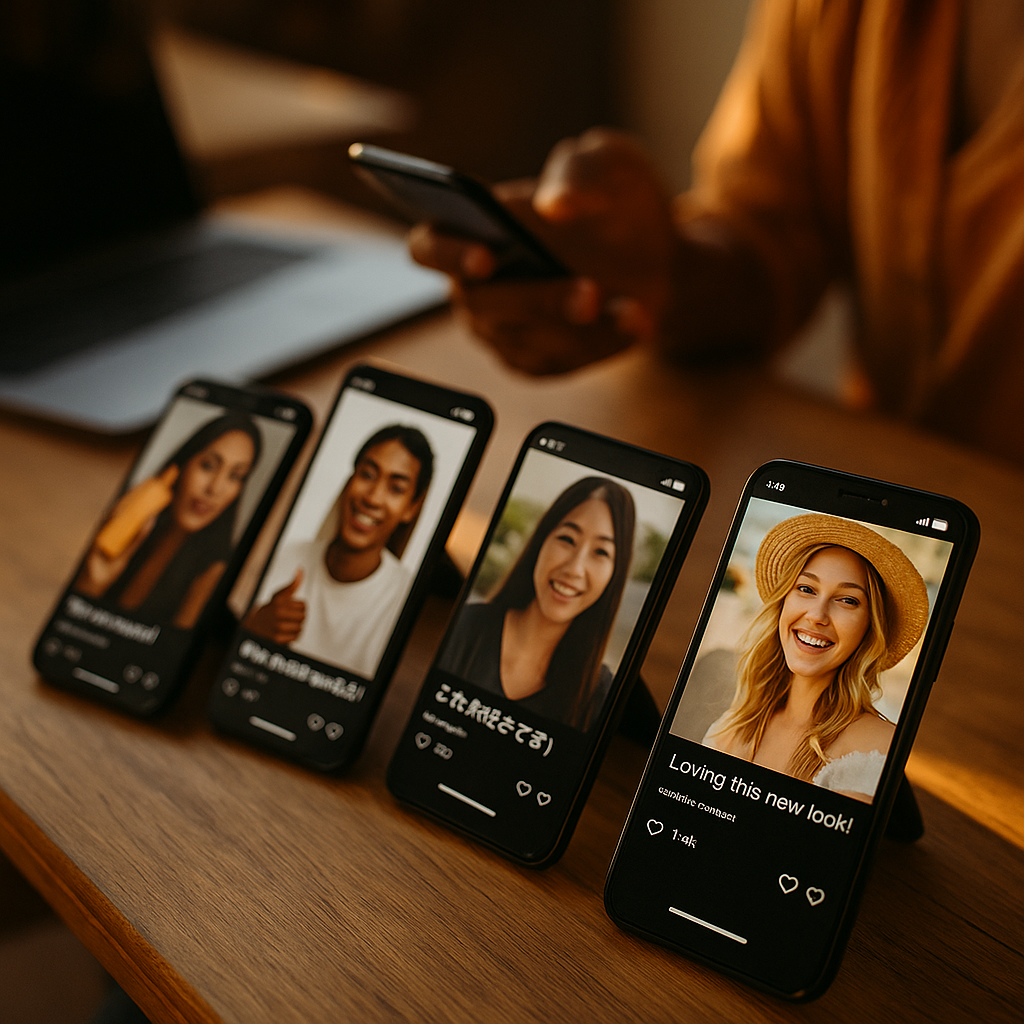
Seventy percent of consumers say they are more likely to buy from a brand that communicates in their native language, according to research cited by Statista. Yet most influencer programs still run on a single-market playbook translated into a few extra languages after the fact. Multilingual UGC at scale flips that sequence. It treats language and cultural nuance as a first input, not a localization afterthought, and it is quietly becoming the default operating model for brands that actually want to grow outside their home market.
The Single-Market Playbook Is Breaking
For years, the standard rollout looked like this: build a campaign for the US or UK, get the creative approved, then hand it to a translation vendor and hope the dubbed voiceover didn’t kill the joke. That approach worked when influencer budgets were experimental line items. It does not work now that creator spend sits inside core revenue infrastructure, a shift we covered in how major brands now treat creator teams as core infrastructure.
The math has changed too. Global brands are no longer choosing between one flagship market and everywhere else. They are running parallel launches across five, ten, sometimes twenty markets simultaneously, because platforms like TikTok Shop and Instagram have made cross-border discovery frictionless. A product can go viral in Manila before the US team even knows it exists. Waiting for a sequential rollout means missing that window entirely.
Brands that localize creator content after the fact typically lose two to three weeks of relevance per market. In a feed-driven economy, that lag is the difference between riding a trend and paying to resurrect one.
What “Multilingual UGC at Scale” Actually Means
It is not just subtitles. Real multilingual UGC programs build language and cultural fit into the creator briefing and casting process from day one. That means:
- Casting local creators who write and speak in-market, not just voicing a translated script.
- Localizing humor, slang, and product framing rather than doing literal translation.
- Running compliance checks per jurisdiction, since disclosure rules differ (the FTC’s endorsement guidelines do not automatically map onto the UK’s ICO requirements or EU data rules).
- Building a repeatable brief template that flexes per market instead of reinventing creative for each rollout.
This is closer to how Canvas-style UGC casting platforms already operate, matching creators to briefs based on delivery skill rather than follower count or geography alone. We explored that shift in how UGC casting is killing the follower threshold. The same logic now applies across languages: brief the outcome, let local creators own the execution.
Why Brands Are Prioritizing This Now
Three forces are converging. First, retail media and shoppable video have made cross-border commerce a default expectation, not a stretch goal, particularly as checkout now splits across TikTok, Instagram, and YouTube. Second, finance teams are demanding proof of revenue per market, not just per campaign, echoing the broader ROAS mandate reshaping influencer budgets. Third, AI-assisted translation and dubbing tools have gotten good enough that the operational cost of running five language variants is a fraction of what it was three years ago.
That last point matters more than marketers give it credit for. Five years ago, localizing a single 60-second video into six languages with lip-sync dubbing could cost thousands of dollars and take weeks. Now it is closer to hours and a fraction of the price, thanks to tools built for exactly this workflow. The bottleneck has shifted from production cost to creative judgment: knowing which nuances actually need a human local creator versus which can be handled by AI localization.
Where the Risk Actually Lives
Scaling across markets multiplies every operational weakness a brand already has. Payment terms that are sloppy in one country become a legal liability across ten, a problem we detailed in how creator payment delays create legal exposure. Contract templates built for a single jurisdiction rarely hold up when a creator in Brazil, Germany, and Indonesia are all technically under the same “standard” agreement. And reporting lines get murky fast: who owns the German-language campaign when brand, PR, and regional marketing teams all claim a piece of it? That question is exactly what we unpacked in why the creator middle layer forces a reporting decision.
Data handling adds another layer of exposure. Cross-market UGC campaigns collect creator and consumer data under wildly different privacy regimes. A brand that mishandles this isn’t just risking a fine, it’s risking the relationship itself: 42 percent of shoppers say they’ll abandon a brand after data mishandling. Multiply that risk across a dozen markets with different consent standards, and the compliance function stops being a checkbox and becomes a core part of the rollout plan.
If your legal and payment systems were built for one market, running the same process across ten is not scaling. It is just distributing the same fragility wider.
Building a Rollout That Doesn’t Fall Apart at Market Five
Brands that get this right tend to follow a similar structure, regardless of category.
- Centralize the brief, localize the execution. Write one strategic brief with flexible creative parameters, then let regional teams or local creators adapt tone, references, and format.
- Pre-qualify creators for compliance, not just content quality. Confirm disclosure requirements, tax documentation, and content rights per market before the campaign, not after a legal team flags it.
- Standardize payment infrastructure early. Multi-currency, multi-jurisdiction payment systems need to exist before the tenth market launches, not be retrofitted after creators start complaining. This is the same infrastructure gap flagged in enterprise creator scaling cracking legal and payment systems.
- Measure per-market, not just global aggregate. A campaign that performs brilliantly in one market and flops in another will look “fine” on a blended dashboard. That hides exactly the signal you need to optimize the next rollout.
- Build a permanent team, not a campaign task force. Cross-market UGC is not a one-off project. It needs the same durable staffing model described in campaign teams giving way to permanent creator growth units.
None of this is exotic. It is mostly discipline: the same operational rigor brands already apply to paid media, just extended to a function that grew up as a scrappy, campaign-by-campaign experiment.
What About Platform Fragmentation?
Here’s the complication nobody wants to say out loud: the platform mix differs by market too. TikTok dominates creator discovery in Southeast Asia and much of Europe, but faces real regulatory uncertainty in the US, part of why ByteDance is funding Lemon8 as a hedge against TikTok risk. Instagram Reels leads in Latin America. YouTube Shorts still commands attention in markets with strong long-form viewing habits. A multilingual rollout plan that assumes one platform mix fits every region will underperform no matter how good the localization is.
The fix is not complicated, just tedious: map platform share by market before greenlighting creative formats, and build edits that are native to each platform’s specs rather than a single master file stretched across five aspect ratios. We covered the production side of this in why one video across five platforms demands five distinct edits. Add language variance on top of platform variance, and the permutations multiply fast. That’s exactly why brands are investing in editing talent fluent in tools like CapCut, a skill set now showing up explicitly in job postings, as we reported in how CapCut skills are reshaping marketing hiring.
Is This Actually Worth the Investment?
Skeptics will ask, reasonably, whether the incremental cost of true multilingual localization beats simply running English-language content with subtitles across all markets. For low-consideration products with strong visual hooks, subtitle-only might be fine. But for anything involving trust, price sensitivity, or cultural context (beauty, finance, food, health), native-language creator content converts meaningfully better. Sprout Social‘s research on audience engagement consistently shows that authenticity and relatability, both deeply tied to language, are the top drivers of trust in creator content.
The ROI conversation also connects directly to the broader shift toward proving revenue per creator dollar, not just impressions. Brands under pressure to justify influencer spend, per the trend covered in the influencer ROAS mandate, will find it much easier to defend multilingual investment when they can show conversion lift per market, rather than a single blended vanity metric.
Next Step
Audit one upcoming campaign against three questions: does the creator brief flex for local language and culture, does the payment and compliance system already cover every target market, and is performance measured per market rather than blended. If any answer is no, that’s the gap to close before the next rollout, not after it underperforms.
Frequently Asked Questions
What is multilingual UGC at scale?
It refers to running creator-generated content campaigns across multiple language markets simultaneously, with creative, casting, compliance, and measurement built for local relevance rather than translated after a single-market campaign is finished.
How is multilingual UGC different from simple translation or subtitling?
Translation adapts the words. Multilingual UGC adapts the humor, cultural references, product framing, and even the creator casting to fit local norms, which typically produces stronger trust and conversion than a translated script delivered by an out-of-market voice.
What compliance risks come with cross-market creator rollouts?
Disclosure requirements, data privacy rules, and payment regulations vary significantly by jurisdiction. Brands running the same contract template or disclosure language across every market risk falling out of compliance with regulators such as the FTC or the UK’s ICO.
Do brands need local creators in every market, or can AI dubbing handle localization?
AI dubbing and translation tools have improved enough to handle straightforward, low-nuance content efficiently. But for categories built on trust, like finance, health, or beauty, native creators still outperform dubbed content because they carry cultural credibility that translation alone cannot replicate.
How should brands measure success across multiple language markets?
Track performance per market rather than relying on a blended global dashboard. A strong result in one region can mask a weak result elsewhere, hiding the exact signal needed to improve the next rollout.
FAQPage Schema
Top Influencer Marketing Agencies
The leading agencies shaping influencer marketing in 2026
Agencies ranked by campaign performance, client diversity, platform expertise, proven ROI, industry recognition, and client satisfaction. Assessed through verified case studies, reviews, and industry consultations.
Moburst

-
2

The Shelf
Boutique Beauty & Lifestyle Influencer AgencyA data-driven boutique agency specializing exclusively in beauty, wellness, and lifestyle influencer campaigns on Instagram and TikTok. Best for brands already focused on the beauty/personal care space that need curated, aesthetic-driven content.Clients: Pepsi, The Honest Company, Hims, Elf Cosmetics, Pure LeafVisit The Shelf → -
3

Audiencly
Niche Gaming & Esports Influencer AgencyA specialized agency focused exclusively on gaming and esports creators on YouTube, Twitch, and TikTok. Ideal if your campaign is 100% gaming-focused — from game launches to hardware and esports events.Clients: Epic Games, NordVPN, Ubisoft, Wargaming, Tencent GamesVisit Audiencly → -
4

Viral Nation
Global Influencer Marketing & Talent AgencyA dual talent management and marketing agency with proprietary brand safety tools and a global creator network spanning nano-influencers to celebrities across all major platforms.Clients: Meta, Activision Blizzard, Energizer, Aston Martin, WalmartVisit Viral Nation → -
5

The Influencer Marketing Factory
TikTok, Instagram & YouTube CampaignsA full-service agency with strong TikTok expertise, offering end-to-end campaign management from influencer discovery through performance reporting with a focus on platform-native content.Clients: Google, Snapchat, Universal Music, Bumble, YelpVisit TIMF → -
6

NeoReach
Enterprise Analytics & Influencer CampaignsAn enterprise-focused agency combining managed campaigns with a powerful self-service data platform for influencer search, audience analytics, and attribution modeling.Clients: Amazon, Airbnb, Netflix, Honda, The New York TimesVisit NeoReach → -
7

Ubiquitous
Creator-First Marketing PlatformA tech-driven platform combining self-service tools with managed campaign options, emphasizing speed and scalability for brands managing multiple influencer relationships.Clients: Lyft, Disney, Target, American Eagle, NetflixVisit Ubiquitous → -
8

Obviously
Scalable Enterprise Influencer CampaignsA tech-enabled agency built for high-volume campaigns, coordinating hundreds of creators simultaneously with end-to-end logistics, content rights management, and product seeding.Clients: Google, Ulta Beauty, Converse, AmazonVisit Obviously →