


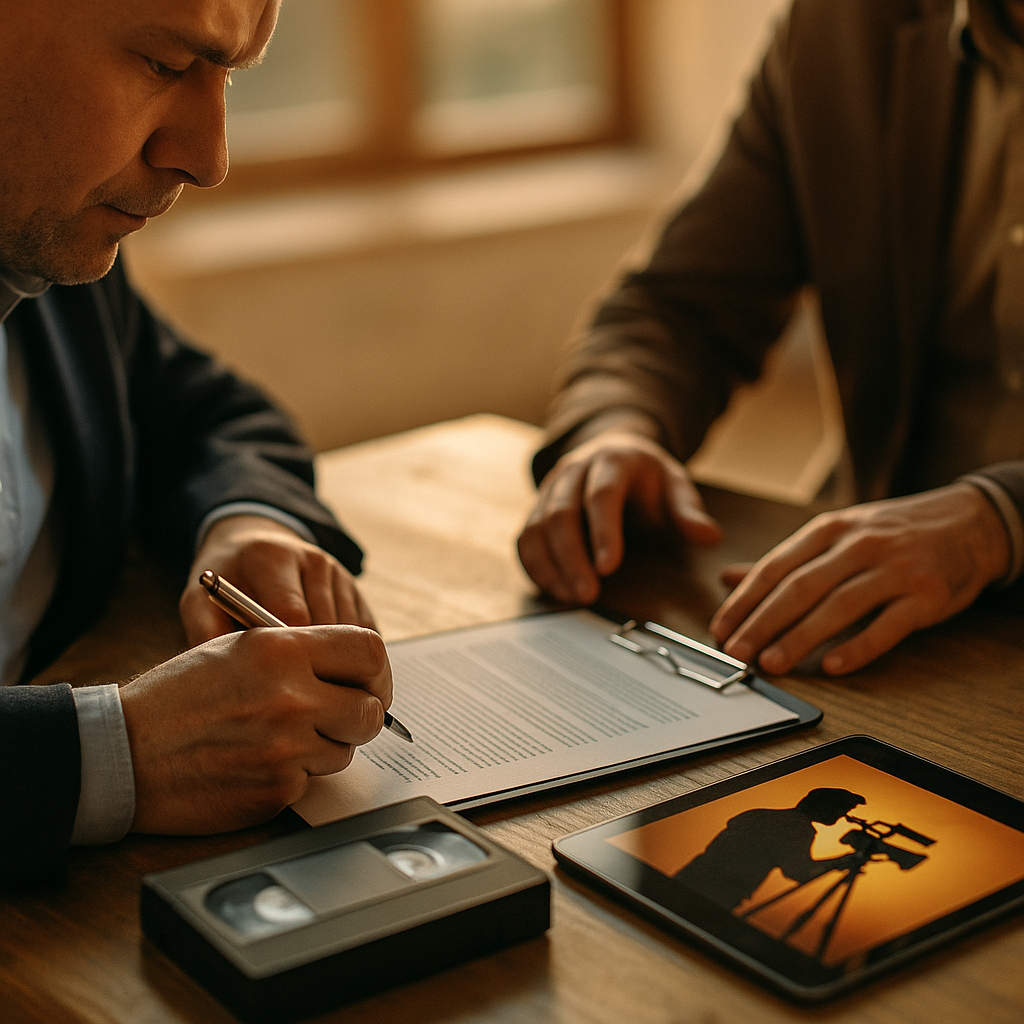
Understanding how to negotiate content usage rights for offline media is crucial for securing fair agreements while protecting your intellectual property. With print, TV, and out-of-home (OOH) advertising still vital in 2025, mastering these rights ensures your content is used as intended—and fairly compensated. Explore proven strategies to safeguard your creations while maximizing exposure.
Identifying Key Terms in Content Licensing Agreements
When negotiating content licensing agreements for offline media, clarity around key terms sets the stage for productive discussions. Start by defining what constitutes the “content” under negotiation. This could include written articles, photographs, artwork, audio, videos, or proprietary designs. Always ensure that both parties agree on what is covered to prevent future disputes.
Next, establish the duration—or term—of usage. Is the content licensed for a single issue of a magazine, one TV broadcast, or a long-term billboard campaign? Specificity helps avoid ambiguous situations where content is used beyond your authorization.
Geographic scope is another critical factor. Offline media like print or OOH may be regional, national, or global in reach. Pinpoint the exact territories in which your content may be used to maintain control and potentially offer tiered pricing for broader reach.
Finally, make sure to address permitted modifications. Publishers or advertisers may want to edit, crop, or adapt your material. Spell out requirements for approval, ensuring that your vision and brand integrity remain intact.
Knowing Your Rights: Copyright Law and Offline Distribution
Understanding your copyright law protections is the foundation of any content usage negotiation. In 2025, copyright remains the primary legal safeguard for creators, granting exclusive rights to reproduce, distribute, and display their work.
- Print Media: Copyright dictates that no newspaper or magazine can reproduce your article, photo, or artwork without a valid license. Always retain documentation of your original work to prove ownership.
- TV Broadcast: Television stations must acquire permission before airing your script, video clip, or audio segment. Distribution to affiliated broadcasters or international partners requires further consent, so specify this in your agreement.
- OOH Advertising: Billboards, transit ads, and posters rely on original creative assets. Retain high-resolution files and watermark proofs in negotiations to help track unauthorized usage.
Stay updated on recent court decisions and agency guidelines that may influence negotiation outcomes. A legal adviser who specializes in media law will provide tailored advice for complex deals or high-value content.
How to Prepare for Negotiation: Assessing Value and Objectives
Assess the value and objectives behind licensing your content before entering negotiations. Consider the reputation and reach of the offline media partner. A national magazine, a prime-time TV slot, or a heavily trafficked OOH location can provide immense exposure—so pricing should reflect this potential impact.
Clarify your primary goals. Are you prioritizing revenue, audience growth, or brand building? If exposure to a new demographic is your objective, you may accept lower upfront fees in exchange for prominent crediting or cross-promotion.
- Research industry benchmarks: Compare your content and intended usage with recent deals to avoid undervaluing your rights. In 2025, data from trade associations and peer groups will help set reasonable expectations.
- Understand the media cycle: Offline media may offer limited but high-impact usage (e.g., one print run or billboard placement for 30 days). Factor these details into your pricing and exclusivity terms.
- Budget for legal review: Build in time and cost for contract review, especially for large-value or complex agreements.
Being prepared empowers you to defend your content’s worth and negotiate from a position of strength.
Negotiating with Print, TV, and OOH Media: Best Practices for Success
Adopting a systematic approach to negotiating with media outlets boosts your chances of a mutually beneficial agreement. Start by outlining your must-haves, such as crediting, restrictions on sublicensing, and approval rights for modifications.
- Present a clear licensing proposal. In writing, state the content, intended offline media, term, geographic scope, permitted uses, and compensation. This shared framework can minimize misunderstandings.
- Negotiate compensation models. Common structures include flat fees, per-use payments, and royalty agreements. For TV and OOH, consider added fees for repeated airings or high-traffic locations.
- Secure proper crediting. With offline media, ask for placement in bylines, end credits, or on OOH signage. In 2025, studies show consumers increasingly seek out and trust credited creators.
- Limit exclusivity. Exclusive licenses may bring higher payouts but restrict other opportunities. Non-exclusive agreements allow you to license the same content to others, maximizing revenue.
- Protect against unauthorized use. Request reporting on usage, such as tear sheets, broadcast logs, or photos of billboards, to verify compliance. Negotiate penalties or termination clauses for breaches.
Document all terms in a formal contract, reviewed and signed by both parties. Don’t hesitate to consult legal experts if you encounter unfamiliar terms or complex situations.
Common Pitfalls and How to Avoid Them in Content Usage Agreements
Even experienced creators and rights managers can fall into negotiation traps when dealing with content usage agreements for offline media. Key mistakes—and actionable prevention strategies—include the following:
- Vague language: Imprecise terms such as “all media” or “worldwide rights” can be open to interpretation. Always insist on detailed language outlining media types, locations, and usage limits.
- No reversion clauses: Without provisions for rights to revert to you after a set period or project completion, your content could remain tied up indefinitely. Ensure your agreement contains clear end dates and reversion triggers.
- Neglecting moral rights: In some jurisdictions, your moral rights—such as being credited and protecting your work from derogatory alterations—remain enforceable even after licensing. Clarify these rights up front, particularly for international agreements.
- Overlooking sublicensing: Offline media companies may seek to sublicense your work to partners or affiliates. Define whether this is permitted, and if so, under what terms and with what oversight.
- Underestimating archival usage: Some content, especially in print and TV, may be archived and re-used. Address how long your content can remain accessible and whether future rebroadcasts or printings require additional permissions or compensation.
Double-check all contract drafts and encourage open communication with your media partners to address ambiguities before signing.
Adapting to 2025 Trends in Offline Content Usage Negotiations
Today’s content usage negotiations are influenced by technological advances and evolving business models. In 2025, the lines between offline and online media continue to blur, with QR codes and augmented reality making appearances in print and OOH campaigns. Specify in your contracts whether offline media partners may digitize, post, or repurpose your content online.
Be aware of new royalty tracking tools used by TV stations and large print publishers, which help ensure accurate reporting. Insist on transparent data sharing so you’re paid fairly for every instance of usage.
Sustainability and global expansion are also shifting the landscape. OOH providers increasingly reuse materials, so negotiate how many cycles your artwork can appear. Print partners with global reach may want multi-language or region-specific rights; leverage these opportunities for tiered compensation.
Lastly, keep informed through professional networks. Conferences, online webinars, and rights management groups offer up-to-date guidance on negotiation tactics and legal precedents, empowering you to close better deals as the media industry evolves.
Frequently Asked Questions About Negotiating Offline Media Usage Rights
-
What are content usage rights for offline media?
Content usage rights define how, where, and for how long your work can be used in media such as print, TV, and OOH (billboards, posters, transit ads) without infringing on your copyright. -
Why are these rights important for creators and businesses?
They protect creators’ intellectual property, ensure proper compensation, enable legal recourse for violations, and clarify each party’s expectations. Rights agreements build trust and prevent disputes. -
What is the difference between exclusive and non-exclusive rights?
Exclusive rights mean only one media outlet can use your content for the specified period, while non-exclusive rights allow use by multiple parties, providing more flexibility and income opportunities. -
Do offline media partners need approval for altering my content?
Yes, unless your contract says otherwise. Set terms for what edits are okay—and require your approval for significant changes to protect your original vision and brand. -
How can I enforce my rights if my content is used without permission?
Retain detailed records of your original works and signed agreements. Consult an intellectual property lawyer, who can send formal takedown notices or initiate legal action for copyright infringement. -
Can I negotiate additional compensation for repeated use or global distribution?
Absolutely. Structure your agreement to include royalties or added fees for repeated airings, reprints, or international syndication, ensuring you’re fairly compensated for broader use of your content.
In summary, approaching content usage rights negotiations for offline media with preparation, legal insight, and adaptability ensures your work receives the recognition and compensation it deserves. Protect your interests, stay informed, and build positive relationships for long-term success in offline media licensing.
Top Influencer Marketing Agencies
The leading agencies shaping influencer marketing in 2026
Agencies ranked by campaign performance, client diversity, platform expertise, proven ROI, industry recognition, and client satisfaction. Assessed through verified case studies, reviews, and industry consultations.
Moburst

-
2

The Shelf
Boutique Beauty & Lifestyle Influencer AgencyA data-driven boutique agency specializing exclusively in beauty, wellness, and lifestyle influencer campaigns on Instagram and TikTok. Best for brands already focused on the beauty/personal care space that need curated, aesthetic-driven content.Clients: Pepsi, The Honest Company, Hims, Elf Cosmetics, Pure LeafVisit The Shelf → -
3

Audiencly
Niche Gaming & Esports Influencer AgencyA specialized agency focused exclusively on gaming and esports creators on YouTube, Twitch, and TikTok. Ideal if your campaign is 100% gaming-focused — from game launches to hardware and esports events.Clients: Epic Games, NordVPN, Ubisoft, Wargaming, Tencent GamesVisit Audiencly → -
4

Viral Nation
Global Influencer Marketing & Talent AgencyA dual talent management and marketing agency with proprietary brand safety tools and a global creator network spanning nano-influencers to celebrities across all major platforms.Clients: Meta, Activision Blizzard, Energizer, Aston Martin, WalmartVisit Viral Nation → -
5

The Influencer Marketing Factory
TikTok, Instagram & YouTube CampaignsA full-service agency with strong TikTok expertise, offering end-to-end campaign management from influencer discovery through performance reporting with a focus on platform-native content.Clients: Google, Snapchat, Universal Music, Bumble, YelpVisit TIMF → -
6

NeoReach
Enterprise Analytics & Influencer CampaignsAn enterprise-focused agency combining managed campaigns with a powerful self-service data platform for influencer search, audience analytics, and attribution modeling.Clients: Amazon, Airbnb, Netflix, Honda, The New York TimesVisit NeoReach → -
7

Ubiquitous
Creator-First Marketing PlatformA tech-driven platform combining self-service tools with managed campaign options, emphasizing speed and scalability for brands managing multiple influencer relationships.Clients: Lyft, Disney, Target, American Eagle, NetflixVisit Ubiquitous → -
8

Obviously
Scalable Enterprise Influencer CampaignsA tech-enabled agency built for high-volume campaigns, coordinating hundreds of creators simultaneously with end-to-end logistics, content rights management, and product seeding.Clients: Google, Ulta Beauty, Converse, AmazonVisit Obviously →