


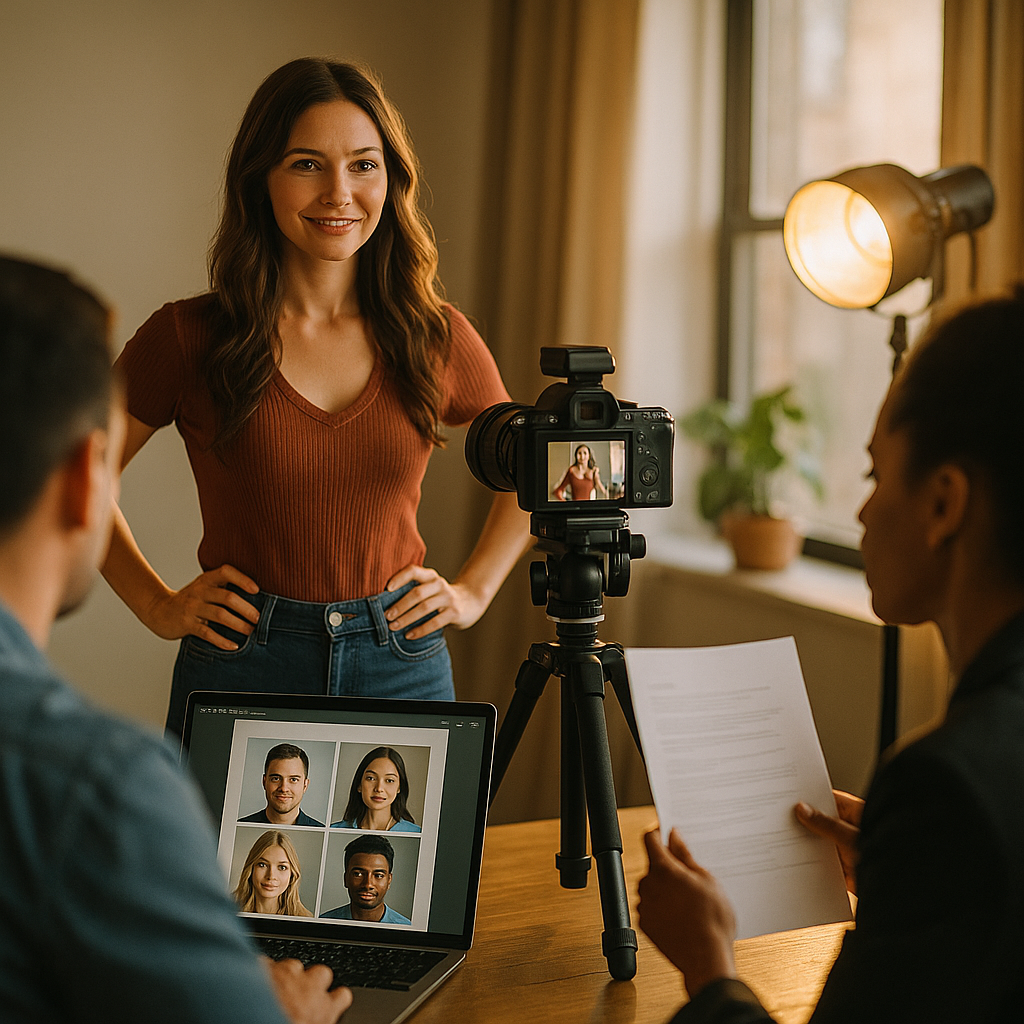
Two states just quietly redrew the map for anyone using algorithms to screen talent. If your team runs creator applications through an AI scoring tool, checks influencer backgrounds with automated risk software, or ranks casting candidates by engagement-fraud likelihood, the New Jersey and Illinois AI employment disclosure laws may already apply to you, whether or not you’ve ever called a creator an “employee.”
Why Hiring Laws Suddenly Matter to Creator Marketing
New Jersey and Illinois built their AI disclosure statutes for a narrower purpose: stopping employers from using opaque algorithms to screen job applicants without telling them. Illinois amended its Human Rights Act to restrict AI use in hiring decisions when the tool produces discriminatory outcomes, with enforcement guidance from the Illinois Department of Human Rights taking effect this year. New Jersey followed with its own disclosure and bias-audit framework for automated employment decision tools, building on the precedent set by New York City’s Local Law 144.
None of these laws mention “influencer.” None mention “creator casting.” That’s exactly the problem.
The statutory language targets “employment decisions,” but regulators have shown little patience for brands that argue creators aren’t employees when the underlying AI tool functions identically to a hiring filter.
Marketing teams increasingly use AI to vet creators for brand safety, score them against fraud-detection models, or auto-rank thousands of applicants for a UGC campaign. Functionally, that’s an automated employment decision tool. Whether a regulator or plaintiff’s attorney agrees is the multimillion-dollar question your legal team hasn’t fully war-gamed yet.
What the Laws Actually Require
Strip away the jurisdictional differences, and both states converge on three obligations:
- Disclosure: Tell the person being screened that AI is involved in the decision, and often, what data the tool uses.
- Bias auditing: Demonstrate the tool doesn’t produce disparate impact across protected classes, typically via an independent audit.
- Human review pathway: Give affected individuals a way to request human reconsideration or accommodation.
Illinois’ law focuses on discriminatory outcomes tied to protected classes, especially when AI analyzes video interviews, facial expressions, or voice patterns, a category that maps uncomfortably well onto AI-driven creator casting tools that screen video submissions for “brand fit.”
New Jersey’s approach leans into transparency requirements similar to what New York City pioneered, mandating notice before an automated tool is used and, in some drafts, audit documentation available on request.
Where Brands Are Exposed
Picture your typical influencer marketing operation today. A brand runs 4,000 applicants through an AI matching platform that scores them on audience authenticity, engagement quality, and “content fit.” An agency uses a separate tool to background-check creators for controversy risk before signing a contract. A CPG brand uses AI to rank UGC submissions for a paid ambassador program, effectively making a hiring decision, complete with pay, deliverables, and exclusivity terms.
Each of these scenarios starts to look like the exact automated employment decision-making these statutes were written to regulate. The creator economy has spent years insisting creators are independent contractors, not employees, largely to avoid labor law obligations. That argument may now boomerang: if a state treats the *tool* the same regardless of employment classification, contractor status won’t shield you.
Consider the parallel to how regulators have already started scrutinizing AI in advertising generally. Influencers Time has covered how Colorado’s AI Act creates similar disclosure pressure for consumer-facing AI systems, and how state-by-state AI ad rules are multiplying faster than most legal teams can track. Hiring-AI spillover into casting is the next logical extension, and it’s arriving faster than most CMOs expect.
The Contractor Classification Loophole Is Shrinking
Marketing and legal teams have long treated creator relationships as fundamentally different from employment. Independent contractor agreements, 1099 forms, no benefits, no at-will termination protections. That framework worked fine for tax purposes. It’s shakier ground for AI-fairness statutes.
Illinois’ Human Rights Act amendments define covered “employers” broadly, and enforcement bodies have signaled interest in functional relationships, not just formal titles. If your AI vetting tool screens out creators based on proxies correlated with age, disability, or national origin, the fact that you paid them via invoice rather than payroll may not matter much to a regulator evaluating discriminatory impact.
This is the same pattern seen in other creator-economy compliance fights: platforms and brands assume contractor status insulates them, then discover that consumer protection and civil rights frameworks care about outcomes, not labels. The FTC has applied similar logic to endorsement rules regardless of employment structure, as covered in our breakdown of brand-directed creator liability.
Practical Steps: Building an Audit Trail Before Regulators Ask
You don’t need to overhaul your entire creator program overnight. You do need documentation showing you took the risk seriously.
- Inventory every AI tool touching creator selection. Casting platforms, fraud-detection software, sentiment analysis on past content, engagement authenticity scorers. List them all, including vendor-provided black-box tools your team didn’t build in-house.
- Ask vendors for bias audit documentation. If your matching platform can’t produce evidence of disparate impact testing, that’s a red flag worth escalating internally, similar to the internal escalation protocols brands use for undisclosed sponsorship risk.
- Add disclosure language to creator-facing applications. A simple notice that AI tools assist in scoring or shortlisting costs little and demonstrates good-faith transparency.
- Build a human review checkpoint. No creator should be rejected solely by algorithmic score without a human able to override the decision, mirroring the human-override principles increasingly baked into AI media-buying contracts.
- Loop legal into vendor contracts now. Indemnification clauses for AI-vetting vendors should explicitly address employment-adjacent liability, not just IP or content claims.
Treat AI-vetting spillover the way smart brands treated GDPR before it hit U.S. shores: assume the compliance bar will keep rising, and build documentation habits now rather than during an investigation.
How This Intersects With Existing Disclosure Regimes
Brands already juggling FTC endorsement guidelines, state-level synthetic media rules, and platform-specific AI labeling don’t need another disconnected compliance track. The smart move is integrating hiring-AI disclosure into the same governance structure you use for other AI-related creator risks.
If your team has already built a framework for reconciling state AI disclosure laws with FTC Section 5, extending it to casting and vetting tools is a smaller lift than starting from scratch. Similarly, brands maintaining a compliance calendar for creator programs should add hiring-AI audit deadlines to that calendar now, before Illinois or New Jersey regulators start issuing guidance letters industry-wide.
Data from eMarketer shows AI-assisted creator discovery tools growing rapidly across mid-market and enterprise brands, which means the exposure surface is expanding right alongside adoption. The more brands lean on automated scoring to manage creator volume, the more this regulatory category matters.
What Other States Are Likely to Follow
New Jersey and Illinois rarely act alone for long. Colorado already has AI-specific consumer protection statutes in motion. California has flirted with algorithmic accountability bills for years. Once two states establish enforcement precedent, others typically draft near-identical language within a legislative cycle or two.
Brands operating national creator programs shouldn’t wait for all 50 states to weigh in. The compliance posture that satisfies New Jersey and Illinois, disclosure, audit trail, human override, will likely satisfy whatever comes next from Colorado, New York, or California. Building toward the strictest current standard is cheaper than retrofitting a patchwork later, a lesson brands learned the hard way with synthetic performer disclosure laws rolling out state by state.
For a broader view of how regulatory bodies handle overlapping jurisdiction issues, the FTC’s guidance resources remain the most reliable federal-level reference point, even though this specific hiring-AI spillover issue is currently playing out at the state level.
Next Step
Pull your AI-vetting vendor list this week, ask each vendor for bias-audit documentation in writing, and add a human-override checkpoint to any tool that auto-rejects creator applicants. That single change closes most of your near-term exposure under New Jersey and Illinois AI employment disclosure rules while regulatory guidance continues to develop.
FAQs
Do New Jersey and Illinois AI employment laws actually apply to influencer casting?
Not explicitly, but both statutes define covered activity broadly enough that AI tools used to screen, score, or rank creators for paid opportunities could plausibly fall within scope, especially if the relationship involves pay, deliverables, and exclusivity similar to employment.
Does creator contractor status protect brands from these laws?
Not reliably. Civil rights and consumer protection statutes increasingly focus on the functional nature of the relationship and the tool’s impact, not just how the worker is classified for tax purposes.
What counts as an “automated employment decision tool” in this context?
Any AI system that scores, ranks, filters, or recommends candidates, including creator-matching platforms, fraud-detection scoring tools, and sentiment or brand-fit analysis software applied to applicant content.
What should brands do first to reduce exposure?
Inventory every AI tool touching creator selection, request bias-audit documentation from vendors, add disclosure language for applicants, and ensure a human can override any automated rejection.
Will other states adopt similar AI hiring disclosure rules?
Very likely. Colorado, New York, and California have all shown legislative interest in algorithmic accountability, and enforcement precedent from New Jersey and Illinois often accelerates similar bills elsewhere.
FAQs
Do New Jersey and Illinois AI employment laws actually apply to influencer casting?
Not explicitly, but both statutes define covered activity broadly enough that AI tools used to screen, score, or rank creators for paid opportunities could plausibly fall within scope, especially if the relationship involves pay, deliverables, and exclusivity similar to employment.
Does creator contractor status protect brands from these laws?
Not reliably. Civil rights and consumer protection statutes increasingly focus on the functional nature of the relationship and the tool’s impact, not just how the worker is classified for tax purposes.
What counts as an “automated employment decision tool” in this context?
Any AI system that scores, ranks, filters, or recommends candidates, including creator-matching platforms, fraud-detection scoring tools, and sentiment or brand-fit analysis software applied to applicant content.
What should brands do first to reduce exposure?
Inventory every AI tool touching creator selection, request bias-audit documentation from vendors, add disclosure language for applicants, and ensure a human can override any automated rejection.
Will other states adopt similar AI hiring disclosure rules?
Very likely. Colorado, New York, and California have all shown legislative interest in algorithmic accountability, and enforcement precedent from New Jersey and Illinois often accelerates similar bills elsewhere.
Top Influencer Marketing Agencies
The leading agencies shaping influencer marketing in 2026
Agencies ranked by campaign performance, client diversity, platform expertise, proven ROI, industry recognition, and client satisfaction. Assessed through verified case studies, reviews, and industry consultations.
Moburst

-
2

The Shelf
Boutique Beauty & Lifestyle Influencer AgencyA data-driven boutique agency specializing exclusively in beauty, wellness, and lifestyle influencer campaigns on Instagram and TikTok. Best for brands already focused on the beauty/personal care space that need curated, aesthetic-driven content.Clients: Pepsi, The Honest Company, Hims, Elf Cosmetics, Pure LeafVisit The Shelf → -
3

Audiencly
Niche Gaming & Esports Influencer AgencyA specialized agency focused exclusively on gaming and esports creators on YouTube, Twitch, and TikTok. Ideal if your campaign is 100% gaming-focused — from game launches to hardware and esports events.Clients: Epic Games, NordVPN, Ubisoft, Wargaming, Tencent GamesVisit Audiencly → -
4

Viral Nation
Global Influencer Marketing & Talent AgencyA dual talent management and marketing agency with proprietary brand safety tools and a global creator network spanning nano-influencers to celebrities across all major platforms.Clients: Meta, Activision Blizzard, Energizer, Aston Martin, WalmartVisit Viral Nation → -
5

The Influencer Marketing Factory
TikTok, Instagram & YouTube CampaignsA full-service agency with strong TikTok expertise, offering end-to-end campaign management from influencer discovery through performance reporting with a focus on platform-native content.Clients: Google, Snapchat, Universal Music, Bumble, YelpVisit TIMF → -
6

NeoReach
Enterprise Analytics & Influencer CampaignsAn enterprise-focused agency combining managed campaigns with a powerful self-service data platform for influencer search, audience analytics, and attribution modeling.Clients: Amazon, Airbnb, Netflix, Honda, The New York TimesVisit NeoReach → -
7

Ubiquitous
Creator-First Marketing PlatformA tech-driven platform combining self-service tools with managed campaign options, emphasizing speed and scalability for brands managing multiple influencer relationships.Clients: Lyft, Disney, Target, American Eagle, NetflixVisit Ubiquitous → -
8

Obviously
Scalable Enterprise Influencer CampaignsA tech-enabled agency built for high-volume campaigns, coordinating hundreds of creators simultaneously with end-to-end logistics, content rights management, and product seeding.Clients: Google, Ulta Beauty, Converse, AmazonVisit Obviously →