


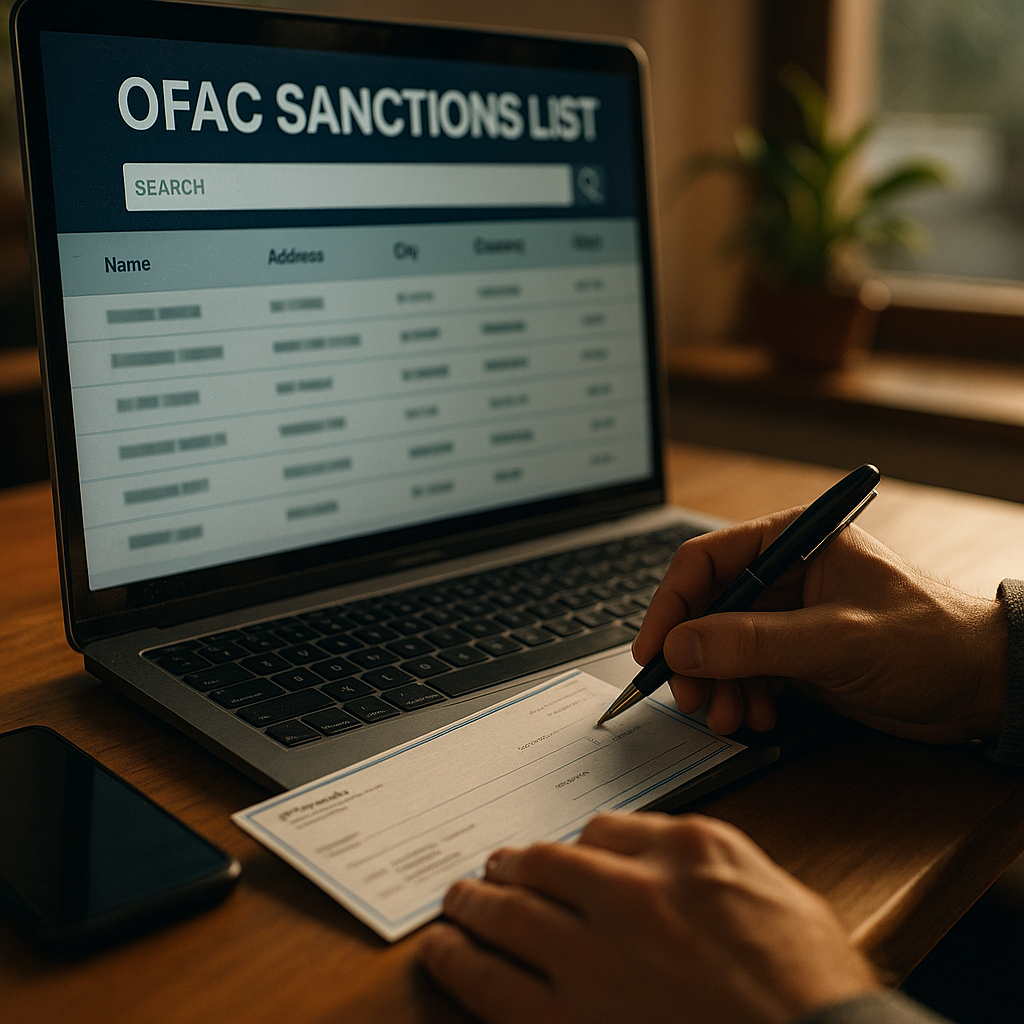
One unscreened wire transfer to a sanctioned individual can trigger civil penalties running into the millions, even if the brand never knew who was on the other end. That is the blunt reality behind OFAC sanctions screening for international creator payouts. As influencer programs expand into Latin America, the Gulf, Southeast Asia, and Eastern Europe, marketing teams are quietly becoming a sanctions compliance function whether they signed up for it or not.
Why a Marketing Line Item Became a Legal Exposure
Five years ago, paying a creator meant cutting a check or sending a PayPal invoice. Now it means routing funds through multiple currencies, payment processors, and jurisdictions, some of which sit on or near sanctioned lists maintained by the U.S. Treasury’s Office of Foreign Assets Control. OFAC does not care that the payment originated from a marketing budget rather than a finance department. Strict liability applies. That means a brand can be penalized for paying a sanctioned party even without knowledge or intent.
This matters more now because creator economy spend has globalized faster than most compliance teams have adapted. Brands running programs across dozens of countries are, in effect, running dozens of parallel payment corridors. Each one carries its own sanctions exposure, from Russia-adjacent entities to Iran-linked shell accounts to individuals on the Specially Designated Nationals (SDN) list who resurface under new business names.
OFAC enforcement operates on strict liability: a brand can be penalized for paying a sanctioned creator even if it never knew the recipient was on a restricted list.
Where the Risk Actually Lives
Ask most CMOs where sanctions risk sits in their influencer program and you’ll get a blank stare. It’s not in the contract. It’s in the payout rail. Here’s where it typically surfaces:
- Payment processors with thin KYC:
- Agency subcontracting: Brands assume their agency screens sub-creators. Often, nobody does, until an audit finds out.
- Barter and product-for-post deals: Non-cash compensation still counts as a transaction under OFAC rules, and it’s frequently overlooked.
- Affiliate and revenue share arrangements: Ongoing payouts tied to revenue share creator deals create recurring exposure, not a one-time risk.
- Shared creator pools across regions: When multiple markets pull from the same roster, screening gaps multiply. This overlaps heavily with the misclassification issues covered in our piece on shared creator pools.
Some influencer payout platforms verify identity loosely, especially for micro and nano creators paid in local currency.
None of this is exotic. It’s the ordinary plumbing of a global influencer program, and that’s exactly why it gets missed.
What OFAC Screening Actually Requires
At its core, sanctions screening means checking a creator’s identifying information (name, country, sometimes date of birth or business registration) against OFAC’s SDN list and related sanctions programs before money moves. Sounds simple. In practice, three complications trip up marketing teams.
First, name-matching is messy. Common names generate false positives constantly, and transliteration from non-Latin scripts (Arabic, Cyrillic, Mandarin) creates inconsistent spellings that basic screening tools miss. Second, sanctions lists change weekly. A creator screened clean in January could be added to a list in March, particularly amid geopolitical shifts affecting Russia, Belarus, Venezuela, or specific regions of Ukraine. Third, ownership structures obscure the real party. A creator might invoice through an LLC that is 50% or more owned by a sanctioned individual, which under OFAC’s 50 Percent Rule makes the entity itself blocked, even if its name never appears on any list.
A creator’s LLC can be automatically blocked under OFAC’s 50 Percent Rule if a sanctioned individual holds majority ownership, even when the entity’s name never appears on any published list.
The Screening Workflow That Actually Holds Up
Brands that get this right treat screening as a repeatable checkpoint, not a one-time gate. A defensible workflow looks like this:
- Screen at onboarding, before the first dollar or product moves.
- Re-screen on a recurring cadence (monthly or quarterly, depending on payout frequency) since lists update continuously.
- Screen again before any large or unusual payout, such as a bonus tied to a viral moment.
- Log every screening result with a timestamp, tool used, and match disposition, for audit purposes.
- Escalate potential matches to legal or compliance before releasing payment, not after.
This is not radically different from KYC processes banks have run for decades. The difference is that influencer marketing teams rarely have compliance infrastructure built for it, which is why so many are bolting screening tools onto payout platforms after the fact rather than by design.
Which Markets Carry the Highest Screening Burden?
Not all international creator payouts carry equal risk. Programs operating in or routing payments through certain corridors need tighter controls:
- Any payout touching Russia, Belarus, Iran, North Korea, Syria, or Cuba, comprehensively sanctioned jurisdictions where nearly all transactions are restricted absent a license.
- Payments to creators in regions with high sanctioned-entity density, including parts of the UAE, Turkey, and certain Eastern European markets, where shell structures are more common.
- Cross-border affiliate networks where the payment processor, not the brand, selects the final payout rail, obscuring the ultimate recipient.
Brands running global ambassador programs often don’t realize how much of their payout volume touches these corridors until they run a geographic audit. It’s usually more than expected, and usually concentrated in the smallest, hardest-to-verify payments.
Tools, Not Guesswork
Manual screening does not scale past a handful of creators. Most compliance-mature brands now integrate automated screening into their payout stack, either through dedicated sanctions screening APIs or through payment processors (think Tipalti, Trolley, or similar cross-border payout platforms) that bake OFAC checks into onboarding. The screening itself typically checks against the SDN list plus OFAC’s other sanctions programs, and mature setups also cross-reference the FTC’s enforcement guidance on endorsement compliance, since sanctions risk and disclosure risk often surface in the same international campaigns.
Automation solves the volume problem but not the judgment problem. A flagged partial name match still needs a human, usually legal or compliance, to determine whether it’s a true positive. Brands that skip this step either bottleneck every payout on manual review (killing speed to market) or auto-clear everything (reintroducing the exact risk screening was meant to catch). Neither extreme works. The middle path is risk-tiered review: low-dollar, low-risk-market payouts clear automatically; anything touching a sanctioned or adjacent jurisdiction gets a second look.
How This Intersects With Broader Creator Compliance
Sanctions screening rarely operates in isolation. It sits alongside data privacy diligence, contract structuring, and disclosure compliance as part of a broader international creator risk stack. Brands doing M&A in the agency space, for instance, are already learning to bake this into creator data privacy diligence during acquisitions, since acquired agencies often bring undisclosed payout rails with unknown screening history. Similarly, programs that rely on revenue share structures need sanctions checks built into the same recurring compliance calendar used for state law and franchise reviews. And any brand running international NIL or athlete deals should assume that state-by-state legal complexity is compounded by sanctions exposure the moment payouts cross a border.
Insurance is another blind spot. Standard creator crisis insurance policies rarely cover regulatory penalties from sanctions violations, meaning a brand that gets this wrong is often self-insured against a seven-figure fine.
Building the Compliance Record Before You Need It
OFAC investigations, when they happen, look backward. Regulators want to see that a brand had a functioning screening program at the time of payment, not that it scrambled to build one afterward. That means documentation is not optional overhead, it’s the actual defense. Keep records of screening tool vendor, screening date, match results, and escalation decisions for every international payout, and retain them for at least five years, which aligns with OFAC’s general recordkeeping expectations.
Practically, this means marketing operations and finance need a shared system of record, not two disconnected spreadsheets. According to eMarketer research on global influencer spend, cross-border creator budgets have grown substantially as brands chase audiences outside saturated U.S. and UK markets, which means the volume of payouts needing this kind of documentation is only rising. Treat the screening log the same way you’d treat FTC disclosure records: assume an auditor will ask for it eventually, because eventually, one will.
Next Step
Audit your current payout stack this quarter: identify every processor handling international creator payments, confirm whether OFAC screening happens before or after funds move, and close the gap before your next cross-border campaign, not after an investigator finds it for you.
FAQs
What is OFAC sanctions screening for creator payouts?
It’s the process of checking a creator’s identity and business information against the U.S. Treasury’s SDN list and other sanctions programs before releasing payment, to confirm the recipient isn’t a blocked or restricted party.
Does OFAC screening apply to small or micro-influencer payments?
Yes. OFAC rules don’t set a minimum dollar threshold for enforcement, so even small payouts to nano or micro creators carry the same strict liability exposure as large ones.
Who is liable if a brand pays a sanctioned creator unknowingly?
The paying brand is generally liable under OFAC’s strict liability standard, regardless of intent or knowledge, though a documented screening process can reduce penalties during enforcement review.
How often should brands re-screen international creators?
Best practice is screening at onboarding, then re-screening on a recurring cadence (monthly or quarterly) since sanctions lists update frequently and a previously clear creator can be added later.
Can payment processors handle OFAC screening automatically?
Many cross-border payout platforms offer built-in sanctions screening, but brands still need human review for partial name matches and should retain documented logs rather than relying solely on automated clearance.
Does non-cash compensation like gifted products need screening too?
Yes. Barter and product-for-post arrangements still count as transactions under OFAC rules, so they require the same screening as cash payments.
Top Influencer Marketing Agencies
The leading agencies shaping influencer marketing in 2026
Agencies ranked by campaign performance, client diversity, platform expertise, proven ROI, industry recognition, and client satisfaction. Assessed through verified case studies, reviews, and industry consultations.
Moburst

-
2

The Shelf
Boutique Beauty & Lifestyle Influencer AgencyA data-driven boutique agency specializing exclusively in beauty, wellness, and lifestyle influencer campaigns on Instagram and TikTok. Best for brands already focused on the beauty/personal care space that need curated, aesthetic-driven content.Clients: Pepsi, The Honest Company, Hims, Elf Cosmetics, Pure LeafVisit The Shelf → -
3

Audiencly
Niche Gaming & Esports Influencer AgencyA specialized agency focused exclusively on gaming and esports creators on YouTube, Twitch, and TikTok. Ideal if your campaign is 100% gaming-focused — from game launches to hardware and esports events.Clients: Epic Games, NordVPN, Ubisoft, Wargaming, Tencent GamesVisit Audiencly → -
4

Viral Nation
Global Influencer Marketing & Talent AgencyA dual talent management and marketing agency with proprietary brand safety tools and a global creator network spanning nano-influencers to celebrities across all major platforms.Clients: Meta, Activision Blizzard, Energizer, Aston Martin, WalmartVisit Viral Nation → -
5

The Influencer Marketing Factory
TikTok, Instagram & YouTube CampaignsA full-service agency with strong TikTok expertise, offering end-to-end campaign management from influencer discovery through performance reporting with a focus on platform-native content.Clients: Google, Snapchat, Universal Music, Bumble, YelpVisit TIMF → -
6

NeoReach
Enterprise Analytics & Influencer CampaignsAn enterprise-focused agency combining managed campaigns with a powerful self-service data platform for influencer search, audience analytics, and attribution modeling.Clients: Amazon, Airbnb, Netflix, Honda, The New York TimesVisit NeoReach → -
7

Ubiquitous
Creator-First Marketing PlatformA tech-driven platform combining self-service tools with managed campaign options, emphasizing speed and scalability for brands managing multiple influencer relationships.Clients: Lyft, Disney, Target, American Eagle, NetflixVisit Ubiquitous → -
8

Obviously
Scalable Enterprise Influencer CampaignsA tech-enabled agency built for high-volume campaigns, coordinating hundreds of creators simultaneously with end-to-end logistics, content rights management, and product seeding.Clients: Google, Ulta Beauty, Converse, AmazonVisit Obviously →