


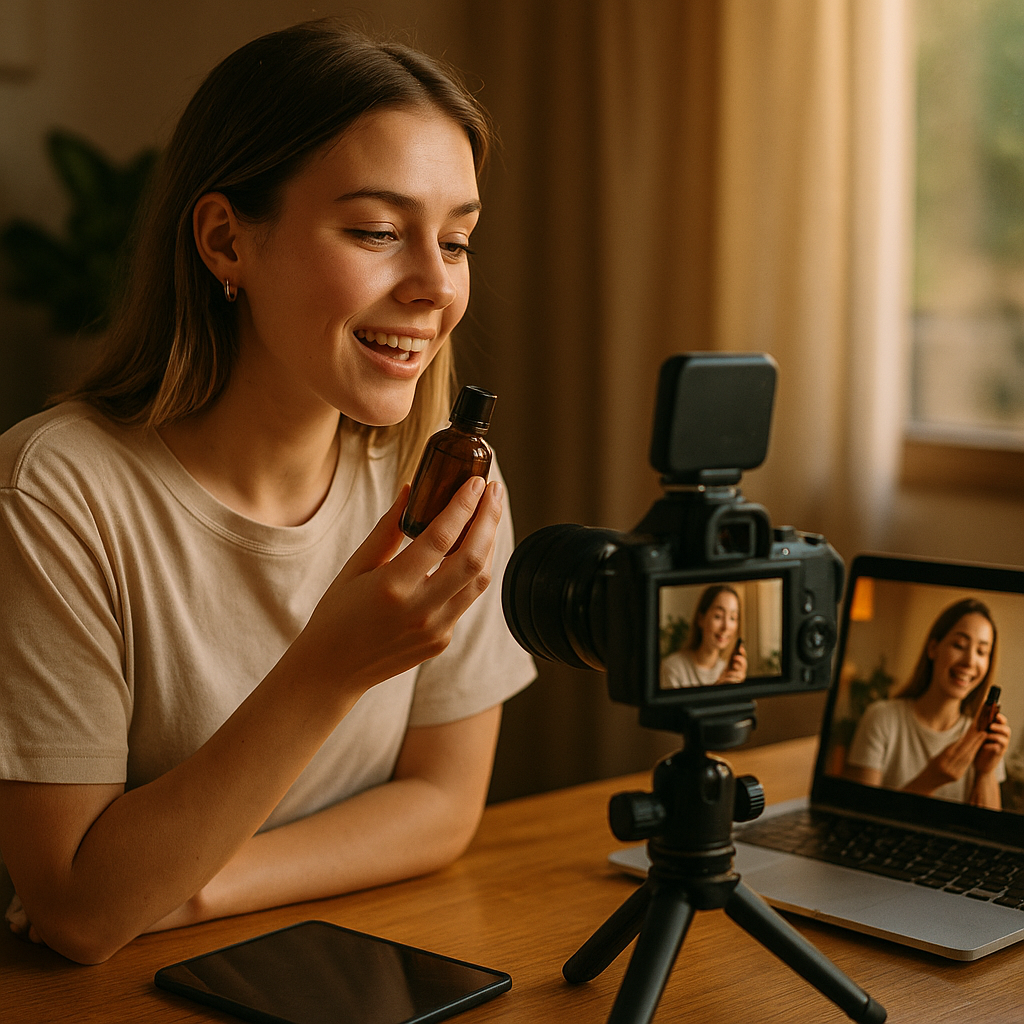
One piece of UGC. Three platforms. Zero extra shoots. Brands running multi-platform repurposing strategies are seeing 30-40% more reach from the same creator budget, according to recent agency benchmarking — so why are so many teams still building separate campaigns for TikTok, Instagram, and YouTube?
The answer, usually, is habit. Legacy workflows treated each platform as its own universe requiring bespoke creative. That model is expensive, slow, and increasingly out of step with how audiences actually consume short-form video. In 2026, the smarter play is distribution-first thinking: one strong asset, redistributed everywhere it can perform.
The Content Volume Problem Nobody Budgeted For
Marketing teams are being asked to produce dramatically more content with flat or shrinking budgets. That’s not opinion — it’s the data. Industry research has found that 80% of marketers face a content volume crisis driven by algorithm demands across an ever-growing number of channels. Add TikTok, Reels, Shorts, and now emerging formats on Pinterest and LinkedIn, and the math simply doesn’t work if every platform needs its own production run.
Repurposing isn’t a shortcut. It’s a survival mechanism. Teams that figured this out early are now producing 80% more content with the same headcount, largely by treating one hero UGC asset as raw material for three or four platform-specific cuts rather than commissioning three or four separate pieces of content.
The brands winning the content volume game aren’t producing more — they’re distributing smarter, squeezing three to five platform variants out of every creator asset they license.
Why Simultaneous Redistribution Beats Sequential Rollout
There’s an old-school approach where brands drop content on one platform, wait to see if it performs, then adapt it for others weeks later. That’s dead. Trends move too fast. A sound bite that’s peaking on TikTok this week will be stale on Reels by the time a sequential rollout gets there.
Simultaneous distribution — pushing platform-optimized cuts to TikTok, Reels, and Shorts within the same 24-48 hour window — captures the trend curve at its peak across all three audiences instead of just one. It also hedges platform risk. If TikTok’s algorithm suppresses a video for reasons no one can fully explain (and no one ever can), the Reels and Shorts versions are still generating impressions and conversions elsewhere.
This matters more given how volatile paid social risk has become. Legal and policy shifts, like the ones discussed in recent rulings affecting paid social distribution, mean brands can’t afford to concentrate all their creator investment on a single platform’s goodwill.
What “Repurposing” Actually Means in Practice
Let’s be precise, because “repurposing” gets thrown around loosely. Good multi-platform repurposing isn’t copy-pasting the same MP4 to three apps and hoping for the best. Native reformatting is non-negotiable:
- Aspect ratio and safe zones — TikTok and Reels both use 9:16, but caption placement and UI overlap differ enough that text can get clipped if you don’t adjust.
- Hook timing — TikTok audiences tolerate a slightly slower build; YouTube Shorts viewers bounce faster, so the hook needs to land in the first second, not the first three.
- Captions and sound design — Instagram’s audience skews toward sound-off viewing more than TikTok’s does, per Meta’s own guidance for advertisers, so caption legibility carries more weight on Reels.
- CTA placement — Shorts drives well to YouTube’s native shopping and subscription features; Reels benefits from Instagram Shop tags; TikTok increasingly rewards in-app conversion paths tied to TikTok Shop.
None of that requires new footage. It requires an editor (often AI-assisted now) who understands each platform’s grammar. That’s a fundamentally different — and cheaper — skill investment than commissioning net-new creative three times over.
Is This Just Efficiency, or Is It Actually Better Marketing?
Fair question. Efficiency arguments are compelling to finance teams, but do repurposed assets actually perform? Increasingly, yes — and sometimes better than platform-native content built from scratch, because the underlying asset has already proven itself.
A UGC clip that earns strong engagement on TikTok has already cleared a bar: real audience validation, not creative-brief guesswork. Redistributing a proven performer to Reels and Shorts is lower-risk than greenlighting brand-new, unvalidated content for each platform. It’s the difference between betting on a hypothesis and betting on evidence.
This logic dovetails with what’s happening in creator compensation. As platforms like TikTok move toward pay tied to sales rather than follower count, and as affiliate-driven data shows performance-based creators winning bigger budget share, brands have stronger signal than ever about which UGC assets are worth the redistribution investment. The content that converts on one platform is the content worth spreading everywhere.
The Creative Waste Problem This Solves
Approval workflows are notoriously wasteful. Recent analysis pegged 40% of creative assets as wasted in the approval pipeline — shot, reviewed, revised, and shelved without ever running. Multi-platform repurposing directly attacks that waste ratio. When one approved asset yields four platform variants instead of one, the effective cost-per-published-asset drops sharply, even if the repurposing labor adds a modest per-unit cost.
It also softens the blow of production budget overruns, which are usually driven by exactly the kind of one-off, single-platform shoots that repurposing strategies are designed to eliminate.
Building the Operational Muscle: What Actually Changes
Adopting this approach isn’t just a creative decision. It reshapes how teams brief, license, and staff content work.
Licensing terms need to cover multi-platform use upfront. Too many brands still license UGC for “social use” without specifying platforms, then scramble when legal flags ambiguity. Contracts should explicitly grant rights across TikTok, Instagram, YouTube, and paid amplification from day one. This is exactly the kind of clause creator studios are now pushing back on — see the shift toward tighter vetting and contract rules from creator studios, which increasingly negotiate per-platform usage fees rather than blanket rights.
Briefs need a repurposing checklist baked in, not bolted on. Ask creators to shoot slightly wider framing so editors have room to reformat for different aspect ratios later. Ask for B-roll. Ask for alternate hooks. A few extra minutes on set saves hours in post.
Teams need dedicated reformatting capacity. This is where AI editing tools have changed the calculus. Auto-reframing, auto-captioning, and platform-specific export presets (many built into tools like CapCut, Adobe Premiere’s scene edit detection, or specialized repurposing platforms) mean a single editor can turn one UGC asset into three or four native cuts in under an hour. That’s a dramatically different cost structure than it was even two years ago.
A brand that licenses one strong UGC asset and reformats it four ways is often getting more usable reach than a brand that commissions four separate, platform-native pieces of content.
Measurement Gets Trickier — Plan For It
Here’s the catch nobody likes to talk about: attribution gets messier when one asset is live across three platforms simultaneously. Which platform actually drove the conversion? Brands need consolidated dashboards pulling from TikTok Ads Manager, Meta Business Suite, and YouTube Studio rather than eyeballing platform-native analytics in isolation.
Transparent, cross-platform attribution matters even more given how AI-driven measurement tools are reshaping attribution trust. Tools from Sprout Social and similar platforms now offer cross-network reporting specifically built for this repurposing-heavy workflow, letting teams see which platform variant of the same asset actually drove the strongest ROI.
Track performance per-platform-variant, not just per-asset. A hook that crushes it on TikTok might underperform on Shorts. That’s not a failure of the strategy — it’s data telling you to adjust the Shorts cut next time, not abandon the redistribution model.
Where This Is Headed
Expect platform-specific reformatting to get increasingly automated, and expect brands to start treating “repurposability” as a creative brief criterion from the outset — commissioning UGC specifically because it’s flexible enough to work across formats, not just because it looks good in isolation. That shift mirrors broader moves toward AI-optimized distribution planning that blends channels rather than treating each as a silo.
Micro-creator content is particularly well-suited to this model. As micro-creators claim a growing share of influencer budgets, their typically higher-volume, lower-production-value content is easier and cheaper to reformat across platforms than glossy macro-influencer productions, which often have rigid brand guidelines attached.
None of this means quality doesn’t matter. It means the definition of “efficient content strategy” has shifted from “make less, make it perfect” to “make it well once, distribute it everywhere it can work.” For data on channel-level ad spend trends worth factoring into these decisions, eMarketer and Statista both publish regularly updated benchmarks on short-form video consumption by platform.
Next step: Audit your last quarter of UGC. Pick your three highest-performing assets, reformat each for the two platforms it currently isn’t running on, and measure incremental reach against the cost of a net-new shoot. The math will make the case better than any deck can.
FAQs
What is multi-platform UGC repurposing?
It’s the practice of taking one piece of user-generated content and reformatting it — aspect ratio, captions, hooks, CTAs — to run natively across multiple short-form platforms like TikTok, Instagram Reels, and YouTube Shorts, rather than commissioning separate content for each channel.
Does repurposed content perform as well as platform-native content?
Often better, because repurposed assets have already been validated by real audience engagement on the original platform before being redistributed, reducing the risk associated with unproven, single-platform creative.
How do brands handle licensing for multi-platform use?
Contracts should explicitly grant usage rights across all intended platforms and paid amplification channels at the time of licensing, rather than relying on vague “social use” language that creates ambiguity later.
What tools help with reformatting UGC across platforms?
Editing tools with auto-reframing, auto-captioning, and platform export presets significantly speed up reformatting. Cross-network analytics platforms also help brands measure performance of each platform-specific variant separately.
Why distribute simultaneously instead of testing on one platform first?
Trends and algorithm windows move too fast for sequential rollout. Simultaneous distribution captures peak trend relevance across all platforms at once and hedges against algorithm suppression on any single channel.
Top Influencer Marketing Agencies
The leading agencies shaping influencer marketing in 2026
Agencies ranked by campaign performance, client diversity, platform expertise, proven ROI, industry recognition, and client satisfaction. Assessed through verified case studies, reviews, and industry consultations.
Moburst

-
2

The Shelf
Boutique Beauty & Lifestyle Influencer AgencyA data-driven boutique agency specializing exclusively in beauty, wellness, and lifestyle influencer campaigns on Instagram and TikTok. Best for brands already focused on the beauty/personal care space that need curated, aesthetic-driven content.Clients: Pepsi, The Honest Company, Hims, Elf Cosmetics, Pure LeafVisit The Shelf → -
3

Audiencly
Niche Gaming & Esports Influencer AgencyA specialized agency focused exclusively on gaming and esports creators on YouTube, Twitch, and TikTok. Ideal if your campaign is 100% gaming-focused — from game launches to hardware and esports events.Clients: Epic Games, NordVPN, Ubisoft, Wargaming, Tencent GamesVisit Audiencly → -
4

Viral Nation
Global Influencer Marketing & Talent AgencyA dual talent management and marketing agency with proprietary brand safety tools and a global creator network spanning nano-influencers to celebrities across all major platforms.Clients: Meta, Activision Blizzard, Energizer, Aston Martin, WalmartVisit Viral Nation → -
5

The Influencer Marketing Factory
TikTok, Instagram & YouTube CampaignsA full-service agency with strong TikTok expertise, offering end-to-end campaign management from influencer discovery through performance reporting with a focus on platform-native content.Clients: Google, Snapchat, Universal Music, Bumble, YelpVisit TIMF → -
6

NeoReach
Enterprise Analytics & Influencer CampaignsAn enterprise-focused agency combining managed campaigns with a powerful self-service data platform for influencer search, audience analytics, and attribution modeling.Clients: Amazon, Airbnb, Netflix, Honda, The New York TimesVisit NeoReach → -
7

Ubiquitous
Creator-First Marketing PlatformA tech-driven platform combining self-service tools with managed campaign options, emphasizing speed and scalability for brands managing multiple influencer relationships.Clients: Lyft, Disney, Target, American Eagle, NetflixVisit Ubiquitous → -
8

Obviously
Scalable Enterprise Influencer CampaignsA tech-enabled agency built for high-volume campaigns, coordinating hundreds of creators simultaneously with end-to-end logistics, content rights management, and product seeding.Clients: Google, Ulta Beauty, Converse, AmazonVisit Obviously →