


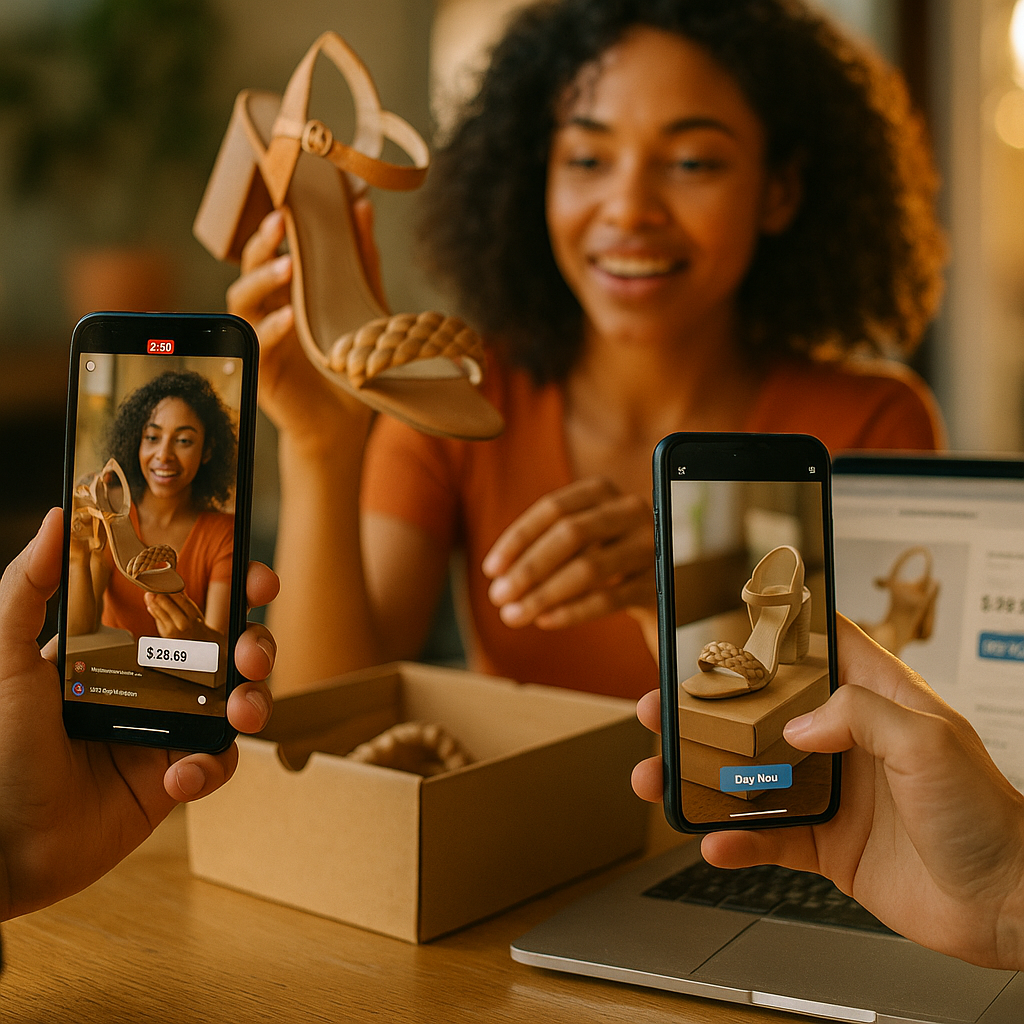
Every scroll is now a storefront. eMarketer projects live commerce alone will drive well over $50 billion in US sales, and that’s before counting AR try-ons and shoppable Reels tucked into every feed. The question isn’t whether shoppable Reels and their commerce cousins matter — it’s whether your brand has the tech stack, creator relationships, and attribution model to capture the moment before a customer’s thumb moves on.
Entertainment and checkout used to live in separate tabs. Not anymore. In 2026, the gap between “I saw it” and “I bought it” has collapsed into a single swipe, and brands that haven’t rebuilt their funnel around that reality are leaving revenue on the table.
The Convergence Is Structural, Not Cosmetic
For years, “social commerce” meant a link in bio and a prayer. That era is over. Instagram, TikTok, and YouTube have rebuilt their core interfaces so that product tagging, live checkout, and AR previews are native features, not bolt-ons. Meta’s shoppable Reels now support in-feed checkout without leaving the app, and TikTok Shop has pushed creator-led commerce so aggressively that it’s reshaping how creators get paid — a shift covered in detail in our piece on tying creator pay to sales rather than follower counts.
This isn’t a UX tweak. It’s a fundamental rewiring of the purchase path. Traditional funnels assumed a gap between discovery and decision — time for consideration, comparison shopping, maybe a cart abandonment email. Shoppable Reels and live commerce compress that gap to near zero. The entertainment moment is the point of sale.
When discovery and checkout happen in the same three seconds, your creative approval workflow becomes a bottleneck for revenue, not just brand safety.
That’s a big claim, but think it through. If a shoppable Reel converts in-app, every hour spent on legal review or brand-safety sign-off is an hour of lost impulse-purchase momentum. Brands still running week-long approval cycles are structurally mismatched with how the channel actually converts.
Live-Stream Commerce: Bigger in Numbers, Trickier in Practice
Live shopping has real traction in the US now, not just in China’s mature Taobao Live ecosystem. Amazon Live, TikTok Live, and YouTube’s shopping streams have all expanded creator tools for real-time selling. But live commerce has a dirty secret: it’s operationally brutal.
Unlike a pre-recorded Reel, a live stream can’t be storyboarded to the second. Creators are fielding comments, answering pricing questions, and improvising product demos in real time — all while a brand’s legal team wants assurance no unapproved claims get made on camera. This is exactly the tension explored in how creator studios are rewriting vetting and contract rules: brands need faster trust-building with creators because there’s no time for line-by-line script approval mid-stream.
Practically, that means:
- Pre-negotiated claim guardrails instead of scripted lines
- Real-time moderation tools with a human (or AI-assisted) monitor on standby
- Clear disclosure protocols baked into the creator brief, not bolted on after a compliance complaint
Skip these steps and you’re one off-hand comment away from an FTC complaint. The FTC’s endorsement guidance applies just as much to live commerce as it does to static posts — arguably more, since there’s no edit button once something’s said on air.
AR Try-Ons Are Quietly Becoming Table Stakes
Augmented reality used to be a novelty — a fun filter, a gimmick for beauty brands with big budgets. Not anymore. Snap, Meta, and Pinterest have all shipped AR shopping tools that let users virtually try on makeup, glasses, furniture placement, even sneakers, directly inside the app they’re already scrolling. Pinterest’s AR try-on for beauty products reportedly lifts conversion meaningfully versus static product pages, and that pattern is repeating across categories.
Why does this matter for brand strategy? Because AR removes the single biggest friction point in mobile commerce: uncertainty. “Will this actually look right on me?” used to require a return-and-reorder cycle. Now it’s answered in the same swipe that discovered the product. That’s a direct hit on cart abandonment and return rates — two metrics every CFO cares about.
Brands investing in AR aren’t just chasing novelty engagement. They’re buying down risk in the purchase decision itself. That’s a very different ROI conversation than “did the filter go viral.”
What This Means for Budget Allocation
If entertainment and checkout are merging, your media mix needs to reflect that the “top of funnel” and “bottom of funnel” are increasingly the same placement. That has real implications for how you split spend between macro creators, micro-creators, and platform-native commerce tools.
Micro-creators already win a disproportionate share of budget because they convert better per dollar — a trend backed by affiliate data showing why micro-creators win ad budgets and echoed in analysis showing micro-creators now claiming roughly half of influencer budgets. Shoppable commerce amplifies that advantage. A micro-creator’s live stream or Reel with an embedded product tag converts a smaller but hotter audience directly, without the brand-safety overhead of a celebrity partnership.
The creators winning shoppable-commerce budgets aren’t the ones with the biggest reach — they’re the ones whose audience trusts a product recommendation enough to tap “buy” without leaving the app.
That trust dynamic is why affiliate monetization is replacing flat fees across the industry. When checkout happens inside the content, pay-per-sale models align creator incentives with actual conversion, not just impressions. It’s a cleaner ROI story for finance teams too, echoing the shift toward CFO-friendly influencer deal structures.
Attribution Gets Harder Before It Gets Easier
Here’s the part nobody wants to admit: in-app checkout is a black box for a lot of brands. When a purchase happens entirely inside TikTok Shop or Instagram Checkout, your existing UTM-based attribution stack often can’t see it clearly. You get platform-reported sales figures, but reconciling those against your own CRM and inventory systems takes real engineering work.
This is the same transparency gap showing up across AI-driven marketing more broadly. As covered in why attribution must go transparent, marketers are increasingly skeptical of platform-reported numbers they can’t independently verify. Shoppable commerce inherits that same trust problem, just with real transaction dollars attached instead of soft engagement metrics.
Practical fixes brands are adopting now:
- Requiring platform-level sales APIs be piped into a unified dashboard rather than trusting native analytics alone
- Running incrementality tests — holdout regions or audiences — to validate that shoppable placements are adding sales, not just cannibalizing existing demand
- Negotiating data-sharing terms into creator and platform contracts upfront, not after a quarter of unexplained numbers
None of this is exciting work. But it’s the difference between a shoppable-commerce strategy that’s actually profitable and one that just looks busy on a dashboard.
Where AI Fits Into the Mix
AI is doing double duty in this convergence: it’s helping brands produce shoppable content at the volume these formats demand, and it’s helping platforms personalize which products get surfaced to which viewers. On the production side, brands facing a content volume crisis on flat budgets are leaning on AI tools to generate the sheer quantity of Reels and live-stream assets this channel demands — a trend detailed in how teams are producing more content with the same headcount.
But there’s a catch. AI-generated shoppable content runs into the same authenticity headwinds hitting AI advertising generally. As explored in why AI-generated ad backlash is now a permanent trust problem, audiences are getting sharper at spotting synthetic content, and a shoppable Reel that feels like an AI-generated infomercial converts worse than one that feels like a genuine recommendation. The brands winning here use AI to scale production logistics — captioning, variant testing, localization — while keeping a human creator’s voice and face front and center for the actual sale.
Tools like HubSpot and Sprout Social have both expanded commerce-adjacent reporting features, reflecting how mainstream this convergence has become — it’s not a niche creator-economy problem anymore, it’s a core marketing-ops requirement.
A Quick Reality Check on Platform Bets
Not every platform is equally committed to shoppable formats, and betting your commerce strategy on the wrong one is expensive. Meta, Reddit, Google, and other major players are making distinct infrastructure bets right now, and understanding where platforms are placing their tech investments tells you a lot about where shoppable formats will mature fastest versus where they’ll stay experimental.
TikTok Shop and Instagram’s checkout tools have the deepest current investment. YouTube is catching up through live shopping integrations tied to its Shorts ecosystem. Pinterest owns the AR try-on lane for visual-discovery categories like home and beauty. Snap remains strong in AR but weaker in native checkout completion. Match your category and audience to the platform that’s actually built the commerce rails you need, not the one with the flashiest demo reel.
Next Step
Audit one shoppable Reel or live-stream campaign this quarter against three questions: can you trace the sale independently of platform-reported numbers, does your approval workflow move fast enough to match real-time commerce, and is the creator paid on performance rather than a flat fee? Fix whichever answer is weakest before scaling spend further.
FAQs
What exactly counts as shoppable Reels versus live-stream commerce?
Shoppable Reels are short-form, pre-recorded videos with embedded product tags that let viewers purchase without leaving the app. Live-stream commerce is the real-time version — a creator or brand selling products during a live broadcast, often with limited-time offers and interactive Q&A driving urgency.
Is AR shopping actually worth the production investment for mid-size brands?
For categories with high return rates or fit uncertainty (beauty, apparel, home goods), AR try-on tools often pay for themselves through reduced returns and higher conversion confidence. For low-consideration purchases, the ROI case is weaker and budget is better spent elsewhere.
How should brands attribute sales from in-app checkout features?
Don’t rely solely on platform-native reporting. Pipe platform sales APIs into a unified dashboard, run periodic incrementality tests, and negotiate data-sharing access into creator and platform contracts before campaigns launch, not after.
Are micro-creators or macro influencers better suited for shoppable commerce formats?
Micro-creators generally convert better per dollar spent because their audiences trust product recommendations more deeply. Macro influencers still have a role for broad awareness, but the actual “tap to buy” moment tends to favor smaller, higher-trust creator relationships.
What compliance risks are unique to live-stream commerce?
Real-time claims can’t be edited after the fact, making live streams higher-risk for FTC endorsement violations. Brands should pre-negotiate claim guardrails with creators and have real-time moderation in place rather than relying on post-hoc script review.
Top Influencer Marketing Agencies
The leading agencies shaping influencer marketing in 2026
Agencies ranked by campaign performance, client diversity, platform expertise, proven ROI, industry recognition, and client satisfaction. Assessed through verified case studies, reviews, and industry consultations.
Moburst

-
2

The Shelf
Boutique Beauty & Lifestyle Influencer AgencyA data-driven boutique agency specializing exclusively in beauty, wellness, and lifestyle influencer campaigns on Instagram and TikTok. Best for brands already focused on the beauty/personal care space that need curated, aesthetic-driven content.Clients: Pepsi, The Honest Company, Hims, Elf Cosmetics, Pure LeafVisit The Shelf → -
3

Audiencly
Niche Gaming & Esports Influencer AgencyA specialized agency focused exclusively on gaming and esports creators on YouTube, Twitch, and TikTok. Ideal if your campaign is 100% gaming-focused — from game launches to hardware and esports events.Clients: Epic Games, NordVPN, Ubisoft, Wargaming, Tencent GamesVisit Audiencly → -
4

Viral Nation
Global Influencer Marketing & Talent AgencyA dual talent management and marketing agency with proprietary brand safety tools and a global creator network spanning nano-influencers to celebrities across all major platforms.Clients: Meta, Activision Blizzard, Energizer, Aston Martin, WalmartVisit Viral Nation → -
5

The Influencer Marketing Factory
TikTok, Instagram & YouTube CampaignsA full-service agency with strong TikTok expertise, offering end-to-end campaign management from influencer discovery through performance reporting with a focus on platform-native content.Clients: Google, Snapchat, Universal Music, Bumble, YelpVisit TIMF → -
6

NeoReach
Enterprise Analytics & Influencer CampaignsAn enterprise-focused agency combining managed campaigns with a powerful self-service data platform for influencer search, audience analytics, and attribution modeling.Clients: Amazon, Airbnb, Netflix, Honda, The New York TimesVisit NeoReach → -
7

Ubiquitous
Creator-First Marketing PlatformA tech-driven platform combining self-service tools with managed campaign options, emphasizing speed and scalability for brands managing multiple influencer relationships.Clients: Lyft, Disney, Target, American Eagle, NetflixVisit Ubiquitous → -
8

Obviously
Scalable Enterprise Influencer CampaignsA tech-enabled agency built for high-volume campaigns, coordinating hundreds of creators simultaneously with end-to-end logistics, content rights management, and product seeding.Clients: Google, Ulta Beauty, Converse, AmazonVisit Obviously →