


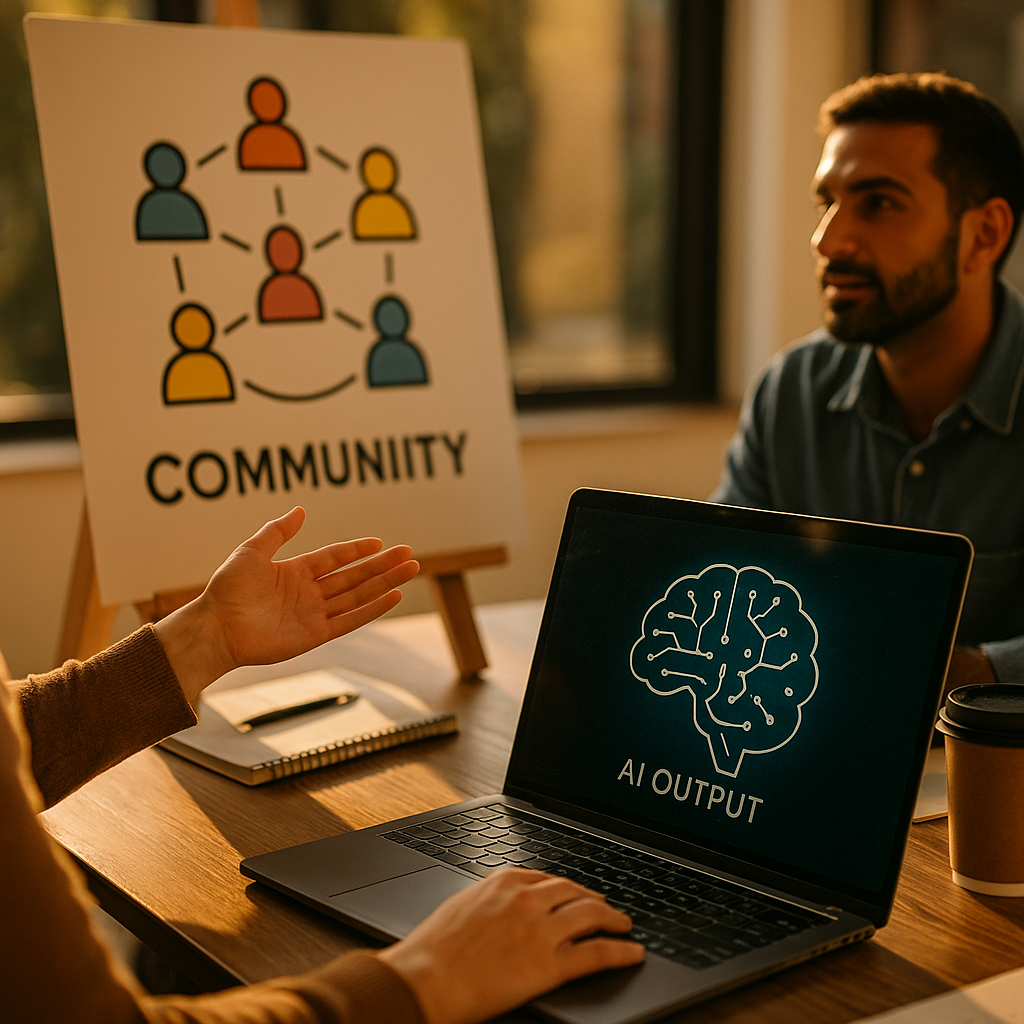
85% of marketers now say community signals — comments, saves, remix rates, duets — carry more weight than AI-generated performance predictions when shaping creative strategy. That’s not a fringe opinion anymore. It’s the new center of gravity, according to fresh WARC-Lions data, and it should worry anyone who’s spent the last two years building a strategy stack around AI-first insight tools.
Why the reversal? Because AI models are trained on what already worked, not on what’s about to work. Communities, by contrast, tell you in real time.
The Data, Plainly
The WARC-Lions research, drawn from a global survey of marketing decision-makers alongside Cannes Lions creative effectiveness case studies, found that 85% of respondents now rank “community and audience signals” above AI-generated recommendations when it comes to guiding creative direction. Only 34% said they’d trust an AI tool’s creative scoring without a human or community sanity check first.
That’s a meaningful gap. Two years ago, plenty of agencies were pitching AI-first creative pipelines as the future — generate, test, optimize, repeat, with minimal human friction. The data suggests that future stalled out before it fully arrived.
Marketers aren’t rejecting AI. They’re rejecting AI as the final word. The 85% figure marks a shift toward AI-plus-community hybrid models, not a retreat to pre-AI workflows.
What counts as a “community signal” in this context? Comment sentiment, remix and duet volume, save-to-share ratios, creator-initiated organic reposts, and unprompted UGC. These are messier metrics than a clean AI confidence score. But they’re harder to game, and they reflect actual human reaction rather than a model’s best guess at one.
Why AI Output Alone Keeps Falling Short
AI creative tools are excellent at pattern-matching against historical data. Ask an AI model to predict which hook will perform best based on last quarter’s top performers, and it’ll do that well. Ask it to anticipate a cultural shift, a meme mutation, or a backlash brewing in the comments section? Much shakier ground.
This is the core tension. Creative strategy isn’t just about optimizing known variables. It’s about sensing what’s about to matter. Communities do that instinctively — they signal boredom, excitement, or discomfort with content days before performance dashboards catch up. AI models, trained on lagging data, are structurally late to that party.
There’s also a trust problem layered on top. Our own reporting on the AI trust paradox found that as brands lean harder into AI-generated content and decisioning, consumer trust in that output actually drops. Audiences are getting sharper at spotting synthetic creative, and they’re penalizing brands that lean on it without a human, community-vetted layer on top. Add in the well-documented AI-generated ad backlash, and you start to see why 85% of marketers are hedging their creative bets on community input instead of pure model output.
The Attribution Gap Makes This Worse
Part of the reason marketers have soured on AI-only guidance is attribution opacity. If an AI tool tells you a concept will perform well, but can’t explain which signal drove that score, you’re flying blind when you need to defend the call to a CMO or a client. Community signals, on the other hand, are legible. You can screenshot the comment thread. You can show the remix count. You can point to the exact moment a creator’s audience reacted.
This transparency gap is a recurring theme in our coverage — see why attribution must go transparent for the broader argument. The short version: opaque AI scoring is a liability when budgets get scrutinized, and community data is the antidote because it’s inherently traceable.
What This Means for Budget and Vendor Decisions
If you’re allocating creative testing budget for the next planning cycle, this data has direct implications.
- Don’t retire your AI tools. Use them for volume and speed, not final judgment calls.
- Build community listening into the creative loop earlier. Not just post-launch analytics, but pre-launch sentiment checks with micro-communities or creator audiences.
- Reweight vendor evaluation criteria. Ask MarTech vendors how their AI scoring incorporates real-time community signal, not just historical performance data.
- Budget for human review layers. The cheapest AI-only pipeline isn’t cheap if it produces creative that tanks on arrival because nobody sanity-checked it against actual audience mood.
This lines up with a broader vendor consolidation trend we’ve tracked. As AI funding tightens, some MarTech platforms are cutting corners on the human-in-the-loop features that made their tools trustworthy in the first place. We covered this risk in detail in how the AI funding shift puts your vendor stack at risk. If your creative tool’s roadmap is quietly deprioritizing community-data integrations in favor of cheaper, pure-model outputs, that’s a red flag worth raising in your next vendor review.
Micro-Creators Are the Clearest Proof Point
Nowhere is the community-over-AI shift more visible than in micro-creator performance. Micro-creators succeed precisely because their audiences function as tight, high-trust communities — the opposite of a cold AI model guessing at broad appeal. Affiliate data has repeatedly shown that micro-creators win ad budgets because their community engagement converts at a rate broad-reach AI targeting simply can’t match.
The trend has legs. Recent budget shifts show micro-creators now claim half of influencer budgets, and a parallel report on reallocating budgets toward micro-creators makes the same case with a slightly different data cut. Whichever number you trust, the direction is consistent: brands are chasing community density over algorithmic reach.
Platform incentive structures are following the same logic. TikTok Go now ties creator pay to sales, not followers, which is a tacit admission that follower count and AI-modeled reach predictions are weaker signals than actual community-driven conversion.
How to Operationalize a Community-First Creative Loop
Talk is easy. Building the process is harder. Here’s a practical structure that’s been working for teams navigating this shift:
- Pre-production sentiment pulse. Before greenlighting a creative concept, run it past a small panel of engaged community members or a creator’s most active followers. Fifteen minutes of feedback beats a week of AI A/B testing on the wrong concept.
- AI for scale, humans for judgment. Let AI tools handle variant generation and initial filtering. Reserve final creative selection for a human review informed by community reaction data.
- Track remix and duet behavior as a leading indicator. Unprompted remixing is one of the strongest predictors of organic reach, and it’s a signal AI models still struggle to anticipate reliably.
- Close the loop with UGC repurposing. When a piece of creative earns strong community response, extend its life across formats rather than starting from scratch. Our UGC repurposing playbook lays out exactly how to stretch one validated asset across three platforms without diluting what made it work.
- Audit creative waste regularly. Teams that skip community validation tend to greenlight more creative than they need, then discover much of it never should have shipped. We break down that inefficiency in fixing the 40% creative waste problem.
None of this requires abandoning AI tooling. It requires demoting AI from decision-maker to research assistant. That’s a subtle but important distinction, and it’s exactly what the WARC-Lions data is telling us marketers have already started doing instinctively.
The Bigger Signal Behind the Signal
Step back, and this data point is really about trust infrastructure. Marketers spent the last few years building AI into every layer of the creative pipeline, often because vendors promised speed and cost savings. What they’re discovering is that speed without community validation just means shipping the wrong thing faster.
Industry benchmarks from eMarketer and Statista back this up: engagement quality metrics, not raw reach or AI-predicted scores, increasingly correlate with campaign ROI. Meanwhile, platforms like Meta for Business and TikTok Ads have both expanded creator- and community-driven measurement tools in their ad platforms, a tacit acknowledgment that advertisers want this data too. Even Sprout Social’s own research on social listening echoes the same pattern: community sentiment is becoming a first-class strategic input, not an afterthought.
This isn’t really an AI-versus-humans story. It’s a recalibration of which signals deserve the final say. For now, the 85% have spoken: community wins the tiebreaker.
Next Step
If your current creative approval process treats AI scoring as the last checkpoint before launch, flip it. Make community sentiment the final gate, and use AI for what it’s actually good at: speed, scale, and pattern-matching against a brief your community has already validated.
FAQs
What are “community signals” in creative strategy?
Community signals are audience-generated reactions to creative content, including comment sentiment, save and share ratios, remix and duet activity, and organic reposts. They reflect real-time human response rather than historical performance patterns.
Does this mean marketers are abandoning AI tools?
No. The WARC-Lions data shows marketers are demoting AI from final decision-maker to research and scaling assistant, while reserving final creative judgment for human review informed by community data.
Why don’t AI models predict creative performance as reliably as community signals?
AI models are trained on historical data and tend to lag behind emerging cultural shifts or audience mood changes. Communities react in real time, often signaling interest or backlash before performance dashboards reflect it.
How can brands start incorporating community signals into creative testing?
Start with a pre-production sentiment pulse using a small panel of engaged followers or community members, then track remix and duet behavior post-launch as a leading indicator of organic reach.
Is this trend connected to the rise of micro-creators?
Yes. Micro-creators tend to have tighter, higher-trust communities, which is part of why affiliate and budget data consistently show them outperforming broader, AI-targeted reach strategies on conversion.
FAQs
What are “community signals” in creative strategy?
Community signals are audience-generated reactions to creative content, including comment sentiment, save and share ratios, remix and duet activity, and organic reposts. They reflect real-time human response rather than historical performance patterns.
Does this mean marketers are abandoning AI tools?
No. The WARC-Lions data shows marketers are demoting AI from final decision-maker to research and scaling assistant, while reserving final creative judgment for human review informed by community data.
Why don’t AI models predict creative performance as reliably as community signals?
AI models are trained on historical data and tend to lag behind emerging cultural shifts or audience mood changes. Communities react in real time, often signaling interest or backlash before performance dashboards reflect it.
How can brands start incorporating community signals into creative testing?
Start with a pre-production sentiment pulse using a small panel of engaged followers or community members, then track remix and duet behavior post-launch as a leading indicator of organic reach.
Is this trend connected to the rise of micro-creators?
Yes. Micro-creators tend to have tighter, higher-trust communities, which is part of why affiliate and budget data consistently show them outperforming broader, AI-targeted reach strategies on conversion.
Top Influencer Marketing Agencies
The leading agencies shaping influencer marketing in 2026
Agencies ranked by campaign performance, client diversity, platform expertise, proven ROI, industry recognition, and client satisfaction. Assessed through verified case studies, reviews, and industry consultations.
Moburst

-
2

The Shelf
Boutique Beauty & Lifestyle Influencer AgencyA data-driven boutique agency specializing exclusively in beauty, wellness, and lifestyle influencer campaigns on Instagram and TikTok. Best for brands already focused on the beauty/personal care space that need curated, aesthetic-driven content.Clients: Pepsi, The Honest Company, Hims, Elf Cosmetics, Pure LeafVisit The Shelf → -
3

Audiencly
Niche Gaming & Esports Influencer AgencyA specialized agency focused exclusively on gaming and esports creators on YouTube, Twitch, and TikTok. Ideal if your campaign is 100% gaming-focused — from game launches to hardware and esports events.Clients: Epic Games, NordVPN, Ubisoft, Wargaming, Tencent GamesVisit Audiencly → -
4

Viral Nation
Global Influencer Marketing & Talent AgencyA dual talent management and marketing agency with proprietary brand safety tools and a global creator network spanning nano-influencers to celebrities across all major platforms.Clients: Meta, Activision Blizzard, Energizer, Aston Martin, WalmartVisit Viral Nation → -
5

The Influencer Marketing Factory
TikTok, Instagram & YouTube CampaignsA full-service agency with strong TikTok expertise, offering end-to-end campaign management from influencer discovery through performance reporting with a focus on platform-native content.Clients: Google, Snapchat, Universal Music, Bumble, YelpVisit TIMF → -
6

NeoReach
Enterprise Analytics & Influencer CampaignsAn enterprise-focused agency combining managed campaigns with a powerful self-service data platform for influencer search, audience analytics, and attribution modeling.Clients: Amazon, Airbnb, Netflix, Honda, The New York TimesVisit NeoReach → -
7

Ubiquitous
Creator-First Marketing PlatformA tech-driven platform combining self-service tools with managed campaign options, emphasizing speed and scalability for brands managing multiple influencer relationships.Clients: Lyft, Disney, Target, American Eagle, NetflixVisit Ubiquitous → -
8

Obviously
Scalable Enterprise Influencer CampaignsA tech-enabled agency built for high-volume campaigns, coordinating hundreds of creators simultaneously with end-to-end logistics, content rights management, and product seeding.Clients: Google, Ulta Beauty, Converse, AmazonVisit Obviously →