


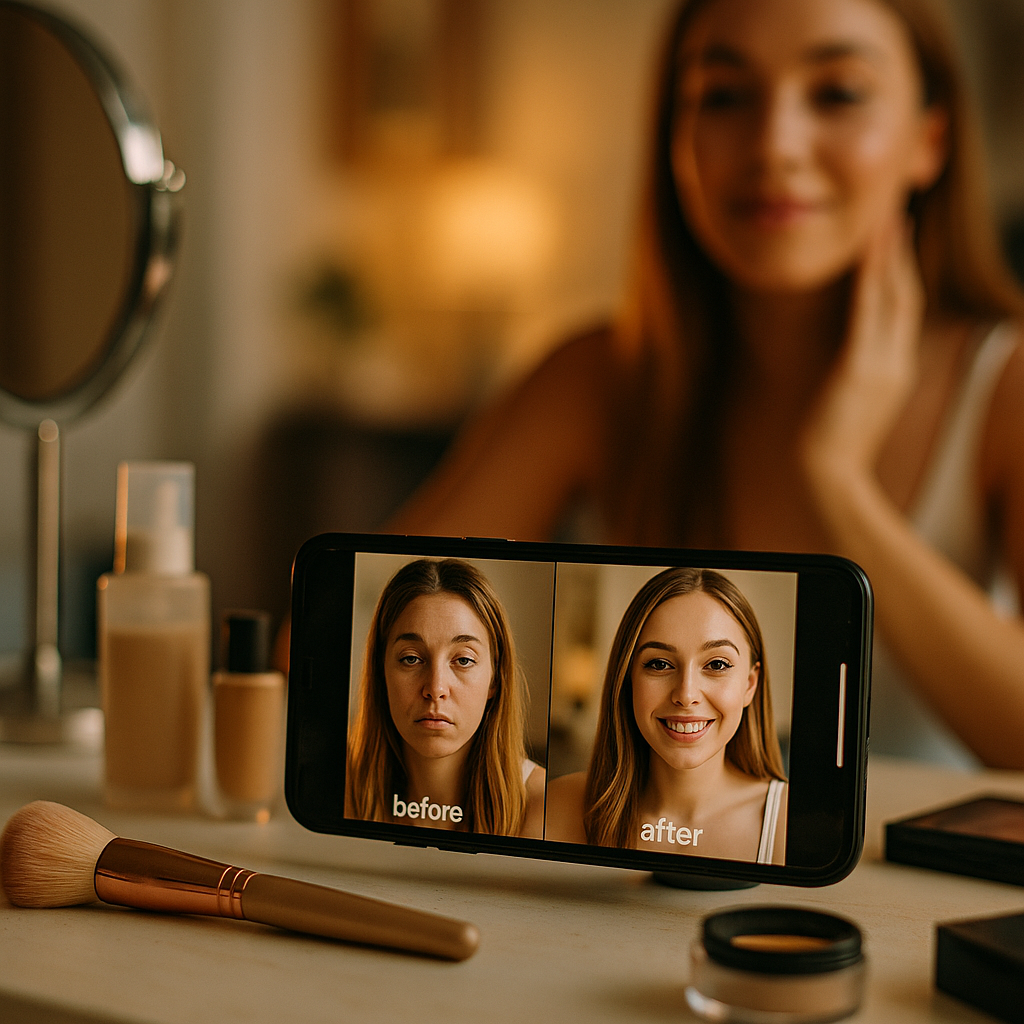
73% of consumers say they’ve felt misled by a “results” video at least once — and the FTC is watching transformation content closer than almost any other creator format. The overnight transformation format is one of the highest-converting styles in influencer marketing right now, but compress a 30-day result into an 8-second cut and you’ve likely built a deceptive ad, not a viral hit.
This is the tension brands live in. The format works because it’s fast, satisfying, and built for short attention spans. It also happens to sit on top of some of the FTC’s clearest enforcement priorities: unsubstantiated claims, misleading time compression, and undisclosed material connections. Get the structure right and you get a scroll-stopping asset. Get it wrong and you get a warning letter, or worse, a consent order.
Why This Format Keeps Winning (and Keeps Getting Flagged)
Before-and-after content converts because it does the persuasion work for you. No claim needed — the viewer draws their own conclusion from the visual delta. That’s exactly why regulators scrutinize it so heavily. A demonstration implies a claim even when no one says a word.
The “overnight” framing specifically compresses a longer results timeline into something that reads as immediate. Skin routines, weight-loss teas, teeth whitening, muscle recovery gadgets — these categories lean hardest into the format because the visual payoff is dramatic. It’s also why the FTC has issued repeated guidance on testimonials and endorsements touching exactly this kind of content.
If the “after” shot was captured weeks later, editing it to look like the next morning isn’t a stylistic choice — it’s a material misrepresentation the FTC can act on.
The core issue isn’t the format itself. It’s the gap between what’s shown and what’s true. Brands that treat that gap as a legal afterthought are the ones who end up in enforcement case studies.
What “Substantiation” Actually Means Here
The FTC’s standard is simple to state and hard to operationalize: you need competent and reliable evidence to back any claim a reasonable consumer would take from the content, including implied claims. A before-and-after video makes an implied claim about typical results, timeframe, and causation. All three need support.
- Typical results: If the “after” shot isn’t representative of what most users experience, you need a clear and conspicuous disclosure saying so — not a tiny caption buried in the corner.
- Timeframe: If results took four weeks and the video implies overnight, that’s a compression problem, not a creative one.
- Causation: Lighting, filters, posture, and makeup can all manufacture an “effect.” If the product isn’t the actual driver, the claim is unsubstantiated regardless of intent.
Read the FTC’s own endorsement guidance materials if you haven’t recently. They’ve been updated with creator economy scenarios in mind, and the examples map almost exactly onto formats brands are running today.
Structuring the Format So It Still Converts
Here’s the good news: compliance doesn’t have to kill the format. It just changes how you brief it.
1. Anchor the timeline on-screen, not in a caption
Burned-in text beats caption text every time, both for compliance and for retention (viewers skip captions, they don’t skip on-screen graphics). “Day 1” and “Day 21” stamped directly into the footage removes ambiguity about what “overnight” actually means in your campaign. If the true results took three weeks, say three weeks — and let the pacing of the edit still feel fast.
2. Separate the emotional hook from the claim
The opening seconds can carry the hook — surprise, drama, a jump cut. But the actual product claim (what it does, how fast, for whom) needs to live somewhere the FTC would consider “clear and conspicuous”: on-screen text, spoken audio, or both, not just vibes implied by editing.
3. Require creators to disclose atypical results
If your top-performing creator got dramatic results in an unusually short window, that’s not the footage to scale as your primary proof point without a disclaimer. “Results not typical, based on X week program” isn’t a legal formality — it’s the line between an ad and a lawsuit.
This is similar to the discipline brands are already applying in demonstration-first briefs, where the proof has to hold up to skeptical, claim-literate audiences who screenshot everything.
4. Build the brief around a real production timeline
Ask creators to document dates, not just footage. A shot list with timestamps protects both the brand and the creator if a claim gets challenged later. This is table-stakes substantiation infrastructure, the same way brands handling packaging ASMR at scale need documented sourcing to back sensory claims.
The Disclosure Problem Nobody Wants to Talk About
Material connection disclosure is a separate requirement from substantiation, and brands routinely conflate the two. Even a perfectly substantiated transformation video needs #ad or #sponsored disclosed clearly, not hidden in a hashtag pile at the end of a caption.
Platforms have their own disclosure tools on top of the FTC baseline. TikTok’s branded content toggle and Meta’s branded content tools exist precisely so this isn’t left to creator discretion. Require their use contractually. Don’t assume creators know the rules — assume they don’t, and build the disclosure requirement into the brief itself, not an afterthought email.
A substantiated claim with no disclosure is still a violation. A disclosed claim with no substantiation is still a violation. You need both, every time.
Where Brands Get the Editing Wrong
A few recurring mistakes show up across categories:
- Lighting mismatches that imply causation. Warmer, more flattering light in the “after” shot isn’t just an editing choice — it’s evidence manipulation if the product gets credited for what’s actually a lighting rig.
- Speed-ramped transitions with no timestamp. A whip-pan transition from “before” to “after” reads as instantaneous even if a disclaimer exists elsewhere. Visual language overrides text almost every time in consumer perception research.
- Cherry-picked single case studies presented as typical. One dramatic result, scaled across a paid media buy, without an “individual results may vary” disclosure is a textbook FTC risk.
- Vague timeframes like “in no time” or “instantly.” These phrases function as claims even though they feel like throwaway copy. Legal reviews should flag them the same way they’d flag a specific percentage claim.
None of this is exotic guidance. It’s the same substantiation logic brands already apply to product claim formats and sourcing claim videos. Transformation content just makes the stakes more visual, which makes the risk easier to overlook.
A Workable Brief Template
Marketing teams don’t need a legal degree to run this format well. They need a brief that forces the right questions upfront:
- What is the actual, documented timeframe for the result shown?
- Is this result typical, or does it need a disclosure?
- Where does the timeframe appear on-screen, and is it legible for the platform’s average viewing speed?
- Has the creator disclosed the material connection using the platform’s native tool?
- Who signs off legally before the asset goes into paid media rotation?
Run every transformation asset through those five questions before it touches a media budget. It’s a five-minute checklist that prevents a five-figure (or worse) compliance headache. Brands running countdown-style creator content already use similar structured checklists — transformation content just needs its own version tuned to results claims specifically.
Data from eMarketer continues to show creator-led product demonstration content outperforming traditional brand ads on trust metrics — but that trust is exactly what erodes fastest when a transformation turns out to be staged. The format’s biggest asset, believability, is also its biggest liability.
The Takeaway
The overnight transformation format isn’t going away, and it shouldn’t — it works because it’s honest persuasion when built correctly. Structure the timeline on-screen, require documented substantiation before creators film, and separate your hook from your claim. Do that, and you keep the format’s conversion power without inheriting its regulatory risk.
FAQs
Is before-and-after content automatically considered a testimonial under FTC rules?
Not automatically, but it’s treated similarly when it implies typical results. If a creator’s experience is shown as representative, the FTC applies the same substantiation and disclosure standards used for testimonials and endorsements.
How specific does the on-screen timeframe need to be?
Specific enough that a reasonable viewer isn’t misled. “Overnight” needs to mean overnight. If results took three weeks, the video needs to show or state that timeframe clearly, not imply something faster through editing.
Does adding “results not typical” in small text protect the brand?
Only if it’s clear and conspicuous — legible, on-screen long enough to read, and not contradicted by the video’s visual pacing. Buried disclaimers in tiny fonts have already been challenged in FTC actions.
Who is liable if a creator posts a misleading transformation video — the brand or the creator?
Both can be held liable. The FTC has pursued brands, agencies, and creators individually, particularly when the brand provided or approved the misleading footage.
Can lighting or filter changes alone trigger a compliance issue?
Yes, if they create a visual effect that implies the product caused a result it didn’t. Editing that manufactures perceived causation is treated as a substantive misrepresentation, not a stylistic choice.
FAQs
Is before-and-after content automatically considered a testimonial under FTC rules?
Not automatically, but it’s treated similarly when it implies typical results. If a creator’s experience is shown as representative, the FTC applies the same substantiation and disclosure standards used for testimonials and endorsements.
How specific does the on-screen timeframe need to be?
Specific enough that a reasonable viewer isn’t misled. “Overnight” needs to mean overnight. If results took three weeks, the video needs to show or state that timeframe clearly, not imply something faster through editing.
Does adding “results not typical” in small text protect the brand?
Only if it’s clear and conspicuous — legible, on-screen long enough to read, and not contradicted by the video’s visual pacing. Buried disclaimers in tiny fonts have already been challenged in FTC actions.
Who is liable if a creator posts a misleading transformation video — the brand or the creator?
Both can be held liable. The FTC has pursued brands, agencies, and creators individually, particularly when the brand provided or approved the misleading footage.
Can lighting or filter changes alone trigger a compliance issue?
Yes, if they create a visual effect that implies the product caused a result it didn’t. Editing that manufactures perceived causation is treated as a substantive misrepresentation, not a stylistic choice.
Top Influencer Marketing Agencies
The leading agencies shaping influencer marketing in 2026
Agencies ranked by campaign performance, client diversity, platform expertise, proven ROI, industry recognition, and client satisfaction. Assessed through verified case studies, reviews, and industry consultations.
Moburst

-
2

The Shelf
Boutique Beauty & Lifestyle Influencer AgencyA data-driven boutique agency specializing exclusively in beauty, wellness, and lifestyle influencer campaigns on Instagram and TikTok. Best for brands already focused on the beauty/personal care space that need curated, aesthetic-driven content.Clients: Pepsi, The Honest Company, Hims, Elf Cosmetics, Pure LeafVisit The Shelf → -
3

Audiencly
Niche Gaming & Esports Influencer AgencyA specialized agency focused exclusively on gaming and esports creators on YouTube, Twitch, and TikTok. Ideal if your campaign is 100% gaming-focused — from game launches to hardware and esports events.Clients: Epic Games, NordVPN, Ubisoft, Wargaming, Tencent GamesVisit Audiencly → -
4

Viral Nation
Global Influencer Marketing & Talent AgencyA dual talent management and marketing agency with proprietary brand safety tools and a global creator network spanning nano-influencers to celebrities across all major platforms.Clients: Meta, Activision Blizzard, Energizer, Aston Martin, WalmartVisit Viral Nation → -
5

The Influencer Marketing Factory
TikTok, Instagram & YouTube CampaignsA full-service agency with strong TikTok expertise, offering end-to-end campaign management from influencer discovery through performance reporting with a focus on platform-native content.Clients: Google, Snapchat, Universal Music, Bumble, YelpVisit TIMF → -
6

NeoReach
Enterprise Analytics & Influencer CampaignsAn enterprise-focused agency combining managed campaigns with a powerful self-service data platform for influencer search, audience analytics, and attribution modeling.Clients: Amazon, Airbnb, Netflix, Honda, The New York TimesVisit NeoReach → -
7

Ubiquitous
Creator-First Marketing PlatformA tech-driven platform combining self-service tools with managed campaign options, emphasizing speed and scalability for brands managing multiple influencer relationships.Clients: Lyft, Disney, Target, American Eagle, NetflixVisit Ubiquitous → -
8

Obviously
Scalable Enterprise Influencer CampaignsA tech-enabled agency built for high-volume campaigns, coordinating hundreds of creators simultaneously with end-to-end logistics, content rights management, and product seeding.Clients: Google, Ulta Beauty, Converse, AmazonVisit Obviously →