


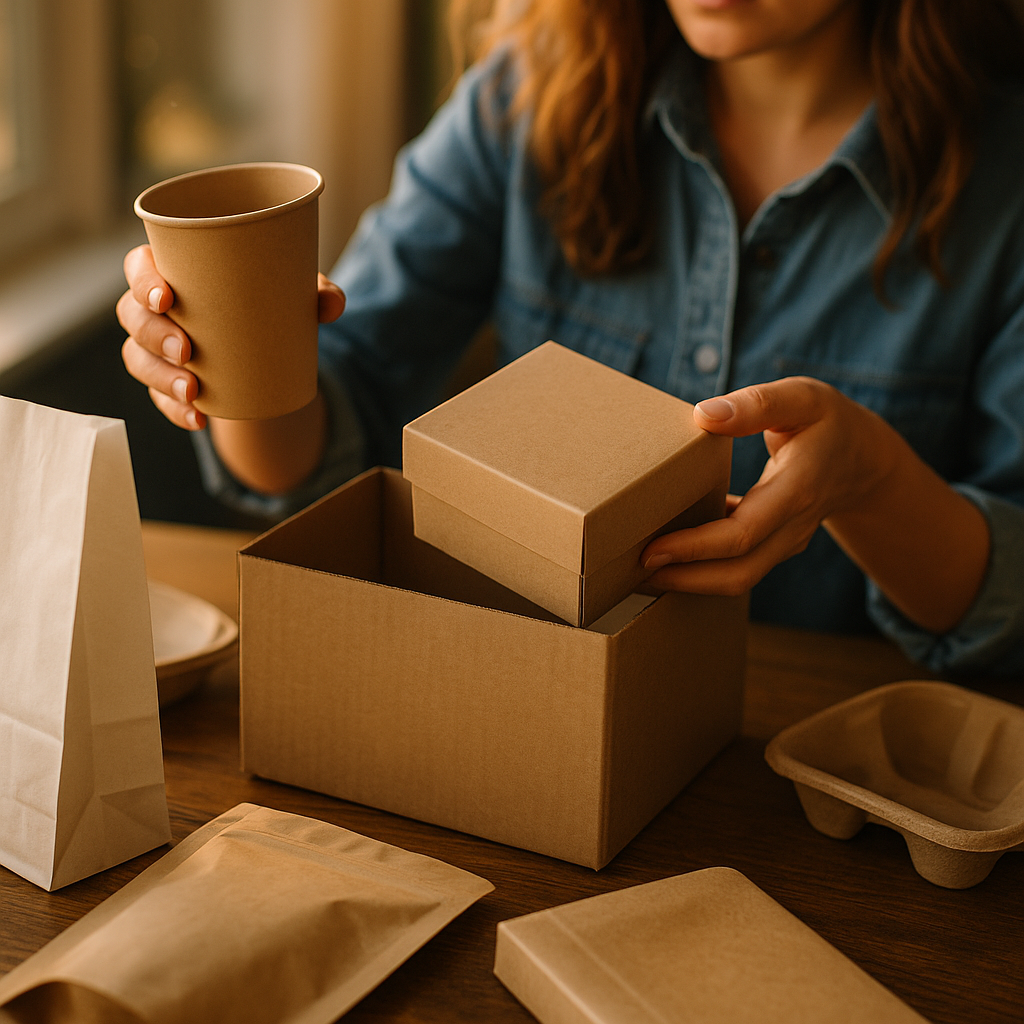
The paperization trend is reshaping how brands present, protect, and ship products in 2025. As regulators tighten rules and customers scrutinize materials, plastic packaging is losing ground to premium fiber solutions that feel better, photograph better, and communicate responsibility. This shift is not cosmetic; it impacts cost, compliance, supply chains, and design systems. What does it take to switch without sacrificing performance?
Premium fiber packaging and why paperization is accelerating
Paperization describes the deliberate replacement of plastic components—trays, clamshells, sleeves, coatings, windows, void fill, and even tapes—with fiber-based alternatives such as paperboard, molded fiber, and cellulose-derived materials. The move is accelerating because it aligns three forces that rarely point in the same direction: regulation, consumer preference, and brand differentiation.
Regulatory pressure is rising across many markets, especially around single-use plastics, recyclability labeling, and extended producer responsibility (EPR). Even when laws vary by region, global brands often standardize to the strictest common denominator to reduce operational complexity. Fiber packaging generally fits more easily into established recycling streams, which makes compliance planning simpler.
Consumer expectations are also shifting from “less plastic” to “prove it.” People increasingly look for packaging that is easy to recycle at home, avoids mixed materials, and signals quality. Fiber delivers a tactile “premium” cue—especially when paired with refined printing, embossing, and well-engineered structure.
Retail and e-commerce realities matter, too. In-store shelves reward packaging that stands out while remaining legible; e-commerce rewards durability and low damage rates. Modern paperboard structures, molded fiber inserts, and right-sized corrugate can compete strongly when engineered correctly.
Paperization is not about swapping one material for another blindly. It is about designing an end-to-end packaging system—primary, secondary, and tertiary—that meets protection needs, communicates brand values, and performs in real logistics conditions.
Sustainable packaging strategy for swapping plastic without greenwashing
A credible sustainable packaging strategy starts with clarity: what problem are you solving—regulatory risk, recyclability, customer perception, plastic reduction targets, or total footprint? Fiber can support these goals, but only if the transition is structured and measurable.
Define “success” in operational terms. Brands that move fastest set a few non-negotiable metrics and track them from concept to rollout:
- Recyclability in target markets: Confirm how municipal systems handle the chosen fiber formats and any barriers (coatings, adhesives, inks, foils).
- Plastic reduction by weight and by component: Weight matters, but so does eliminating hard-to-recycle parts like multilayer films or small plastic pieces.
- Damage rate and returns: For e-commerce, a low damage rate often saves more carbon and cost than any single material change.
- Pack-out efficiency: Right-sizing and cube utilization reduce freight emissions and cost.
- Total cost of ownership: Include tooling, line changeovers, labor, storage, and supplier risk—not only unit cost.
Avoid “paper on the outside, plastic on the inside” pitfalls. One of the most common missteps is adding paperboard sleeves or cartons while keeping the same plastic tray or pouch. That can increase total material and create mixed-material packages that consumers struggle to separate. If a plastic component must remain for barrier or safety reasons, be explicit about why, minimize it, and engineer for easy separation.
Use substantiation, not slogans. Helpful, EEAT-aligned communication includes clear disposal instructions, concise material descriptions, and packaging choices that match local recycling realities. If you claim “recyclable,” ensure that it is practically recyclable where the product is sold, not just technically possible in a few locations.
Build a cross-functional decision team. Packaging engineers, procurement, brand, legal/compliance, and operations must work together early. Paperization touches line speeds, adhesives, ink rub resistance, moisture sensitivity, and transport testing—areas that marketing alone cannot validate.
Plastic-free branding and the premium unboxing experience
Paperization is also a branding opportunity. Fiber does more than reduce plastic; it creates a visual and tactile language that can signal craft, trust, and premium quality. The goal is not to look “eco” in a generic way, but to create a distinct, ownable experience.
Design fiber to feel premium. Premium fiber branding often relies on a few high-impact choices:
- Material selection: High-bulk SBS, uncoated natural kraft, or specialty papers can align with different brand personalities.
- Structural design: Rigid paperboard, book-style opening, integrated inserts, and molded fiber cradles can replace plastic vac trays.
- Print and finishing: Thoughtful typography, minimal ink coverage, and selective finishing can feel upscale without heavy laminations.
- Color strategy: Natural fiber tones can reinforce authenticity, while bright whites can communicate clinical precision for health and beauty.
Make the “how to recycle” message part of the experience. Consumers often hesitate because they are unsure what goes where. A short, clear instruction (for example, “Remove paper seal and recycle carton”) reduces friction. Where mixed materials remain, label the separation steps plainly and design the pack so separation feels intuitive.
Answer the follow-up question: “Will this protect my product?” Premium doesn’t help if the product arrives damaged. Fiber solutions can protect well, but performance must be engineered into the structure: corner strength, crush resistance, puncture resistance, and cushioning. A premium unboxing should also be fast and frustration-free—no excessive layers, no messy fibers shedding, and no “puzzle box” complexity.
Use fiber to reduce visual clutter. Plastic windows, glossy films, and complex multi-part assemblies often exist to show the product or communicate features. Fiber-based structural design can replace these with smart reveals, printed silhouettes, or QR-driven information—while keeping the package more recyclable.
Recyclable paperboard design: barriers, coatings, and performance trade-offs
The hardest part of paperization is usually not the carton. It is the functional performance that plastic used to provide: moisture resistance, grease resistance, oxygen barriers, aroma retention, or heat sealing. In 2025, fiber-based packaging can cover many of these needs, but trade-offs must be managed.
Barrier needs vary by category. Food, supplements, cosmetics, and household products have very different requirements. A soap bar may tolerate a simple paper wrap; a moisture-sensitive powder may need a barrier pouch; a greasy item may need a grease-resistant liner. The right question is: which performance requirements are essential, and which were inherited from legacy packaging?
Coatings and laminations can undermine recyclability. Many high-gloss or high-barrier solutions use plastic films or complex coatings that complicate recycling. Work with suppliers to select barrier technologies designed for fiber recovery systems, and validate them with the recycling guidance relevant to your markets. When in doubt, prioritize designs that keep materials mono-type or easily separable.
Molded fiber is evolving quickly. Molded fiber trays and inserts can replace PET or PS thermoforms in many applications. They often provide excellent cushioning and a premium look, but they can be sensitive to humidity and may require tooling investment and lead-time planning. For products requiring tight tolerances (electronics, glass, fragile cosmetics), specify dimensional requirements early and prototype repeatedly.
Adhesives, inks, and finishes matter. Even if the substrate is recyclable, overly aggressive adhesives, heavy ink coverage, or certain metallic finishes can create processing issues. Ask suppliers about de-inking performance, repulpability, and compatibility with your finishing choices. A packaging engineer can help you meet both aesthetics and processability.
Testing prevents expensive surprises. Before scaling, validate fiber designs through compression tests, drop tests, vibration tests, and climate conditioning that matches real shipping lanes. If your product is shipped through humid regions or stored in non-climate-controlled warehouses, design for that reality. Paperization succeeds when performance is proven, not assumed.
Packaging compliance and EEAT: claims, labeling, and supply-chain credibility
In 2025, packaging decisions are scrutinized by regulators, retailers, and consumers. EEAT-aligned content and packaging claims require accuracy, traceability, and clarity. The goal is to build credibility that holds up to audits and customer questions.
Substantiate every claim. If you claim “plastic-free,” confirm whether adhesives, coatings, inks, labels, and window materials contain plastic. If you claim “recyclable,” specify where and how, and avoid overpromising. If you reference certifications, ensure they are current and applicable to the exact material used.
Document chain-of-custody and sourcing. Premium fiber branding often includes responsibly sourced fiber. Your procurement team should be able to trace supplier declarations and maintain documentation for retailer requirements. This is especially important for global rollouts where different markets have different documentation expectations.
Align labeling with consumer behavior. A technically correct label that confuses people is not helpful. Use straightforward disposal instructions, minimize jargon, and design the pack so the labeled action is easy (for example, make tear strips obvious; avoid hidden plastic components).
Prepare for retailer and marketplace rules. Retailers increasingly have packaging scorecards and restricted-material lists. Early alignment reduces costly redesign cycles. If you sell on marketplaces, expect additional scrutiny around claims and evidence.
Build credibility through transparency. Brands that lead in paperization often share what they changed, why they changed it, and what trade-offs remain. This earns trust because it treats customers as adults and reduces the risk of backlash when packaging isn’t perfect.
Cost, operations, and supplier selection for fiber-based packaging
Paperization can reduce risk and strengthen branding, but it must work operationally. The fastest failures come from underestimating equipment constraints, lead times, and supplier capability.
Understand the real cost drivers. Unit price is only one part of the equation. The biggest cost swings often come from:
- Tooling and changeover: Molded fiber tooling, new dies, and line adjustments can be significant upfront investments.
- Line speed and labor: Some fiber assemblies may require more manual steps unless designed for automation.
- Damage and returns: A small increase in damage rate can erase savings from cheaper materials.
- Freight and storage: Bulky packaging increases warehousing and shipping costs; right-sizing can offset this.
Select suppliers for capability, not only price. Premium fiber branding needs consistency: color, caliper, surface, and print fidelity. Vet suppliers on quality systems, capacity, lead times, and contingency planning. Ask for samples from production runs, not only lab prototypes.
Prototype in phases. A practical approach is:
- Phase 1: Replace secondary packaging (cartons, inserts) where risk is lower.
- Phase 2: Redesign primary packaging components with performance testing.
- Phase 3: Optimize for automation, cost, and global compliance after early market feedback.
Answer the follow-up question: “Will we run out of supply?” Fiber supply chains can be robust, but specialty grades and molded fiber capacity can be constrained. Dual-source critical components where possible, and design packaging that can tolerate small variations in paper properties without failing.
Plan for end-of-life reality. If your packaging depends on a specific recycling stream, confirm that your major markets support it. When markets differ, consider modular designs or region-specific pack components to maintain recyclability without forcing a one-size-fits-none solution.
FAQs: Paperization trend and premium fiber branding
What is the paperization trend in packaging?
Paperization is the shift from plastic packaging components to fiber-based alternatives such as paperboard, corrugate, molded fiber, and cellulose-derived materials. Brands pursue it to improve recyclability, meet regulatory requirements, reduce plastic use, and create a more premium, credible brand experience.
Is fiber packaging always more sustainable than plastic?
Not always. Sustainability depends on design, sourcing, weight, transport efficiency, and end-of-life outcomes. Fiber often performs well where recycling systems are mature, but overly heavy structures, non-recyclable coatings, or increased damage rates can negate benefits. A good decision uses lifecycle thinking and real logistics testing.
How do brands replace plastic trays or clamshells?
Common alternatives include molded fiber trays, paperboard structural inserts, and redesigned cartons that hold products securely without a plastic cavity. Success depends on matching the insert geometry to the product, validating tolerances, and testing for drop, vibration, and humidity exposure.
Do barrier coatings make paperboard non-recyclable?
Some barrier solutions can reduce recyclability, especially when they create a plastic-laminated structure. However, certain coatings are engineered to be compatible with fiber recovery. The best approach is to specify barrier performance requirements first, then select materials that meet both performance and local recycling guidance.
How can a brand avoid greenwashing during a paperization rollout?
Use precise claims, keep documentation for materials and certifications, and provide clear disposal instructions. Be transparent about remaining constraints (for example, a small barrier liner still needed for product safety) and show measurable progress such as plastic reduction by component and improved recyclability in key markets.
What’s the biggest operational risk when switching from plastic to fiber?
Underestimating how fiber behaves in production and shipping. Fiber can be sensitive to humidity, compression, and abrasion, and may require different machinery settings or assembly methods. Prototyping, transit testing, and supplier quality validation reduce the risk of line downtime and product damage.
How long does it take to convert packaging to premium fiber?
Timelines depend on complexity and tooling. Simple carton redesigns can move quickly, while molded fiber conversions or high-barrier applications typically take longer due to tooling, supplier capacity, and performance testing. Phased rollouts often deliver early wins while higher-risk components are engineered.
Can premium fiber branding still look high-end without plastic laminations?
Yes. High-end results come from thoughtful structure, strong typography, controlled color, and selective finishing that avoids heavy films. Brands also use tactile papers, embossing, and well-designed inserts to create a luxury feel while keeping the package more recyclable.
What is the clearest takeaway for brands in 2025?
Paperization works best as a system redesign, not a material swap. When brands align performance requirements, recyclability, claims compliance, and supplier capability, premium fiber packaging can reduce plastic, strengthen brand trust, and improve the customer experience.
Conclusion
Paperization is changing packaging in 2025 because it solves multiple problems at once: it reduces plastic dependence, supports evolving compliance, and enables premium fiber branding that customers recognize instantly. The strongest results come from engineering, not wishful thinking—validate barriers, test shipping performance, and substantiate every claim. Treat paperization as a system upgrade, and it becomes a competitive advantage.