


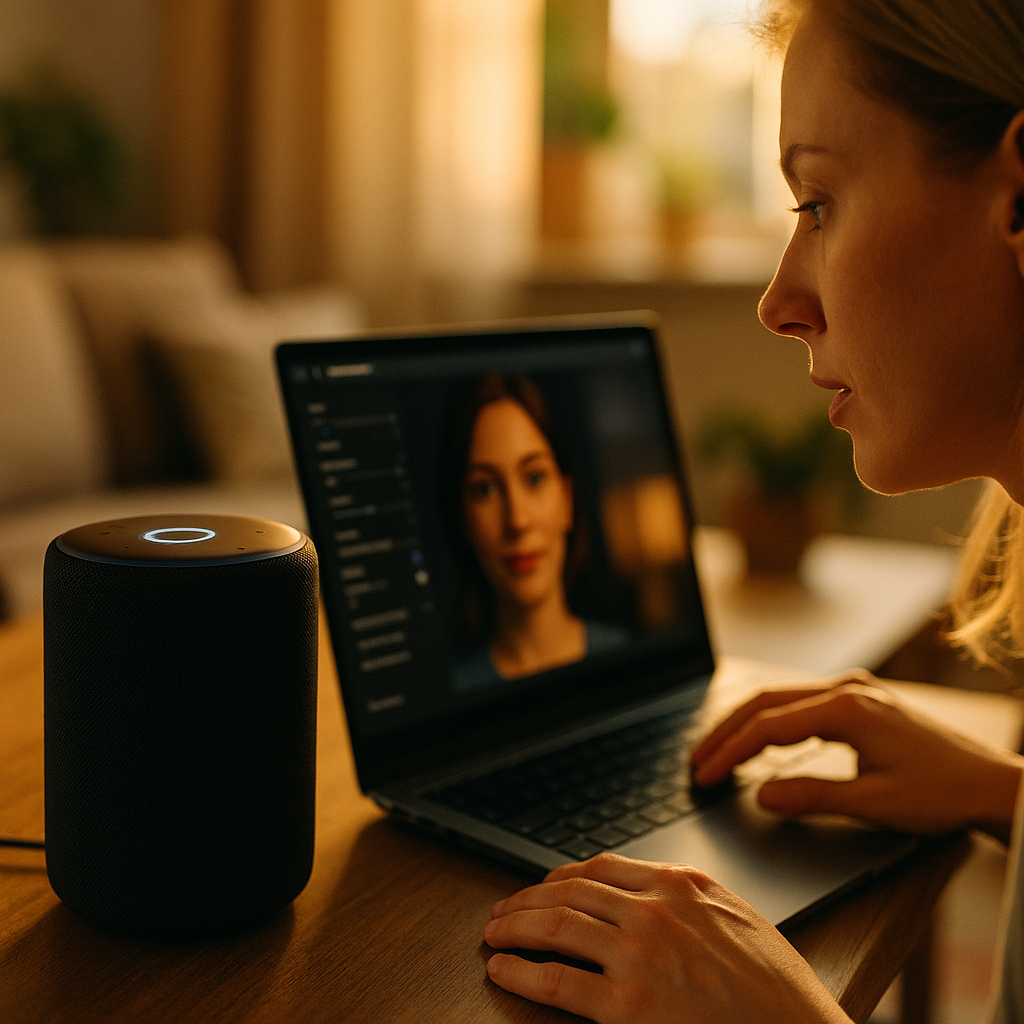
Using AI To Personalize Voice Assistant Brand Personas In Real Time is reshaping how customers experience brands through speech. In 2025, people expect assistants to sound consistent, helpful, and context-aware across devices and channels. The challenge is personalizing without breaking trust or brand identity. Done well, real-time adaptation boosts satisfaction, reduces friction, and strengthens loyalty—so how do you build it responsibly?
Real-time voice personalization: what it is and why it matters
Real-time voice personalization means your assistant adjusts its wording, pacing, prompts, and interaction style during a live conversation based on current context and verified customer signals. It goes beyond static “tone of voice” guidelines by choosing the right persona traits for the moment while staying within brand guardrails.
In practice, this can include:
- Adaptive phrasing: “Want the quick version?” for time-pressed users, versus a guided explanation for new customers.
- Dynamic formality: More formal language for financial tasks, more casual language for routine updates.
- Channel-aware responses: Shorter responses on smart speakers; more structured summaries in-car for safety.
- Situation-aware escalation: Switching to a calm, empathetic style when detecting frustration, and offering a human handoff.
Why it matters now: voice is often the fastest path to an answer, but it’s also the easiest place to disappoint. A persona that feels robotic, inconsistent, or tone-deaf can damage trust quickly. Personalization improves outcomes when it helps users complete tasks with fewer turns, fewer misunderstandings, and clearer next steps.
Readers often ask, “Is this just a nicer script?” No. A script is prewritten. Real-time personalization uses models plus rules to pick the best response strategy during the interaction, based on intent, risk level, and consented user context.
Brand persona AI: building a consistent identity that can flex
Brand persona AI is the system of models, prompts, policies, and evaluation methods that ensures the assistant expresses your brand reliably while still adapting to individual users. The key is to design a persona that is both distinct and bounded.
Start with a persona blueprint that includes:
- Voice principles: 5–8 rules (e.g., “be concise,” “never guilt the customer,” “offer options”).
- Lexicon and taboo list: preferred terms, banned phrases, and brand-specific pronunciations.
- Emotional range: what “empathetic” sounds like for your brand, and what it must avoid (over-familiarity, false apologies).
- Risk tiers: stricter language and confirmations for payments, medical, account changes, or regulated topics.
- Identity boundaries: what the assistant can claim (“I can help you reset your password”) and cannot (“I guarantee this will work”).
Then make it flexible by defining “persona modes” that your AI can select from without improvising a new identity. For example:
- Efficient mode: minimal words, direct confirmations, fewer follow-ups.
- Guided mode: step-by-step, checks understanding, offers examples.
- Reassurance mode: slower pacing, clearer summaries, explicit next steps.
This approach answers a common concern: “If it personalizes, won’t it drift off-brand?” Not if you treat personalization as controlled switching between approved modes and micro-choices (sentence length, verbosity, explanation depth) within strict constraints.
Conversational AI for voice assistants: the real-time personalization stack
Conversational AI for voice assistants requires more than a large language model. Real-time personalization works best as a stack, where each layer has a clear job and measurable outputs.
A practical architecture in 2025 typically includes:
- Speech layer: automatic speech recognition (ASR) tuned for your domain terms, plus text-to-speech (TTS) voices aligned to the brand (with consistent pronunciation dictionaries).
- Orchestration layer: a router that classifies intent, detects risk, selects tools, and chooses a persona mode.
- Context layer: retrieves relevant facts (account status, order info, policy snippets) using permissioned data access and retrieval augmentation.
- Policy and safety layer: enforces compliance, blocks disallowed content, and triggers confirmations or handoffs.
- Response layer: generates the reply in the selected persona mode, then runs checks for tone, clarity, and correctness.
Real-time inputs that can ethically power personalization include:
- Session context: what the user already asked, what’s been answered, and any unresolved steps.
- Device context: car vs. speaker vs. phone (affects brevity and safety constraints).
- Preference settings: “brief answers,” “more detail,” pronunciation choices, accessibility needs.
- Behavioral signals: repeated re-asks, interruptions, or timeouts (used to simplify and confirm).
Answering the likely follow-up: “Can it personalize with emotions?” It can react to conversation dynamics (confusion, frustration) using safe heuristics, but it should avoid claiming to diagnose feelings. A safer pattern is: “I can help fix that. Want the quick steps or the detailed steps?” That feels responsive without overstepping.
Dynamic voice experiences: personalization tactics that improve outcomes
Dynamic voice experiences should prioritize user success metrics, not novelty. The best tactics reduce effort and errors, especially in voice-first contexts where memory load is high.
High-impact tactics include:
- Adaptive turn design: ask fewer questions when confidence is high; ask clarifying questions when ambiguity is high.
- Progressive disclosure: provide the minimal answer first, then offer deeper detail on request.
- Personalized confirmations: “I’m about to reorder the same size as last time—confirm?” when the user has opted in to saved preferences.
- Contextual summaries: at the end of complex flows, recap what was done, what will happen next, and how to undo it.
- Pronunciation and name handling: user-corrected pronunciations stored as a preference, not guessed repeatedly.
- Smart fallback: when the assistant fails, it offers the best next action: rephrase suggestions, a short menu of intents, or a human transfer with context.
To keep experiences coherent, tie tactics to measurable outcomes:
- Task completion rate and time-to-resolution for key intents.
- Turn count (fewer turns usually indicates clearer responses, but watch for premature brevity).
- Re-ask rate (how often users repeat themselves).
- Containment with quality (self-service success without increased complaints).
Readers often worry: “Will personalization slow responses?” It shouldn’t. Use lightweight, cached profile preferences; restrict real-time retrieval to the minimum required; and pre-compile persona modes into templates and system policies so the model doesn’t “think” from scratch on every turn.
Voice assistant privacy and trust: consent, safety, and compliance in 2025
Voice assistant privacy is the foundation of sustainable personalization. If customers feel monitored, personalization backfires. The goal is to be transparent, minimize data, and give users real control.
Implement these trust-first practices:
- Explicit opt-in for personalization: let users choose “personalized” or “standard” mode, and explain what changes (e.g., saved preferences, shorter answers).
- Data minimization: store only what you need (like verbosity preference), not raw transcripts unless essential and consented.
- On-device or edge options: when feasible, keep wake-word detection, basic intent recognition, and sensitive commands local.
- Clear retention policies: simple controls to delete history, reset the persona, and export preferences.
- Risk-based safeguards: stronger authentication for account changes; confirmations for purchases; strict tool permissions.
- Truthfulness controls: require the assistant to cite internal sources in retrieval, refuse unknowns, and avoid confident guessing.
For regulated industries, combine legal review with technical enforcement. It’s not enough to say “don’t give medical advice” in guidelines; you need classifiers, refusal behaviors, and audited logs that show the assistant followed policy.
EEAT in this context means demonstrating:
- Experience: testing flows with real users across accents, environments, and accessibility needs.
- Expertise: domain-reviewed knowledge, especially for policies, billing, and safety topics.
- Authoritativeness: consistent, versioned brand voice standards and governance.
- Trust: transparent consent, robust security, and measurable error reduction over time.
AI voice persona governance: testing, monitoring, and continuous improvement
AI voice persona governance keeps real-time personalization from drifting into inconsistency, bias, or reputational risk. Treat your assistant like a living product: it needs QA, observability, and change control.
Use a governance loop:
- Persona test suite: hundreds of scripted and synthetic conversations that validate tone, disclaimers, and brand rules.
- Golden responses: curated “best answers” for top intents, used to score new model versions.
- Human review: sample interactions weekly, focusing on edge cases: complaints, cancellations, payment failures, and sensitive topics.
- Bias and fairness checks: ensure consistent helpfulness across accents, dialects, and speech impairments; monitor higher fallback rates by segment.
- Safety and hallucination monitoring: detect ungrounded claims, missing citations, or tool misuse; block or route to human support.
- Change management: version prompts, policies, and voices; run A/B tests; roll back quickly if metrics drop.
Operationally, define ownership:
- Brand team: persona principles, lexicon, and boundaries.
- Product team: intent roadmap, user journeys, and success metrics.
- Data/ML team: model selection, evaluation, and monitoring.
- Security/legal: consent flows, retention, and compliance controls.
- Support team: escalation design and feedback from real customer pain points.
If you’re wondering “How do we start without boiling the ocean?” pick 3–5 high-volume intents, design two persona modes (efficient and guided), implement opt-in preferences, and measure before expanding. Real-time personalization is most effective when it grows from proven journeys.
FAQs
What is the difference between a voice assistant persona and a voice assistant voice?
A voice is the audio output (TTS timbre, pace, pronunciation). A persona is the assistant’s character and behavior: word choice, politeness, confidence, empathy style, and decision rules. Real-time personalization can adjust persona traits without changing the underlying TTS voice.
How do you personalize in real time without sounding creepy?
Use explicit opt-in, limit personalization to user-chosen preferences (like brevity), and avoid referencing inferred attributes. Keep personalization functional: “I can keep answers short if you prefer.” Provide a simple “reset personalization” control.
Do we need a large language model to personalize a brand persona?
Not always. Many wins come from orchestration rules, templated responses, and well-designed prompts. LLMs help with natural variation and summarization, but you still need policy constraints, retrieval grounding, and structured tools for account actions.
How do you prevent brand drift when the assistant adapts to different users?
Define approved persona modes, enforce a lexicon and taboo list, and run automated style checks. Route high-risk intents through stricter templates and confirmations. Monitor live conversations and use versioned releases with rollback.
What data is safe to use for personalization?
Use data the user expects and consents to: session context, device context, and explicit preferences. For account data, access only what’s required for the current task and avoid storing raw transcripts unless necessary and consented.
What metrics show real-time persona personalization is working?
Track task completion rate, time-to-resolution, re-ask rate, containment with quality, escalation rate, and post-interaction satisfaction. Also monitor safety metrics: refusal correctness, policy adherence, and ungrounded-claim rates.
In 2025, real-time persona adaptation works when you treat it as a governed product, not a gimmick. Build a brand persona that can switch between approved modes, ground responses in trusted data, and personalize only with clear consent. Measure outcomes, monitor drift, and iterate on high-volume journeys first. The payoff is a voice assistant that feels coherent, helpful, and reliably on-brand.