


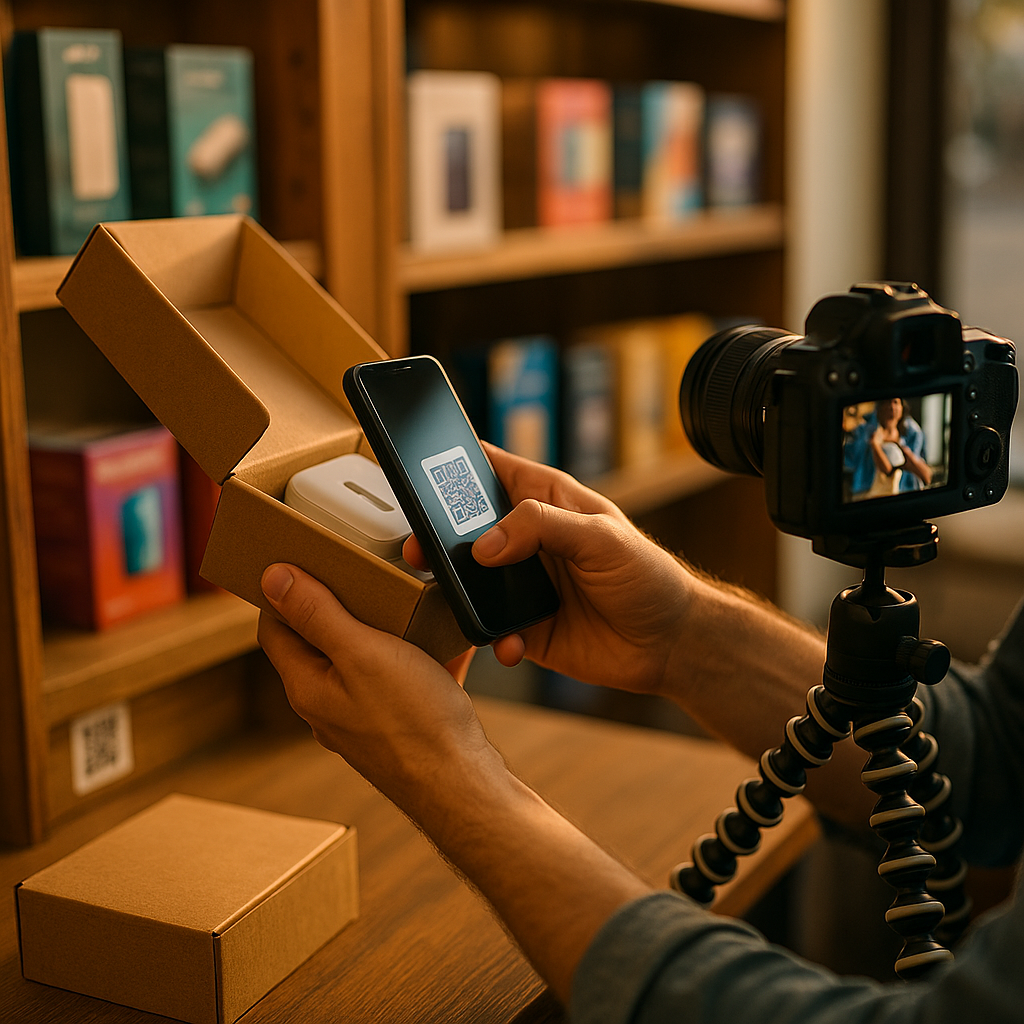
Walmart’s test aisles are quietly running an experiment that should worry every brand still treating packaging as a dead end: shoppers scan a QR code on a shelf tag, and instead of a boring product page, they land on a 30-second creator video showing the exact item being unboxed, tested, and reviewed. Phygital unboxing is no longer a gimmick for luxury beauty drops. It’s becoming a conversion layer brands can’t afford to ignore, especially as retail media networks hunt for new inventory to sell.
What Phygital Unboxing Actually Means
Strip away the buzzword and the concept is simple. A physical touchpoint, usually a QR code, NFC tag, or AR marker on packaging or shelf signage, links directly to creator-made video content. The shopper standing in the aisle (or scrolling a retail app) gets instant access to someone else’s honest unboxing, demo, or review before they decide to buy.
This isn’t new technology. QR codes have been on cereal boxes since the pandemic made contactless everything mandatory. What’s changed is the content on the other end of the scan. Brands used to link to spec sheets and warranty registration. Now they’re linking to the same creator video assets already driving performance on TikTok Shop and Instagram Reels, repurposed as a bridge between shelf and screen.
A shopper who scans a QR code mid-aisle has already self-selected as high intent. That’s a conversion opportunity most brands are currently wasting on a static landing page.
Why Retail Shelves Need a Video Layer Now
In-store foot traffic hasn’t recovered to pre-pandemic highs in most categories, but conversion rates inside physical stores still outperform ecommerce by a wide margin, largely because shoppers can touch, compare, and decide on the spot. The problem is information asymmetry. A shelf tag gives you a price and a star rating. It doesn’t show you how a serum actually absorbs, or whether a blender is loud enough to wake the neighbors.
Creator video fills that gap better than any spec sheet ever could. According to eMarketer, shoppers who watch creator-made product video before purchase convert at meaningfully higher rates than those relying on brand-produced content alone. Pair that behavior with a shelf-level trigger, and you’ve effectively turned every physical store into a content distribution channel.
Retailers are noticing too. Retail media networks at Target, Kroger, and Walmart are actively building QR infrastructure into shelf tags and endcaps, partly because it gives them a new ad product to sell brands: sponsored video placement at the point of decision.
The Format Brands Are Actually Using
Most phygital unboxing campaigns follow a predictable structure, because the format has already been stress-tested on social. The video that gets linked from the shelf is rarely new content shot specifically for in-store use. It’s a repurposed creator asset, usually one of these three types:
- Raw unboxing clips that show the product leaving its packaging, the same format that performs well in product-in-hand UGC on paid social.
- Split-screen demo and reaction content, borrowing the structure covered in split screen reaction demos, where a creator’s genuine surprise sits next to the product in use.
- Short explainer cuts pulled from longer creator scripts, following the beat structure outlined in product explainer scripts built for TikTok Shop.
None of this requires new production budget. That’s the operational win here: brands aren’t commissioning bespoke in-store video, they’re routing existing creator content toward a new trigger point.
Is It Worth the Operational Lift?
Here’s the honest answer: it depends on your attribution stack. QR-linked video only pays off if you can actually measure what happens after the scan. Most brands running phygital pilots are tracking three things: scan rate (how many shoppers engage with the code), watch-through rate (how much video they consume), and basket lift in-store or online within a short attribution window.
Early pilots from CPG and beauty brands suggest scan rates hover in the low single digits of total foot traffic, which sounds unimpressive until you compare it to the conversion value of that segment. Shoppers who scan are already past the discovery phase. They’re standing in front of the product, wallet in hand, looking for a reason to say yes. That’s a fundamentally different audience than a cold social impression.
The bigger cost isn’t the QR code itself, it’s the content pipeline behind it. If your creator video library isn’t organized for rapid retrieval and tagging by SKU, you’ll spend more time hunting for the right asset than building the campaign. This is where a structured hook library approach pays dividends twice: once in paid social, and again when you need to match a specific creator clip to a specific shelf tag at scale.
Building the Bridge Without Breaking the Experience
A few operational realities matter here, and they’re easy to overlook when you’re excited about a new channel.
First, load time kills intent. A shopper scanning in a store with spotty wifi won’t wait ten seconds for a video to buffer. Host content on a lightweight, mobile-optimized page, not a bloated microsite with autoplay carousels and pop-up email captures. Google’s own mobile usability guidance is a decent baseline for this, even outside the search context.
Second, don’t link to a generic brand page. Link to the specific creator video for that specific SKU. A shopper scanning a code on a 16oz jar shouldn’t land on a video reviewing the 32oz version. This sounds obvious, but SKU-level content mapping is where most pilots fall apart, because it requires tighter coordination between merchandising teams and content teams than most orgs currently have.
Third, disclosure still applies. If the linked video is sponsored or gifted creator content, FTC disclosure rules don’t disappear just because the content is sitting behind a QR code instead of a social feed. The FTC’s endorsement guidance applies to any commercial connection between brand and creator, regardless of distribution surface. Build disclosure into the video itself, not just the landing page copy, so it travels with the asset wherever it’s embedded.
The shelf is just a new distribution surface for content you’re already producing. Treat it like a channel, not a gimmick, and the compliance and measurement rules you already follow for social still apply.
What Content Actually Performs at the Shelf
Not every creator format translates well to a QR-triggered, in-aisle viewing moment. Shoppers in this context are standing, often holding a phone and a product, with limited patience. The formats that work tend to be short, visually led, and resolve quickly:
- Sub-30-second unboxing or first-use clips with minimal narration setup
- Comparison-style content, similar to the comparison video format, that answers “why this one over the competitor next to it”
- Silent-friendly edits with on-screen captions, since shoppers often won’t have headphones in or sound on, a principle covered well in silent-first video design
Long-form mini documentaries and founder-led trust narratives, while powerful for upper-funnel brand building, generally underperform at the shelf. Save those for retargeting sequences after the store visit, not the point-of-decision scan itself.
Where This Is Headed
Retail media teams are already pitching phygital video placement as a paid product, which means the QR-to-creator-video bridge won’t stay free real estate for long. Brands moving now get first-mover access to premium shelf locations before retailers formalize pricing tiers. Expect NFC to gradually replace QR in higher-end categories over the next product cycle, since tap-to-view removes the scan friction entirely, but the underlying content strategy stays the same regardless of the trigger mechanism.
The brands winning early aren’t the ones with the biggest production budgets. They’re the ones with organized, SKU-tagged creator video libraries and the cross-functional discipline to connect merchandising, ecommerce, and content teams around a single asset. If your creator content already lives in silos across departments, that’s the problem to solve before you order a single QR sticker.
Frequently Asked Questions
Do QR codes still work for this, or is NFC the better long-term bet?
QR codes remain the practical default because every smartphone camera reads them without an app. NFC offers a smoother tap-to-view experience but requires compatible hardware and higher per-unit tagging costs, making it more common in premium or limited-run packaging for now.
How do I measure ROI on phygital unboxing campaigns?
Track scan rate against total shelf traffic, video watch-through rate, and basket lift within a defined attribution window, ideally using a unique URL or dynamic QR platform that reports scan location and timestamp data back to your analytics stack.
Can I reuse existing social creator content for in-store QR links, or does it need to be new?
Existing creator content works well and is the more cost-efficient approach, provided it’s SKU-accurate, mobile-optimized, and carries proper sponsorship disclosure if the relationship was paid or gifted.
What’s the biggest reason phygital unboxing pilots fail?
Mismatched content, linking a shelf tag to the wrong product variant’s video, and slow-loading landing pages are the two most common failure points, both of which stem from weak coordination between merchandising and content teams.
Does FTC disclosure still apply to QR-linked creator video?
Yes. Disclosure obligations follow the commercial relationship between brand and creator regardless of where the content is distributed, so sponsored or gifted content needs clear disclosure embedded in the video itself.
Next step: Audit your existing creator video library for SKU-level tagging before you order a single QR sticker. The bridge from shelf to screen only works if the content on the other end actually matches what’s in the shopper’s hand.
Top Influencer Marketing Agencies
The leading agencies shaping influencer marketing in 2026
Agencies ranked by campaign performance, client diversity, platform expertise, proven ROI, industry recognition, and client satisfaction. Assessed through verified case studies, reviews, and industry consultations.
Moburst

-
2

The Shelf
Boutique Beauty & Lifestyle Influencer AgencyA data-driven boutique agency specializing exclusively in beauty, wellness, and lifestyle influencer campaigns on Instagram and TikTok. Best for brands already focused on the beauty/personal care space that need curated, aesthetic-driven content.Clients: Pepsi, The Honest Company, Hims, Elf Cosmetics, Pure LeafVisit The Shelf → -
3

Audiencly
Niche Gaming & Esports Influencer AgencyA specialized agency focused exclusively on gaming and esports creators on YouTube, Twitch, and TikTok. Ideal if your campaign is 100% gaming-focused — from game launches to hardware and esports events.Clients: Epic Games, NordVPN, Ubisoft, Wargaming, Tencent GamesVisit Audiencly → -
4

Viral Nation
Global Influencer Marketing & Talent AgencyA dual talent management and marketing agency with proprietary brand safety tools and a global creator network spanning nano-influencers to celebrities across all major platforms.Clients: Meta, Activision Blizzard, Energizer, Aston Martin, WalmartVisit Viral Nation → -
5

The Influencer Marketing Factory
TikTok, Instagram & YouTube CampaignsA full-service agency with strong TikTok expertise, offering end-to-end campaign management from influencer discovery through performance reporting with a focus on platform-native content.Clients: Google, Snapchat, Universal Music, Bumble, YelpVisit TIMF → -
6

NeoReach
Enterprise Analytics & Influencer CampaignsAn enterprise-focused agency combining managed campaigns with a powerful self-service data platform for influencer search, audience analytics, and attribution modeling.Clients: Amazon, Airbnb, Netflix, Honda, The New York TimesVisit NeoReach → -
7

Ubiquitous
Creator-First Marketing PlatformA tech-driven platform combining self-service tools with managed campaign options, emphasizing speed and scalability for brands managing multiple influencer relationships.Clients: Lyft, Disney, Target, American Eagle, NetflixVisit Ubiquitous → -
8

Obviously
Scalable Enterprise Influencer CampaignsA tech-enabled agency built for high-volume campaigns, coordinating hundreds of creators simultaneously with end-to-end logistics, content rights management, and product seeding.Clients: Google, Ulta Beauty, Converse, AmazonVisit Obviously →