


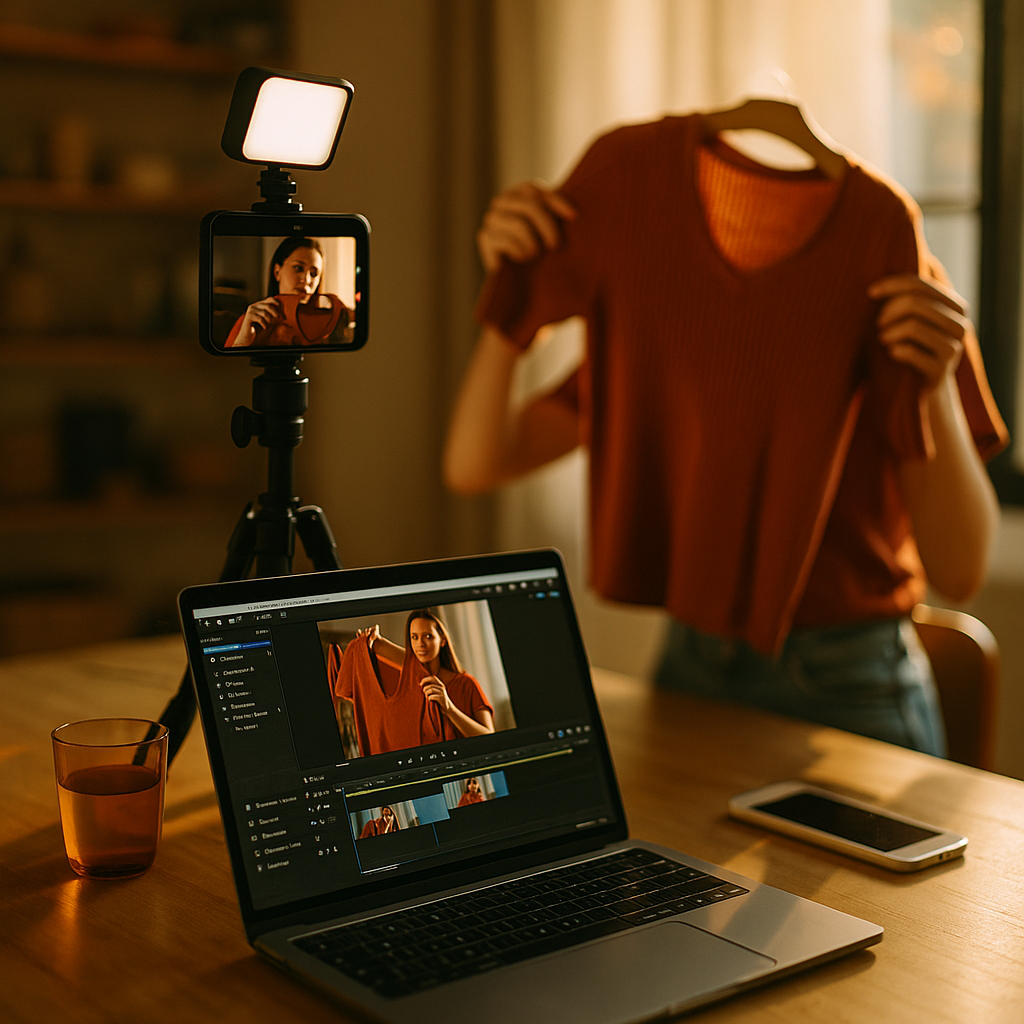
Brands running weekly shopping streams are sitting on hundreds of hours of footage and ignoring most of it. One two-hour livestream can yield 40+ paid social assets if you know what to cut. That’s the entire premise behind livestream clip repurposing: stop treating the stream as a one-time event and start treating it as a content mine.
Most teams still think of livestream shopping as a channel, not a production engine. That’s a budget mistake. The stream already paid for itself in talent fees, set design, and platform time. Everything after the broadcast ends is pure margin, if someone bothers to cut it.
Why the Raw Footage Is Worth More Than the Stream Itself
Here’s an uncomfortable truth for brands still measuring success by concurrent viewers: the live audience is often the smallest audience that content will ever reach. A shopping stream on TikTok LIVE or Whatnot might pull a few thousand concurrent viewers. The clips cut from it, pushed into paid social, can reach millions.
The reaction a host has when a product sells out. The side-by-side comparison she does on the fly when a viewer asks “how’s this different from the one I bought last year?” The unscripted laugh when a demo goes slightly wrong and she recovers. None of that gets written in a brief. It happens because live commerce forces authenticity, and authenticity is exactly what paid social algorithms reward right now.
A single 90-minute shopping stream typically contains 15 to 25 moments strong enough to stand alone as paid ad creative, most brands currently use zero to three.
This is the gap. Not a content gap, a workflow gap. Teams have the raw material. They just don’t have a system for mining it, tagging it, and routing it into ad accounts before it goes stale.
What Actually Qualifies as a “Moment”
Not every clip from a shopping show deserves paid spend. Being selective is the whole skill here. The moments worth repurposing usually fall into a handful of repeatable categories:
- The objection-handling moment: a host responds to a live chat question that mirrors a common sales objection. These convert well because they feel like social proof, not scripted copy.
- The reaction spike: genuine surprise, delight, or even mild disbelief at a product feature. Facial expression sells harder than narration.
- The scarcity beat: “we’re down to 40 units” moments that create urgency without you having to fabricate it in post.
- The side-by-side demo: comparing the featured product against a competitor or an older version, often requested by chat in real time.
- The price reveal: the specific second a discount or bundle price appears on screen, paired with host reaction.
If you’ve read our breakdown on cutting CPA from shopping streams, this will sound familiar. The difference with repurposing specifically for paid social is intent: you’re not just highlighting the stream for replay value, you’re engineering standalone ad units that need to work with zero context from the original broadcast.
The Three-Second Rule Still Applies
Paid social doesn’t care that a moment was great in context. If it doesn’t hook a scroller in the first three seconds, it’s dead weight, no matter how good the live reaction was. This is why raw livestream pulls almost always need a trim, a caption overlay, and sometimes a re-ordered sequence before they’re ad-ready. Lead with the punchline, not the setup.
Building the Clip-to-Asset Pipeline
Repurposing at scale requires a pipeline, not a one-off editor scrubbing through VOD footage hoping to get lucky. The brands doing this well have a tagging system baked into their production workflow:
- Hosts or producers flag timestamps live, using a shorthand code (reaction, objection, price, demo) in a shared doc or livestream platform’s native marker tool.
- A post-production editor pulls flagged segments within 24 hours, while the moment is still culturally relevant and the product is still in stock.
- Each clip gets a vertical crop, caption burn-in, and a hook-forward edit, often reordering the first two seconds to lead with the strongest beat.
- Assets get routed into a testing queue inside the ad account, usually against a control creative already running.
- Winners get scaled into evergreen rotation; losers get archived, not deleted, since formats that fail in one season sometimes work in another.
This isn’t fundamentally different from the system outlined in turning VODs into hook libraries, except repurposing pushes the output directly into paid media rather than an organic hook bank. Think of clip mining as the quarry and repurposing as the factory that turns raw stone into something sellable.
Where Compliance Teams Need to Get Involved Early
This is the part brand safety and legal teams tend to miss until it’s too late. A livestream is produced under one set of disclosure assumptions (real-time FTC guidance applies, chat moderation handles most risk in the moment). Once you cut a clip and run it as a paid ad, the rules shift. The FTC’s endorsement guidance applies fully to repurposed paid creative, meaning any claims made casually in the heat of a live sale (exaggerated efficacy, unverified comparisons, “better than” statements about competitors) need a second compliance pass before they go into a media buy.
Build this into your pipeline, not as an afterthought. A quick checklist before any clip enters the ad account:
- Does the clip make a product claim that needs substantiation?
- Is the #ad or #sponsored disclosure visible and legible once cropped vertical?
- Does the comparison to a competitor hold up outside the live context?
- Has pricing or stock information changed since the stream aired?
Skipping this step is how brands end up pulling a high-performing ad mid-flight because legal flagged it three weeks too late. Cheaper to catch it in the pipeline.
Format Choices: Where Repurposed Clips Actually Perform
Not every platform rewards the same cut. A reaction spike that crushes on TikTok might underperform as a Meta feed ad because the audience intent is different. Some patterns worth knowing:
- TikTok and Reels: favor the unpolished, mid-sentence cut. Don’t smooth the edges too much, the rawness is the credibility signal.
- Meta feed and Advantage+ placements: perform better with a slightly more structured edit, text overlay doing more of the selling work since sound-off viewing is still common. This echoes what we covered in designing for scrollers on mute.
- YouTube Shorts: rewards clips with a clear narrative arc, even if compressed to 20 seconds. Pure reaction without context performs worse here than on TikTok.
Testing isn’t optional. Run the same moment cut three different ways (reaction-first, price-first, demo-first) and let the algorithm pick the winner before committing budget. This mirrors the approach in multi-hook testing, just applied to live-sourced footage instead of scripted shoots.
Tying Repurposed Clips Back to Revenue
Finance teams increasingly want to see the same rigor applied to livestream-derived assets as any other ad spend. That means tracking CPA, ROAS, and ideally attributing specific SKU sales back to the originating clip, not just the campaign. If you’re building a case for continued stream investment, pull the numbers the way we outlined in why finance teams now demand explainer KPIs. The same logic applies here: a shopping stream that generates five strong paid assets and a 22 percent lower CPA than studio-shot creative justifies its production cost on its own, independent of live sales.
Platforms are also making this easier operationally. TikTok’s ad platform and Meta’s business tools both support rapid creative rotation, which rewards brands that can feed fresh repurposed clips into testing weekly rather than quarterly. According to eMarketer, creative fatigue now sets in faster than it did even two years ago, shortening the shelf life of any single ad and raising the value of a consistent repurposing pipeline over a one-time production sprint.
Brands refreshing paid creative weekly from livestream pulls report meaningfully slower CPA decay than those relying on monthly studio shoots alone.
What This Means for Smaller Teams
You don’t need a full production department to run this. A single editor with clip-tagging discipline and a vertical export template can realistically turn one weekly stream into 8 to 12 usable paid assets. Start small: tag three moment types, test them for two weeks, and expand the taxonomy once you see which category actually moves CPA. Our hook taxonomy framework is a useful starting structure even if you’re applying it after the fact instead of in pre-production.
The brands winning with this right now aren’t necessarily running bigger streams. They’re running the same streams and simply refusing to let the footage die in a VOD archive.
Next step: audit your last three shopping streams this week, tag every moment that falls into the five categories above, and push the strongest three into a paid test before the product cycle moves on. The footage is already paid for. Stop wasting it.
FAQs
What is livestream clip repurposing in the context of paid social?
It’s the practice of extracting specific moments from recorded shopping livestreams, editing them into standalone vertical assets, and running them as paid ads rather than only using the footage for organic replay or VOD highlights.
How many usable ad assets can one livestream realistically produce?
A well-run 90-minute shopping stream typically yields 15 to 25 strong moments, though most brands only act on a fraction of that. Teams with a tagging system in place can realistically turn that into 8 to 12 paid-ready assets per stream.
Do repurposed livestream clips need separate FTC compliance review?
Yes. Claims and disclosures that were acceptable in a real-time, chat-moderated livestream context need a second compliance pass before running as paid media, since the FTC’s endorsement guidance applies fully once content becomes a paid ad.
Which platforms perform best for repurposed livestream clips?
TikTok and Reels tend to reward raw, unpolished reaction moments, while Meta feed placements and YouTube Shorts perform better with slightly more structure and clear text overlays, since viewing context and sound-on behavior differ across platforms.
How soon after a livestream should clips be cut and tested?
Within 24 to 48 hours ideally. Pricing, stock levels, and cultural relevance of a reaction moment degrade quickly, and delayed repurposing often means re-verifying claims that have already changed.
Is repurposing livestream clips cheaper than producing new ad creative from scratch?
In most cases, yes. The production cost of the stream (talent, set, platform time) is already sunk. Editing and tagging existing footage is significantly cheaper than a new studio shoot, and brands report meaningfully lower CPA decay when rotating fresh repurposed clips weekly.
Top Influencer Marketing Agencies
The leading agencies shaping influencer marketing in 2026
Agencies ranked by campaign performance, client diversity, platform expertise, proven ROI, industry recognition, and client satisfaction. Assessed through verified case studies, reviews, and industry consultations.
Moburst

-
2

The Shelf
Boutique Beauty & Lifestyle Influencer AgencyA data-driven boutique agency specializing exclusively in beauty, wellness, and lifestyle influencer campaigns on Instagram and TikTok. Best for brands already focused on the beauty/personal care space that need curated, aesthetic-driven content.Clients: Pepsi, The Honest Company, Hims, Elf Cosmetics, Pure LeafVisit The Shelf → -
3

Audiencly
Niche Gaming & Esports Influencer AgencyA specialized agency focused exclusively on gaming and esports creators on YouTube, Twitch, and TikTok. Ideal if your campaign is 100% gaming-focused — from game launches to hardware and esports events.Clients: Epic Games, NordVPN, Ubisoft, Wargaming, Tencent GamesVisit Audiencly → -
4

Viral Nation
Global Influencer Marketing & Talent AgencyA dual talent management and marketing agency with proprietary brand safety tools and a global creator network spanning nano-influencers to celebrities across all major platforms.Clients: Meta, Activision Blizzard, Energizer, Aston Martin, WalmartVisit Viral Nation → -
5

The Influencer Marketing Factory
TikTok, Instagram & YouTube CampaignsA full-service agency with strong TikTok expertise, offering end-to-end campaign management from influencer discovery through performance reporting with a focus on platform-native content.Clients: Google, Snapchat, Universal Music, Bumble, YelpVisit TIMF → -
6

NeoReach
Enterprise Analytics & Influencer CampaignsAn enterprise-focused agency combining managed campaigns with a powerful self-service data platform for influencer search, audience analytics, and attribution modeling.Clients: Amazon, Airbnb, Netflix, Honda, The New York TimesVisit NeoReach → -
7

Ubiquitous
Creator-First Marketing PlatformA tech-driven platform combining self-service tools with managed campaign options, emphasizing speed and scalability for brands managing multiple influencer relationships.Clients: Lyft, Disney, Target, American Eagle, NetflixVisit Ubiquitous → -
8

Obviously
Scalable Enterprise Influencer CampaignsA tech-enabled agency built for high-volume campaigns, coordinating hundreds of creators simultaneously with end-to-end logistics, content rights management, and product seeding.Clients: Google, Ulta Beauty, Converse, AmazonVisit Obviously →