


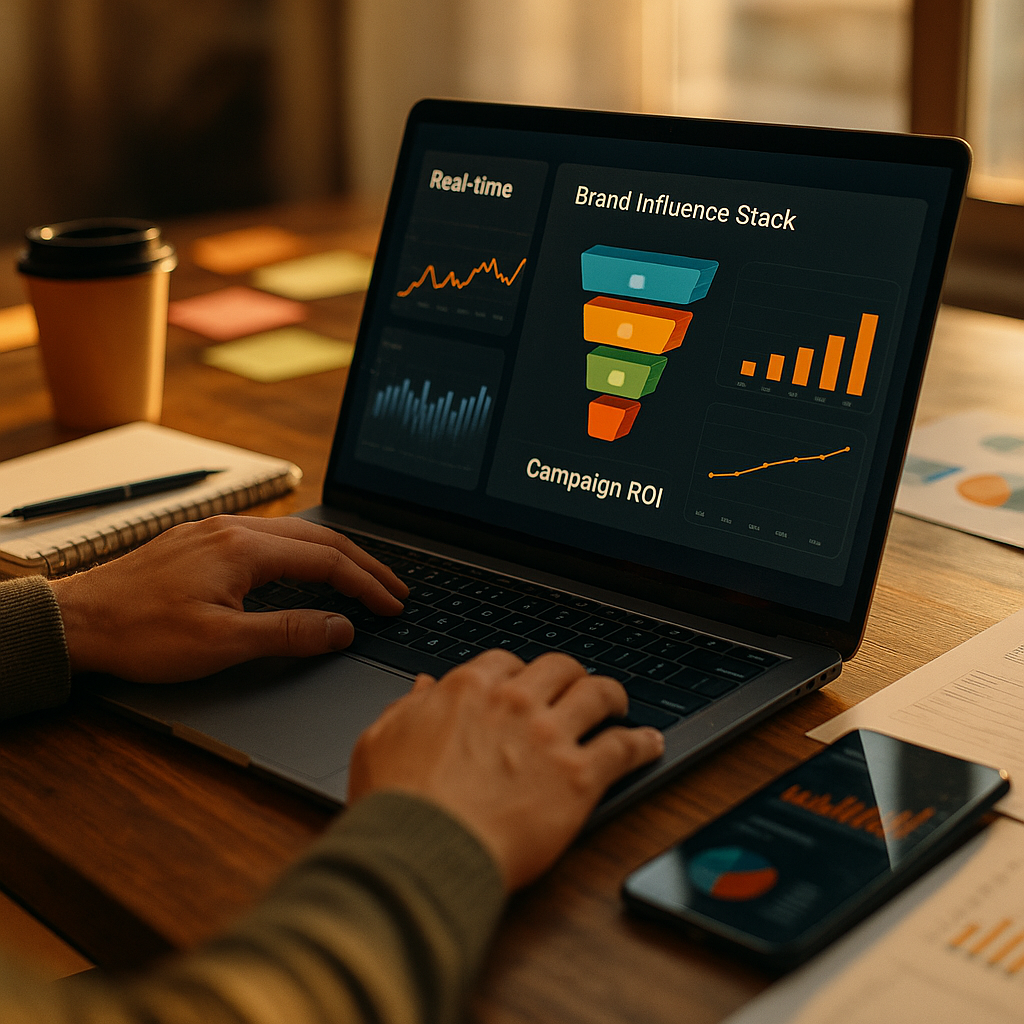
Most Brand Marketers Are Still Reading Yesterday’s Data
What if your creative assets were already optimizing themselves while your campaign was still running? The real-time brand influence stack isn’t a future concept — it’s the operational architecture that leading brands are deploying right now to compress the feedback loop between audience signal, creative production, and commerce outcome to near zero.
The Three Layers That Are Finally Talking to Each Other
For years, brand marketers operated with three disconnected systems: perception measurement tools that delivered sentiment reports weeks after launch, video production pipelines that required agency turnaround cycles, and platform algorithm data that lived inside walled gardens nobody could properly query. The insight lived in one place. The production capacity lived in another. The distribution logic lived in a third. The result was that most optimization decisions happened after the money had already been spent.
That architecture is collapsing. AI perception tools like Brandwatch, Sprinklr, and Talkwalker now ingest social signals, search behavior, and earned media mentions in real time, surfacing sentiment shifts before they become reputation events. Automated video production platforms, including Runway, Synthesia, and tools built natively into Meta’s Advantage+ ecosystem, can generate and version creative assets at scale without waiting for a creative team to clear a brief. And platform algorithm APIs — on TikTok, YouTube, and Meta — now expose performance signals like watch-time decay, swipe-away rates, and add-to-cart velocity at a granularity that makes real-time creative decisions operationally viable.
When these three systems share a data layer, the campaign loop closes in hours, not weeks.
What “Real-Time” Actually Means in Practice
Real-time is a word that gets abused in marketing technology. Let’s be precise. In the context of the brand influence stack, real-time means that audience perception signals feed directly into creative versioning logic, which then updates distribution targeting without human handoffs between each step. A creator’s video underperforms in the 18-24 female cohort on TikTok because the hook loses attention at the three-second mark. The system identifies the watch-time drop, flags the CTA as the likely failure point, and queues a re-edited variant using agentic video CTA optimization before the original has finished its first distribution cycle.
This is not hypothetical. Nike’s digital team, L’Oréal’s creator program division, and DTC brands running on Shopify with TikTok Shop integrations have all reported compressing their creative iteration cycles from 10-14 days down to under 48 hours using combinations of these tools. The underlying infrastructure is now accessible to mid-market brands, not just enterprise teams with nine-figure media budgets.
Brands that close the signal-to-creative feedback loop in under 48 hours are generating 2-3x higher return on ad spend compared to those still running weekly creative review cycles, according to performance data from Meta’s managed accounts.
AI Perception Tools: Beyond Sentiment Scores
The older generation of brand perception tools gave you a sentiment score and a share-of-voice number. Useful. Not actionable. The newer generation does something meaningfully different: it maps which specific brand attributes are gaining or losing equity in real time, and it does so at the audience segment level, not just the aggregate.
This matters for creative decisions. If your brand’s “value” attribute is spiking among the 35-44 demographic while “innovation” is declining in the 18-24 cohort, those are two different creative briefs. You don’t need to wait for a quarterly brand tracker to tell you that. Tools with AI perception measurement capabilities can surface that bifurcation in 24-48 hours, giving creative teams a targeting input that’s actually grounded in current audience psychology rather than last quarter’s survey data.
The integration question is where most brands stall. Perception data sitting in a dashboard does nothing unless it connects to a production trigger. The brands winning here are the ones that have built (or bought) a middleware layer that translates perception signals directly into creative briefs, asset versioning parameters, and audience targeting rules.
Automated Video Production Pipelines Aren’t Just About Speed
Speed is the obvious benefit. Reduce the cost of a 30-second social video from $8,000 to $400. Cut production timelines from two weeks to four hours. Those gains are real, and AI video tools are delivering on them. But the more strategically significant benefit is variance.
When production is cheap and fast, you can afford to test 20 versions of the same concept instead of committing to one. You can adapt the same creator video for three different audience segments with segment-specific hooks. You can swap product SKUs in a commerce-integrated video within the same production session. The script-to-edit pipeline that generates a TikTok variant and a Reels variant from the same source footage is no longer a technical novelty. It’s table stakes for any brand running always-on creator content.
The operational risk here is brand consistency. When you’re generating dozens of creative variants at machine speed, governance becomes a real concern. Brand safety guardrails, tone-of-voice parameters, and visual identity rules need to be encoded into the production system itself, not reviewed manually after the fact. This is where AI marketing governance becomes a prerequisite, not an afterthought.
Platform Algorithm Signals as a Creative Input
Most marketers think of platform algorithm signals as a distribution variable. They’re also a creative input. TikTok’s Creative Center, TikTok Ads Manager, and Meta’s Advantage+ Creative suite all expose performance signals that can tell you, in near real-time, what content format, length, and hook structure is currently being rewarded by the algorithm for your specific audience category.
This is a significant shift in how creative strategy should work. The traditional model: develop a creative concept, test it, wait for data, iterate. The integrated model: algorithm signals inform the initial creative brief, production generates variants aligned to current platform behavior, perception tools confirm audience resonance, and commerce metrics close the loop back to the algorithm layer. The system is self-correcting rather than episodic.
For brands with creator programs, this means the brief you send to influencers should include current platform performance signals, not just brand messaging guidelines. A creator brief built on last week’s algorithm behavior data will outperform a brief built on brand intuition alone. The creator content pipeline that integrates algorithm intelligence upstream of production is a competitive advantage that compounds over time.
Commerce Integration: The Metric That Closes the Loop
The final layer that makes this stack genuinely integrated rather than just fast is commerce data. TikTok Shop, Instagram Shopping, and YouTube Shopping have created a direct path from creator content to purchase that generates attribution data far richer than click-through rates. When a creator video drives an add-to-cart event, that signal feeds back into the audience targeting layer, adjusting who sees the next variant of that creative. The dual attribution framework that connects social commerce signals to broader campaign performance is what separates brands with real ROI visibility from those still arguing about last-click credit.
According to eMarketer, social commerce revenue is projected to exceed $100 billion in the US market, with the majority of growth concentrated in platforms that offer native checkout and creator-linked attribution. Brands without a real-time commerce integration layer are measuring the wrong outcomes.
The brands that will own this cycle by the end of the decade are those treating commerce integration not as a checkout feature but as a feedback mechanism. Every purchase, cart abandonment, and product page visit is a signal that should be routing back into the creative and targeting logic of the system.
Building the Stack Without Building a Technology Team
You don’t need to hire a team of engineers to operationalize this. The more practical path for mid-market brands is a three-tool stack: a real-time perception layer (Sprinklr, Talkwalker, or Sprout Social‘s AI-powered listening), an automated video production tool with brand kit integration (Runway, Synthesia, or Adobe Firefly for video), and a platform analytics layer that surfaces algorithm signals at creative-brief frequency. Connect them through a lightweight middleware solution, Zapier for simpler workflows, or a custom integration via HubSpot’s operations hub for teams with existing CRM infrastructure.
The three-layer AI marketing stack architecture gives you a model for thinking about how perception, production, and distribution connect without requiring a bespoke build. Start with the integration that removes the biggest bottleneck in your current workflow. For most brands, that’s the gap between perception data and creative briefing. Close that first.
Your next move: audit how many days currently elapse between a detectable audience sentiment shift and a live creative update in your paid social campaigns. That number is your baseline. Anything above seven days is a structural disadvantage in a real-time competitive environment.
Frequently Asked Questions
What is a real-time brand influence stack?
A real-time brand influence stack is an integrated system combining AI perception tools, automated video production pipelines, and platform algorithm signals. It allows brands to continuously optimize creative assets, audience targeting, and commerce integration without waiting for post-campaign reporting cycles. The goal is to compress the feedback loop between audience signal and creative response to hours rather than weeks.
How do AI perception tools feed into creative production?
AI perception tools monitor audience sentiment, brand attribute performance, and social signal changes in near real-time. When integrated with production pipelines, these tools translate perception shifts directly into updated creative briefs or automated asset versioning. For example, if a brand’s “trust” attribute is declining in a specific demographic, the system can trigger a new creative variant emphasizing proof points targeted at that segment before the next distribution cycle begins.
Which platforms expose algorithm signals useful for real-time creative decisions?
TikTok’s Creative Center and Ads Manager, Meta’s Advantage+ Creative suite, and YouTube’s Creator Studio all expose granular performance signals including watch-time decay, engagement rates by hook type, and commerce event data. These signals can inform creative briefs in near real-time, allowing brands and creators to align content formats and structures with current platform behavior rather than historical assumptions.
What is the biggest operational risk of automated video production at scale?
Brand consistency is the primary risk. When AI production systems generate dozens of creative variants rapidly, manual quality review becomes a bottleneck and a failure point. Brands need to encode brand safety parameters, visual identity rules, and tone-of-voice guidelines directly into production systems. Governance frameworks built upstream of production are more effective than review processes applied after the fact.
How does commerce integration improve real-time optimization?
Native commerce integrations on TikTok Shop, Instagram Shopping, and YouTube Shopping generate purchase, cart, and product interaction data that can feed directly back into audience targeting and creative versioning logic. Rather than waiting for post-campaign sales reports, brands can use live commerce signals to adjust which creative variants are served to which audience segments within the same campaign window, significantly improving return on ad spend.
Do mid-market brands have access to these tools, or is this only for enterprise?
The integrated real-time brand influence stack is increasingly accessible to mid-market brands. Tools like Sprout Social, Runway, Synthesia, and native platform analytics suites are priced for teams without enterprise budgets. Middleware platforms like Zapier allow basic integrations without engineering resources. The key is prioritizing the integration that removes the most costly bottleneck, typically the gap between perception data and creative briefing, before attempting a full-stack build.
Top Influencer Marketing Agencies
The leading agencies shaping influencer marketing in 2026
Agencies ranked by campaign performance, client diversity, platform expertise, proven ROI, industry recognition, and client satisfaction. Assessed through verified case studies, reviews, and industry consultations.
Moburst

-
2

The Shelf
Boutique Beauty & Lifestyle Influencer AgencyA data-driven boutique agency specializing exclusively in beauty, wellness, and lifestyle influencer campaigns on Instagram and TikTok. Best for brands already focused on the beauty/personal care space that need curated, aesthetic-driven content.Clients: Pepsi, The Honest Company, Hims, Elf Cosmetics, Pure LeafVisit The Shelf → -
3

Audiencly
Niche Gaming & Esports Influencer AgencyA specialized agency focused exclusively on gaming and esports creators on YouTube, Twitch, and TikTok. Ideal if your campaign is 100% gaming-focused — from game launches to hardware and esports events.Clients: Epic Games, NordVPN, Ubisoft, Wargaming, Tencent GamesVisit Audiencly → -
4

Viral Nation
Global Influencer Marketing & Talent AgencyA dual talent management and marketing agency with proprietary brand safety tools and a global creator network spanning nano-influencers to celebrities across all major platforms.Clients: Meta, Activision Blizzard, Energizer, Aston Martin, WalmartVisit Viral Nation → -
5

The Influencer Marketing Factory
TikTok, Instagram & YouTube CampaignsA full-service agency with strong TikTok expertise, offering end-to-end campaign management from influencer discovery through performance reporting with a focus on platform-native content.Clients: Google, Snapchat, Universal Music, Bumble, YelpVisit TIMF → -
6

NeoReach
Enterprise Analytics & Influencer CampaignsAn enterprise-focused agency combining managed campaigns with a powerful self-service data platform for influencer search, audience analytics, and attribution modeling.Clients: Amazon, Airbnb, Netflix, Honda, The New York TimesVisit NeoReach → -
7

Ubiquitous
Creator-First Marketing PlatformA tech-driven platform combining self-service tools with managed campaign options, emphasizing speed and scalability for brands managing multiple influencer relationships.Clients: Lyft, Disney, Target, American Eagle, NetflixVisit Ubiquitous → -
8

Obviously
Scalable Enterprise Influencer CampaignsA tech-enabled agency built for high-volume campaigns, coordinating hundreds of creators simultaneously with end-to-end logistics, content rights management, and product seeding.Clients: Google, Ulta Beauty, Converse, AmazonVisit Obviously →