


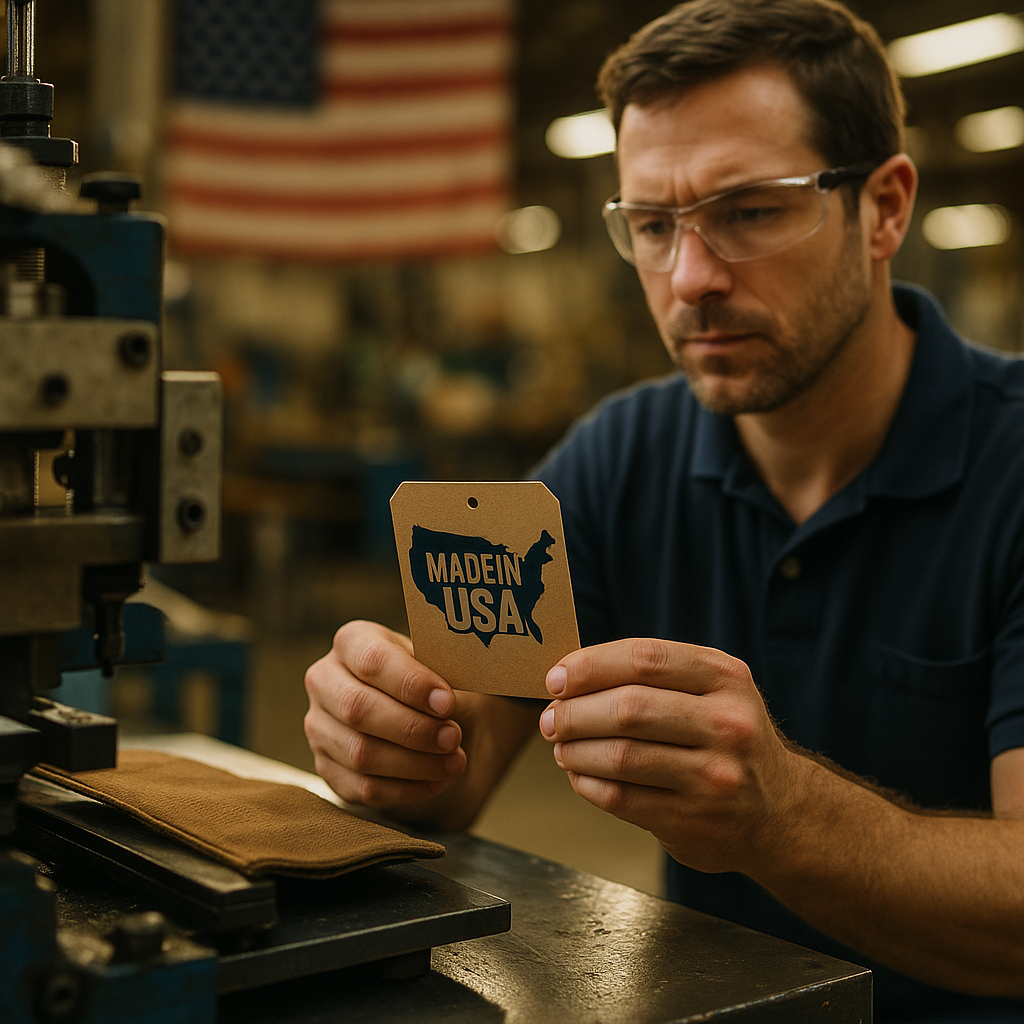
67% of U.S. manufacturers say they’ve reshored or are actively planning to, according to Reshoring Initiative data tracked through recent years. That shift isn’t just an operations story. Global supply chain reshoring is quietly rewriting the brand playbook, forcing marketers to ditch decades of “citizen of the world” messaging for something narrower, warmer, and riskier: local pride.
If your brand deck still leans on globalist language — “made for everyone, everywhere” — it might already sound out of step with where consumers, regulators, and even your own supply chain are headed.
Why the Globalist Narrative Is Losing Its Grip
For thirty years, brand strategy assumed globalization was a one-way ratchet. Supply chains stretched further, marketing followed suit, and “global citizen” became shorthand for sophistication. Nike, Coca-Cola, Unilever — all built empires on the idea that a brand could feel native everywhere at once.
That assumption is cracking. Tariff volatility, geopolitical friction, and pandemic-era shortages taught procurement teams a hard lesson: long, cheap supply chains are fragile supply chains. Companies from Walmart to smaller CPG players have spent recent years diversifying suppliers closer to home, and marketing departments are now scrambling to explain why the label suddenly says “Assembled in Ohio” instead of a country most customers can’t locate on a map.
This isn’t a niche trend. It intersects directly with broader consumer skepticism toward globalized value chains — the same skepticism showing up in trade-down shopper behavior, where price-conscious buyers scrutinize every claim a brand makes about where their money actually goes.
Reshoring isn’t just changing where products get made — it’s changing what brands are allowed to say about themselves without sounding tone-deaf.
What “Made Locally” Actually Means to Buyers Now
Ask ten consumers what “local” means and you’ll get ten different answers. That ambiguity is both the opportunity and the trap.
For some buyers, local means domestic manufacturing. For others, it means regional sourcing, small-batch production, or simply “not a mega-corporation.” A 2024 Deloitte consumer survey found that over half of shoppers say they’d pay a premium for domestically produced goods, but the actual willingness-to-pay drops sharply once price gaps exceed 10-15%. Sentiment is real. Budget discipline is realer.
Marketers need to treat “Made Locally” as a spectrum, not a slogan:
- Fully reshored: raw materials, manufacturing, and assembly all domestic — the strongest claim, but hardest and most expensive to achieve.
- Final assembly local: components sourced globally, final production domestic — common, defensible, but requires careful wording to avoid overclaiming.
- Regional sourcing: nearshoring to neighboring countries (Mexico, Eastern Europe, Southeast Asia hubs) rather than full domestic production.
- Local brand, global supply chain: headquarters and founder story are local; production remains offshore. Riskiest positioning if oversold.
Get the category wrong in your messaging and you’re not just inaccurate — you’re one Reddit thread away from an FTC complaint. The FTC’s Made in USA guidelines are unambiguous: “all or virtually all” domestic content is required for unqualified claims. Qualified claims (“Assembled in the USA from imported parts”) are legal but must be precise. Sloppy copywriting here isn’t just a brand risk, it’s a regulatory one.
The Marketing Implications Are Bigger Than a New Tagline
Swapping “Global” for “Local” in your brand book sounds simple. Operationally, it touches almost everything.
Creative strategy shifts from aspiration to provenance. Instead of selling a lifestyle untethered from geography, brands now lean into origin stories: the factory, the founder, the town. This favors documentary-style content and founder-led storytelling over polished global campaigns shot in five countries.
Influencer selection criteria change too. A national or global macro-influencer with a generic aesthetic doesn’t sell “local” convincingly. Micro and regional creators — the ones already outperforming on engagement, as covered in sub-20K creator performance data — are far better suited to authentic, place-based storytelling. Expect rate cards to shift accordingly, with regional micro-creators commanding a premium for exactly this reason.
Retail media and CTV buys need geographic precision. A “Made in the Midwest” campaign broadcast nationally without regional targeting reads as inauthentic, maybe even cynical. Programmatic buying platforms increasingly support this granularity, but planners have to actually use it rather than defaulting to broad national reach, a theme also playing out in CTV inventory consolidation discussions.
SEO and AI search visibility depend on provenance clarity. As more consumers start product research inside AI assistants rather than traditional search — a shift detailed in McKinsey’s AI search research — brands need structured, verifiable claims about sourcing and manufacturing baked into product pages. Vague “proudly local” copy without specifics won’t surface well when an AI overview is summarizing competitive claims side by side.
Case in Point: Who’s Getting This Right
A few examples worth studying, not copying wholesale:
New Balance has run “Made in USA” messaging for years, but it recently sharpened the pitch by quantifying domestic value (70%+ US/UK material and labor value in specific product lines) rather than leaning on vague patriotism. That specificity matters — it’s defensible, quotable, and hard to accuse of greenwashing.
Faribault Woolen Mill, a small Minnesota manufacturer, leans entirely into place: the mill’s history, the town, the machinery. It can’t compete on price with mass-market blankets, so it doesn’t try. It sells scarcity and provenance instead.
Allbirds took a hit when its supply chain complexity contradicted its sustainability-and-simplicity brand promise. The lesson: if your operational reality doesn’t match your “local, transparent, simple” narrative, someone will find the gap and publicize it.
The brands winning the reshoring narrative aren’t the loudest about patriotism — they’re the most specific about facts.
Does This Replace Global Brand Positioning Entirely?
No — and this is where a lot of marketing teams overcorrect. Global brands don’t need to abandon international identity; they need dual-track messaging that lets local resonate without torching global equity.
Think of it as a portfolio approach:
- Maintain global brand identity for markets and products where it’s an asset (premium positioning, aspirational categories, tourism-adjacent goods).
- Layer in local manufacturing proof points where supply chains genuinely support it, using specific, verifiable claims.
- Avoid retrofitting “local” language onto a supply chain that hasn’t actually changed. Consumers, journalists, and regulators are all better at fact-checking than they were five years ago.
This mirrors what’s happening with AI vendor selection, where brands increasingly favor sovereign AI models for data sovereignty reasons even while keeping global tech stacks for other functions. Reshoring marketing isn’t all-or-nothing. It’s segment-specific.
Operational Checklist Before You Launch a “Local” Campaign
Before greenlighting any reshoring-themed campaign, marketing leads should confirm:
- Legal has verified the claim meets FTC or relevant regional Made-in labeling standards.
- Supply chain and procurement teams have signed off on the specific percentages or locations being cited.
- Creative avoids nationalist or exclusionary undertones — “local pride” done poorly reads as anti-immigrant or anti-global, alienating exactly the younger, values-driven consumers brands are trying to win back, a cohort already showing declining loyalty per longitudinal brand loyalty data.
- Influencer partners are briefed on what can and can’t be claimed on their own channels — creator overclaiming is a common source of FTC exposure.
- Pricing strategy accounts for the premium reshoring often demands, positioned honestly rather than buried in fine print, echoing the transparency shoppers now expect per value messaging audits.
Data and analytics platforms like Statista and eMarketer both track consumer sentiment shifts on domestic sourcing regularly — worth building into quarterly brand tracking rather than treating as a one-time campaign check.
What This Means for Budget and Team Structure
Reshoring-driven marketing isn’t free to execute well. It typically requires:
More localized content production (regional shoots, regional creators, regional retail media buys) instead of one hero campaign rolled out globally. More legal review cycles, since sourcing claims carry real regulatory teeth. And more cross-functional coordination between marketing, procurement, and comms — teams that historically operated in separate lanes now need shared fact sheets on what’s actually true about the supply chain, updated as it changes.
None of this is a reason to avoid the shift. It’s a reason to budget for it properly rather than treating “Made Locally” as a copywriting exercise.
Bottom line: audit your actual supply chain before you audit your messaging. Build a one-page fact sheet with legal and procurement, verify every claim against FTC standards, then let creative build the story around what’s true — not the other way around.
Frequently Asked Questions
What is reshoring in the context of marketing?
Reshoring refers to companies moving manufacturing or sourcing back to their home country or region after years of offshoring. In marketing terms, it means adjusting brand messaging to reflect and promote this shift, often through “Made Locally” or domestic-origin campaigns.
Is “Made Locally” messaging legally risky?
Yes, if claims aren’t accurate. In the U.S., the FTC requires that unqualified “Made in USA” claims meet an “all or virtually all” domestic content standard. Qualified claims are allowed but must be worded precisely. Brands should always get legal and procurement sign-off before launching origin-based campaigns.
Does “Made Locally” messaging work for global brands?
It can, but it requires a segmented approach rather than a full rebrand. Global brands can layer local manufacturing proof points into specific markets or product lines while maintaining international brand identity elsewhere, rather than abandoning global positioning entirely.
How do consumers actually respond to domestic sourcing claims?
Surveys show meaningful willingness to pay a premium for domestically made goods, but that willingness drops sharply once the price gap becomes too large. Sentiment favors local sourcing, but budget discipline still governs actual purchase decisions, especially among value-conscious shoppers.
What creative approaches work best for reshoring campaigns?
Documentary-style storytelling, founder narratives, and place-based content tend to outperform polished, aspirational global creative. Regional micro-influencers often communicate authenticity more convincingly than macro-influencers with generic, placeless aesthetics.
How does AI search change how brands should present sourcing claims?
As more consumers begin product research inside AI assistants rather than traditional search engines, brands need clear, structured, and verifiable sourcing claims on product pages. Vague “local” language without specifics is less likely to surface favorably when AI tools summarize competing brand claims.
Frequently Asked Questions
What is reshoring in the context of marketing?
Reshoring refers to companies moving manufacturing or sourcing back to their home country or region after years of offshoring. In marketing terms, it means adjusting brand messaging to reflect and promote this shift, often through “Made Locally” or domestic-origin campaigns.
Is “Made Locally” messaging legally risky?
Yes, if claims aren’t accurate. In the U.S., the FTC requires that unqualified “Made in USA” claims meet an “all or virtually all” domestic content standard. Qualified claims are allowed but must be worded precisely. Brands should always get legal and procurement sign-off before launching origin-based campaigns.
Does “Made Locally” messaging work for global brands?
It can, but it requires a segmented approach rather than a full rebrand. Global brands can layer local manufacturing proof points into specific markets or product lines while maintaining international brand identity elsewhere, rather than abandoning global positioning entirely.
How do consumers actually respond to domestic sourcing claims?
Surveys show meaningful willingness to pay a premium for domestically made goods, but that willingness drops sharply once the price gap becomes too large. Sentiment favors local sourcing, but budget discipline still governs actual purchase decisions, especially among value-conscious shoppers.
What creative approaches work best for reshoring campaigns?
Documentary-style storytelling, founder narratives, and place-based content tend to outperform polished, aspirational global creative. Regional micro-influencers often communicate authenticity more convincingly than macro-influencers with generic, placeless aesthetics.
How does AI search change how brands should present sourcing claims?
As more consumers begin product research inside AI assistants rather than traditional search engines, brands need clear, structured, and verifiable sourcing claims on product pages. Vague “local” language without specifics is less likely to surface favorably when AI tools summarize competing brand claims.
Top Influencer Marketing Agencies
The leading agencies shaping influencer marketing in 2026
Agencies ranked by campaign performance, client diversity, platform expertise, proven ROI, industry recognition, and client satisfaction. Assessed through verified case studies, reviews, and industry consultations.
Moburst

-
2

The Shelf
Boutique Beauty & Lifestyle Influencer AgencyA data-driven boutique agency specializing exclusively in beauty, wellness, and lifestyle influencer campaigns on Instagram and TikTok. Best for brands already focused on the beauty/personal care space that need curated, aesthetic-driven content.Clients: Pepsi, The Honest Company, Hims, Elf Cosmetics, Pure LeafVisit The Shelf → -
3

Audiencly
Niche Gaming & Esports Influencer AgencyA specialized agency focused exclusively on gaming and esports creators on YouTube, Twitch, and TikTok. Ideal if your campaign is 100% gaming-focused — from game launches to hardware and esports events.Clients: Epic Games, NordVPN, Ubisoft, Wargaming, Tencent GamesVisit Audiencly → -
4

Viral Nation
Global Influencer Marketing & Talent AgencyA dual talent management and marketing agency with proprietary brand safety tools and a global creator network spanning nano-influencers to celebrities across all major platforms.Clients: Meta, Activision Blizzard, Energizer, Aston Martin, WalmartVisit Viral Nation → -
5

The Influencer Marketing Factory
TikTok, Instagram & YouTube CampaignsA full-service agency with strong TikTok expertise, offering end-to-end campaign management from influencer discovery through performance reporting with a focus on platform-native content.Clients: Google, Snapchat, Universal Music, Bumble, YelpVisit TIMF → -
6

NeoReach
Enterprise Analytics & Influencer CampaignsAn enterprise-focused agency combining managed campaigns with a powerful self-service data platform for influencer search, audience analytics, and attribution modeling.Clients: Amazon, Airbnb, Netflix, Honda, The New York TimesVisit NeoReach → -
7

Ubiquitous
Creator-First Marketing PlatformA tech-driven platform combining self-service tools with managed campaign options, emphasizing speed and scalability for brands managing multiple influencer relationships.Clients: Lyft, Disney, Target, American Eagle, NetflixVisit Ubiquitous → -
8

Obviously
Scalable Enterprise Influencer CampaignsA tech-enabled agency built for high-volume campaigns, coordinating hundreds of creators simultaneously with end-to-end logistics, content rights management, and product seeding.Clients: Google, Ulta Beauty, Converse, AmazonVisit Obviously →