


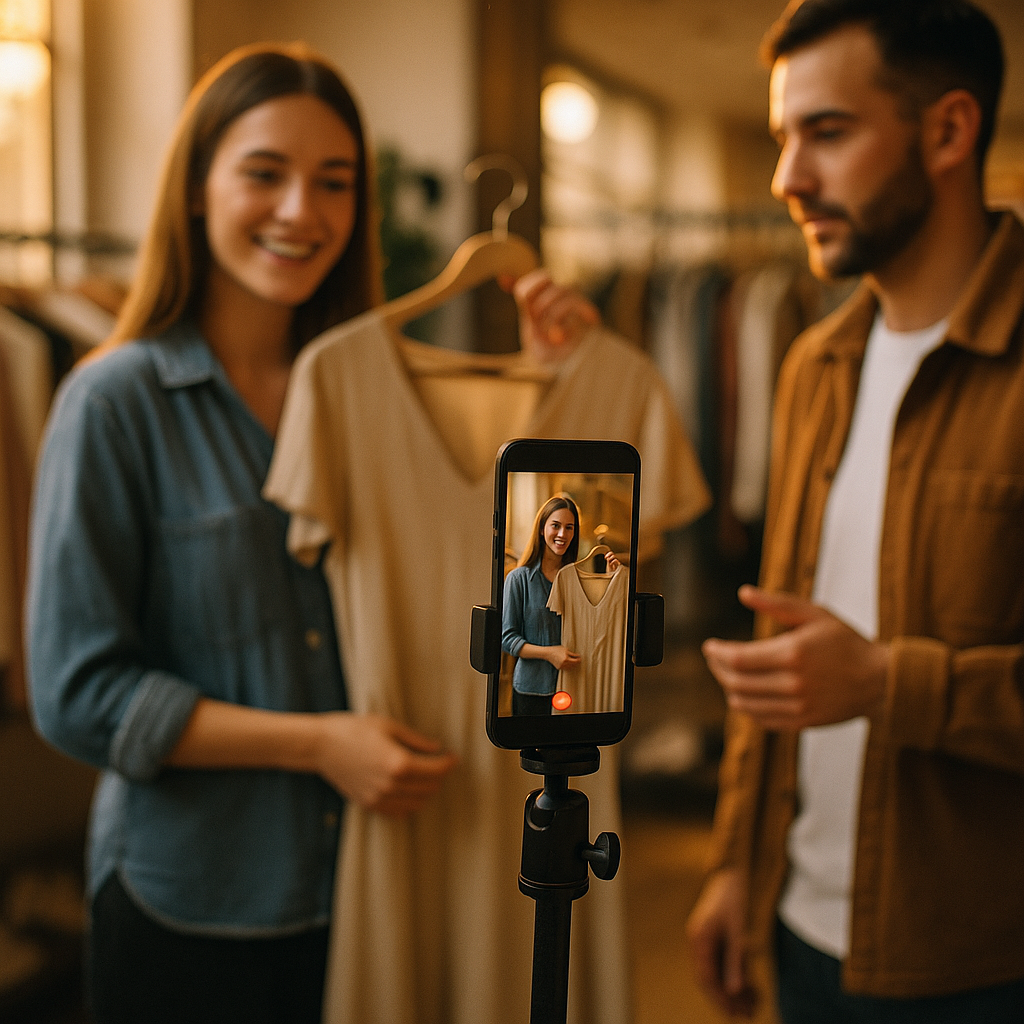
In 2025, retailers are rethinking how they earn attention, trust, and sales. This case study on a retailer’s successful transition from print to social video shows what happens when a legacy brand replaces static ads with short-form storytelling, creator partnerships, and measurable performance marketing. You’ll see the exact decisions, workflows, and metrics that made the shift pay off—and the surprising insight that unlocked scale.
Print advertising decline: why the retailer changed course
The retailer in this case study—an established regional home-and-lifestyle chain with 40 stores—had relied on a monthly print circular for decades. The circular drove predictable store traffic, kept vendor co-op funding flowing, and gave merchandising teams tight control over messaging. But by early 2025, the model started to break.
The core problem wasn’t that print “stopped working.” It was that print became harder to optimize and harder to attribute. Costs increased while response became less reliable, especially among younger households and new movers. The marketing team faced three connected pressures:
- Attention shifted to mobile video. Customers were discovering products through social feeds, not paper mailers.
- Measurement expectations rose. The CFO wanted clearer links between spend and sales, not just circulation and anecdotal store feedback.
- Creative speed became a competitive advantage. Competitors could launch new offers in days; print required weeks of lead time.
Rather than eliminate print overnight, leadership set a practical objective: reduce reliance on circular-driven demand while building a repeatable social video engine that could support both e-commerce and stores. The team also had to answer an internal question quickly: Would social video drive incremental revenue or simply repackage existing demand?
Social video strategy: goals, audiences, and platform fit
The retailer built its social video strategy around a principle that made decision-making easier: every video must be mapped to a buying moment. That prevented the common trap of chasing views without business impact.
The strategy had three goals, each with a different measurement plan:
- Drive discovery for seasonal categories (patio, organization, décor refresh) using short-form storytelling.
- Increase consideration by demonstrating product value, sizing, setup, and use-cases.
- Convert through localized offers and “shop the look” bundles tied to inventory.
The team segmented audiences into four groups, then aligned formats to each:
- Value seekers: quick deal callouts, price anchors, and limited-time bundles.
- Style-led shoppers: “before/after” room vignettes, color stories, and trend edits.
- DIY doers: how-to steps, tool lists, and time-to-complete framing.
- New homeowners: starter kits, checklists, and “what to buy first” guidance.
Platform choices followed customer behavior and content strengths. The retailer prioritized short-form vertical video across major social platforms, then repurposed the best performers for paid placements. Organic content validated creative themes; paid distribution scaled proven hooks to new audiences. Importantly, the brand avoided copying print logic. Instead of “20 items on a page,” each video focused on a single idea and one clear action.
Follow-up question most teams ask: “Should we pick one platform?” The retailer answered with a workflow decision: build in a platform-native style (fast hook, captions, tight edits), but produce from a single master script so variations could be exported quickly without ballooning costs.
Short-form video production: workflow, creative, and brand safety
To replace the predictability of print, the retailer needed a dependable content cadence. The marketing lead created a lightweight studio model inside an unused stockroom at the flagship store. This reduced friction: merchandising could pull products instantly, and store associates could appear on camera without travel.
The production system hinged on three repeatable content pillars:
- “3 Ways to Use It” demos that turned one product into multiple needs.
- “Cart Build” bundles that paired hero items with add-ons to lift average order value.
- “Fix This Space” makeovers that used a problem-solution narrative (cluttered entryway, dark living room, small balcony).
Each video followed a consistent structure that improved completion rates and reduced rework:
- First 2 seconds: the problem or payoff (“Small balcony?” “This lamp changes the whole room.”)
- Middle: demonstration with on-screen text, pricing context when relevant, and one key proof point (material, warranty, ease of assembly)
- Last 3 seconds: clear action (shop link, store pickup, comment keyword for a list)
Because retail claims can trigger compliance issues, the brand introduced a simple brand safety checklist. It covered pricing accuracy, availability disclaimers, correct usage instructions, and “no exaggerated performance” language. This protected trust and reduced takedowns.
EEAT in practice: The retailer used real associates and category specialists on camera for credibility. A lighting expert explained bulb temperature; a floor lead showed rug sizing; an inventory manager explained why certain items sell out and how to set pickup alerts. These details signaled experience and expertise, and they answered the questions customers typically ask in-store.
Influencer marketing for retail: partnerships that drove trust
The retailer tested influencer marketing for retail with a strict rule: creators must demonstrate a product in a real space, not just unbox it. The goal was to borrow authentic context, not just reach.
They built a small roster of local and regional creators who matched their customer base—home organizers, budget decorators, and DIY educators. Contracts emphasized:
- Usage-based content (setup, styling, maintenance) over generic endorsements
- Retail realism (links to exact SKUs, pickup options, and substitutions if inventory changed)
- Disclosure and transparency (clear sponsored labeling, honest pros/cons where appropriate)
The team also answered a critical operational question: “How do we avoid creator chaos?” They implemented a creator brief template with three non-negotiables (brand voice, must-say compliance points, and the single conversion action) and three flexible elements (creator’s style, filming location, and story angle). This protected authenticity while keeping content usable in paid campaigns.
To reinforce trust, the retailer invited creators to film in-store with a merchandiser who could explain differences between similar products. That collaboration created richer, more accurate content than creators could produce alone, and it reduced returns because shoppers understood what they were buying.
Omnichannel attribution: metrics, testing, and what changed
Print had long been evaluated with top-line sales lifts and store manager feedback. Social video forced clearer omnichannel attribution. The retailer set up a measurement approach that matched how customers actually shop:
- Video engagement indicators: 3-second views, average watch time, and completion rate to judge creative strength
- Traffic signals: clicks to category pages, store locator visits, and “save” actions for later intent
- Conversion metrics: add-to-cart, online purchase, store pickup orders, and coupon redemptions
- Store impact: region-level sales comparisons and time-bound lift around campaigns
They ran disciplined A/B tests, changing one variable at a time:
- Hook tests: “problem-first” vs. “result-first” openings
- Offer framing: percentage off vs. bundle value vs. price anchor
- On-screen text density: minimal captions vs. step-by-step overlays
- CTA options: shop now vs. save for later vs. comment-to-receive checklist
The biggest learning surprised the team: the best-performing conversion videos were not the most polished. Simple, well-lit demos with clear voiceover and honest limitations (for example, “best for small rooms” or “assembly takes 20 minutes”) produced higher quality traffic and fewer post-purchase complaints.
To connect social to stores, they combined three tactics:
- Localized creative: videos tagged to store regions with pickup and availability messaging
- Trackable offers: mobile-friendly codes and “mention this video” incentives at checkout
- Merch synchronization: ensuring featured items had adequate stock and strong endcaps for the campaign window
What changed vs. print: the team gained speed and feedback loops. A print circular locked choices weeks in advance; social video allowed them to adapt within days, reallocate budget to winners, and retire underperformers quickly.
Retail marketing transformation: results, lessons, and a repeatable playbook
By mid-2025, the retailer had shifted a substantial portion of promotional effort from print to social video without sacrificing store performance. Instead of presenting results as a single “viral win,” the team documented a system that could survive staffing changes and seasonal swings.
The transformation produced four concrete outcomes:
- More predictable creative performance: a tested set of hooks and formats reduced guesswork.
- Higher merchandising alignment: video planning forced earlier coordination on inventory and bundles.
- Better customer education: fewer basic questions at customer service because videos answered them upfront.
- Improved budget confidence: leadership could see which categories and creative angles drove results.
The playbook that made it repeatable included:
- A weekly content meeting with merchandising, paid media, and one store rep to select 6–10 “video-able” items
- A shot list template so any staff member could capture usable footage
- A creative scorecard tracking hook, clarity, proof, and CTA strength alongside results
- A recycling rule: top performers get re-edited into new cuts, lengths, and angles before making net-new concepts
One operational insight mattered most: the retailer treated video like a product, not a campaign. That mindset led to ongoing iteration, tighter measurement, and a consistent brand presence. Print still had a role, but it stopped being the primary growth engine.
FAQs about transitioning from print to social video
How long does it take a retailer to replace print with social video?
Most retailers need one full seasonal cycle to build a dependable content cadence and measurement baseline. This case study showed meaningful traction within months by starting with a hybrid model: reduce print frequency while scaling proven video formats and paid distribution.
What budget should shift first from print to social video?
Start with a portion of promotional spend tied to one or two categories where video demonstrations naturally help (home organization, décor, DIY, beauty, or apparel styling). Keep the shift large enough to learn quickly, but small enough to protect revenue while testing hooks, offers, and targeting.
Do we need professional production to succeed with short-form video?
No. You need clear lighting, readable captions, stable framing, and a strong hook. In this case, simple demos outperformed highly polished edits because they felt more trustworthy and showed products in realistic contexts.
How do we measure store sales impact from social video?
Use a mix of region-level lift analysis, localized campaigns, trackable offers, and store pickup metrics. Align featured items with inventory and in-store displays during the campaign window to reduce noise in the results.
What content types work best for retailers coming from print circulars?
Single-product value stories, “how to choose” guides, bundles that raise basket size, and problem-solution makeovers typically translate best. These formats replace the circular’s breadth with clarity and motivation.
How can influencer marketing stay brand-safe for retail?
Use standardized briefs, require accurate product usage, insist on clear disclosures, and include compliance checkpoints for pricing and claims. Collaborating in-store with a category expert also improves accuracy and reduces returns.
In 2025, this retailer proved that moving away from circular-led marketing doesn’t require a leap of faith. It requires a system: audience-linked video formats, fast production, creator partnerships grounded in real use, and omnichannel measurement that connects content to sales. The clear takeaway is simple—treat social video as a repeatable product engine, and print becomes a support channel, not the driver.
Top Influencer Marketing Agencies
The leading agencies shaping influencer marketing in 2026
Agencies ranked by campaign performance, client diversity, platform expertise, proven ROI, industry recognition, and client satisfaction. Assessed through verified case studies, reviews, and industry consultations.
Moburst

-
2

The Shelf
Boutique Beauty & Lifestyle Influencer AgencyA data-driven boutique agency specializing exclusively in beauty, wellness, and lifestyle influencer campaigns on Instagram and TikTok. Best for brands already focused on the beauty/personal care space that need curated, aesthetic-driven content.Clients: Pepsi, The Honest Company, Hims, Elf Cosmetics, Pure LeafVisit The Shelf → -
3

Audiencly
Niche Gaming & Esports Influencer AgencyA specialized agency focused exclusively on gaming and esports creators on YouTube, Twitch, and TikTok. Ideal if your campaign is 100% gaming-focused — from game launches to hardware and esports events.Clients: Epic Games, NordVPN, Ubisoft, Wargaming, Tencent GamesVisit Audiencly → -
4

Viral Nation
Global Influencer Marketing & Talent AgencyA dual talent management and marketing agency with proprietary brand safety tools and a global creator network spanning nano-influencers to celebrities across all major platforms.Clients: Meta, Activision Blizzard, Energizer, Aston Martin, WalmartVisit Viral Nation → -
5

The Influencer Marketing Factory
TikTok, Instagram & YouTube CampaignsA full-service agency with strong TikTok expertise, offering end-to-end campaign management from influencer discovery through performance reporting with a focus on platform-native content.Clients: Google, Snapchat, Universal Music, Bumble, YelpVisit TIMF → -
6

NeoReach
Enterprise Analytics & Influencer CampaignsAn enterprise-focused agency combining managed campaigns with a powerful self-service data platform for influencer search, audience analytics, and attribution modeling.Clients: Amazon, Airbnb, Netflix, Honda, The New York TimesVisit NeoReach → -
7

Ubiquitous
Creator-First Marketing PlatformA tech-driven platform combining self-service tools with managed campaign options, emphasizing speed and scalability for brands managing multiple influencer relationships.Clients: Lyft, Disney, Target, American Eagle, NetflixVisit Ubiquitous → -
8

Obviously
Scalable Enterprise Influencer CampaignsA tech-enabled agency built for high-volume campaigns, coordinating hundreds of creators simultaneously with end-to-end logistics, content rights management, and product seeding.Clients: Google, Ulta Beauty, Converse, AmazonVisit Obviously →