


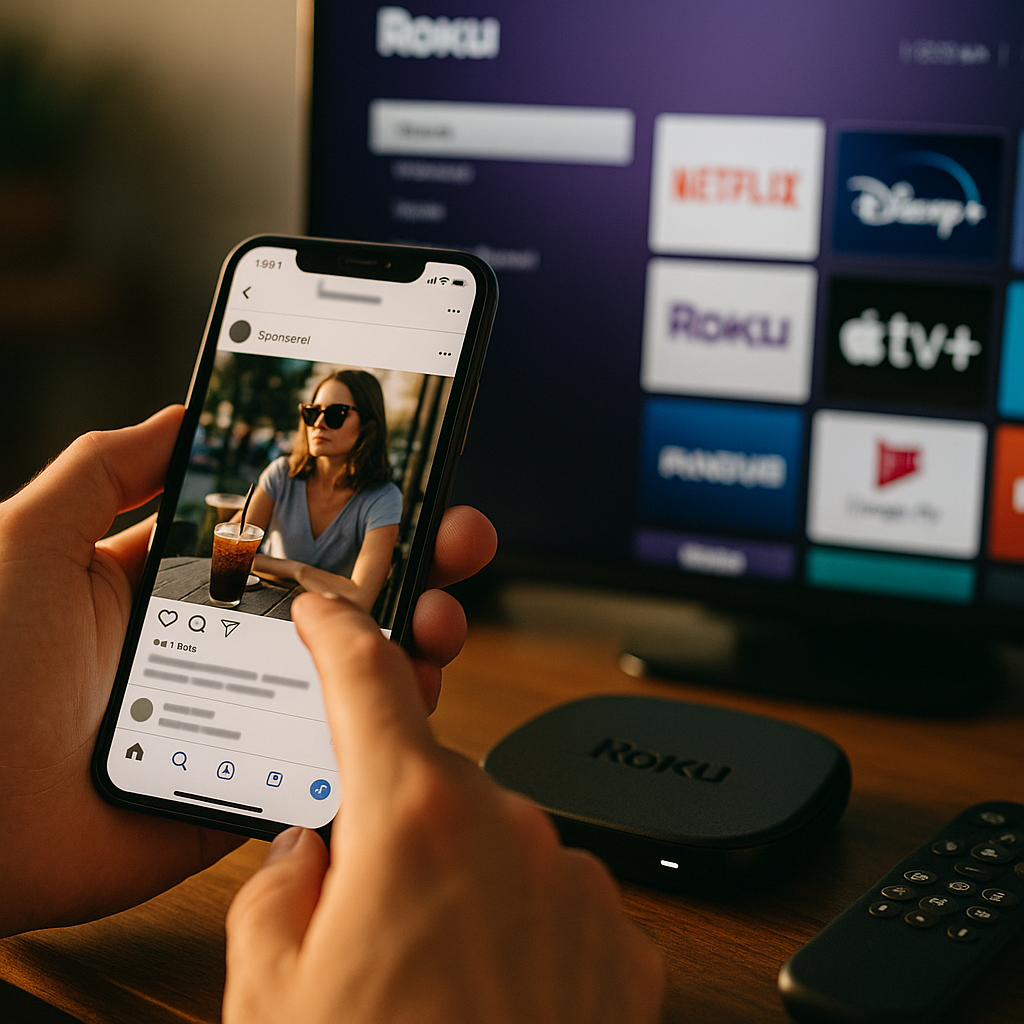
CTV ad inventory is exploding, but most brands are still shoving square social clips into 16:9 frames and calling it strategy. Smartly’s new integration with Roku changes that math entirely, letting marketers push social-native creator content into programmatic streaming buys with the same automation logic they use for Meta and TikTok. That’s not a minor workflow update. It’s a structural shift in how creator assets get valued, versioned, and paid for.
If you run paid social and CTV in separate lanes with separate vendors, this partnership is your cue to rethink that org chart.
What Smartly and Roku Actually Built
Smartly.io, the ad-tech platform best known for automating creative variation and bidding across Meta, TikTok, Pinterest, and Google, has extended its automation stack into Roku’s ad platform. The pitch is straightforward: brands can now take creator-sourced social content, or performance creative built for feed environments, and deploy it into Roku’s streaming inventory without rebuilding the campaign from scratch in a separate DSP.
Practically, that means the same creative testing logic, the same audience signals, and the same budget pacing tools that marketers use for Instagram Reels or TikTok in-feed ads can now extend into connected TV. Smartly handles the format adaptation and delivery; Roku supplies the inventory and the household-level targeting data.
Why does this matter now? Because CTV has quietly become one of the largest ad inventory pools in the industry, and much of it has been underserved by the kind of rapid creative iteration that social advertisers take for granted. CTV ad inventory growth has outpaced the supply of native, platform-appropriate creative to fill it. Brands have been buying streaming impressions and running the same 30-second broadcast-style spot on loop. That’s expensive, and it’s a missed opportunity given how much creator content already exists in brand libraries.
The real story isn’t that Smartly added another platform integration. It’s that CTV is being absorbed into the same automated, iterative creative pipeline that social advertisers have used for a decade — and creator content is the raw material that pipeline needs most.
Why Creator Content Was Never Built for TV Screens
Creator content is optimized for scroll-speed attention: vertical framing, on-screen text, fast cuts, native platform aesthetics. TV is a lean-back environment with horizontal framing, longer attention windows, and no captions unless you add them. Historically, that mismatch meant brands treated CTV and social as entirely separate creative disciplines, run by different teams, briefed differently, measured differently.
That separation was defensible when CTV ad buying was manual, relationship-driven, and slow to iterate. It’s much harder to defend when the ad-tech layer itself is collapsing the distance between the two channels.
Smartly’s automation doesn’t just resize a vertical video into a letterboxed frame and call it done — though plenty of vendors do exactly that, badly. The more useful capability is dynamic creative assembly: swapping in different creator hooks, captions, and calls-to-action based on audience segment and streaming context, then testing variants the way a performance marketer tests ad copy on Meta. That’s a meaningfully different approach to CTV creative than the industry has used for the last decade.
The Repurposing Math Brands Need to Run
Here’s the practical question every brand marketer should be asking: does this integration actually lower the cost of getting creator content in front of CTV audiences, or does it just add another platform fee to the stack?
The honest answer is it depends on your current setup. If you’re already running Smartly for social, extending into Roku is a lighter lift than standing up a new streaming-specific creative workflow. If you’re not, you’re evaluating a new vendor relationship, and that decision should run through the same ROI lens you’d apply to any martech investment.
- Creative production cost per format: compare what you currently spend adapting creator content for CTV manually versus what automated reformatting through Smartly would cost at scale.
- Testing velocity: can you run 5-10 creative variants against Roku audiences in the time it previously took to produce one broadcast-style spot?
- Attribution clarity: does Roku’s measurement stack give you household-level or outcome-level data you can actually act on, or just impressions?
- Usage rights: creator contracts written for social placement don’t automatically cover CTV distribution. Check your rights language before you repurpose anything.
That last point trips up more legal and brand safety teams than any technical integration ever will. Creator agreements need explicit language covering cross-channel usage, including streaming, or you’re exposed to disputes down the line. This is the same due-diligence muscle brands have had to build around creator contract reform more broadly, where negotiation leverage and usage terms are getting rewritten across the industry.
Automation Doesn’t Fix a Bad Creative Strategy
It’s tempting to treat any ad-tech integration as a performance guarantee. It isn’t. Smartly’s tooling can push creator content into CTV faster and test variants more efficiently, but it can’t tell you whether that content resonates with a streaming audience in the first place. A creator hook that works in a six-second TikTok scroll might fall completely flat in a living room viewing context where the audience didn’t choose to be there and can’t skip past your ad in half a second.
Brands that succeed here will treat CTV as its own creative brief, informed by creator-native assets but not a straight copy-paste job. That means keeping the authentic tone and pacing that made the content work on social, while adjusting length, captioning, and CTA placement for a passive viewing environment.
There’s also a measurement gap worth naming honestly. Programmatic CTV attribution is still catching up to the granularity marketers expect from social platforms. eMarketer’s CTV ad spend research has repeatedly flagged measurement standardization as the category’s biggest unresolved friction point, and that hasn’t disappeared just because Smartly and Roku made buying easier. Faster deployment doesn’t automatically mean faster proof of ROI.
Where This Fits the Broader Creator Economy Shift
This integration lands at an interesting moment for creator economics. Brands are increasingly working with micro-creators whose content is cheaper to produce and often more authentic-feeling than agency-shot broadcast spots. If that content can now flow into CTV inventory without a full production reshoot, it changes the value calculus of the creator deal itself.
A creator partnership that was priced purely for social reach starts looking underpriced if the same asset ends up carrying paid CTV distribution too. Smart brands will renegotiate scope before their competitors figure this out, not after. This connects directly to the broader trend toward CFO-friendly creator deal structures, where finance teams are pushing for clearer usage terms and predictable cost per placement rather than open-ended licensing.
It also raises a talent supply question. As more brands look to repurpose creator content across CTV, demand for creators who can shoot with dual-format flexibility in mind — content that works vertically on a phone and reformats cleanly for a 16:9 streaming frame — will likely rise. That’s a new skill line item for creator briefs, and one talent pool growth should make easier to source at reasonable rates, at least for now.
The Operational Checklist Before You Buy In
If your team is considering piloting Smartly’s Roku integration, run through this before signing anything:
- Audit existing creator contracts for CTV and streaming usage rights, not just social.
- Confirm what attribution data Roku actually surfaces at the audience or household level, and what gaps remain versus your social platforms.
- Pressure-test creative adaptation quality with a small pilot batch before committing budget at scale — don’t assume automated reformatting looks native on a TV screen.
- Loop in legal and brand safety early, particularly around FTC disclosure requirements for sponsored content that crosses into new distribution channels. The FTC’s endorsement guidance applies regardless of which screen the ad appears on.
- Set a clear incrementality test: are CTV-distributed creator ads driving outcomes social alone wasn’t reaching, or just duplicating reach you already had?
None of this is exotic. It’s the same rigor brands should already apply to any new ad-tech integration. The difference is the stakes: CTV budgets are large, creative production is expensive, and getting the repurposing math wrong at scale is costly in a way that a failed social test never quite is.
Worth watching too: this kind of social-to-streaming bridge is part of a bigger pattern of ad platforms consolidating fragmented buying workflows into single automated pipelines, similar to how retail media shoppable video is collapsing the line between commerce and content. The channels keep merging. The teams managing them, in most organizations, haven’t caught up yet.
The Bottom Line
Smartly and Roku aren’t handing brands a shortcut to CTV performance. They’re handing brands a faster, cheaper pipe for getting creator content in front of streaming audiences, and it’s on marketing leadership to make sure the creative, contracts, and measurement are actually ready for that pipe. Pilot small, audit your creator rights language now, and don’t confuse deployment speed with proven ROI.
FAQs
What does the Smartly and Roku integration actually do?
It lets brands use Smartly’s ad automation and creative testing tools to deploy content, including creator-sourced social assets, directly into Roku’s connected TV ad inventory, streamlining a process that previously required separate workflows for social and streaming campaigns.
Can brands legally reuse creator content made for social on CTV?
Only if the creator contract explicitly grants usage rights for streaming or CTV distribution. Many older influencer agreements are scoped narrowly to social platforms, so brands should audit contract language before repurposing any asset into a paid CTV buy.
Does automated reformatting make social content look native on TV screens?
Not automatically. Automation can resize and adapt formats, but pacing, captioning, and hook structure built for a scrolling feed often don’t translate well to a lean-back TV viewing context without deliberate creative adjustment.
How does this affect creator rate negotiation?
If a brand plans to distribute creator content across both social and paid CTV, that expanded usage should be reflected in the fee and contract scope. Treating CTV distribution as a free add-on to a social-only deal undervalues the creator’s work and invites future disputes.
Is CTV measurement as precise as social platform analytics?
Not yet, in most cases. Programmatic CTV attribution has improved but still lags behind the granular, real-time performance data marketers get from platforms like Meta or TikTok, so brands should set realistic measurement expectations before scaling budget.
FAQs
What does the Smartly and Roku integration actually do?
It lets brands use Smartly’s ad automation and creative testing tools to deploy content, including creator-sourced social assets, directly into Roku’s connected TV ad inventory, streamlining a process that previously required separate workflows for social and streaming campaigns.
Can brands legally reuse creator content made for social on CTV?
Only if the creator contract explicitly grants usage rights for streaming or CTV distribution. Many older influencer agreements are scoped narrowly to social platforms, so brands should audit contract language before repurposing any asset into a paid CTV buy.
Does automated reformatting make social content look native on TV screens?
Not automatically. Automation can resize and adapt formats, but pacing, captioning, and hook structure built for a scrolling feed often don’t translate well to a lean-back TV viewing context without deliberate creative adjustment.
How does this affect creator rate negotiation?
If a brand plans to distribute creator content across both social and paid CTV, that expanded usage should be reflected in the fee and contract scope. Treating CTV distribution as a free add-on to a social-only deal undervalues the creator’s work and invites future disputes.
Is CTV measurement as precise as social platform analytics?
Not yet, in most cases. Programmatic CTV attribution has improved but still lags behind the granular, real-time performance data marketers get from platforms like Meta or TikTok, so brands should set realistic measurement expectations before scaling budget.
Top Influencer Marketing Agencies
The leading agencies shaping influencer marketing in 2026
Agencies ranked by campaign performance, client diversity, platform expertise, proven ROI, industry recognition, and client satisfaction. Assessed through verified case studies, reviews, and industry consultations.
Moburst

-
2

The Shelf
Boutique Beauty & Lifestyle Influencer AgencyA data-driven boutique agency specializing exclusively in beauty, wellness, and lifestyle influencer campaigns on Instagram and TikTok. Best for brands already focused on the beauty/personal care space that need curated, aesthetic-driven content.Clients: Pepsi, The Honest Company, Hims, Elf Cosmetics, Pure LeafVisit The Shelf → -
3

Audiencly
Niche Gaming & Esports Influencer AgencyA specialized agency focused exclusively on gaming and esports creators on YouTube, Twitch, and TikTok. Ideal if your campaign is 100% gaming-focused — from game launches to hardware and esports events.Clients: Epic Games, NordVPN, Ubisoft, Wargaming, Tencent GamesVisit Audiencly → -
4

Viral Nation
Global Influencer Marketing & Talent AgencyA dual talent management and marketing agency with proprietary brand safety tools and a global creator network spanning nano-influencers to celebrities across all major platforms.Clients: Meta, Activision Blizzard, Energizer, Aston Martin, WalmartVisit Viral Nation → -
5

The Influencer Marketing Factory
TikTok, Instagram & YouTube CampaignsA full-service agency with strong TikTok expertise, offering end-to-end campaign management from influencer discovery through performance reporting with a focus on platform-native content.Clients: Google, Snapchat, Universal Music, Bumble, YelpVisit TIMF → -
6

NeoReach
Enterprise Analytics & Influencer CampaignsAn enterprise-focused agency combining managed campaigns with a powerful self-service data platform for influencer search, audience analytics, and attribution modeling.Clients: Amazon, Airbnb, Netflix, Honda, The New York TimesVisit NeoReach → -
7

Ubiquitous
Creator-First Marketing PlatformA tech-driven platform combining self-service tools with managed campaign options, emphasizing speed and scalability for brands managing multiple influencer relationships.Clients: Lyft, Disney, Target, American Eagle, NetflixVisit Ubiquitous → -
8

Obviously
Scalable Enterprise Influencer CampaignsA tech-enabled agency built for high-volume campaigns, coordinating hundreds of creators simultaneously with end-to-end logistics, content rights management, and product seeding.Clients: Google, Ulta Beauty, Converse, AmazonVisit Obviously →