


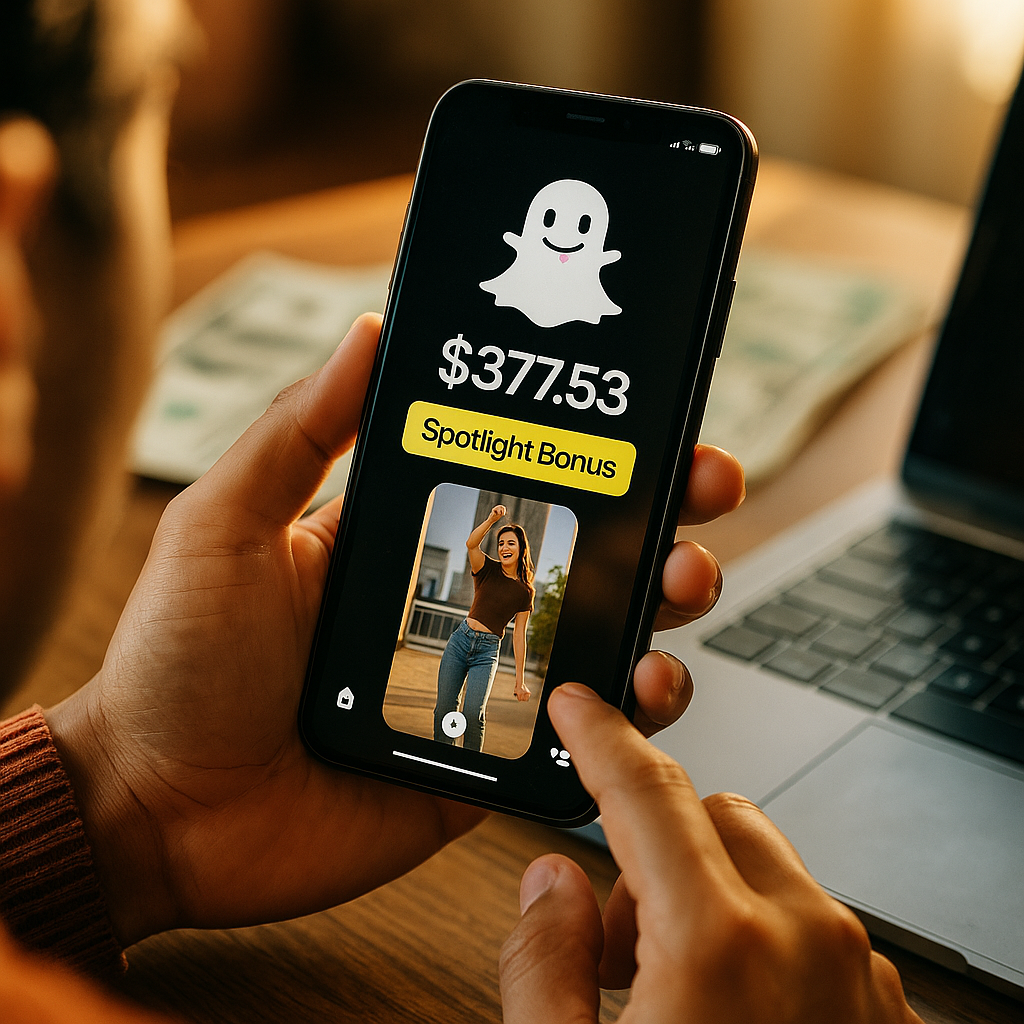
Snapchat quietly pushed over 850 million monthly Snapchatters through Spotlight and Stories last year, and most brand marketers still treat the platform like a Stories-only relic. That’s a mistake. Snapchat Spotlight for Brands now functions as a legitimate creator distribution engine, one where the platform pays creators directly for views, meaning brands can piggyback on that incentive structure instead of footing the entire bill themselves.
Here’s the uncomfortable question every CMO should be asking: if Snap is already paying creators to make short-form video, why is your influencer budget still funding 100% of the production cost?
What Spotlight Actually Is (And Why Brands Keep Underestimating It)
Spotlight is Snapchat’s algorithmic short-video feed, essentially its answer to TikTok’s For You Page. Unlike Stories, which rely on a follower graph, Spotlight surfaces content to anyone based on interest signals. That’s the part brand strategists miss: distribution isn’t gated by audience size. A creator with 4,000 followers can pull 2 million Spotlight views if the content resonates.
Snap has run creator bonus programs on and off since 2020, shifting from flat cash pools to a monetization structure tied to ad revenue share on longer videos. For brands, the mechanics matter less than the incentive alignment. Creators are financially motivated to chase reach on Spotlight regardless of whether a brand is paying them a dime. That’s free wind in your sails, if you know how to brief for it.
Spotlight’s algorithm rewards completion rate and rewatch behavior over follower count, which means a well-cast nano-creator can outperform a paid mega-influencer post for a fraction of the cost.
The ROI Case: Why Spotlight Deserves a Line Item
Let’s talk numbers, because that’s what gets budget approved. Snap reported that Spotlight and Stories together generate significant daily engagement among Gen Z and younger millennial users, a demographic that’s increasingly hard to reach through Instagram Reels alone thanks to saturation. According to eMarketer, younger audiences continue shifting time toward short-form video apps beyond TikTok, and Snapchat’s daily active user base skews younger than most legacy platforms.
The operational upside is simple: brand-sponsored Spotlight content can qualify for Snap’s creator bonus payouts on top of whatever the brand pays directly. That’s a dual-revenue structure most other platforms don’t offer. Compare that to Instagram, where Meta pays creators nothing for organic Reels performance, or TikTok, where the Creator Rewards Program has narrowed eligibility significantly. Snap’s model, imperfect as it is, still gives brands a cost-sharing lever.
For teams already running comparison shopping across platforms, it’s worth reading how Facebook’s Reels bonus program stacks up, since the incentive logic is nearly identical: platforms subsidizing creator output to seed their short-video feeds.
Building the Creator Brief for Spotlight Distribution
A generic UGC brief will not work here. Spotlight rewards specific behavioral signals: watch-through rate, loop count, and shares within the app. Briefs need to reflect that.
- Hook within 1.5 seconds. Spotlight’s swipe-to-skip behavior is even faster than TikTok’s. If the first frame doesn’t earn a pause, the video dies in the algorithm.
- Vertical, native-feeling edits. Overly polished ad content underperforms. Ask creators to shoot in-app or with minimal post-production gloss.
- Loopable endings. Content that seamlessly restarts drives rewatch metrics, which Spotlight weights heavily.
- Caption-driven searchability. Spotlight increasingly surfaces content through keyword and topic matching, not just engagement velocity.
Brands running AR try-on campaigns should also connect their Spotlight briefs to lens-based content, since Snap tends to boost Spotlight videos that use branded AR assets. If that’s on your roadmap, the Snapchat AR lens playbook covers the production and conversion side in more depth.
Compliance Isn’t Optional, Even on a “Fun” Platform
Snapchat’s younger user base means regulatory scrutiny is tighter than most brand teams assume. Any paid creator partnership distributed through Spotlight still falls under FTC disclosure rules. That means #ad or #sponsored tags, clearly placed, not buried in a caption dump.
Brands targeting UK audiences also need to keep the ICO’s guidance on children’s data and advertising in mind, given Snapchat’s demographic skew. This isn’t a place to get creative with disclosure placement. Regulators have shown increasing willingness to enforce against platforms with younger audiences, and brand liability doesn’t disappear just because a creator posted the content.
Review the FTC’s endorsement guidelines before finalizing any creator contract, and bake disclosure language directly into the brief rather than leaving it to creator discretion. Legal teams appreciate specificity, and so do platforms running automated compliance sweeps.
Bonus Pool Mechanics: What Brands Should Know Before Negotiating Rates
Here’s where it gets tactical. If a creator is already eligible for Spotlight’s monetization program, brands can often negotiate lower flat fees because the creator has a secondary revenue stream baked in. This isn’t about lowballing talent, it’s about structuring deals that reflect the platform’s actual payout economics.
Ask creators directly: are you currently enrolled in Spotlight’s creator fund or bonus structure? Their answer changes your negotiation leverage. A creator earning consistent bonus revenue from Snap has less incentive to inflate flat-fee asks, because the platform is already subsidizing part of their income. Smart brand teams treat this like any other cost-sharing arrangement, not a loophole to exploit.
Treat Spotlight bonus eligibility as a negotiation variable, not a footnote. It can shift flat-fee creator rates by a meaningful margin when structured correctly.
Measurement: Don’t Just Count Views
Spotlight view counts are notoriously easy to inflate through loop behavior, so brands need a measurement framework that goes beyond raw view totals. Track completion rate, share-to-DM behavior (a strong purchase-intent signal on Snap), and swipe-up conversions if you’re running a linked landing page.
This mirrors a broader industry shift happening across platforms right now. YouTube’s view count overhaul and TikTok’s Instant View metric changes both point to the same lesson: raw view counts are becoming less reliable as a standalone KPI. Brands that build cross-platform measurement dashboards now will avoid the scramble later when Snap inevitably tweaks its own metrics definitions.
For teams benchmarking creator performance across tools, Sprout Social’s reporting integrations and HubSpot’s campaign attribution frameworks both offer decent starting templates for adapting to Spotlight’s data exports, which admittedly lag behind Meta and TikTok’s ads manager sophistication.
Where Spotlight Fits in a Diversified Creator Strategy
No brand should build a creator program around Spotlight alone. Think of it as a distribution multiplier layered on top of an existing content strategy, not a replacement for Instagram or TikTok spend. It works best for brands with younger target demographics, mobile-first products, or AR/try-on use cases where Snap’s native tools already give you a production advantage.
Brands experimenting broadly across emerging and mid-tier platforms should also look at how Threads’ creator monetization tools are shaping up, since the platform diversification logic is nearly identical: spread creator risk across channels rather than betting everything on one algorithm’s mood.
Takeaway
Snapchat Spotlight rewards brands willing to brief for algorithmic behavior, not just aesthetics. Start with a small test cohort of five to eight creators, negotiate rates around their existing bonus eligibility, and measure share-to-DM and completion rate before scaling spend.
Frequently Asked Questions
What is Snapchat Spotlight and how is it different from Snapchat Stories?
Spotlight is Snapchat’s algorithmic short-video feed that distributes content based on interest matching rather than follower relationships, similar to TikTok’s For You Page. Stories, by contrast, rely primarily on existing follower connections.
Do brands need to pay creators separately if they’re already earning Spotlight bonuses?
Not necessarily. Brands can negotiate lower flat fees when a creator has an active Spotlight monetization stream, since the platform is already subsidizing part of the creator’s income for that content.
What content performs best on Spotlight for branded campaigns?
Native-feeling, vertical video with a fast hook, loopable endings, and minimal polished production tends to outperform traditional ad-style content, since Spotlight’s algorithm favors watch-through and rewatch behavior.
Is influencer content on Spotlight subject to FTC disclosure rules?
Yes. Any paid or gifted partnership distributed through Spotlight still requires clear disclosure under FTC endorsement guidelines, and brands remain liable even when a creator handles the posting.
How should brands measure success on Spotlight beyond view counts?
Track completion rate, share-to-DM activity, and swipe-up conversions where applicable. Raw view counts on Spotlight can be inflated by loop behavior, so they shouldn’t be the sole success metric.
Top Influencer Marketing Agencies
The leading agencies shaping influencer marketing in 2026
Agencies ranked by campaign performance, client diversity, platform expertise, proven ROI, industry recognition, and client satisfaction. Assessed through verified case studies, reviews, and industry consultations.
Moburst

-
2

The Shelf
Boutique Beauty & Lifestyle Influencer AgencyA data-driven boutique agency specializing exclusively in beauty, wellness, and lifestyle influencer campaigns on Instagram and TikTok. Best for brands already focused on the beauty/personal care space that need curated, aesthetic-driven content.Clients: Pepsi, The Honest Company, Hims, Elf Cosmetics, Pure LeafVisit The Shelf → -
3

Audiencly
Niche Gaming & Esports Influencer AgencyA specialized agency focused exclusively on gaming and esports creators on YouTube, Twitch, and TikTok. Ideal if your campaign is 100% gaming-focused — from game launches to hardware and esports events.Clients: Epic Games, NordVPN, Ubisoft, Wargaming, Tencent GamesVisit Audiencly → -
4

Viral Nation
Global Influencer Marketing & Talent AgencyA dual talent management and marketing agency with proprietary brand safety tools and a global creator network spanning nano-influencers to celebrities across all major platforms.Clients: Meta, Activision Blizzard, Energizer, Aston Martin, WalmartVisit Viral Nation → -
5

The Influencer Marketing Factory
TikTok, Instagram & YouTube CampaignsA full-service agency with strong TikTok expertise, offering end-to-end campaign management from influencer discovery through performance reporting with a focus on platform-native content.Clients: Google, Snapchat, Universal Music, Bumble, YelpVisit TIMF → -
6

NeoReach
Enterprise Analytics & Influencer CampaignsAn enterprise-focused agency combining managed campaigns with a powerful self-service data platform for influencer search, audience analytics, and attribution modeling.Clients: Amazon, Airbnb, Netflix, Honda, The New York TimesVisit NeoReach → -
7

Ubiquitous
Creator-First Marketing PlatformA tech-driven platform combining self-service tools with managed campaign options, emphasizing speed and scalability for brands managing multiple influencer relationships.Clients: Lyft, Disney, Target, American Eagle, NetflixVisit Ubiquitous → -
8

Obviously
Scalable Enterprise Influencer CampaignsA tech-enabled agency built for high-volume campaigns, coordinating hundreds of creators simultaneously with end-to-end logistics, content rights management, and product seeding.Clients: Google, Ulta Beauty, Converse, AmazonVisit Obviously →