


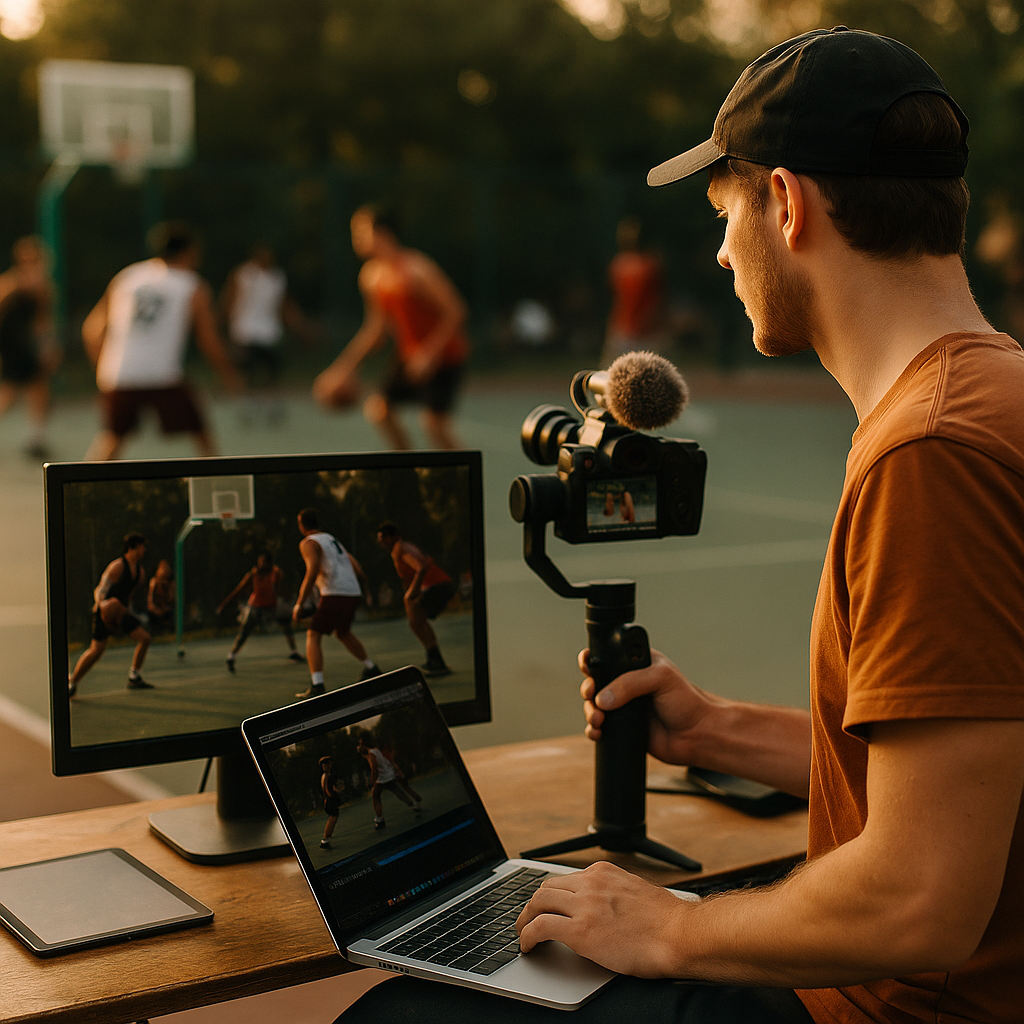
Sports brands running three separate productions to serve YouTube, CTV, and premium publisher placements are burning budget on a problem that better briefing solves. The high-impact creator video standard for sports brands isn’t about producing more content. It’s about producing smarter — once.
Why Sports Brands Keep Getting This Wrong
The default workflow at most sports sponsors looks like this: a creator films a lifestyle clip for Instagram, the brand team commissions a separate 30-second spot for CTV, and a media agency produces a third set of assets for publisher display and pre-roll. Three briefs, three shoots, three invoices. And at the end of it, the brand story still doesn’t connect across touchpoints because each piece was conceived in isolation.
The fan journey doesn’t work that way. A Nike or Gatorade fan might encounter your creator content during YouTube pre-roll before a match highlights video, see it again in a CTV ad break during the live game on ESPN+ or Peacock, then encounter a brand story in a premium publisher context on The Athletic or Bleacher Report. If those three moments don’t feel like chapters in the same story, you’ve wasted reach. You’ve reached the same person three times and told them nothing coherent.
Sports audiences are among the most cross-platform of any vertical. According to eMarketer, CTV ad spending in the sports category is growing at double the rate of general entertainment — meaning your creator content is increasingly competing for the same inventory against traditional broadcast-quality spots.
The Fan Journey as Your Brief Architecture
Before writing a single creative direction line, map the fan journey in three stages: pre-game anticipation, in-moment intensity, and post-game identity. These aren’t just emotional states. They’re content modes that correspond directly to where your creative will be distributed.
Pre-game anticipation plays on YouTube. Fans searching for previews, predictions, and behind-the-scenes access are in discovery mode. Long-form creator content (8 to 18 minutes) with strong search intent signals lives here. Your brief needs to tell the creator to build a genuine narrative arc, not just a product mention. This is where long-form creator strategy pays its rent.
In-moment intensity is CTV territory. This is the 15 or 30-second extracted clip, engineered from the same shoot as the long-form. The brief must specify that the creator capture 3 to 5 standalone moments within the longer shoot: a reaction, a product interaction, a declarative statement that lands without context. These become your CTV assets. No second shoot required.
Post-game identity is premium publisher territory: The Athletic, ESPN digital, Bleacher Report, local sports publishers. These placements require a more considered, editorial tone. The brief needs to instruct creators to produce a “calm version” of their on-camera energy — still authentic, but at a register that matches the reading environment rather than the algorithm-optimized feed.
What Goes in the Brief (Specifically)
Generic briefs produce generic content. A high-impact sports creator brief has six non-negotiable components.
- Surface specifications up front. Tell the creator which platforms this will run on, in what formats, and what the viewing context is for each. A fan watching on a 65-inch OLED during a live game is not the same viewer as someone scrolling YouTube Shorts at halftime. Frame the brief around the audience’s state of mind, not just aspect ratios.
- Modular scene architecture. Instruct creators to film discrete scenes that can be assembled independently. Scene one: product in use in a game-day context (CTV-extractable). Scene two: extended story or reaction (YouTube long-form). Scene three: quiet, considered reflection (publisher placement). The creator shoots all three in one session.
- Brand safety guardrails tied to placement. CTV inventory on premium sports properties has stricter compliance requirements than social. The brief must specify which claims can be made, which visuals are cleared, and where FTC disclosure language needs to appear. See the FTC guidelines for endorsement disclosure requirements, which apply regardless of surface.
- Audio design instructions. CTV is a lean-back, audio-on environment. YouTube is often audio-on with visual attention. Publisher pre-roll is frequently muted. Brief creators on which scenes need strong verbal hooks versus which should work without sound. This determines caption strategy, on-screen text placement, and the weight given to visual storytelling.
- Clear extraction instructions. Explicitly tell the creator which moments in the long-form are candidates for CTV extraction. “The moment between 4:30 and 5:15 where you demonstrate the product should be filmed as if it could stand alone.” Creators are not media planners. They need this spelled out.
- Rights language that covers all surfaces. One of the most expensive mistakes in multi-surface distribution is discovering that the talent agreement or music licensing only covers social. Build out rights for YouTube, CTV, and publisher pre-roll in the original contract. For a deeper look at structuring this from the brief outward, the UGC-to-CTV distribution pipeline framework is worth reviewing.
Technical Standards That Actually Matter
This is where most briefs fail silently. The creative direction is fine. The strategy is coherent. But the creator delivers footage that fails quality checks for CTV or publisher placements, and the brand team is suddenly back in production.
Specify minimum capture requirements in the brief itself: 4K capture at 24fps minimum for CTV, with adequate headroom and clean audio track separated from ambient sound. For vertical-to-CTV adaptation, instruct creators to capture in 16:9 even when primary delivery is vertical, then reframe for each surface in post. This single instruction saves significant rework cost.
Logo and product visibility standards also vary by surface. On CTV, a product that’s briefly on-screen in social will often require a longer hold to register with lean-back viewers. Brief creators to hold product moments for at least 3 to 4 seconds in scenes designated for CTV extraction.
Keeping Brand Voice Consistent Across Creators
Sports brands working with multiple creators across a season face an amplified version of a problem every multi-creator program has: maintaining recognizable brand identity without sanitizing the creator’s voice into irrelevance. The brief is the only lever you actually control.
Build a two-page brand standards addendum into every creator brief. Not a full style guide. A focused reference: three words that describe the brand’s tone, two examples of on-brand content from past campaigns, two examples of off-brand content (from anywhere), and one sentence on what the brand never does. That’s it. Creators can work with that. A 40-page PDF of guidelines gets skimmed once and forgotten. For a systematic approach to this, multi-creator brand consistency has practical frameworks that apply directly to sports campaigns.
Sponsorship disclosure is not a compliance afterthought in sports creator content — it’s a trust signal. Research consistently shows that transparent disclosures don’t depress engagement when handled authentically. Brief creators on disclosure language early, not as a legal footnote at the bottom of the document.
Measuring Performance Without Surface Silos
If your measurement model treats YouTube performance, CTV reach, and publisher impressions as three separate campaign lines, you’ll never understand how the fan journey is actually working. The whole point of producing connected content is to capture the compounding effect across touchpoints.
Set up a unified measurement framework before the campaign launches. Use Google’s cross-channel attribution tools to connect YouTube creator content performance to downstream CTV and search lift. For CTV-specific measurement, platforms like iSpot.tv and Samba TV offer cross-device match rates that can help you see whether fans who saw the CTV extraction also engaged with the long-form YouTube content. Brand lift studies on YouTube can be run against the same audience segment exposed to CTV ads to measure cumulative message retention.
Track creator content not just by platform KPIs (views, completion rate, click-through) but by a fan journey metric: what percentage of your target audience encountered the brand story at two or more touchpoints? That’s your real number. A single touchpoint at scale is media buying. Multiple touchpoints from a unified creator story is brand building.
For brands scaling this approach across international markets and multiple sports properties, AI-assisted localization can adapt the same core assets to regional audiences without a full re-brief or new shoot. The efficiency gains are significant when the original brief has been structured for modularity from the start. AI localization at global scale covers the operational mechanics in detail.
The One Thing to Fix First
If your creator brief doesn’t explicitly tell creators that the content will run on CTV and premium publisher placements, and doesn’t give them the technical and creative parameters to accommodate those surfaces, you will keep commissioning separate productions. Start there. Rewrite your standard sports creator brief template to include surface specifications, modular scene instructions, and extraction guidance before anything else changes. The production savings alone will cover the time it takes to do it.
Frequently Asked Questions
What is a fan-journey-spanning creator brief?
A fan-journey-spanning creator brief is a creative and technical document that instructs creators to produce video content structured around the emotional and behavioral stages a sports fan moves through: pre-game discovery, in-game intensity, and post-game reflection. Each stage maps to a distribution surface (YouTube, CTV, premium publishers), and the brief ensures the same shoot can produce assets for all three without separate productions.
How do you brief a creator to produce content that works on CTV without a second shoot?
The brief must specify modular scene architecture: instruct the creator to film discrete, standalone moments within the longer production that can be extracted as 15 or 30-second CTV clips. Technical requirements (4K capture, clean audio track, 3-4 second product holds) must also be specified in the brief itself. Explicit extraction guidance — noting specific scenes or timestamps designated for CTV — ensures creators understand the requirement without needing media planning knowledge.
What technical specs should a sports creator brief include for CTV placement?
At minimum: 4K capture at 24fps, clean separated audio track, 16:9 capture even if primary delivery is vertical, product visibility holds of at least 3-4 seconds in CTV-designated scenes, and no on-screen text or graphics in areas that conflict with broadcaster overlay zones. Rights language must also cover CTV distribution, which differs from social platform licensing.
How should sports brands handle FTC disclosure across YouTube, CTV, and publisher placements?
FTC disclosure requirements apply to all paid endorsements regardless of the distribution surface. The brief should specify the exact disclosure language for each surface: verbal and on-screen disclosure for YouTube and CTV, and text-based disclosure for publisher pre-roll. Brief creators on disclosure placement early in the creative process, not as a legal addendum. For current requirements, refer directly to the FTC’s endorsement guidelines at ftc.gov.
How do you measure creator content performance across multiple surfaces without siloing data?
Set up a unified measurement framework before the campaign launches. Connect YouTube creator content analytics to CTV cross-device measurement tools (such as iSpot.tv or Samba TV) and run brand lift studies against audiences exposed across multiple touchpoints. The key metric is the percentage of target audience members who encountered the brand story at two or more surfaces, which captures the compounding effect of connected creator content.
Can one creator brief work for multiple sports creators on the same campaign?
Yes, with a two-layer structure: a universal brief that covers surface specifications, technical requirements, modular scene architecture, and rights language, combined with a creator-specific addendum that provides personalized tone guidance, relevant platform context, and the brand standards reference (tone words, on-brand and off-brand examples). This preserves creator authenticity while maintaining campaign coherence across talent.
Top Influencer Marketing Agencies
The leading agencies shaping influencer marketing in 2026
Agencies ranked by campaign performance, client diversity, platform expertise, proven ROI, industry recognition, and client satisfaction. Assessed through verified case studies, reviews, and industry consultations.
Moburst

-
2

The Shelf
Boutique Beauty & Lifestyle Influencer AgencyA data-driven boutique agency specializing exclusively in beauty, wellness, and lifestyle influencer campaigns on Instagram and TikTok. Best for brands already focused on the beauty/personal care space that need curated, aesthetic-driven content.Clients: Pepsi, The Honest Company, Hims, Elf Cosmetics, Pure LeafVisit The Shelf → -
3

Audiencly
Niche Gaming & Esports Influencer AgencyA specialized agency focused exclusively on gaming and esports creators on YouTube, Twitch, and TikTok. Ideal if your campaign is 100% gaming-focused — from game launches to hardware and esports events.Clients: Epic Games, NordVPN, Ubisoft, Wargaming, Tencent GamesVisit Audiencly → -
4

Viral Nation
Global Influencer Marketing & Talent AgencyA dual talent management and marketing agency with proprietary brand safety tools and a global creator network spanning nano-influencers to celebrities across all major platforms.Clients: Meta, Activision Blizzard, Energizer, Aston Martin, WalmartVisit Viral Nation → -
5

The Influencer Marketing Factory
TikTok, Instagram & YouTube CampaignsA full-service agency with strong TikTok expertise, offering end-to-end campaign management from influencer discovery through performance reporting with a focus on platform-native content.Clients: Google, Snapchat, Universal Music, Bumble, YelpVisit TIMF → -
6

NeoReach
Enterprise Analytics & Influencer CampaignsAn enterprise-focused agency combining managed campaigns with a powerful self-service data platform for influencer search, audience analytics, and attribution modeling.Clients: Amazon, Airbnb, Netflix, Honda, The New York TimesVisit NeoReach → -
7

Ubiquitous
Creator-First Marketing PlatformA tech-driven platform combining self-service tools with managed campaign options, emphasizing speed and scalability for brands managing multiple influencer relationships.Clients: Lyft, Disney, Target, American Eagle, NetflixVisit Ubiquitous → -
8

Obviously
Scalable Enterprise Influencer CampaignsA tech-enabled agency built for high-volume campaigns, coordinating hundreds of creators simultaneously with end-to-end logistics, content rights management, and product seeding.Clients: Google, Ulta Beauty, Converse, AmazonVisit Obviously →