


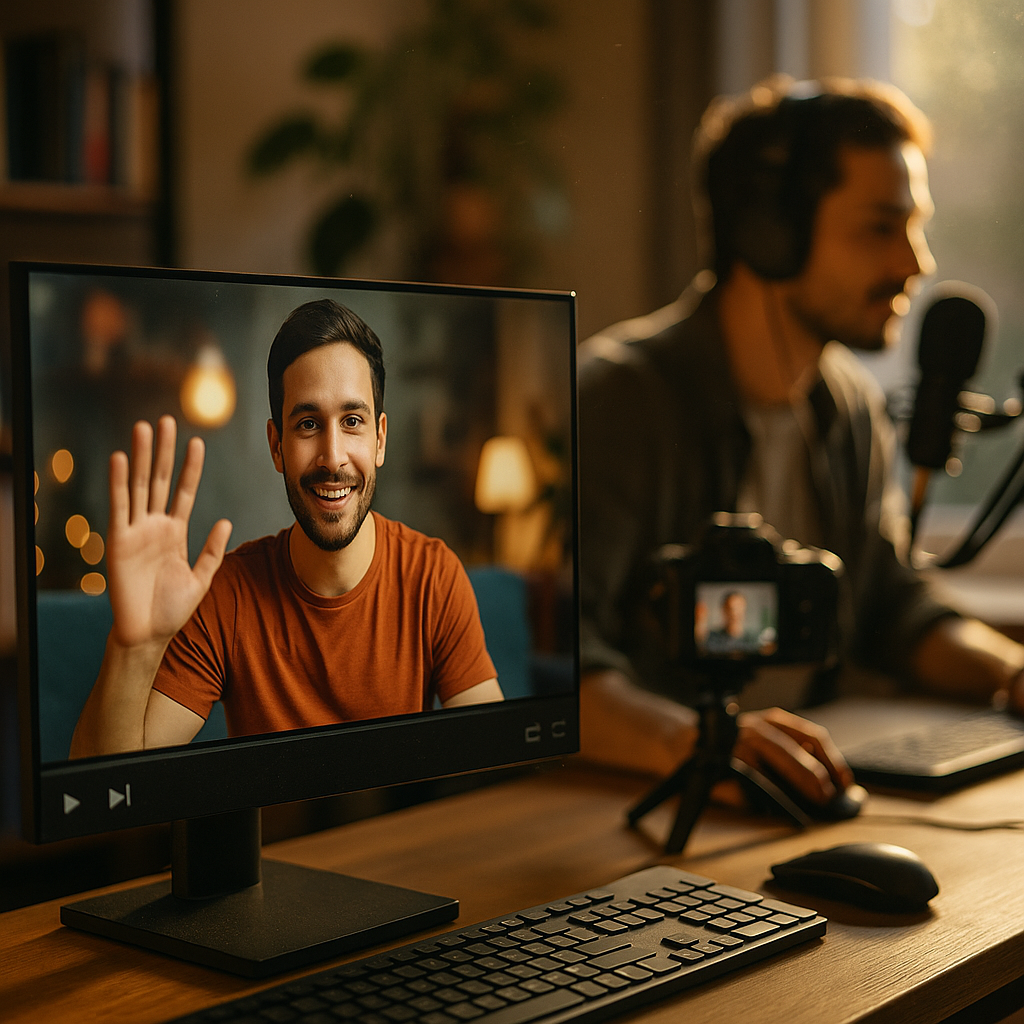
Netflix now runs creator-hosted specials. Amazon pays YouTubers to build shows for Prime Video. YouTube’s TV screen viewing time has overtaken mobile in U.S. living rooms. This is not a side experiment anymore — it’s a full-on land grab, and it changes how every brand should think about a streaming platform as a creator distribution channel, not just a media buy.
The Line Between Streaming and Social Just Dissolved
For years, “streaming” meant scripted television delivered on a schedule, and “social” meant short, algorithmic, creator-led content consumed on a phone. Those categories are collapsing into each other. Netflix has licensed creator-led unscripted formats. YouTube is the single most-watched service on connected TVs in the U.S., according to Nielsen’s Gauge data. Amazon’s Prime Video has opened direct pipelines to creators for original programming. Roku and Samsung TV Plus are stacking free ad-supported channels built entirely around creator personalities.
What used to be a two-lane system — paid social for reach, streaming for prestige — is becoming one lane with multiple on-ramps. A creator can now post a Shorts clip, host a long-form podcast episode, and appear in a Netflix-adjacent unscripted format, all from the same IP, same week. For brand strategists, that means the old media plan (TV budget here, influencer budget there) no longer maps to how content actually travels.
Streaming platforms aren’t replacing social distribution — they’re absorbing it. The creator is becoming the format, regardless of screen.
Why Platforms Want Creators More Than Studios
Streamers are chasing creators for the same reason brands are: cost efficiency and audience trust. A creator-led series costs a fraction of scripted programming and arrives with a built-in, loyal audience that doesn’t need a marketing campaign to discover it. Netflix doesn’t have to build awareness for a show fronted by a creator with 8 million existing subscribers. That audience already showed up.
This is the same math that’s driven the shift toward creator ad spend outpacing traditional digital channels generally. Streamers are simply applying it to original content commissioning. eMarketer has repeatedly flagged that ad-supported streaming tiers now depend on influencer-adjacent programming to keep CPMs competitive against YouTube and TikTok, per eMarketer’s connected TV research.
There’s also a defensive angle. Streaming platforms watched YouTube eat into linear TV’s living-room dominance and don’t want to repeat that mistake with creators building parallel ecosystems on TikTok or Substack. Better to bring the talent in-house, or at least under a distribution deal, than to compete against them for attention.
What This Means for Brand Budgets
Here’s the uncomfortable part for a lot of marketing teams: your media plan probably still treats “streaming” and “influencer” as separate line items with separate approval chains, separate measurement frameworks, and often separate agencies. That structure is becoming a liability.
If a creator’s content is simultaneously distributed on TikTok, YouTube, and a connected TV app, which budget pays for the brand integration? Who owns the usage rights? What’s the attribution model when a single piece of content shows up across three measurement systems that don’t talk to each other?
- Brand safety review now has to account for CTV-grade content standards, not just platform community guidelines.
- Contracts need usage terms that cover streaming redistribution, not just original social placement.
- Media planning teams need a shared view of reach across CTV and social rather than siloed dashboards.
- Procurement needs faster approval cycles, since streaming-adjacent creator deals move at social speed, not upfront speed.
This is very much the operational shift already discussed around on-demand content libraries replacing campaign bursts. Streaming distribution just adds another shelf for that always-on library to sit on, and another set of rights to manage.
Social-First Formats Are Rewriting What “Premium” Means
A decade ago, premium inventory meant a 30-second spot in a scripted drama with a recognizable cast. Now it might mean a mid-roll placement in a creator-hosted unscripted format streaming on Prime Video, built with the pacing and intimacy of a YouTube vlog but the production polish of television.
That hybrid format is exactly what’s pulling budget attention. Brands that spent years perfecting native-feeling influencer integrations are discovering those same skills translate directly to streaming placements. The creator doesn’t change their tone for the bigger screen. The audience doesn’t expect them to.
Sprout Social’s research on platform trust consistently shows audiences rate creator recommendations above traditional advertising, per Sprout Social’s index reports. That trust doesn’t evaporate when the same creator’s content lands on a bigger screen. If anything, it compounds, because streaming still carries a “curated” halo that social platforms don’t always have.
This matters for budget allocation. Dollars that would have gone toward a linear CTV buy are increasingly funding creator-fronted streaming formats instead, precisely because the trust transfer is stronger and the production cost is lower.
The premium inventory of the next few years won’t be defined by screen size or production budget — it’ll be defined by whether the creator’s audience already trusts them before the brand shows up.
Measurement Is the Hard Part Nobody’s Solved
Ask any media buyer where this gets complicated and they’ll say attribution. Social platforms report engagement, views, click-through. Streaming platforms report completion rates, household reach, sometimes nothing granular at all. When a creator’s content lives on both, brands are stuck stitching together incompatible metrics to answer one simple question: did this work?
Some platforms are building bridges. YouTube’s integration with Nielsen and its own CTV reporting inside Google Ads is a start. TikTok has pushed harder on incrementality testing through its TikTok Ads Manager tools. But there’s no unified standard yet for measuring a creator’s footprint across a streaming placement and a social post from the same campaign.
This is part of a broader measurement reckoning that’s been building across the industry, echoed in coverage of the attention recession forcing reach planning changes. Brands that wait for a perfect cross-platform standard will simply be late. The more pragmatic move is building an internal framework now: define what “reach” means across formats, agree on a shared source of truth even if it’s imperfect, and revisit it quarterly as platforms improve their reporting.
Who’s Actually Winning Budget Here
It’s not the mega-celebrity creators, at least not exclusively. Mid-tier creators with loyal, format-flexible audiences are landing streaming deals because they’re cheaper to work with and their content translates across screen sizes without losing authenticity. This tracks with what’s already been documented about the creator middle class outperforming top talent on ROI.
Brands chasing this shift should ask a blunt question before signing any streaming-distribution creator deal: does this creator’s content actually work without the platform’s algorithm doing the heavy lifting? If a creator’s engagement depends entirely on a For You Page boost, that value doesn’t necessarily transfer to a CTV app where discovery works completely differently.
There’s also a self-funding trend worth watching. More creators are building their own production capacity, partly to control how their content gets repackaged for streaming deals. That shift in leverage was covered in detail around creators self-funding studios and shifting negotiating leverage. Brands negotiating streaming-adjacent placements should expect creators to hold firmer lines on usage rights and exclusivity than they might on a standard sponsored post.
Practical Next Steps for Brand Teams
None of this requires a total overhaul of your influencer program. It requires updating a few specific muscles:
Start by auditing existing creator contracts for streaming redistribution clauses. Most brand-creator agreements written even eighteen months ago say nothing about CTV placement rights. Second, loop your media planning and influencer teams into the same briefing calls; siloed teams will keep buying overlapping reach without knowing it. Third, build a lightweight cross-platform measurement view, even a shared spreadsheet, before the next budget cycle. Fourth, prioritize creators whose content format already works across screen sizes, rather than betting on a single-platform specialist to suddenly translate.
For a compliance gut-check on disclosure requirements as creator content moves onto streaming inventory, the FTC’s endorsement guidance still applies regardless of screen. Streaming doesn’t exempt anyone from disclosure rules, and regulators haven’t signaled any intention of treating it differently.
Frequently Asked Questions
Is streaming really becoming a creator distribution channel, or is this a niche trend?
It’s broad and accelerating. Nielsen’s Gauge data has shown YouTube leading total U.S. streaming viewership on connected TVs for multiple consecutive periods, and major platforms including Amazon and Netflix have both signed creator-led programming deals. This isn’t a fringe experiment; it’s a core distribution strategy for platforms competing for living-room attention.
Should brands shift budget from social influencer campaigns to streaming placements?
Not as an either/or decision. The smarter move is treating streaming as an extension of an existing creator relationship rather than a separate budget line. Brands that already work with a creator on social can often negotiate streaming distribution rights into the same deal at a lower incremental cost than starting a new streaming-specific campaign.
How does measurement work when a creator’s content appears on both social and streaming platforms?
Imperfectly, for now. There’s no unified cross-platform standard, so brands need to build an internal framework that defines shared reach and engagement metrics, even if it means accepting some inconsistency between platform reports until measurement tools mature.
Do FTC disclosure rules apply to creator content distributed on streaming platforms?
Yes. Disclosure requirements follow the content and the relationship, not the screen it’s displayed on. Brands should ensure creator contracts specify disclosure obligations for any streaming redistribution of sponsored content.
What type of creator performs best in streaming-adjacent formats?
Creators whose engagement isn’t solely dependent on algorithmic discovery tend to translate better, since streaming platforms don’t distribute content the same way social feeds do. Mid-tier creators with loyal, niche audiences are increasingly landing these deals over mega-celebrity talent.
Visible FAQ Schema Reference
(See structured data block below for search engines.)
The brands that win this shift won’t be the ones with the biggest streaming budget line, but the ones who update creator contracts, measurement frameworks, and approval speed before the next renewal cycle forces the issue.
Top Influencer Marketing Agencies
The leading agencies shaping influencer marketing in 2026
Agencies ranked by campaign performance, client diversity, platform expertise, proven ROI, industry recognition, and client satisfaction. Assessed through verified case studies, reviews, and industry consultations.
Moburst

-
2

The Shelf
Boutique Beauty & Lifestyle Influencer AgencyA data-driven boutique agency specializing exclusively in beauty, wellness, and lifestyle influencer campaigns on Instagram and TikTok. Best for brands already focused on the beauty/personal care space that need curated, aesthetic-driven content.Clients: Pepsi, The Honest Company, Hims, Elf Cosmetics, Pure LeafVisit The Shelf → -
3

Audiencly
Niche Gaming & Esports Influencer AgencyA specialized agency focused exclusively on gaming and esports creators on YouTube, Twitch, and TikTok. Ideal if your campaign is 100% gaming-focused — from game launches to hardware and esports events.Clients: Epic Games, NordVPN, Ubisoft, Wargaming, Tencent GamesVisit Audiencly → -
4

Viral Nation
Global Influencer Marketing & Talent AgencyA dual talent management and marketing agency with proprietary brand safety tools and a global creator network spanning nano-influencers to celebrities across all major platforms.Clients: Meta, Activision Blizzard, Energizer, Aston Martin, WalmartVisit Viral Nation → -
5

The Influencer Marketing Factory
TikTok, Instagram & YouTube CampaignsA full-service agency with strong TikTok expertise, offering end-to-end campaign management from influencer discovery through performance reporting with a focus on platform-native content.Clients: Google, Snapchat, Universal Music, Bumble, YelpVisit TIMF → -
6

NeoReach
Enterprise Analytics & Influencer CampaignsAn enterprise-focused agency combining managed campaigns with a powerful self-service data platform for influencer search, audience analytics, and attribution modeling.Clients: Amazon, Airbnb, Netflix, Honda, The New York TimesVisit NeoReach → -
7

Ubiquitous
Creator-First Marketing PlatformA tech-driven platform combining self-service tools with managed campaign options, emphasizing speed and scalability for brands managing multiple influencer relationships.Clients: Lyft, Disney, Target, American Eagle, NetflixVisit Ubiquitous → -
8

Obviously
Scalable Enterprise Influencer CampaignsA tech-enabled agency built for high-volume campaigns, coordinating hundreds of creators simultaneously with end-to-end logistics, content rights management, and product seeding.Clients: Google, Ulta Beauty, Converse, AmazonVisit Obviously →