


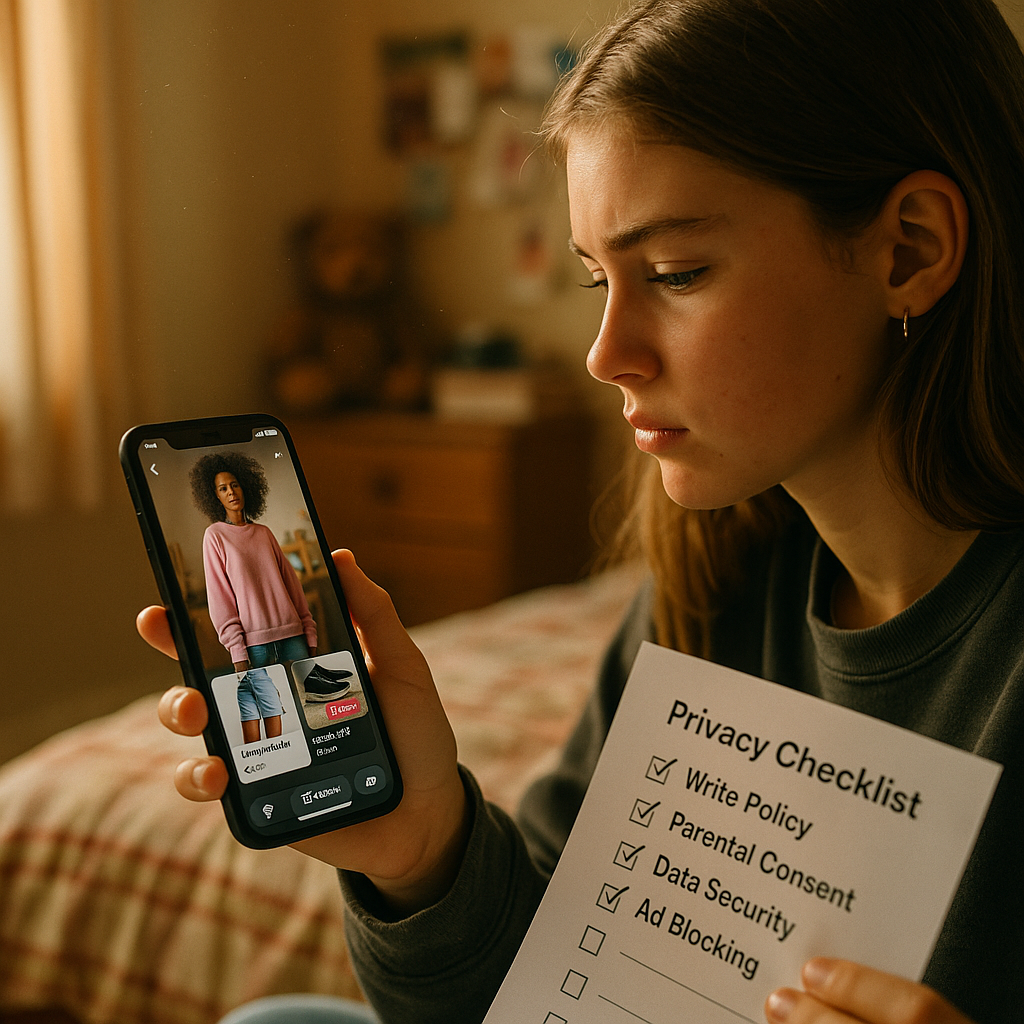
73% of teens have made a purchase directly from a livestream or shoppable video in the past year, according to recent creator commerce surveys, and almost none of those transactions trigger COPPA review. That’s the blind spot. Brands have spent years building COPPA checklists for kids under 13, while the real exposure now sits in the 13 to 17 bracket, the exact age group most shoppable drops are built to target. Youth privacy risk in teen targeted shoppable drops isn’t a hypothetical. It’s a live regulatory gap that state attorneys general are already exploiting.
Why COPPA Was Never Built for This
COPPA covers children under 13. Full stop. The moment a shoppable drop targets 14, 15, 16 year olds, the federal statute that most legal teams cite as their privacy shield simply stops applying. That doesn’t mean the risk disappears. It means it migrates somewhere brands aren’t looking: state teen privacy statutes, biometric data laws, and dark pattern enforcement under FTC Section 5.
Think about the mechanics of a typical shoppable drop. A creator hosts a livestream, countdown timers create urgency, limited-quantity drops trigger FOMO, and a checkout flow captures name, email, sometimes a phone number for SMS alerts on the “next drop.” None of that is COPPA-triggering if the audience skews 15-17. But several states, including California, Connecticut, and Colorado, now have separate teen-specific data protection provisions that layer on top of general consumer privacy law. If your legal team is only running the COPPA questionnaire, you are missing an entire second checklist.
Age-gating a shoppable drop at “13+” doesn’t create compliance. It creates a paper trail proving you knew you were collecting teen data without a teen-specific consent framework.
The Compliance Checklist Beyond COPPA
Here’s what an actual audit needs to cover, item by item, before the next drop goes live.
- Age verification method and its documentation. Self-attestation checkboxes don’t hold up anymore. Regulators want to see what method you used and why you believed it was reasonable for the platform and audience.
- Data minimization at checkout. Does the shoppable flow collect more than it needs? Phone numbers for “drop alerts” are a common overreach that regulators flag as secondary use without clear consent.
- Dark pattern review of urgency mechanics. Countdown timers, low-stock alerts, and social proof pop-ups aimed at teen audiences draw specific FTC scrutiny under unfairness doctrine, separate from privacy law entirely.
- Third-party pixel and SDK audit. Every ad tech vendor touching the checkout page needs a data flow map. State teen privacy laws increasingly require disclosure of who else receives that data.
- Parental notice thresholds. Some state statutes require notice (not consent, notice) to parents when a known minor makes a purchase over a certain value threshold.
- Retention and deletion schedule specific to minors. Adult data retention windows often don’t apply. Teen data frequently requires shorter retention and an easier deletion path.
- Creator brief language on age-appropriate framing. If the creator’s script pushes urgency tactics the brand didn’t approve, that’s a liability the brand still owns.
None of this is exotic. It’s operational hygiene that most brands simply haven’t updated since COPPA training five or six years ago.
Where State Law Fills the Gap
California’s teen-focused amendments and Connecticut’s data privacy act both carve out heightened obligations for processing known minor data, generally defined as under 18 rather than under 13. That’s a massive expansion of scope for any brand running shoppable drops aimed at high schoolers. If a platform’s own age data (self-reported, inferred, or provided at signup) suggests a user is 13-17, the “known minor” trigger activates regardless of whether the campaign was designed with kids in mind.
This is where a lot of influencer marketing teams get caught flat-footed. Campaign targeting on TikTok Shop or Instagram often segments by interest and behavior, not strict age brackets. But the platforms themselves hold age data. If a brand’s targeting overlaps heavily with a known-minor segment, courts and regulators are increasingly willing to impute knowledge to the brand, even without explicit targeting instructions. Our TikTok Shop disclosure coverage gets into how paid partnership labeling intersects with this exact targeting ambiguity.
For platform specifics, marketing teams should also review TikTok’s advertising policies and Meta’s business guidelines on minor data handling, since both have tightened rules ahead of state enforcement waves.
Dark Patterns Aren’t Just a UX Problem
Shoppable drops live and die on urgency. That’s the whole design premise: scarcity, countdowns, social proof. But when the audience is teenagers, the FTC treats manipulative design with a lower tolerance threshold than it does for adult consumers. The agency has been explicit that design choices exploiting a lack of consumer sophistication, something regulators associate more readily with minors, can constitute an unfair practice under Section 5 even absent a privacy violation.
This means your compliance checklist can’t stop at data collection. It needs a UX review layer. Does the checkout flow use pressure tactics disproportionate to what an informed adult buyer would tolerate? Would a reasonable regulator look at that drop timer and see manipulation rather than marketing? These aren’t rhetorical questions anymore, they’re the actual test the FTC applies. For a broader look at how AI-driven urgency claims intersect with disclosure obligations, see our piece on real time AI forecasting claims.
If your urgency mechanics wouldn’t survive a regulator screen-recording the checkout flow and asking “would a 15 year old understand this is designed to rush them,” redesign it before the next drop.
Disclosure Still Matters, Maybe More
Teen audiences are also the demographic least likely to recognize sponsored content as sponsored content. That’s not opinion, it’s been documented repeatedly in FTC consumer research and in academic media literacy studies. So the disclosure standards that apply to adult-facing influencer content need to be even more airtight for teen-targeted drops. A verbal “link in bio, thanks brand” mention buried in a fast-paced livestream doesn’t cut it. Our detailed breakdown in one creator post, three FTC disclosure standards is a useful baseline, but teen-targeted campaigns should treat that as a floor, not a ceiling.
Brands should also revisit how AI-generated content interacts with youth audiences. Synthetic creators, AI voiceovers narrating a drop, or AI-personalized product recommendations all introduce another disclosure layer that teen viewers are even less equipped to parse. The TikTok AI content disclosure mandate piece walks through what needs flagging, and it applies with extra force when the audience skews younger.
Breach Risk Multiplies With Minor Data
Here’s the part legal teams underweight: breach notification obligations often escalate when minor data is involved. A checkout database breach involving adult emails is bad. The same breach involving a database segmented by age, or containing known-minor flags, can trigger stricter, faster notification timelines under several state frameworks. If your shoppable drop pipeline uses real-time personalization or AI-driven recommendation feeds, that data often sits in less-audited infrastructure than your core CRM. We’ve covered this exposure in depth in real time AI pipelines and breach notification risk, and it’s directly relevant to any brand running personalized teen shopping experiences.
Insurance is the other blind spot. Standard media liability policies rarely anticipate teen-specific privacy claims at the scale plaintiffs’ firms are now pursuing. Brands running in-person pop-up drops with filming components should also review the coverage gaps outlined in in-store filming insurance gaps, since teen-attended events add a layer of consent complexity that generic event insurance doesn’t price in.
Building the Actual Program
A workable youth privacy program for shoppable drops needs three owners, not one. Legal owns the state-by-state statute mapping. Marketing ops owns the checkout data flow and age verification tooling. Creative and brand safety own the urgency mechanics and disclosure language in the creator brief. Too many brands assign this entirely to legal, who then hands back a document nobody in marketing reads before the drop ships.
Practical steps that actually get implemented:
- Run a quarterly data flow audit specifically for any campaign where audience data suggests 13-17 skew, regardless of stated targeting intent.
- Add a “teen UX review” gate to the creative approval process, separate from the standard brand safety review.
- Require creators running teen-targeted drops to use the strictest applicable disclosure standard by default, not the platform minimum.
- Shorten data retention windows for any checkout flow where age data is known or inferable.
- Document the age verification rationale in writing, every time, so there’s a defensible record if a regulator asks.
None of this requires new headcount. It requires treating teen data as its own risk category instead of a subset of general COPPA training that nobody has updated since the first Trump administration’s FTC guidance cycle.
For broader context on how consumer data protection frameworks are evolving, the FTC’s official guidance and the ICO’s data protection resources are both useful ongoing references, especially for brands running cross-border teen campaigns.
FAQs
Does COPPA apply to teenagers aged 13 to 17?
No. COPPA only covers children under 13. Teens aged 13-17 fall outside COPPA entirely, which is why brands need separate state privacy law review for this age group.
What states have specific teen data privacy requirements?
California, Connecticut, and Colorado are among the states with provisions addressing “known minor” data, generally covering users under 18, separate from general consumer privacy obligations.
Can urgency tactics like countdown timers create legal risk in teen-targeted drops?
Yes. The FTC has signaled that manipulative design targeting less sophisticated consumers, including minors, can violate Section 5’s unfairness standard independent of any privacy law violation.
What data should shoppable checkout flows avoid collecting from teen users?
Anything beyond what’s strictly needed to complete the transaction. Phone numbers collected for marketing alerts, unless clearly consented to, are a frequent compliance flag in teen-targeted flows.
Who inside a brand should own youth privacy compliance for shoppable drops?
It should be shared across legal (statute mapping), marketing ops (data flow and age verification), and creative teams (UX and disclosure language), not siloed entirely within legal.
The next teen-targeted drop on your calendar is a compliance test whether you planned it that way or not. Run the checklist above before launch, not after a state AG inquiry forces the issue.
Top Influencer Marketing Agencies
The leading agencies shaping influencer marketing in 2026
Agencies ranked by campaign performance, client diversity, platform expertise, proven ROI, industry recognition, and client satisfaction. Assessed through verified case studies, reviews, and industry consultations.
Moburst

-
2

The Shelf
Boutique Beauty & Lifestyle Influencer AgencyA data-driven boutique agency specializing exclusively in beauty, wellness, and lifestyle influencer campaigns on Instagram and TikTok. Best for brands already focused on the beauty/personal care space that need curated, aesthetic-driven content.Clients: Pepsi, The Honest Company, Hims, Elf Cosmetics, Pure LeafVisit The Shelf → -
3

Audiencly
Niche Gaming & Esports Influencer AgencyA specialized agency focused exclusively on gaming and esports creators on YouTube, Twitch, and TikTok. Ideal if your campaign is 100% gaming-focused — from game launches to hardware and esports events.Clients: Epic Games, NordVPN, Ubisoft, Wargaming, Tencent GamesVisit Audiencly → -
4

Viral Nation
Global Influencer Marketing & Talent AgencyA dual talent management and marketing agency with proprietary brand safety tools and a global creator network spanning nano-influencers to celebrities across all major platforms.Clients: Meta, Activision Blizzard, Energizer, Aston Martin, WalmartVisit Viral Nation → -
5

The Influencer Marketing Factory
TikTok, Instagram & YouTube CampaignsA full-service agency with strong TikTok expertise, offering end-to-end campaign management from influencer discovery through performance reporting with a focus on platform-native content.Clients: Google, Snapchat, Universal Music, Bumble, YelpVisit TIMF → -
6

NeoReach
Enterprise Analytics & Influencer CampaignsAn enterprise-focused agency combining managed campaigns with a powerful self-service data platform for influencer search, audience analytics, and attribution modeling.Clients: Amazon, Airbnb, Netflix, Honda, The New York TimesVisit NeoReach → -
7

Ubiquitous
Creator-First Marketing PlatformA tech-driven platform combining self-service tools with managed campaign options, emphasizing speed and scalability for brands managing multiple influencer relationships.Clients: Lyft, Disney, Target, American Eagle, NetflixVisit Ubiquitous → -
8

Obviously
Scalable Enterprise Influencer CampaignsA tech-enabled agency built for high-volume campaigns, coordinating hundreds of creators simultaneously with end-to-end logistics, content rights management, and product seeding.Clients: Google, Ulta Beauty, Converse, AmazonVisit Obviously →