


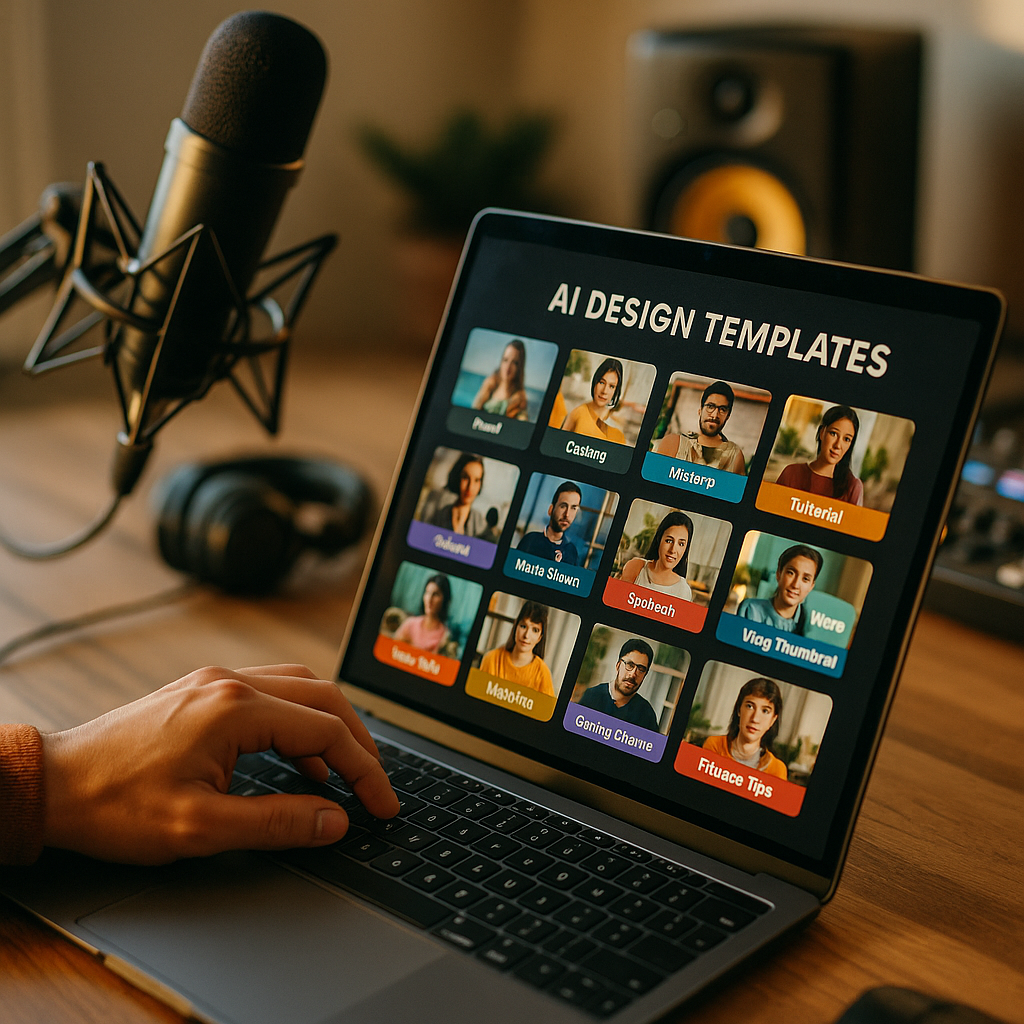
Ninety seconds. That’s roughly how long it takes a micro-creator with zero editing skill to produce a polished, on-brand video using a templated AI studio like Captions, Pika, or Runway’s presets. The micro-creator expansion curve — the rate at which smaller creators gain access to production tools once reserved for agencies — just went vertical. Brands that still gate quality by follower count are about to miss the best inventory of their careers.
The Old Barrier Just Collapsed
For years, the influencer market sorted itself by production capability as much as audience size. Mega and mid-tier creators could afford editors, lighting kits, and a few hours with a colorist. Micro-creators — typically defined as accounts with 10,000 to 100,000 followers — often couldn’t. Their content looked scrappier, which brands read (rightly or wrongly) as a proxy for lower professionalism.
That gap is closing fast. Templated AI studios now bundle script generation, voice cloning, auto B-roll, captioning, and brand-kit color matching into single workflows. A creator uploads raw footage or even just a product photo, picks a template tuned for a vertical (skincare unboxing, SaaS demo, restaurant review), and gets an export that looks like it came from a mid-size agency. Tools like Captions, HeyGen, and Adobe’s Firefly-powered templates have made this the default workflow for a growing share of part-time creators, who now make up the majority of the creator pool.
What “Templated AI Studio” Actually Means
Worth being precise here, because the term gets thrown around loosely. A templated AI studio is not a generic video editor with AI filters. It’s a workflow product that pre-solves the hard parts of production: pacing, hook structure, caption timing, aspect-ratio variants, and often music licensing. The creator supplies raw material and brand inputs; the AI handles structure and polish.
This matters for brands because it changes what “quality” signals. A clean edit no longer tells you a creator invested serious time or money. It tells you they picked a good template. That’s a meaningful shift in how briefs, vetting, and rate cards should work.
When production polish becomes a commodity, the differentiator shifts from “can they make it look good” to “can they make it convert” — and that requires new vetting criteria entirely.
Why This Is Good News for Brand Budgets
Let’s not bury the upside. Cheaper, faster production means brands can run more tests, more variants, and more niche-specific campaigns without blowing the budget on a handful of polished assets. A campaign that once needed five agency-produced hero videos can now support fifty micro-creator variants at similar visual quality, each targeting a slightly different audience segment or pain point.
This lines up with broader trends already reshaping budgets. Creator spend has climbed to 45% of D2C marketing budgets at many brands, and the creator economy has crossed the $500 billion mark globally. Templated AI studios don’t just ride that wave — they accelerate it by making high-volume, high-variety content production financially viable at the micro tier.
- Lower per-asset cost means smaller test budgets can still yield statistically useful data.
- Faster turnaround compresses campaign timelines from weeks to days, similar to what’s already happening with AI-assisted creator workflows cutting production to hours.
- Broader creator pools reduce reliance on a handful of expensive mid-tier names.
But the Same Curve Cuts Both Ways
Here’s the uncomfortable part. If templated studios make it easy for a genuine micro-creator to punch above their weight, they make it just as easy for a content farm to fake authenticity at scale. This isn’t hypothetical — it’s already happening. Coordinated networks are using the same tools to spin up hundreds of “creator” accounts that look individually credible but are functionally indistinguishable from ad units.
We’ve covered this risk directly: AI studios are flooding the micro-creator pool, and the warning holds. Brands sourcing talent through open marketplaces or inbound DMs need sharper vetting now, not less. Polish is no longer a filter. Engagement authenticity, audience overlap, and posting history consistency are the filters that actually matter in this environment.
So How Do You Vet Quality When Everyone Looks Professional?
Three checks matter more than they used to:
- Audience response patterns. Real micro-creators get comments that reference specifics — a product detail, a personal anecdote. Templated-farm content tends to draw generic engagement, often from accounts with thin posting histories.
- Cross-platform consistency. Check whether the creator’s voice, niche, and posting cadence hold up across TikTok, Instagram, and YouTube. Farms tend to clone the same script across dozens of accounts with minor variable swaps.
- Disclosure hygiene. Creators who understand FTC disclosure norms tend to understand platform norms generally. Sloppy or missing disclosure is a decent proxy for a rushed, low-accountability operation — a risk area regulators are actively scrutinizing, as seen in the YouTube FTC probe into disclosure gaps.
None of this is exotic. It’s the same diligence brands should have applied all along — the AI shift just raises the stakes for skipping it.
The Data Behind the Shift
Industry trackers are already documenting the volume increase. eMarketer has flagged rising creator content output per capita as AI tools proliferate, and Statista‘s creator economy datasets show micro and nano tiers growing faster in absolute headcount than mid or top tiers. That’s consistent with what platforms themselves report: more creators posting more often, with production quality gaps narrowing across tiers.
The practical read for brand teams: the micro tier isn’t a discount option anymore. It’s a volume-and-precision option. Micro-creators using templated studios can now produce assets that pass a casual quality bar while charging a fraction of mid-tier rates. That reshapes negotiating leverage, a dynamic already playing out as income disparities give brands more pricing power across the creator pool.
Rebuilding the Brief for a Templated World
If the production bar is now table stakes, briefs need to shift focus upstream. Instead of specifying shot lists and editing style, brands should specify narrative angle, proof points, and CTA placement — the things AI templates don’t solve for you. A template can make a video look clean. It cannot make the creator say something true, specific, and persuasive about your product.
This is also where seeding strategy needs an update. With most creators working part-time and juggling templated tools alongside day jobs, response windows and content turnaround expectations have changed. The old seeding playbook, built around a smaller pool of dedicated full-timers, doesn’t map cleanly onto a market where 84% of creators are part-time. Build briefs that are fast to execute inside a templated workflow: clear hooks, pre-approved claims, modular asset requirements that fit a 15-minute production session.
The brands winning this cycle aren’t the ones with the biggest creator budgets — they’re the ones who rewrote their briefs and vetting criteria before their competitors noticed the ground had shifted.
What About Platform-Native Discovery?
There’s a secondary effect worth flagging. As templated studios flood feeds with more professional-looking micro-content, discovery algorithms have more high-quality signal to work with at lower reach thresholds. This dovetails with what’s already happening on TikTok, where discovery is outperforming raw reach for driving sales in markets like APAC. Better production at the micro tier means these discovery-driven wins are likely to compound, not plateau.
Brands running affiliate or performance-based programs should watch this closely. Platforms like TikTok Shop and matching tools covered in our piece on performance-pay shifts among 90,000+ creators are built precisely for this high-volume, lower-cost-per-asset environment. Templated AI studios are the supply-side engine feeding that demand.
Where This Leaves Compliance Teams
One more wrinkle: AI-assisted content raises fresh disclosure questions. If a creator uses an AI voice clone or auto-generated script, does existing sponsorship disclosure guidance cover it? The FTC’s endorsement guidelines don’t yet spell out AI-specific rules in granular detail, but the underlying principle — clear, unambiguous disclosure of material connections — still applies regardless of how the content was produced. Brand legal and compliance teams should treat AI-assisted creator content the same way they’d treat any sponsored post: disclosure requirements travel with the commercial relationship, not the production method.
Marketing teams that build this into contracts now, rather than after a regulatory inquiry, will save themselves a very bad quarter.
FAQs
What is a templated AI studio in the creator context?
It’s a workflow tool that combines AI-driven editing, scripting, captioning, and formatting into pre-built templates, letting creators produce polished content without professional editing skills or equipment.
Does the micro-creator expansion curve mean brands should shift budget entirely to micro-creators?
Not entirely. It means micro-creators deserve reassessment based on new criteria — audience authenticity and message fit rather than assumed low production value. A blended tier strategy still performs best for most brands.
How can brands tell real micro-creators from AI-generated content farms?
Check audience engagement specificity, cross-platform posting consistency, and disclosure practices. Farms tend to show generic engagement and cloned scripts across many accounts.
Do FTC disclosure rules apply to AI-assisted creator content?
Yes. Disclosure obligations are tied to the commercial relationship between brand and creator, not the production method, so AI-assisted content still requires clear sponsorship disclosure.
What should change in brand briefs given wider access to professional-grade tools?
Shift emphasis from production specs to narrative angle, proof points, and CTA clarity — the elements templated tools can’t automate, since visual polish is no longer a differentiator.
The Next Move
Audit your current micro-creator vetting checklist this quarter. If “production quality” is still a line item, replace it with audience authenticity, disclosure hygiene, and message fit — the filters that actually separate signal from noise now that everyone’s toolkit looks the same.
FAQs
What is a templated AI studio in the creator context?
It’s a workflow tool that combines AI-driven editing, scripting, captioning, and formatting into pre-built templates, letting creators produce polished content without professional editing skills or equipment.
Does the micro-creator expansion curve mean brands should shift budget entirely to micro-creators?
Not entirely. It means micro-creators deserve reassessment based on new criteria — audience authenticity and message fit rather than assumed low production value. A blended tier strategy still performs best for most brands.
How can brands tell real micro-creators from AI-generated content farms?
Check audience engagement specificity, cross-platform posting consistency, and disclosure practices. Farms tend to show generic engagement and cloned scripts across many accounts.
Do FTC disclosure rules apply to AI-assisted creator content?
Yes. Disclosure obligations are tied to the commercial relationship between brand and creator, not the production method, so AI-assisted content still requires clear sponsorship disclosure.
What should change in brand briefs given wider access to professional-grade tools?
Shift emphasis from production specs to narrative angle, proof points, and CTA clarity — the elements templated tools can’t automate, since visual polish is no longer a differentiator.
Top Influencer Marketing Agencies
The leading agencies shaping influencer marketing in 2026
Agencies ranked by campaign performance, client diversity, platform expertise, proven ROI, industry recognition, and client satisfaction. Assessed through verified case studies, reviews, and industry consultations.
Moburst

-
2

The Shelf
Boutique Beauty & Lifestyle Influencer AgencyA data-driven boutique agency specializing exclusively in beauty, wellness, and lifestyle influencer campaigns on Instagram and TikTok. Best for brands already focused on the beauty/personal care space that need curated, aesthetic-driven content.Clients: Pepsi, The Honest Company, Hims, Elf Cosmetics, Pure LeafVisit The Shelf → -
3

Audiencly
Niche Gaming & Esports Influencer AgencyA specialized agency focused exclusively on gaming and esports creators on YouTube, Twitch, and TikTok. Ideal if your campaign is 100% gaming-focused — from game launches to hardware and esports events.Clients: Epic Games, NordVPN, Ubisoft, Wargaming, Tencent GamesVisit Audiencly → -
4

Viral Nation
Global Influencer Marketing & Talent AgencyA dual talent management and marketing agency with proprietary brand safety tools and a global creator network spanning nano-influencers to celebrities across all major platforms.Clients: Meta, Activision Blizzard, Energizer, Aston Martin, WalmartVisit Viral Nation → -
5

The Influencer Marketing Factory
TikTok, Instagram & YouTube CampaignsA full-service agency with strong TikTok expertise, offering end-to-end campaign management from influencer discovery through performance reporting with a focus on platform-native content.Clients: Google, Snapchat, Universal Music, Bumble, YelpVisit TIMF → -
6

NeoReach
Enterprise Analytics & Influencer CampaignsAn enterprise-focused agency combining managed campaigns with a powerful self-service data platform for influencer search, audience analytics, and attribution modeling.Clients: Amazon, Airbnb, Netflix, Honda, The New York TimesVisit NeoReach → -
7

Ubiquitous
Creator-First Marketing PlatformA tech-driven platform combining self-service tools with managed campaign options, emphasizing speed and scalability for brands managing multiple influencer relationships.Clients: Lyft, Disney, Target, American Eagle, NetflixVisit Ubiquitous → -
8

Obviously
Scalable Enterprise Influencer CampaignsA tech-enabled agency built for high-volume campaigns, coordinating hundreds of creators simultaneously with end-to-end logistics, content rights management, and product seeding.Clients: Google, Ulta Beauty, Converse, AmazonVisit Obviously →