


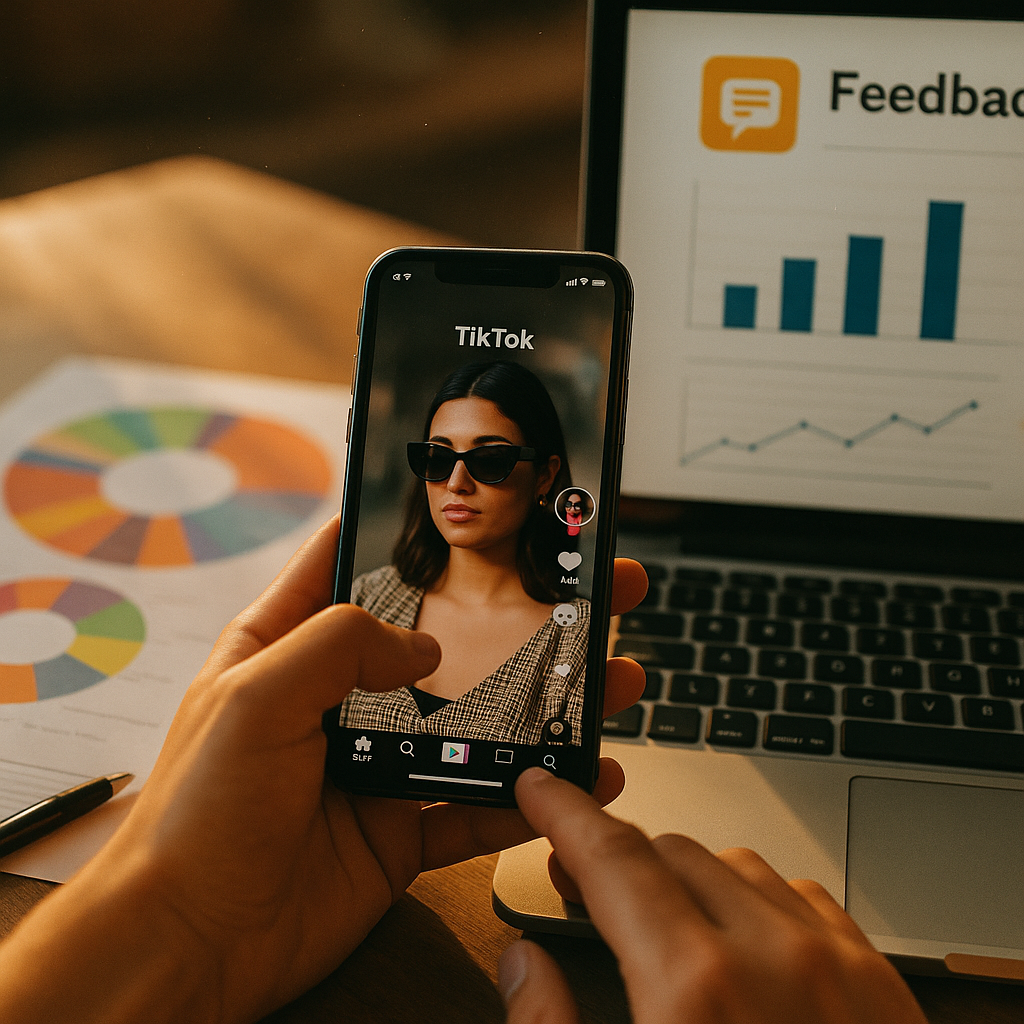
Every duet, stitch, and sound remix on TikTok is training data now. TikTok’s cultural intelligence feedback loop ingests billions of daily engagement signals and feeds them straight into the creative AI powering ad generation, creator matching, and trend forecasting. If your brand still treats TikTok as a media buy rather than a live cultural dataset, you’re already behind.
What Is the Cultural Intelligence Feedback Loop, Exactly?
Strip away the marketing language and it’s simple: TikTok’s recommendation engine and its creative AI tools (Symphony, Smart+, and the ad format prediction layer) share a data backbone. Community behavior, what gets replayed, remixed, muted, or skipped, doesn’t just shape the For You feed. It gets piped into the models that generate ad variants, suggest creator pairings, and score content before it ever runs as paid media.
This isn’t a new idea. Netflix has long used viewing data to greenlight content. Spotify does it with playlists. But TikTok’s version moves faster and closer to the transaction. A trend can emerge on Tuesday, get flagged by the platform’s cultural signal layer by Wednesday, and show up as a recommended creative direction in Smart+ campaign tools by Friday. That compression is the whole story.
TikTok’s creative AI isn’t trained once and shipped. It’s re-trained continuously on what the community does in real time, making the platform’s ad recommendations a lagging (but fast-lagging) indicator of culture itself.
Why Brands Should Care More Than They Currently Do
Most brand teams still evaluate TikTok performance the way they evaluate a linear TV buy: set a creative, run it, measure it, iterate next quarter. That cadence doesn’t match how the platform’s AI actually learns. If community signals are updating the model weekly, and your creative refresh cycle is quarterly, you’re optimizing against a moving target with a broken sightline.
There’s a second, less obvious risk: brand safety and cultural misreads. When creative AI recommends formats or sounds based on aggregate community behavior, it can surface trends that are popular but reputationally risky, meme formats tied to controversy, ironic sounds, or niche subculture references a mainstream brand shouldn’t touch without context. The AI doesn’t know your brand’s risk tolerance. Your team does. That’s why human review of AI-suggested creative direction remains non-negotiable, a theme we’ve covered in where human sign-off can’t be skipped.
The Data Sources Feeding the Loop
- Engagement velocity: how fast a sound, format, or effect accumulates completions and shares in its first 48 hours.
- Remix behavior: duets, stitches, and green-screen reuse, which signal a format’s adaptability, not just its popularity.
- Comment sentiment clustering: NLP models scanning comment sections for tone shifts, sarcasm, and emerging slang.
- Creator adoption curves: tracking which creator tiers (nano, mid, mega) pick up a trend first, a strong predictor of longevity.
- Drop-off points: exactly where in a video viewers disengage, which trains the AI’s pacing recommendations for ad cuts.
None of this is exotic. What’s new is the speed at which it loops back into commercial tooling. TikTok has talked publicly about this infrastructure through its advertiser resources at TikTok for Business, though the platform is understandably vague about exact model architecture.
Symphony, Smart+, and the Matching Layer
The clearest commercial expression of this feedback loop is TikTok’s Symphony suite, which we’ve broken down previously in our piece on Symphony’s AI creator matching. Symphony doesn’t just match brands to creators based on static audience demographics. It weighs real-time community signals, does this creator’s audience currently over-index on a rising sound or format, to predict which pairings will perform, not just which pairings look good on paper.
Six months of field data has started to validate (and complicate) this. Our analysis of Symphony agent vs. manual whitelisting found that AI-driven matching outperformed manual creator vetting on speed and reach prediction, but underperformed on brand-fit nuance, exactly the kind of judgment call that requires a human who understands the brand’s actual voice.
Is This Just Trend-Chasing With Extra Steps?
Fair question. Skeptics argue this feedback loop just automates what savvy social teams already do manually: watch what’s trending, react fast, brief creators accordingly. There’s truth in that. But the difference is scale and latency. A human social team can monitor maybe a few dozen signals a day across a handful of verticals. TikTok’s models are processing engagement patterns across hundreds of millions of videos simultaneously, then translating that into creative recommendations inside the ad platform itself.
The practical implication for brand teams: the AI’s creative suggestions are increasingly a proxy for “what the community is doing right now,” not a generic best-practices template. Treating those suggestions as pure noise is a mistake. Treating them as gospel, without brand judgment layered on top, is a bigger one.
Where This Creates Real Operational Risk
Here’s where it gets uncomfortable for procurement and legal teams. If creative AI is generating ad variants based on real-time trend data, and creators are being algorithmically matched based on the same signals, who’s accountable when a trend the AI surfaces turns out to be tied to a copyright dispute, a creator controversy, or a claim that hasn’t been vetted?
This isn’t hypothetical. We’ve documented similar failure patterns in AI hallucination audits for product claims, and the same logic applies here: speed without a verification layer is how brands end up issuing apologies. TikTok’s push toward content provenance, detailed in our coverage of C2PA content provenance badges, is a partial answer, but it verifies origin, not appropriateness.
Real-time trend responsiveness and brand governance are in tension by design. The faster the feedback loop moves, the more your approval process becomes the bottleneck, or the safeguard, depending on how you’ve built it.
Capacity Planning Is No Longer Optional
If TikTok’s AI is generating creative variants faster than most brand teams can review them, that’s a resourcing problem, not just a strategy one. We’ve covered the operational side of this in capacity planning for AI creative variant volume, and the core recommendation holds here too: build a tiered review system. Low-risk, on-brand variants get lighter-touch approval. Anything touching sensitive trends, political adjacency, or unverified claims gets escalated.
Agencies without this structure are already feeling the strain. Smaller shops have found ways to compress review cycles without cutting corners, a pattern documented in how small agencies use AI to cut RFP time, and the same discipline, clear tiers, defined escalation triggers, applies to creative approval as much as procurement.
How Marketers Should Actually Respond
Stop treating TikTok creative as a quarterly asset and start treating it as a living system. That means a few concrete shifts:
- Shorten your creative refresh cadence. If the platform’s recommendation layer updates weekly, your brief-to-publish window needs to be measured in days, not months.
- Build a trend-vetting checkpoint into your workflow. Someone on your team, not the algorithm, should sign off on cultural fit before a trend-driven format ships.
- Track creator adoption curves, not just follower counts. Symphony’s matching logic already weighs this. Your creator vetting should too.
- Set governance thresholds for AI-suggested creative. Borrow from the framework in AI governance charters for marketing agents: define what the AI can greenlight autonomously versus what needs human review.
- Audit provenance on trend-adjacent content. Especially anything using remixed sound or borrowed formats, where IP risk hides.
None of this requires abandoning speed. It requires building the review infrastructure that lets you move fast without moving recklessly. Industry data from eMarketer continues to show short-form video ad spend outpacing static formats, so the pressure to keep pace with TikTok’s cadence isn’t going away. The brands winning here aren’t the ones reacting fastest. They’re the ones who’ve built the governance layer that lets fast reaction happen safely.
A Note on Measurement
One underrated consequence of this feedback loop: attribution gets murkier. If a creative variant was generated because the AI detected a rising trend signal, was the resulting performance lift due to the trend, the creative execution, or the creator pairing? Most brands don’t have clean ways to separate these variables yet. Platforms like Sprout Social and Statista offer benchmarking data that can help contextualize performance, but internal attribution modeling still needs work. This is a gap worth flagging to your analytics team now, before Q1 budget conversations force the question.
FAQs
Frequently Asked Questions
What exactly is TikTok’s cultural intelligence feedback loop?
It’s the continuous process by which real-time community behavior, engagement, remixing, comment sentiment, and creator adoption, feeds back into TikTok’s creative AI tools like Symphony and Smart+, shaping the ad formats, creator matches, and trend recommendations the platform surfaces to advertisers.
Does this feedback loop replace the need for human creative strategy?
No. It accelerates trend detection and surfaces data-backed creative directions, but it doesn’t assess brand fit, reputational risk, or legal exposure. Human review remains essential, particularly for trend-adjacent or culturally sensitive content.
How fast does the loop actually move?
Trends can be detected, scored, and surfaced as creative recommendations within days rather than weeks. This is significantly faster than traditional brand creative refresh cycles, which is exactly why misalignment between platform speed and internal approval processes creates risk.
What’s the biggest risk for brands relying on AI-suggested creative direction?
Cultural misreads and unverified claims. The AI optimizes for engagement signals, not brand safety or factual accuracy, so unvetted trend-based creative can expose brands to reputational or compliance risk.
How should brand teams adjust their workflows?
Shorten creative refresh cycles, build tiered approval systems based on risk level, track creator adoption curves alongside follower metrics, and set clear governance thresholds for what AI can approve autonomously versus what requires human sign-off.
The takeaway is simple: audit your current TikTok approval workflow this quarter and identify exactly where the AI’s recommendation speed outpaces your review capacity, then fix that gap before the next trend cycle exposes it.
Top Influencer Marketing Agencies
The leading agencies shaping influencer marketing in 2026
Agencies ranked by campaign performance, client diversity, platform expertise, proven ROI, industry recognition, and client satisfaction. Assessed through verified case studies, reviews, and industry consultations.
Moburst

-
2

The Shelf
Boutique Beauty & Lifestyle Influencer AgencyA data-driven boutique agency specializing exclusively in beauty, wellness, and lifestyle influencer campaigns on Instagram and TikTok. Best for brands already focused on the beauty/personal care space that need curated, aesthetic-driven content.Clients: Pepsi, The Honest Company, Hims, Elf Cosmetics, Pure LeafVisit The Shelf → -
3

Audiencly
Niche Gaming & Esports Influencer AgencyA specialized agency focused exclusively on gaming and esports creators on YouTube, Twitch, and TikTok. Ideal if your campaign is 100% gaming-focused — from game launches to hardware and esports events.Clients: Epic Games, NordVPN, Ubisoft, Wargaming, Tencent GamesVisit Audiencly → -
4

Viral Nation
Global Influencer Marketing & Talent AgencyA dual talent management and marketing agency with proprietary brand safety tools and a global creator network spanning nano-influencers to celebrities across all major platforms.Clients: Meta, Activision Blizzard, Energizer, Aston Martin, WalmartVisit Viral Nation → -
5

The Influencer Marketing Factory
TikTok, Instagram & YouTube CampaignsA full-service agency with strong TikTok expertise, offering end-to-end campaign management from influencer discovery through performance reporting with a focus on platform-native content.Clients: Google, Snapchat, Universal Music, Bumble, YelpVisit TIMF → -
6

NeoReach
Enterprise Analytics & Influencer CampaignsAn enterprise-focused agency combining managed campaigns with a powerful self-service data platform for influencer search, audience analytics, and attribution modeling.Clients: Amazon, Airbnb, Netflix, Honda, The New York TimesVisit NeoReach → -
7

Ubiquitous
Creator-First Marketing PlatformA tech-driven platform combining self-service tools with managed campaign options, emphasizing speed and scalability for brands managing multiple influencer relationships.Clients: Lyft, Disney, Target, American Eagle, NetflixVisit Ubiquitous → -
8

Obviously
Scalable Enterprise Influencer CampaignsA tech-enabled agency built for high-volume campaigns, coordinating hundreds of creators simultaneously with end-to-end logistics, content rights management, and product seeding.Clients: Google, Ulta Beauty, Converse, AmazonVisit Obviously →