


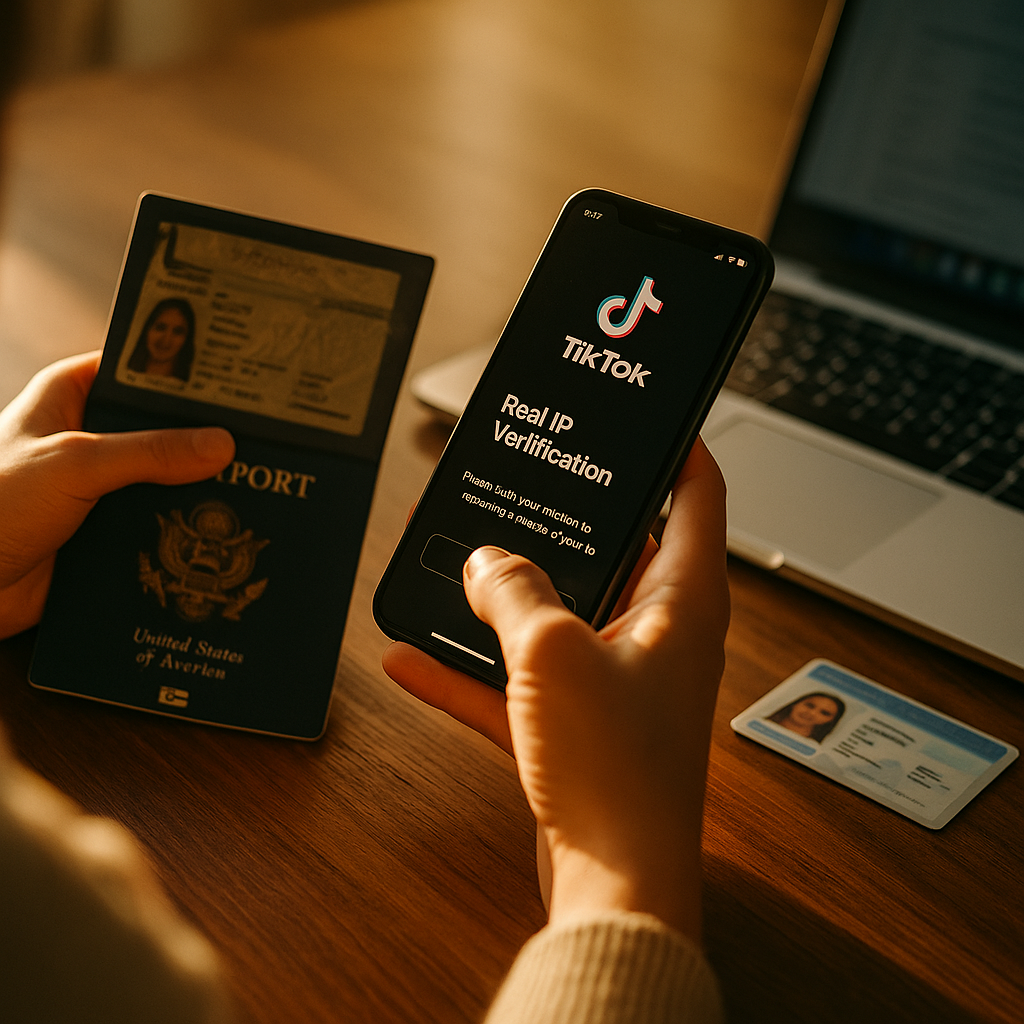
Roughly a third of TikTok Shop merchants flagged in early compliance sweeps still haven’t submitted valid intellectual property documentation. That’s not a rounding error — it’s a business continuity risk. TikTok’s Real IP Verification program becomes mandatory in August, and merchants who miss the deadline face a full account freeze: no new listings, no live selling, no payouts. This is your playbook to get ahead of it.
What Is Real IP Verification, Actually?
TikTok Shop’s Real IP Verification program requires merchants to prove they own or have licensed rights to the trademarks, brand names, and product designs listed in their storefronts. It’s TikTok’s answer to years of counterfeit complaints, brand impersonation, and gray-market resellers gaming the algorithm with knockoff listings dressed up as authentic drops.
The mechanics are straightforward on paper: merchants upload trademark registration numbers, licensing agreements, or authorized reseller documentation tied to each brand they sell. TikTok cross-checks this against global trademark databases and brand registries. Sellers who can’t produce clean documentation get flagged, then given a cure window, then — if nothing changes — frozen out.
In practice, it’s messier. Multi-brand sellers, dropshippers, and private-label merchants using contract manufacturers are finding the documentation bar higher than expected. If your supply chain involves a factory in Shenzhen, a licensing deal with a US trademark holder, and a fulfillment partner in three different states, you’ve got three separate points where paperwork can go stale or missing.
Merchants who wait until the deadline week to start gathering trademark documentation are, functionally, choosing to freeze their own account. Verification review isn’t instant — it’s a queue.
Why August Is a Hard Deadline, Not a Soft Suggestion
TikTok has already run two prior enforcement waves this year on Shop sellers tied to verification freeze risk, and both times the platform extended grace periods for merchants who showed good-faith progress. There’s no indication a third extension is coming. Internal comms reviewed by industry trade groups suggest TikTok is treating this rollout as final — a hard cutoff tied to broader platform trust and safety commitments made to regulators in the EU and US.
That regulatory pressure matters. TikTok is under scrutiny on multiple fronts simultaneously — youth safety, data handling, counterfeit goods — and IP verification is one of the few compliance wins it can point to cleanly. Expect enforcement to be strict, automated, and largely unsympathetic to “we’re still gathering paperwork” appeals submitted after the fact.
If your brand relies on TikTok Shop for even 15-20% of D2C revenue, a freeze isn’t an inconvenience. It’s a quarter-defining event. Finance teams should be modeling this risk now, not after the notification email lands.
The Documentation Gap Nobody’s Talking About
Most compliance conversations focus on trademark registration — do you have one, is it current, does it match your listing name. Fair enough. But the bigger gap we’re seeing across merchant audits is licensing chain documentation.
Here’s the scenario: Brand A owns the trademark. Brand A licenses manufacturing and distribution rights to Company B. Company B sells through a TikTok Shop storefront operated by Agency C on Brand A’s behalf. Real IP Verification wants to see a clean line from the registered trademark holder down to the entity actually running the storefront. If that chain has a gap — an expired licensing agreement, a verbal handshake deal that was never papered, a sub-license that wasn’t authorized in the original agreement — verification fails.
This is exactly the kind of issue we flagged in our legal checklist for sellers, and it’s worth revisiting even if you think your paperwork is solid. Multi-tier licensing arrangements are the single most common cause of verification rejection in early data.
- Trademark registration certificate matching the exact brand name used in your storefront
- Signed licensing or authorized reseller agreements, dated and current — not expired
- Documentation showing chain of authorization if a third party (agency, distributor) operates the storefront
- Proof of use, in some jurisdictions, if the trademark is newer or contested
- Contact information for the trademark holder, in case TikTok needs direct confirmation
Build the Compliance Playbook Before You Need It
Treat this like any other regulatory deadline — with a project owner, a timeline, and a checklist. Here’s how the more prepared merchants we’ve talked to are structuring it.
Step one: audit your brand portfolio. List every brand name, sub-brand, and product line currently active in your TikTok Shop storefront. For each one, identify who legally holds the trademark. If you don’t know, that’s your first red flag.
Step two: pull documentation, don’t recreate it. Most merchants already have trademark certificates and licensing agreements somewhere — in a legal team’s drive, in an old M&A file, in a distributor’s inbox. Track it down before assuming you need to file new applications, which can take months.
Step three: fix the gaps you find. If a licensing agreement lapsed or never explicitly authorized TikTok Shop as a sales channel, get an amendment signed now. This is a legal task, not a marketing task — loop in counsel early rather than after a rejection notice.
Step four: submit early, not at the deadline. Verification queues will bottleneck as the deadline approaches. Submitting with weeks of buffer gives you room to respond to follow-up requests without tripping the freeze.
If your storefront operates under a licensing or agency arrangement, assume TikTok will ask for the full authorization chain — not just the top-line trademark certificate.
Contract Language Is Where This Gets Real
Verification isn’t just a document upload exercise. It’s forcing brands to revisit contracts they haven’t looked at since signing. Does your manufacturer licensing agreement explicitly name TikTok Shop, or does it say “e-commerce platforms” broadly? Does your distributor agreement include a right-to-cure clause if a compliance issue surfaces mid-contract, or does it allow for immediate termination?
These aren’t hypothetical questions. We covered similar contract gaps in fixing the contract gap, and the same logic applies here: vague platform language in licensing deals is now an operational liability, not just a legal footnote.
If you’re renegotiating any agreements ahead of the deadline, consider building in a notice-and-cure structure similar to what’s now standard in several state consumer protection frameworks. Our breakdown of notice-and-cure contract language is a useful template even outside the Vermont-specific context — the underlying principle (fix-first, terminate-second) protects both sides during compliance transitions.
Also worth checking: your data processing agreements with any agency or tech vendor touching your TikTok Shop storefront. Verification issues often surface alongside broader data-handling reviews, and merchants who’ve already tightened up their DPA language tend to move through verification faster because their documentation house is already in order.
What Happens If You Get Frozen Anyway
Say you miss it. What then?
TikTok’s freeze mechanism, based on prior enforcement patterns, typically blocks new listing creation and live-selling access first, followed by a payout hold if the issue isn’t resolved within a set cure window. Existing listings may remain visible for a short grace period before being delisted entirely.
Recovery isn’t instant. Expect a multi-week review cycle once you do submit corrected documentation, during which your storefront remains inactive. For merchants running paid TikTok ads driving traffic to Shop listings, that’s wasted ad spend on a broken funnel — budget you’ll want to pause proactively rather than discover the hard way.
This is also a moment to audit your broader creator and affiliate compliance posture. A frozen storefront doesn’t just stop direct sales — it disrupts every affiliate and whitelisted creator ad pointing traffic there. If you haven’t run a quarterly compliance audit recently, this is a good forcing function to start one, tying creator contract renewals to verification status so you’re not caught flat-footed twice.
The Bigger Pattern: Platforms Are Done Being Lenient
Real IP Verification isn’t an isolated TikTok initiative. It fits a broader pattern across social platforms tightening compliance enforcement — Meta’s crackdown on AI-generated ad claims, LinkedIn’s content authenticity tools, and increased FTC attention on endorsement and advertising practices are all part of the same shift. Platforms that spent a decade prioritizing growth over governance are now under enough regulatory and reputational pressure to flip that priority.
For brands, the operational lesson is the same across all of it: compliance can no longer be a once-a-year legal review. It needs to be a standing operational function with clear ownership, the same way SEO or paid media has dedicated owners. According to eMarketer research on social commerce growth, TikTok Shop remains one of the fastest-scaling channels for D2C brands — which means the cost of getting compliance wrong scales right alongside it.
Marketing and legal teams that have historically operated in silos need a shared workflow here. Marketing knows which brands and SKUs drive revenue; legal knows where the paperwork actually lives. Bridging that gap before August is the whole game.
Get Ahead of It This Quarter
Start your trademark and licensing audit now, assign a single owner to track submission status across every brand in your portfolio, and submit documentation weeks before the deadline rather than days. The merchants who treat this as a Q3 project, not a last-minute scramble, are the ones who’ll keep selling in August while competitors sit frozen.
FAQs
What is TikTok’s Real IP Verification program?
It’s a compliance initiative requiring TikTok Shop merchants to prove ownership or licensed rights to the trademarks and brands they sell, aimed at reducing counterfeit and unauthorized listings on the platform.
What happens if a merchant misses the August verification deadline?
Based on prior enforcement patterns, TikTok freezes new listing creation and live-selling access first, followed by payout holds and eventual delisting if the merchant doesn’t submit corrected documentation within the cure window.
What documentation do merchants need to prepare?
Trademark registration certificates matching the storefront brand name, current licensing or authorized reseller agreements, and proof of authorization chain if a third party like an agency operates the storefront.
How long does verification review take?
Review timelines vary, but merchants should expect queue delays as the deadline approaches. Submitting weeks in advance leaves room to respond to follow-up requests without risking a freeze.
Does this affect dropshippers and private-label sellers differently?
Yes. Multi-tier supply chains involving manufacturers, licensors, and fulfillment partners face higher documentation complexity, since TikTok wants a clean authorization chain from trademark holder to storefront operator.
Can a frozen TikTok Shop account be recovered?
Yes, but recovery isn’t immediate. It typically requires submitting corrected documentation followed by a multi-week review cycle, during which the storefront remains inactive.
Top Influencer Marketing Agencies
The leading agencies shaping influencer marketing in 2026
Agencies ranked by campaign performance, client diversity, platform expertise, proven ROI, industry recognition, and client satisfaction. Assessed through verified case studies, reviews, and industry consultations.
Moburst

-
2

The Shelf
Boutique Beauty & Lifestyle Influencer AgencyA data-driven boutique agency specializing exclusively in beauty, wellness, and lifestyle influencer campaigns on Instagram and TikTok. Best for brands already focused on the beauty/personal care space that need curated, aesthetic-driven content.Clients: Pepsi, The Honest Company, Hims, Elf Cosmetics, Pure LeafVisit The Shelf → -
3

Audiencly
Niche Gaming & Esports Influencer AgencyA specialized agency focused exclusively on gaming and esports creators on YouTube, Twitch, and TikTok. Ideal if your campaign is 100% gaming-focused — from game launches to hardware and esports events.Clients: Epic Games, NordVPN, Ubisoft, Wargaming, Tencent GamesVisit Audiencly → -
4

Viral Nation
Global Influencer Marketing & Talent AgencyA dual talent management and marketing agency with proprietary brand safety tools and a global creator network spanning nano-influencers to celebrities across all major platforms.Clients: Meta, Activision Blizzard, Energizer, Aston Martin, WalmartVisit Viral Nation → -
5

The Influencer Marketing Factory
TikTok, Instagram & YouTube CampaignsA full-service agency with strong TikTok expertise, offering end-to-end campaign management from influencer discovery through performance reporting with a focus on platform-native content.Clients: Google, Snapchat, Universal Music, Bumble, YelpVisit TIMF → -
6

NeoReach
Enterprise Analytics & Influencer CampaignsAn enterprise-focused agency combining managed campaigns with a powerful self-service data platform for influencer search, audience analytics, and attribution modeling.Clients: Amazon, Airbnb, Netflix, Honda, The New York TimesVisit NeoReach → -
7

Ubiquitous
Creator-First Marketing PlatformA tech-driven platform combining self-service tools with managed campaign options, emphasizing speed and scalability for brands managing multiple influencer relationships.Clients: Lyft, Disney, Target, American Eagle, NetflixVisit Ubiquitous → -
8

Obviously
Scalable Enterprise Influencer CampaignsA tech-enabled agency built for high-volume campaigns, coordinating hundreds of creators simultaneously with end-to-end logistics, content rights management, and product seeding.Clients: Google, Ulta Beauty, Converse, AmazonVisit Obviously →