


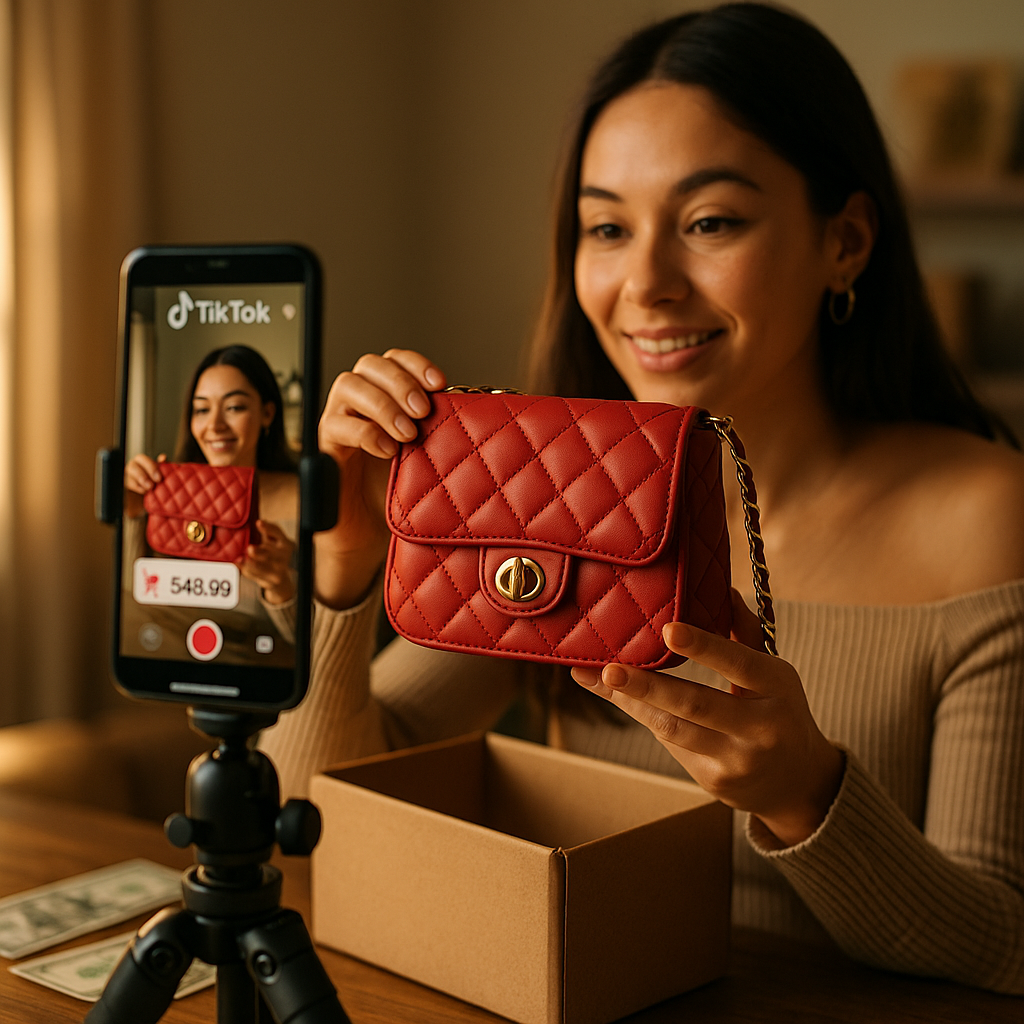
One thousand followers. That’s the entire bar to entry for TikTok Shop’s affiliate program, and it’s quietly rewriting who gets paid in influencer marketing. The TikTok Shop affiliate model has turned a follower count that used to signal “not worth the outreach email” into a legitimate revenue channel, and brands that still price talent by audience size are leaving margin on the table.
The Threshold That Broke the Old Pricing Ladder
For most of the last decade, influencer pricing followed a predictable curve. More followers meant more reach, which meant higher rates, which meant agencies built entire rate cards around tiers: nano, micro, mid, macro, celebrity. It wasn’t a perfect system, but it was a legible one.
TikTok Shop’s affiliate program doesn’t care about that ladder. Any creator with 1,000 followers and a handful of posted videos can apply, get approved, and start earning commission on products they tag in-feed. No campaign brief. No negotiated flat fee. No agency handling. Just a product link, a video, and a commission split that can range from 5% to 20% depending on what the brand sets in Seller Center.
That access point matters more than it looks. It means the supply of monetizable creators isn’t capped by who has a media kit and a rate card, it’s capped by who’s willing to film and post. And that’s a much, much bigger pool.
A creator with 4,000 hyper-engaged followers in a niche like fermentation or minimalist skincare can now out-earn a 200,000-follower lifestyle account on a per-post basis, purely on commission velocity.
Why Niche Micro-Talent Is Winning the Commission Game
Here’s the mechanic brands need to understand: TikTok Shop rewards conversion, not reach. A video from a large but generalist account might get 500,000 views and drive a trickle of purchases because the audience isn’t primed to buy. A video from a niche creator with 8,000 followers, all of whom follow specifically for skincare-for-eczema content, can convert at a rate that dwarfs the bigger account’s absolute numbers.
Commission-based pay structures reward that specificity directly. There’s no “reach fee” cushioning underperformance. If the video sells, the creator gets paid. If it doesn’t, they don’t. This is a fundamentally different risk allocation than the flat-fee sponsorship model that’s dominated Instagram and YouTube for years.
For brands, this is a pricing power shift worth sitting with. You’re no longer negotiating rate cards with agents who know your budget ceiling. You’re setting a commission rate once, in your Seller Center dashboard, and letting thousands of micro-creators self-select into promoting your product based on whether they think it’ll sell to their specific audience. The market sets the price through participation, not through back-and-forth email negotiation.
What This Does to Traditional Rate Cards
Agencies that built their margin on markup — take a brand’s budget, negotiate creator fees below it, pocket the spread — are finding that model harder to defend when a brand can activate 200 micro-affiliates through TikTok Shop for less than the cost of three mid-tier flat-fee posts. This isn’t hypothetical. It’s already reshaping how micro-agencies are rewriting deal economics across the creator space, with smaller, leaner shops built specifically to manage affiliate-model creator networks at scale.
It also changes what “good talent” means operationally. A creator who’s mediocre on camera but has an audience that trusts every recommendation might outperform a polished creator with passive followers. Brands chasing production value over purchase intent are optimizing for the wrong variable.
The Math Behind the Shift
TikTok Shop crossed tens of billions in gross merchandise value in recent reporting periods, and affiliate-driven content is consistently cited as one of the platform’s fastest-growing sales mechanisms. eMarketer and other research firms have flagged social commerce as one of the few retail channels still posting double-digit growth, and TikTok Shop is disproportionately responsible for that lift in the US market.
What’s less discussed is the distribution of who’s earning inside that GMV. Unlike a traditional influencer campaign where a handful of macro creators absorb most of the budget, affiliate commission structures spread payouts across a long tail. Thousands of small creators each generating a few hundred to a few thousand dollars a month adds up to a very different spend pattern than ten creators splitting a six-figure campaign fee.
This connects to something Influencers Time has covered before: the shift toward retail media data as the top creator KPI. When commission replaces flat fees, the only number that matters is sales attributed to a specific creator’s link. Reach becomes a vanity input, not an outcome brands are paying for.
Vetting 1,000-Follower Accounts Is a Real Operational Problem
Lower the bar to entry, and you widen the range of quality dramatically. For every niche micro-creator with a genuinely engaged, high-intent audience, there are dozens of accounts gaming engagement, buying followers, or posting low-effort content just to qualify for affiliate status. Brands that treat every 1,000-plus follower account as equally viable are going to get burned.
This is where most marketing teams underinvest. Vetting at scale isn’t glamorous, but it’s the difference between a program that compounds and one that quietly bleeds commission on fraud or non-performance. A few things worth building into your process:
- Engagement-to-follower ratio, not follower count. A 3,000-follower account with 12% engagement is worth more than a 40,000-follower account with 1.5%.
- Content-category consistency. Creators who post narrowly (skincare, pet care, home organization) convert better than generalists, because their audience opted in for that specificity.
- Historical GMV per creator, where available. TikTok Shop’s Creator Marketplace surfaces this data. Use it before setting commission tiers.
- Fulfillment and return-rate signals. High commission doesn’t matter if the products being sold get returned at unusual rates, which can indicate misleading claims in the content.
Building this vetting layer in-house is resource-intensive, which is part of why agencies specializing in affiliate-model creator sourcing are gaining ground fast. If your team is still manually scrolling TikTok Shop’s Creator Marketplace without a scoring framework, you’re behind.
Compliance Doesn’t Disappear Just Because the Model Is Automated
It’s tempting to treat affiliate programs as “set it and forget it” because the commission structure runs on autopilot. That’s a mistake. The FTC’s endorsement guidance still applies regardless of whether a creator is on a flat fee or commission. Affiliate links and commission relationships need disclosure just like any sponsored post, and the FTC’s endorsement guidelines don’t carve out an exception for micro-creators or algorithmic commission programs.
Brands running affiliate programs at scale should have a standing disclosure audit built into their monthly reporting, not just a one-time onboarding checklist. With potentially hundreds of active affiliates at once, manual spot-checking doesn’t scale, but ignoring it entirely is a regulatory exposure most legal teams won’t accept once volume climbs.
What This Means for Budget Allocation
If you’re still splitting influencer budget the way you did three years ago — 70% to a handful of mid-to-macro creators, 30% to “test” smaller accounts — the TikTok Shop affiliate model is a good excuse to rebalance. Commission-based spend is inherently lower-risk per dollar, because you’re not paying for content that doesn’t convert. That frees up flat-fee budget for the awareness-stage creators who still deserve it, while letting a much larger pool of niche micro-talent compete for commission dollars on merit.
This isn’t an argument for abandoning flat-fee deals entirely. Brand awareness and top-of-funnel storytelling still benefit from creators with real production value and audience trust that took years to build. But bottom-funnel, conversion-focused spend is migrating toward commission structures fast, and niche micro-creators are the biggest beneficiaries. This mirrors a broader pattern our team has tracked in creator economics research, where budget owners consistently misjudge which tier of creator actually drives measurable revenue.
There’s also a testing implication. Programs that run multi-cycle creator testing rather than one-off campaigns are far better positioned to identify which niche micro-creators consistently convert versus which ones had a lucky viral moment. Affiliate commission data gives you that longitudinal view for free, since every sale is tracked and attributed automatically through TikTok Shop’s backend.
Where Brands Get This Wrong
The most common mistake isn’t setting commission rates too low. It’s failing to differentiate commission rates by category and creator tier at all. A flat 10% across every affiliate, regardless of niche or historical performance, ignores the fact that some categories (beauty, home goods) support far higher margins than others (electronics, low-margin consumables). Brands should be tiering commission the way they’d tier any performance-based spend, rewarding proven converters with better rates rather than treating every affiliate identically.
The second mistake is neglecting creator relationships once they’re inside the affiliate program. Just because the model is self-serve doesn’t mean it should be hands-off. The niche micro-creators driving the best conversion are worth identifying and cultivating with early product access, exclusive drops, or slightly better commission terms. Treat your top 5% of affiliates like the asset they are, not like an anonymous line item in Seller Center.
Next step: Pull your last 90 days of TikTok Shop affiliate data, rank creators by GMV-per-follower rather than raw sales volume, and redirect commission-tier incentives toward the niche micro-talent already outperforming your macro roster.
FAQs
What is the TikTok Shop affiliate model?
It’s a program that lets creators with as few as 1,000 followers apply to promote products in-feed and earn commission on resulting sales, without needing a brand deal or flat-fee agreement.
Why are micro-creators earning more under this model?
Because commission is tied to conversion, not reach. Niche creators with smaller but highly engaged audiences often convert better per video than larger generalist accounts, letting them out-earn bigger creators on a per-post basis.
How should brands set commission rates for affiliates?
Base rates on category margin and historical creator performance rather than applying one flat percentage across every affiliate. Higher-margin categories and proven converters can support tiered, more generous commission structures.
Do FTC disclosure rules apply to TikTok Shop affiliates?
Yes. Affiliate and commission relationships require the same disclosure as any sponsored content under FTC endorsement guidelines, regardless of follower count or program automation.
How can brands vet low-follower affiliate creators at scale?
Prioritize engagement-to-follower ratio, content-category consistency, and historical GMV data available through TikTok Shop’s Creator Marketplace, rather than relying on follower count alone.
Top Influencer Marketing Agencies
The leading agencies shaping influencer marketing in 2026
Agencies ranked by campaign performance, client diversity, platform expertise, proven ROI, industry recognition, and client satisfaction. Assessed through verified case studies, reviews, and industry consultations.
Moburst

-
2

The Shelf
Boutique Beauty & Lifestyle Influencer AgencyA data-driven boutique agency specializing exclusively in beauty, wellness, and lifestyle influencer campaigns on Instagram and TikTok. Best for brands already focused on the beauty/personal care space that need curated, aesthetic-driven content.Clients: Pepsi, The Honest Company, Hims, Elf Cosmetics, Pure LeafVisit The Shelf → -
3

Audiencly
Niche Gaming & Esports Influencer AgencyA specialized agency focused exclusively on gaming and esports creators on YouTube, Twitch, and TikTok. Ideal if your campaign is 100% gaming-focused — from game launches to hardware and esports events.Clients: Epic Games, NordVPN, Ubisoft, Wargaming, Tencent GamesVisit Audiencly → -
4

Viral Nation
Global Influencer Marketing & Talent AgencyA dual talent management and marketing agency with proprietary brand safety tools and a global creator network spanning nano-influencers to celebrities across all major platforms.Clients: Meta, Activision Blizzard, Energizer, Aston Martin, WalmartVisit Viral Nation → -
5

The Influencer Marketing Factory
TikTok, Instagram & YouTube CampaignsA full-service agency with strong TikTok expertise, offering end-to-end campaign management from influencer discovery through performance reporting with a focus on platform-native content.Clients: Google, Snapchat, Universal Music, Bumble, YelpVisit TIMF → -
6

NeoReach
Enterprise Analytics & Influencer CampaignsAn enterprise-focused agency combining managed campaigns with a powerful self-service data platform for influencer search, audience analytics, and attribution modeling.Clients: Amazon, Airbnb, Netflix, Honda, The New York TimesVisit NeoReach → -
7

Ubiquitous
Creator-First Marketing PlatformA tech-driven platform combining self-service tools with managed campaign options, emphasizing speed and scalability for brands managing multiple influencer relationships.Clients: Lyft, Disney, Target, American Eagle, NetflixVisit Ubiquitous → -
8

Obviously
Scalable Enterprise Influencer CampaignsA tech-enabled agency built for high-volume campaigns, coordinating hundreds of creators simultaneously with end-to-end logistics, content rights management, and product seeding.Clients: Google, Ulta Beauty, Converse, AmazonVisit Obviously →