


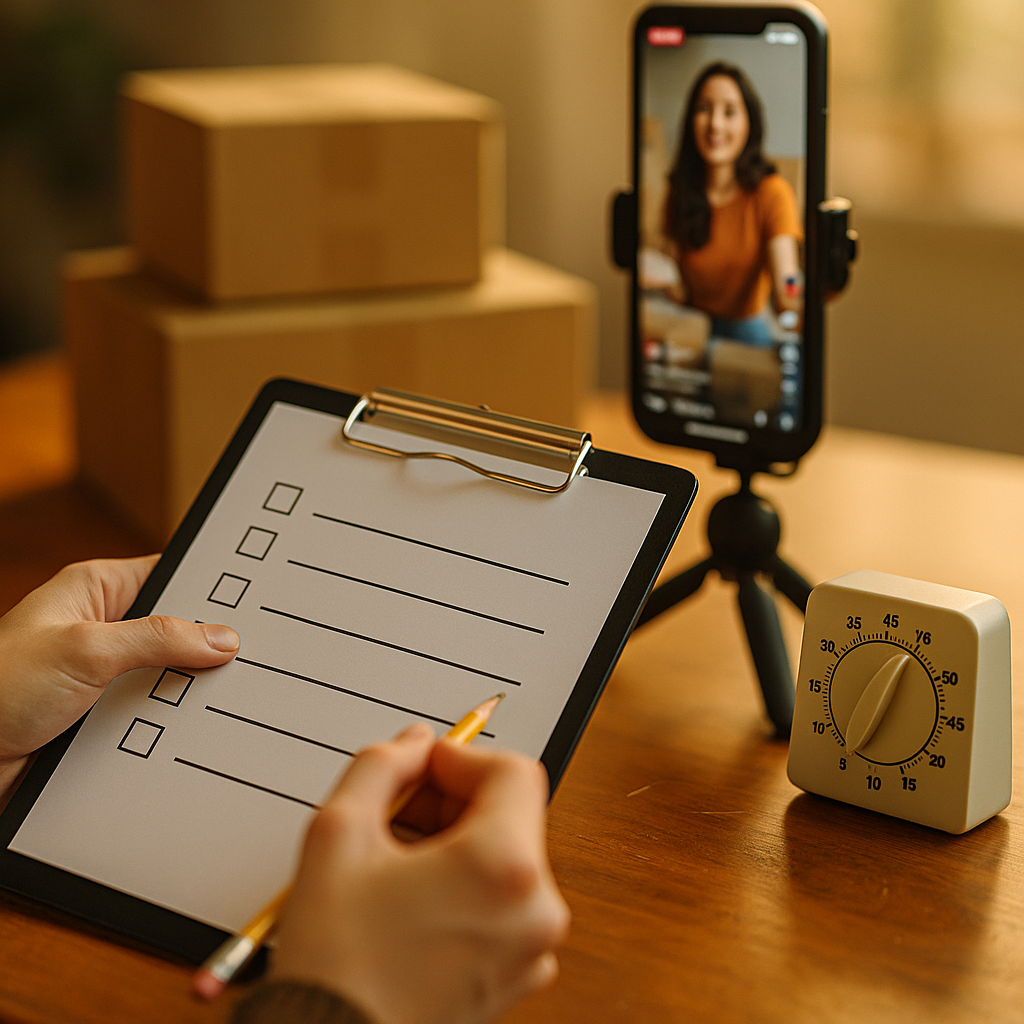
The FTC logged over 2.6 million fraud reports tied to deceptive marketing tactics last year, and livestream shopping is now squarely in its crosshairs. If your brand runs TikTok Shop lives with countdown timers and flash discounts, a TikTok Shop live-selling compliance checklist isn’t optional anymore — it’s the difference between a strong quarter and an FTC inquiry letter.
Live commerce moves fast. That’s the appeal. It’s also exactly why regulators are watching so closely. A host says “only 12 left” while a countdown clock ticks down in the corner, and viewers buy on impulse. Nothing wrong with urgency as a sales tactic — until the urgency is fake. That’s where brands get burned.
Why Livestream Urgency Tactics Are Under the Microscope
The FTC’s updated guidance on endorsements and its broader crackdown on “dark patterns” both point in the same direction: manufactured scarcity and fake countdowns are deceptive practices, full stop. The agency doesn’t care that the timer is a TikTok Shop widget instead of a banner ad. A countdown that resets after it hits zero, or a “limited stock” claim when the warehouse has 4,000 units sitting idle, is a misrepresentation regardless of platform.
This isn’t theoretical. The FTC endorsement guide update targeting livestream price claims explicitly calls out real-time pricing displays and urgency cues as areas of enforcement focus. Brands that treated countdown timers as a harmless UX feature are now realizing they’re a legal liability if the underlying claim doesn’t hold up.
A countdown timer isn’t just a design element — it’s a factual claim about time-limited availability, and the FTC treats it that way.
What Actually Counts as “Deceptive Urgency” on TikTok Shop
Let’s get specific, because “deceptive urgency” sounds abstract until you see it in a live-selling script. Here’s what regulators flag most often:
- Recurring countdowns: A timer that expires, then quietly resets for the next live session with the same “deal.”
- Fabricated stock counts: “Only 8 left!” overlays that aren’t tied to actual live inventory data.
- Fake urgency language without a real deadline: Hosts saying “this price ends when I go live tomorrow” with no enforcement of that end date.
- Discounts that were never the real price: Inflating a “was” price so the “now” price looks like a bigger discount than it is.
- Pressure stacking: Combining countdown timers, stock warnings, and “everyone’s buying this” social proof simultaneously, when none of the three are independently verifiable.
Individually, some of these might pass muster. Stacked together, they create what the FTC calls a “net impression” of urgency that misleads a reasonable consumer. That’s the legal standard you need your compliance team measuring against, not just whether any single claim is technically true.
The Checklist: Structuring Timers and Discounts the Right Way
Here’s the operational framework we recommend brands adopt before their next live-selling event. Treat it as a pre-flight checklist, not a one-time policy document.
- Tie every countdown to a real, enforced end date. If the timer says the deal ends in 2 hours, the price must actually change in 2 hours — across every channel, not just the live room.
- Pull stock claims from live inventory systems, not scripts. If a host says “only 15 left,” that number should sync with your actual TikTok Shop inventory feed in real time. Static graphics claiming scarcity are a red flag.
- Document your reference price. Keep records showing the “original” price was genuinely offered for a reasonable period before the “sale” price kicked in. The FTC’s guidance on former price comparisons applies here just as much as it does to traditional retail ads.
- Script disclosure language for hosts, not just disclaimers. “This discount is only available during this live stream” needs to be true, said clearly, and not buried under a fast-talking sales pitch.
- Log every live session. Save the video, the overlay data, and the actual inventory/pricing logs for at least the FTC’s typical lookback window. If someone flags a broadcast six months later, you need receipts.
- Run a pre-live legal check on script and graphics. Treat this the same way you’d treat ad copy approval — because functionally, it is ad copy.
- Audit affiliate and creator hosts separately from owned-channel hosts. Creators improvising urgency language off-script is one of the most common compliance failures in live commerce.
This isn’t dramatically different from the discipline brands already apply to flash sales on their own DTC sites. The difference is speed: live-selling compliance has to happen in real time, with no edit window. That’s why the checklist needs to live inside your production workflow, not in a PDF nobody opens until something goes wrong.
Creators Are Your Biggest Compliance Exposure
Brands love TikTok Shop’s affiliate model because it scales fast. Dozens of creators, running dozens of lives, moving product without your team touching every broadcast. That scale is also the risk. A creator ad-libbing “last chance, selling out fast” because it sounds good on camera isn’t malicious — it’s just untrained. But the FTC doesn’t care about intent. Liability for deceptive claims made during a sponsored live can attach to the brand, not just the creator.
This is where TikTok live-shopping governance frameworks earn their keep. If you’re compensating creators through commission or equity structures, you need governance that covers not just payment terms but on-camera claims. The script approval clause built for FTC liability is a useful model here: require pre-approval of urgency language, scarcity claims, and discount framing before any live goes public, and build in a kill-switch for hosts who go off-script.
If a creator can say it live and you can’t produce documentation proving it’s true, assume the FTC will eventually ask you to.
Discounts, Bundles, and the “Was/Now” Price Trap
Countdown timers get most of the attention, but discount framing is just as risky. TikTok Shop’s live interface makes it trivial to display a slashed price next to an original price. That’s great for conversion — and a compliance minefield if the “original” price wasn’t a genuine, sustained price point.
Retailers have been burned by this exact issue outside of live commerce for years; the FTC has pursued cases against companies for inflating reference prices to manufacture the appearance of a deal. Live-selling doesn’t get a pass just because the format is new. If anything, enforcement priorities suggest regulators see livestream commerce as a growth area worth scrutinizing precisely because of how fast these deals move and how little documentation typically exists.
Build a simple rule into your pricing ops: any “was” price shown in a live session must reflect a price actually charged for a meaningful, defined period beforehand (many legal teams use 30 days as a conservative benchmark, though the FTC doesn’t mandate a fixed number). Keep the pricing history logged and timestamped. If your team can’t produce that history on request, don’t run the comparison.
For a broader look at how scarcity claims intersect with live commerce more generally, the livestream shopping compliance checklist for scarcity claims is worth pairing with this piece — countdown timers are one urgency lever, but stock-based scarcity claims carry similar legal weight and deserve the same documentation discipline.
Building This Into Your Escalation Process
None of this works if compliance review happens after a live has already aired. You need an escalation path that catches problems before broadcast and flags issues fast if something slips through. That means:
- A named legal or compliance reviewer with authority to pull a live-selling script before it airs.
- A defined response window if a host deviates from approved urgency language mid-broadcast.
- A record-retention policy that automatically archives live video, overlay screenshots, and inventory logs.
- Regular audits of creator-hosted lives against your brand’s approved claim list, not just spot checks after a complaint.
The FTC compliance escalation matrix framework is a solid starting template for mapping who reviews what, and how fast issues get flagged once a live goes public. Live commerce compresses your usual ad-review timeline from days to minutes, so your escalation matrix has to be built for that speed, not retrofitted from a slower channel.
Industry data backs up why this matters financially, not just legally. According to eMarketer’s tracking of social commerce growth, live shopping continues to be one of the fastest-growing purchase channels in the US, meaning the volume of broadcasts — and the volume of potential compliance exposure — is only going up. Platforms like TikTok’s advertising resources offer creative guidance, but they won’t shield your brand from FTC enforcement. That responsibility sits with you.
For teams building out broader creator compensation structures alongside live-selling programs, it’s also worth reviewing how equity-paid creators still trigger FTC disclosure rules — compensation structure doesn’t change the disclosure obligation, and the same logic applies to urgency claims made during commission-based live sessions.
FAQ
Marketing teams new to live commerce compliance tend to ask the same handful of questions. Here are the ones we hear most from brand and agency clients building out their first TikTok Shop programs.
Frequently Asked Questions
Is a countdown timer on TikTok Shop automatically illegal?
No. Countdown timers are legal marketing tools as long as they reflect a genuine, enforced deadline. The problem arises when timers reset, don’t correspond to an actual price change, or run alongside fabricated scarcity claims.
Who is liable if a creator makes a false urgency claim during a sponsored live?
Both the creator and the brand can face FTC scrutiny. Brands that fail to review scripts, provide approved claim language, or monitor live broadcasts carry significant exposure even if the false statement came from the creator’s ad-lib, not brand copy.
How long should brands retain live-selling video and pricing records?
Most legal teams recommend retaining video, overlay data, and inventory/pricing logs for at least the FTC’s typical multi-year lookback period on enforcement actions. Check with counsel, since retention needs can vary by product category and state law.
Does the FTC treat TikTok Shop lives differently than traditional TV shopping channels?
No. The legal standard for deceptive claims applies across formats. The FTC’s recent guidance updates specifically address livestream and social commerce, confirming that platform novelty doesn’t change the underlying deceptive-practices analysis.
What’s the simplest first step for a brand with no live-selling compliance process yet?
Start by auditing your last five live-selling broadcasts against actual inventory and pricing records. Gaps found there will tell you exactly where to build your checklist first.
Bottom line: audit one live broadcast this week against your actual inventory and pricing data, and if the numbers don’t match what the host said on camera, fix your process before you run another one.
Top Influencer Marketing Agencies
The leading agencies shaping influencer marketing in 2026
Agencies ranked by campaign performance, client diversity, platform expertise, proven ROI, industry recognition, and client satisfaction. Assessed through verified case studies, reviews, and industry consultations.
Moburst

-
2

The Shelf
Boutique Beauty & Lifestyle Influencer AgencyA data-driven boutique agency specializing exclusively in beauty, wellness, and lifestyle influencer campaigns on Instagram and TikTok. Best for brands already focused on the beauty/personal care space that need curated, aesthetic-driven content.Clients: Pepsi, The Honest Company, Hims, Elf Cosmetics, Pure LeafVisit The Shelf → -
3

Audiencly
Niche Gaming & Esports Influencer AgencyA specialized agency focused exclusively on gaming and esports creators on YouTube, Twitch, and TikTok. Ideal if your campaign is 100% gaming-focused — from game launches to hardware and esports events.Clients: Epic Games, NordVPN, Ubisoft, Wargaming, Tencent GamesVisit Audiencly → -
4

Viral Nation
Global Influencer Marketing & Talent AgencyA dual talent management and marketing agency with proprietary brand safety tools and a global creator network spanning nano-influencers to celebrities across all major platforms.Clients: Meta, Activision Blizzard, Energizer, Aston Martin, WalmartVisit Viral Nation → -
5

The Influencer Marketing Factory
TikTok, Instagram & YouTube CampaignsA full-service agency with strong TikTok expertise, offering end-to-end campaign management from influencer discovery through performance reporting with a focus on platform-native content.Clients: Google, Snapchat, Universal Music, Bumble, YelpVisit TIMF → -
6

NeoReach
Enterprise Analytics & Influencer CampaignsAn enterprise-focused agency combining managed campaigns with a powerful self-service data platform for influencer search, audience analytics, and attribution modeling.Clients: Amazon, Airbnb, Netflix, Honda, The New York TimesVisit NeoReach → -
7

Ubiquitous
Creator-First Marketing PlatformA tech-driven platform combining self-service tools with managed campaign options, emphasizing speed and scalability for brands managing multiple influencer relationships.Clients: Lyft, Disney, Target, American Eagle, NetflixVisit Ubiquitous → -
8

Obviously
Scalable Enterprise Influencer CampaignsA tech-enabled agency built for high-volume campaigns, coordinating hundreds of creators simultaneously with end-to-end logistics, content rights management, and product seeding.Clients: Google, Ulta Beauty, Converse, AmazonVisit Obviously →