


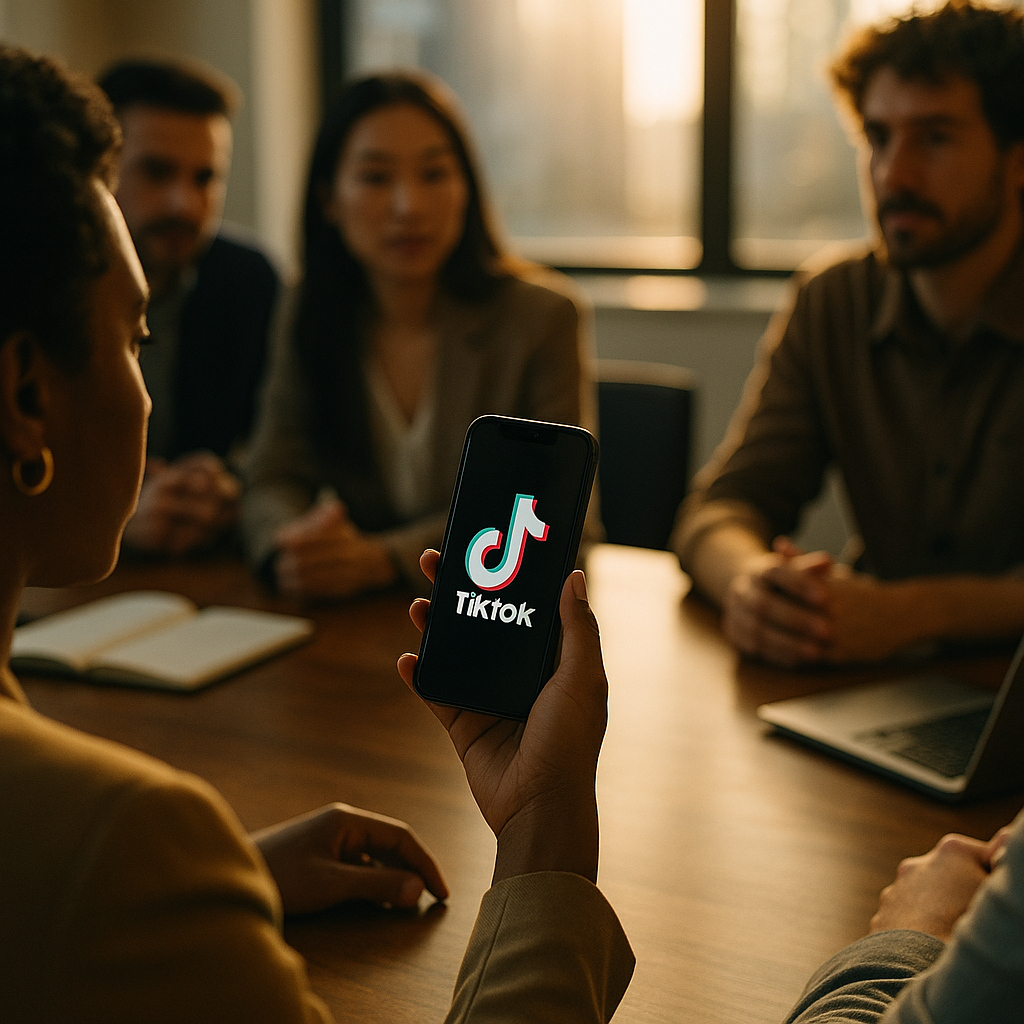
Speed-dating for brand deals just went mainstream. TikTok recently ran an event pairing brands with creators through more than 500 pre-arranged meetings, structured like a trade show floor rather than an open marketplace. If you’ve spent the last two years drowning in DM pitches and spreadsheet-based creator sourcing, this model should get your attention. It signals something bigger than one event: platforms are done leaving discovery to chance.
The Problem TikTok Is Actually Solving
Creator sourcing has been broken for a while, and everyone in this industry knows it. Brands post briefs into black-box marketplaces. Creators cold-pitch hundreds of accounts hoping one lands. Agencies build janky spreadsheets to track outreach, follow-ups, and rates. It’s inefficient on both sides, and it scales terribly.
TikTok’s answer borrows a page from B2B trade shows and investor pitch events: pre-qualify both sides, schedule the meetings in advance, and let curated matchmaking replace cold outreach. Think of it as Techstars Demo Day logic applied to influencer sourcing. Brands get a shortlist of vetted creators. Creators get guaranteed face time with decision-makers instead of shouting into the void.
This isn’t charity. TikTok has clear commercial incentive to make brand-creator matching feel less chaotic, especially as TikTok Shop’s seller base keeps expanding and competition for ad dollars intensifies against Meta and YouTube.
When a platform starts curating 500+ meetings instead of leaving matchmaking to an open marketplace, it’s telling you the old sourcing model has hit its ceiling.
Why Conference-Style Matchmaking Beats Open Marketplaces
Open creator marketplaces have a discovery problem disguised as a volume advantage. More creators in a database doesn’t mean better matches — it usually means more noise. Anyone who has filtered a marketplace by “beauty, 50K-100K followers, US-based” and gotten 4,000 results knows this pain.
Pre-arranged meetings flip the model. Instead of brands searching, someone (in this case, TikTok’s team) does the pre-matching based on category fit, audience overlap, and past campaign performance. That’s a meaningful shift in who controls the top of the sourcing funnel.
- Time savings: A 20-minute scheduled meeting replaces weeks of DM back-and-forth.
- Higher intent on both sides: Creators who show up to a scheduled slot are serious. Brands who book a meeting have budget allocated.
- Built-in accountability: Scheduled meetings create a paper trail — who met whom, what was discussed, what was agreed. That matters when compliance teams ask questions later.
Compare this to the average influencer marketplace experience, and the appeal is obvious. According to eMarketer research, sourcing and vetting still eat up a disproportionate share of influencer program budgets relative to actual campaign execution. Anything that compresses that timeline is worth testing.
What This Signals About the Direction of Creator Sourcing
TikTok isn’t the only platform rethinking sourcing infrastructure. We’ve already covered how AI has cut discovery costs without solving the harder vetting problem. Conference-style matchmaking is a different lever entirely — it’s a structural fix, not a technology fix. It says: the bottleneck isn’t finding creators, it’s finding the *right* creators efficiently, with accountability built in.
This matters more as the creator economy passes $250 billion in overall value. At that scale, ad-hoc sourcing simply doesn’t hold up. Enterprise brands running hundreds of creator relationships need something closer to structured procurement than casual networking.
It also tracks with a broader shift toward micro and nano creators claiming half of influencer budgets. These creators are harder to find through traditional agency rosters, and they don’t always show up in marketplace search filters the way macro influencers do. Curated matchmaking events are, frankly, a more efficient way to surface them at volume.
Is This Just PR, or a Real Operational Shift?
Fair question. One event with 500 meetings doesn’t rewrite an industry. But the format matters because it’s replicable — and platforms tend to scale what works. If TikTok sees strong booking rates and post-meeting deal conversion, expect this to become a recurring feature, possibly regionalized (APAC, EMEA, LATAM cohorts) rather than a one-off flagship event.
There’s precedent here. Retail media networks run similar curated vendor-buyer sessions. LinkedIn has quietly built structured intro tools for B2B sales teams via LinkedIn Sales Navigator. Matchmaking-as-a-service isn’t new — TikTok is just the first major platform to apply it explicitly to creator sourcing at this scale.
What Brands Should Actually Do With This
Don’t wait for an invite to the next flagship event. There are practical moves you can make now, regardless of whether your brand gets a seat at TikTok’s table.
- Audit your current sourcing cost-per-creator. If you don’t know how many hours your team spends per signed creator deal, you can’t measure whether structured matchmaking actually saves time.
- Push your platform reps for pre-vetted shortlists. TikTok, Meta, and YouTube all have creator marketplace teams. Ask directly whether curated matchmaking programs exist for your vertical — most brands never ask.
- Build internal scoring criteria before you show up. Conference-style meetings move fast. If your team hasn’t pre-defined audience fit, rate benchmarks, and content style requirements, you’ll waste your slots.
- Treat it as a pipeline, not a one-off buy. The brands getting the most value from these programs are the ones converting matched creators into retainer relationships rather than one-campaign transactions. Given that 63% of creator deals don’t renew, matchmaking events are a chance to fix a leaky funnel at the source.
There’s a compliance angle too, and it’s one legal and brand safety teams should flag early. Structured, documented introductions actually reduce risk versus informal DM-based sourcing, since there’s a clearer record of how the relationship began and what was disclosed. That matters for FTC endorsement guideline compliance, especially as enforcement around disclosure has tightened.
Where This Breaks Down
Curated matchmaking isn’t a silver bullet. It works best for mid-market and enterprise brands with defined budgets and category clarity — a beauty brand looking for skincare micro-creators, for example. It works less well for brands still figuring out their creator strategy, because pre-arranged meetings assume you already know what you’re looking for.
It also doesn’t replace vetting. A scheduled meeting tells you a creator passed TikTok’s initial screen. It doesn’t tell you whether their engagement is real, whether their audience overlaps with yours, or whether their past brand deals ended cleanly. That diligence still sits with your team — a lesson reinforced by ongoing scrutiny of creator income streams and disclosure practices.
And there’s a scale ceiling. Five hundred meetings sounds impressive until you consider how many brands are competing for slots. Expect these programs to prioritize larger ad spenders first, at least initially — smaller brands may need to lean on existing tools like Sprout Social or agency partners to replicate the benefits without the invite.
The Bigger Trend: Platforms as Matchmakers, Not Just Marketplaces
Step back, and this fits a pattern we’ve tracked repeatedly: platforms are shifting from passive listing services to active curators of relationships. It shows up in how TikTok’s trust-based algorithm now prioritizes credibility signals over raw follower counts. It shows up in how discovery itself has fragmented across platforms with no single ranking logic left to game.
Conference-style matchmaking is the sourcing-side equivalent. TikTok isn’t just hosting an ad marketplace anymore — it’s positioning itself as the connective tissue between brand budgets and creator supply. That’s a strategic bet, not a marketing stunt. If it works, expect Meta and YouTube to follow with their own structured matchmaking formats within the next product cycle.
FAQs
Frequently Asked Questions
What is TikTok’s pre-arranged brand-to-creator meetings model?
It’s a structured matchmaking format where TikTok schedules brands and creators into pre-arranged meetings, similar to trade show or investor pitch events, rather than relying on open marketplace search or cold outreach.
How is this different from TikTok’s existing Creator Marketplace?
The Creator Marketplace is a self-service search tool where brands filter and browse creator profiles. The pre-arranged meetings model adds a curation layer, with TikTok pre-matching brands and creators based on fit before the meeting happens.
Does structured matchmaking replace creator vetting?
No. It shortens the discovery phase but doesn’t replace due diligence on audience authenticity, past brand performance, or disclosure compliance. Brand teams still need to run their own vetting process before signing deals.
Is this model only useful for large enterprise brands?
It works best for brands with defined budgets and clear category needs, which tends to favor mid-market and enterprise advertisers. Smaller brands can still apply the same principles using agency partners or existing creator platforms.
Will other platforms adopt similar matchmaking events?
It’s likely. Meta and YouTube have both invested in creator marketplace tools, and curated matchmaking is a logical next step if TikTok’s format shows strong conversion from meeting to signed deal.
FAQs
What is TikTok’s pre-arranged brand-to-creator meetings model?
It’s a structured matchmaking format where TikTok schedules brands and creators into pre-arranged meetings, similar to trade show or investor pitch events, rather than relying on open marketplace search or cold outreach.
How is this different from TikTok’s existing Creator Marketplace?
The Creator Marketplace is a self-service search tool where brands filter and browse creator profiles. The pre-arranged meetings model adds a curation layer, with TikTok pre-matching brands and creators based on fit before the meeting happens.
Does structured matchmaking replace creator vetting?
No. It shortens the discovery phase but doesn’t replace due diligence on audience authenticity, past brand performance, or disclosure compliance. Brand teams still need to run their own vetting process before signing deals.
Is this model only useful for large enterprise brands?
It works best for brands with defined budgets and clear category needs, which tends to favor mid-market and enterprise advertisers. Smaller brands can still apply the same principles using agency partners or existing creator platforms.
Will other platforms adopt similar matchmaking events?
It’s likely. Meta and YouTube have both invested in creator marketplace tools, and curated matchmaking is a logical next step if TikTok’s format shows strong conversion from meeting to signed deal.
The takeaway is simple: don’t wait for a platform invite to fix your sourcing model. Build your own pre-vetted shortlist criteria now, so when structured matchmaking opportunities arrive — from TikTok or whoever follows — your team can move in minutes, not weeks.
Top Influencer Marketing Agencies
The leading agencies shaping influencer marketing in 2026
Agencies ranked by campaign performance, client diversity, platform expertise, proven ROI, industry recognition, and client satisfaction. Assessed through verified case studies, reviews, and industry consultations.
Moburst

-
2

The Shelf
Boutique Beauty & Lifestyle Influencer AgencyA data-driven boutique agency specializing exclusively in beauty, wellness, and lifestyle influencer campaigns on Instagram and TikTok. Best for brands already focused on the beauty/personal care space that need curated, aesthetic-driven content.Clients: Pepsi, The Honest Company, Hims, Elf Cosmetics, Pure LeafVisit The Shelf → -
3

Audiencly
Niche Gaming & Esports Influencer AgencyA specialized agency focused exclusively on gaming and esports creators on YouTube, Twitch, and TikTok. Ideal if your campaign is 100% gaming-focused — from game launches to hardware and esports events.Clients: Epic Games, NordVPN, Ubisoft, Wargaming, Tencent GamesVisit Audiencly → -
4

Viral Nation
Global Influencer Marketing & Talent AgencyA dual talent management and marketing agency with proprietary brand safety tools and a global creator network spanning nano-influencers to celebrities across all major platforms.Clients: Meta, Activision Blizzard, Energizer, Aston Martin, WalmartVisit Viral Nation → -
5

The Influencer Marketing Factory
TikTok, Instagram & YouTube CampaignsA full-service agency with strong TikTok expertise, offering end-to-end campaign management from influencer discovery through performance reporting with a focus on platform-native content.Clients: Google, Snapchat, Universal Music, Bumble, YelpVisit TIMF → -
6

NeoReach
Enterprise Analytics & Influencer CampaignsAn enterprise-focused agency combining managed campaigns with a powerful self-service data platform for influencer search, audience analytics, and attribution modeling.Clients: Amazon, Airbnb, Netflix, Honda, The New York TimesVisit NeoReach → -
7

Ubiquitous
Creator-First Marketing PlatformA tech-driven platform combining self-service tools with managed campaign options, emphasizing speed and scalability for brands managing multiple influencer relationships.Clients: Lyft, Disney, Target, American Eagle, NetflixVisit Ubiquitous → -
8

Obviously
Scalable Enterprise Influencer CampaignsA tech-enabled agency built for high-volume campaigns, coordinating hundreds of creators simultaneously with end-to-end logistics, content rights management, and product seeding.Clients: Google, Ulta Beauty, Converse, AmazonVisit Obviously →