


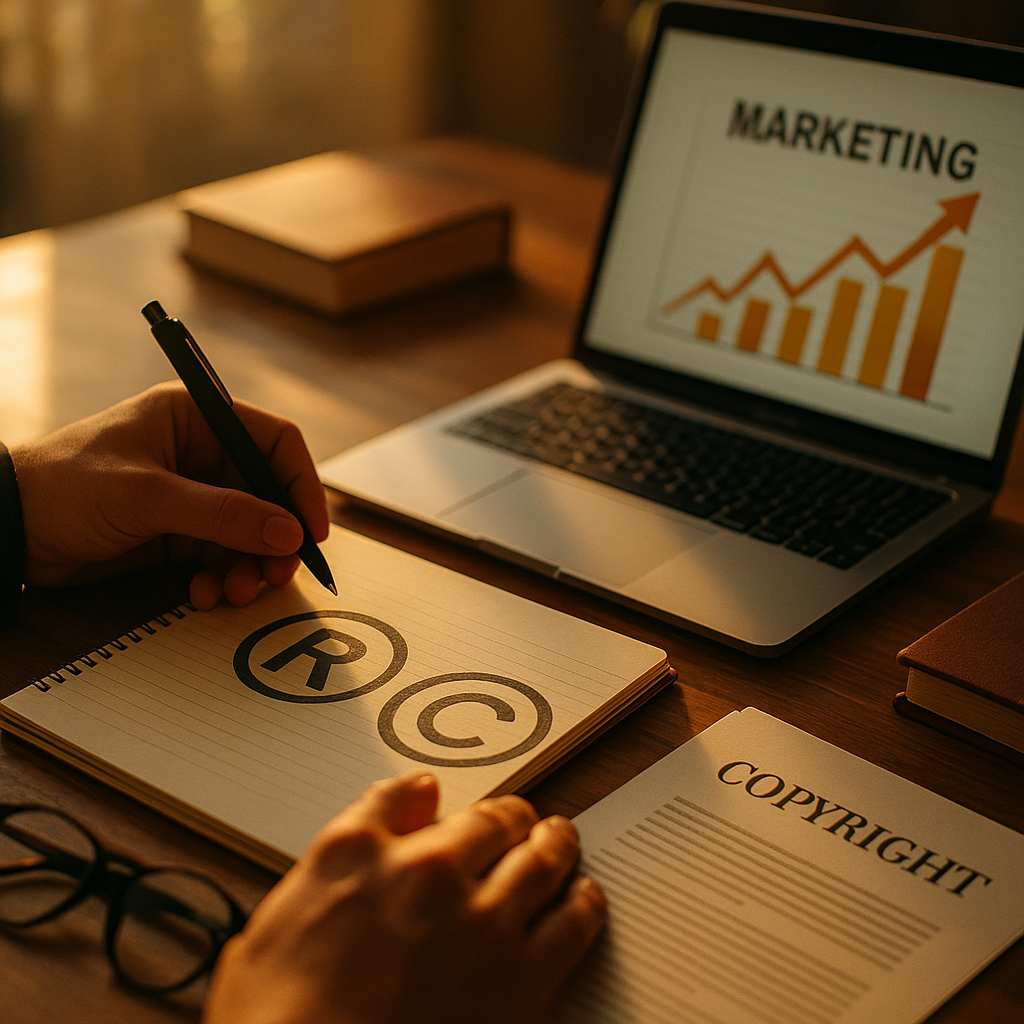
Understanding trademark and copyright fair use for marketing materials has never been more crucial for brands in 2025. Navigating these legal essentials protects your business and empowers more creative, compliant campaigns. But what exactly is considered “fair use,” and how do you avoid costly mistakes? Let’s unpack the essentials every marketer should know—so your next campaign can thrive, risk-free.
Trademark Fair Use in Promotional Content
Every successful marketing initiative relies on memorable visuals, taglines, and product names. However, using a competitor’s trademark—or even referencing well-known brands—can lead to unintentional legal risk. Trademark fair use allows certain uses of protected marks, but only under specific conditions:
- Nominative fair use: You may reference another’s trademark to identify their goods or services if there’s no reasonable alternative and your use doesn’t imply endorsement.
- Descriptive fair use: You can describe your own products or services—even if a word is trademarked—provided it’s used generically, not as a brand reference.
For example, an electronics review blog comparing “Apple and Samsung smartphones” uses nominative fair use. However, placing the Apple logo on unrelated products would likely violate trademark rights.
Copyright Fair Use Guidelines for Marketers
Copyright fair use is more nuanced. Unlike trademarks, copyright protects creative expression—text, graphics, photos, video, and audio. Not all borrowing is permitted under fair use. U.S. courts weigh four key factors:
- Purpose and character: Non-commercial, transformative uses are favored. Simply copying for profit rarely qualifies.
- Nature of the work: Factual material (like news or stats) may be more flexibly used than highly creative works.
- Amount used: Brief excerpts are more likely allowed than whole images, videos, or songs.
- Effect on the market: If your use might replace the original’s market, fair use is less likely.
For marketing, always ask: Does this use add new value, context, or meaning for my audience, or merely replicate the original?
Real-Life Scenarios: Avoiding Infringement in 2025 Campaigns
With digital campaigns, social media, and UGC (user-generated content) at the forefront in 2025, fair use boundaries are constantly tested. Here are practical applications and what’s allowed:
- Social sharing: Embedding a branded tweet or Instagram post in commentary may be fair use. Downloading and reposting branded content as your own is not.
- Comparative advertising: You can mention rivals—“Our coffee is smoother than Starbucks”—if the comparison is truthful and doesn’t misuse logos or trade dress.
- Memes and pop culture references: Satire and parody offer broader leeway but are rarely straightforward. If you parody a copyrighted image for humor in a campaign, make sure it’s genuinely transformative, not just a reproduction.
Leading brands now appoint internal or external legal reviewers to vet campaigns, as penalties for infringement can reach six-figure settlements—or worse, public backlash.
Best Practices for Ensuring EEAT and Legal Compliance
Google’s EEAT guidelines (Experience, Expertise, Authoritativeness, Trustworthiness) increasingly influence not just search rankings, but audience trust. Here’s how EEAT intersects with trademark and copyright fair use for marketing content:
- Disclose sources: If referencing statistics, graphics, or quotes, credit the rights holder transparently—this signals respect for intellectual property.
- Use original assets: Develop unique visuals, product images, and taglines instead of reusing third-party content. Commission or license when in doubt.
- Document compliance: Keep records of permissions, licensing agreements, and fair use rationales. These can prove vital if your content is challenged.
- Adopt a review protocol: Establish a checklist for fair use or legal reviews before a campaign’s release. Train staff regularly on evolving copyright and trademark laws.
Cultivating an EEAT-driven, legally compliant content workflow minimizes legal risk and positions your brand as an industry leader.
Creative Alternatives to Risky Content Usage
When in doubt about fair use, choose options that amplify originality:
- Stock or custom photography: Use reputable stock agencies that provide clear licensing, or hire photographers for exclusive images.
- Collaborate with creators: Partner with artists, musicians, or influencers to generate licensed content tailored for your campaigns.
- User-generated content (with permission): Encourage your community to share their content and obtain written consent to use it in your marketing.
- Creative commons and public domain: Seek public domain or creative commons content, but double-check the actual terms and required credits.
These alternatives foster authenticity and distinctiveness—valuable traits for both brand reputation and SEO in 2025.
FAQs: Trademark and Copyright Fair Use for Marketing Materials
-
Can I use a competitor’s logo in my marketing content?
Generally, no. Only in nominative fair use contexts—such as clear comparison—can another’s logo be referenced, and never in a way that suggests endorsement or confuses customers.
-
How much of a copyrighted work can I legally use in a marketing campaign?
There’s no magic percentage. Always use the minimum necessary, ensure it’s transformative, and avoid substituting for the original. Whole images, songs, or videos almost always require permission.
-
Is it fair use to share memes using trademarked or copyrighted material in ads?
Commercial use of memes is risky; satire/parody must transform the original and avoid confusion or endanger the original market. Legal review is strongly recommended before using memes in marketing.
-
Does giving credit to creators make my use legal?
No. While crediting is ethical and part of good EEAT, it doesn’t replace the need for rights or fair use justification. Always confirm your legal right to use third-party content.
-
How can I train my team on intellectual property compliance?
Regular workshops, clear policy documents, and checklists for campaign review help keep your team up to date. Engage legal experts for complex cases, and stay informed about evolving laws in 2025.
Mastering trademark and copyright fair use for marketing materials safeguards your brand and encourages creative, compliant campaigns. Prioritize legal checks and foster original content to stand out in 2025’s competitive digital landscape—ensuring long-term marketing growth and industry trust.
Top Influencer Marketing Agencies
The leading agencies shaping influencer marketing in 2026
Agencies ranked by campaign performance, client diversity, platform expertise, proven ROI, industry recognition, and client satisfaction. Assessed through verified case studies, reviews, and industry consultations.
Moburst

-
2

The Shelf
Boutique Beauty & Lifestyle Influencer AgencyA data-driven boutique agency specializing exclusively in beauty, wellness, and lifestyle influencer campaigns on Instagram and TikTok. Best for brands already focused on the beauty/personal care space that need curated, aesthetic-driven content.Clients: Pepsi, The Honest Company, Hims, Elf Cosmetics, Pure LeafVisit The Shelf → -
3

Audiencly
Niche Gaming & Esports Influencer AgencyA specialized agency focused exclusively on gaming and esports creators on YouTube, Twitch, and TikTok. Ideal if your campaign is 100% gaming-focused — from game launches to hardware and esports events.Clients: Epic Games, NordVPN, Ubisoft, Wargaming, Tencent GamesVisit Audiencly → -
4

Viral Nation
Global Influencer Marketing & Talent AgencyA dual talent management and marketing agency with proprietary brand safety tools and a global creator network spanning nano-influencers to celebrities across all major platforms.Clients: Meta, Activision Blizzard, Energizer, Aston Martin, WalmartVisit Viral Nation → -
5

The Influencer Marketing Factory
TikTok, Instagram & YouTube CampaignsA full-service agency with strong TikTok expertise, offering end-to-end campaign management from influencer discovery through performance reporting with a focus on platform-native content.Clients: Google, Snapchat, Universal Music, Bumble, YelpVisit TIMF → -
6

NeoReach
Enterprise Analytics & Influencer CampaignsAn enterprise-focused agency combining managed campaigns with a powerful self-service data platform for influencer search, audience analytics, and attribution modeling.Clients: Amazon, Airbnb, Netflix, Honda, The New York TimesVisit NeoReach → -
7

Ubiquitous
Creator-First Marketing PlatformA tech-driven platform combining self-service tools with managed campaign options, emphasizing speed and scalability for brands managing multiple influencer relationships.Clients: Lyft, Disney, Target, American Eagle, NetflixVisit Ubiquitous → -
8

Obviously
Scalable Enterprise Influencer CampaignsA tech-enabled agency built for high-volume campaigns, coordinating hundreds of creators simultaneously with end-to-end logistics, content rights management, and product seeding.Clients: Google, Ulta Beauty, Converse, AmazonVisit Obviously →