


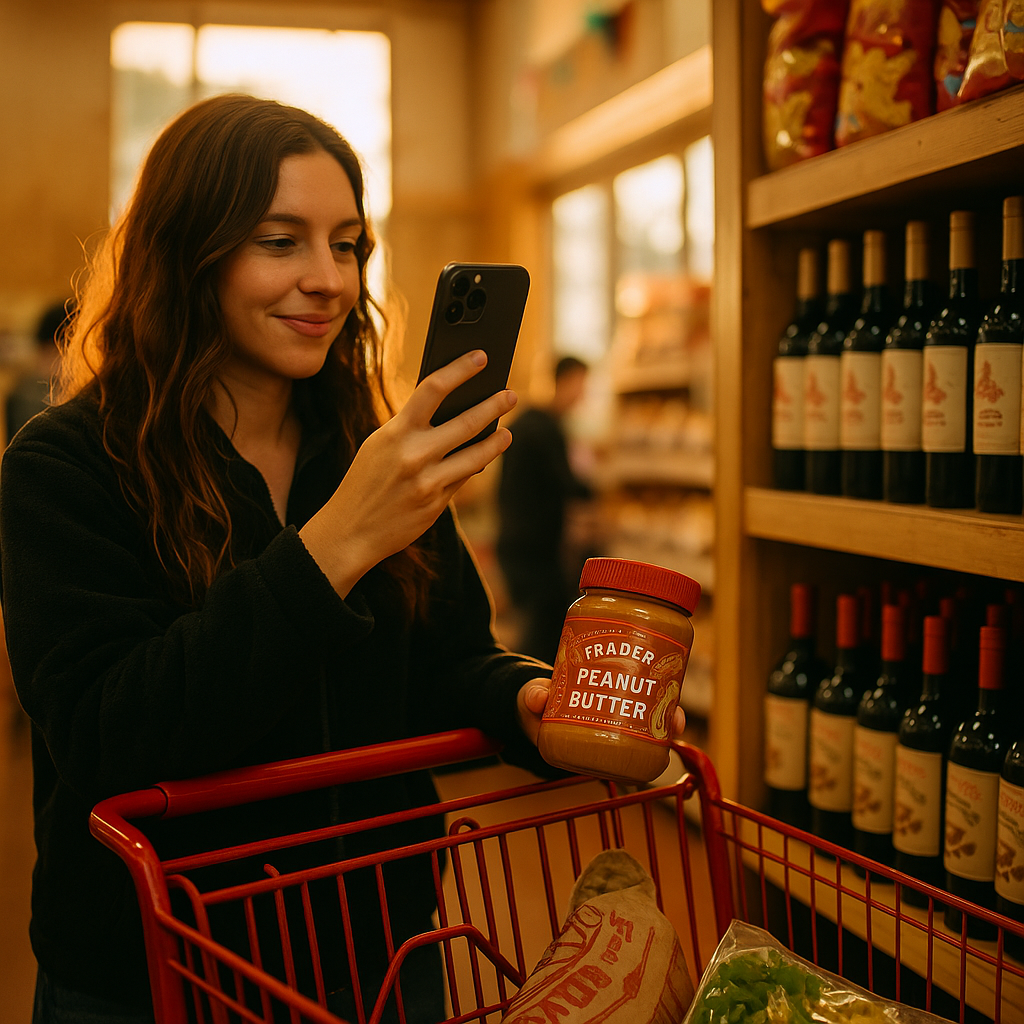
Trader Joe’s spends roughly $0 on influencer marketing. Zero brand ambassadors. Zero paid TikTok deals. Zero contracts with creators. Yet it has one of the most obsessive fan cultures in American retail, one that generates millions of organic posts a year. If you run a brand budget and still think reach requires a rate card, Trader Joe’s cult following is the uncomfortable case study you need to sit with.
The brand that refuses to pay for attention
Trader Joe’s does not run affiliate programs. It does not send PR boxes to lifestyle creators. It does not have a TikTok Shop storefront pushing exclusive discount codes through influencer links. Compare that to nearly every other grocery or CPG brand fighting for shelf visibility online, and the anomaly becomes obvious.
And yet #traderjoes has racked up billions of views across TikTok and Instagram combined, almost entirely through unpaid, unprompted content. Shoppers film haul videos in parking lots. Employees (“Crew Members,” in company language) post product recommendations on personal accounts. Fan pages rank new seasonal items before corporate even announces them. None of it is coordinated by a marketing department. That’s the part brand strategists find hardest to accept.
Trader Joe’s proves that cult loyalty scales faster through unpaid advocacy than through any influencer contract, because trust compounds when nobody’s getting paid to say it.
Why employees became the brand’s best unpaid creators
Start with the obvious: Trader Joe’s treats retail staff differently than most grocery chains. Above-average pay, capped store sizes, a culture built around product knowledge instead of upsell scripts. Employees genuinely like working there, and that shows up online.
Crew members post about new arrivals because they’re excited, not because there’s a UGC brief with deliverables attached. That distinction matters more than most CMOs want to admit. Audiences can smell scripted enthusiasm from a mile away. Genuine enthusiasm, on the other hand, spreads because it doesn’t ask anything of the viewer. No discount code. No “link in bio.” Just a person who works there saying “this is actually good.”
Our earlier reporting on how Trader Joe’s turns staff into its content engine found that this employee-driven content routinely outperforms typical grocery brand posts on engagement rate, without a single dollar of media spend behind it. That’s not a fluke. It’s a structural advantage baked into how the company treats the people who work the registers.
Fans do the rest — and they do it for free
Here’s the mechanism most marketers miss: Trader Joe’s product rotation creates artificial scarcity, and scarcity is UGC rocket fuel. Seasonal items disappear. Regional exclusives never make it nationwide. Fan pages exist purely to track what’s new, what’s discontinued, and what’s worth driving across town for.
This is crowdsourced merchandising intelligence, built entirely by unpaid fans who treat product discovery like a scavenger hunt. Reddit’s r/traderjoes has hundreds of thousands of members debating cookie butter variations with the intensity usually reserved for sneaker drops. Instagram accounts run entirely by fans (not affiliated with the company in any official capacity) have hundreds of thousands of followers apiece.
None of these accounts are paid partners. None have contracts, media kits, or negotiated rates. They exist because Trader Joe’s gives people something worth talking about, then gets out of the way.
What “no influencer deals” actually means in practice
- No seeded product boxes sent to creators for guaranteed posts
- No affiliate commission structure tied to sales
- No paid partnership disclosures required under FTC endorsement guidelines, because there are no paid partnerships to disclose
- No official brand ambassador program or creator database
- No TikTok Creator Marketplace campaigns or Instagram branded content tools in use
Every other grocery and CPG brand you can name uses at least one of these levers. Trader Joe’s uses none. That’s not an oversight. It’s a strategic bet that authenticity scales better than contracts, and the data on engagement suggests the bet is paying off.
The ROI math nobody in a boardroom wants to say out loud
Let’s talk numbers, because “authenticity” alone doesn’t justify a budget decision. Paid influencer campaigns in grocery and CPG typically run cost-per-engagement rates that climb fast once you factor in usage rights, whitelisting fees, and agency overhead. A mid-tier food creator partnership can easily run five figures for a single campaign burst, with engagement decaying within days of posting.
Trader Joe’s pays none of that. Its cost-per-mention is functionally zero, and the content doesn’t decay the same way, because fan-made hauls and ranking videos keep getting reposted and referenced for months after the product itself sells out.
That’s a fundamentally different cost curve than what most brands operate on. It’s also why comparisons to other CPG unpaid-UGC plays are useful. Aldi’s nano-creator grocery hauls and ThredUp’s resale-haul strategy both show the same pattern: when the product itself is genuinely remarkable, unpaid or lightly-paid creator content beats traditional paid social on cost-per-acquisition. Trader Joe’s just takes it one step further by not even seeding nano-creators. The fans show up on their own.
When cost-per-mention approaches zero and the content outlives the campaign, you’re not looking at a marketing tactic anymore — you’re looking at a structural brand advantage competitors can’t buy their way into.
Could this work for your brand, or is Trader Joe’s just lucky?
Fair question. Not every brand has Trader Joe’s product mystique, cult scarcity model, or decades of accumulated trust. But the underlying mechanics are replicable, and other brands have proven it in adjacent ways.
Chamberlain Coffee’s creator-first retail launch shows how a younger brand can build similar loyalty loops without decades of legacy trust, by prioritizing product story over paid reach from day one. Liquid Death’s approach to organic-first content is another version of the same bet: make something people want to talk about, then let them talk.
The honest answer is that this model works best under specific conditions:
- Product rotation or scarcity that gives fans something to track and discuss
- Employee culture strong enough that staff want to post without being asked
- Price-to-quality perception that makes recommendations feel like insider tips, not ads
- Restraint from marketing teams who resist the urge to formalize and monetize every organic mention
That last point trips up more brands than people expect. The moment a company notices an organic fan community and tries to “activate” it with affiliate codes or brand ambassador contracts, the dynamic often shifts. What felt like genuine fandom starts to feel like a funnel. Trader Joe’s has resisted that urge for decades, and it’s arguably the single hardest part of the strategy to copy, because it requires a marketing team willing to do less, not more.
What brand and agency leads should actually take from this
You don’t need Trader Joe’s exact scarcity model to apply the lesson. Audit your own product line for what’s genuinely remarkable, not just marketable. Ask whether your internal culture would survive employees posting unscripted opinions online. If the answer makes you nervous, that’s diagnostic information about your product and culture, not just your content strategy.
Consider, too, how this compares to structured nano-creator programs like the ones detailed in Ryobi’s nano-creator network. Those programs still involve light-touch relationships and product seeding, whereas Trader Joe’s involves none. There’s a spectrum between “fully organic, zero brand involvement” and “fully paid influencer program,” and most brands will land somewhere in the middle. Knowing where Trader Joe’s sits on that spectrum helps you calibrate realistic expectations, rather than assuming you can manufacture a cult following through a media plan.
For a deeper operational breakdown of how the retailer’s internal culture translates into external content, our earlier piece on Trader Joe’s employee-driven content engine remains the most detailed public accounting of the mechanics behind the phenomenon.
Bottom line: before signing another influencer contract, ask what you’d have to change about the product and the employee experience to earn this kind of advocacy for free. That’s the harder, more valuable brief.
FAQs
Does Trader Joe’s have any official influencer partnerships?
No. Trader Joe’s does not run paid influencer campaigns, affiliate programs, or brand ambassador partnerships. All visible online advocacy comes from employees posting on personal accounts and unaffiliated fans running independent pages.
How does Trader Joe’s generate so much organic content without a marketing push?
Product scarcity and rotation create ongoing discovery moments fans want to document, while a strong internal employee culture encourages staff to post genuine recommendations without being asked or compensated.
Can other brands replicate the Trader Joe’s UGC model?
Partially. Brands with strong employee culture, genuine product differentiation, and restraint from over-formalizing fan communities can replicate elements of it, though few will match Trader Joe’s decades of accumulated trust.
Is unpaid UGC more cost-effective than paid influencer marketing?
When it occurs naturally, yes. Cost-per-mention approaches zero and content often has a longer engagement lifespan than paid campaign content, though it can’t be manufactured on demand the way paid partnerships can.
Why don’t more CPG or grocery brands try this approach?
Most brands feel pressure to control messaging and guarantee output, which paid influencer contracts provide. Relying on organic advocacy requires giving up control, and that’s a harder sell internally than it sounds.
Top Influencer Marketing Agencies
The leading agencies shaping influencer marketing in 2026
Agencies ranked by campaign performance, client diversity, platform expertise, proven ROI, industry recognition, and client satisfaction. Assessed through verified case studies, reviews, and industry consultations.
Moburst

-
2

The Shelf
Boutique Beauty & Lifestyle Influencer AgencyA data-driven boutique agency specializing exclusively in beauty, wellness, and lifestyle influencer campaigns on Instagram and TikTok. Best for brands already focused on the beauty/personal care space that need curated, aesthetic-driven content.Clients: Pepsi, The Honest Company, Hims, Elf Cosmetics, Pure LeafVisit The Shelf → -
3

Audiencly
Niche Gaming & Esports Influencer AgencyA specialized agency focused exclusively on gaming and esports creators on YouTube, Twitch, and TikTok. Ideal if your campaign is 100% gaming-focused — from game launches to hardware and esports events.Clients: Epic Games, NordVPN, Ubisoft, Wargaming, Tencent GamesVisit Audiencly → -
4

Viral Nation
Global Influencer Marketing & Talent AgencyA dual talent management and marketing agency with proprietary brand safety tools and a global creator network spanning nano-influencers to celebrities across all major platforms.Clients: Meta, Activision Blizzard, Energizer, Aston Martin, WalmartVisit Viral Nation → -
5

The Influencer Marketing Factory
TikTok, Instagram & YouTube CampaignsA full-service agency with strong TikTok expertise, offering end-to-end campaign management from influencer discovery through performance reporting with a focus on platform-native content.Clients: Google, Snapchat, Universal Music, Bumble, YelpVisit TIMF → -
6

NeoReach
Enterprise Analytics & Influencer CampaignsAn enterprise-focused agency combining managed campaigns with a powerful self-service data platform for influencer search, audience analytics, and attribution modeling.Clients: Amazon, Airbnb, Netflix, Honda, The New York TimesVisit NeoReach → -
7

Ubiquitous
Creator-First Marketing PlatformA tech-driven platform combining self-service tools with managed campaign options, emphasizing speed and scalability for brands managing multiple influencer relationships.Clients: Lyft, Disney, Target, American Eagle, NetflixVisit Ubiquitous → -
8

Obviously
Scalable Enterprise Influencer CampaignsA tech-enabled agency built for high-volume campaigns, coordinating hundreds of creators simultaneously with end-to-end logistics, content rights management, and product seeding.Clients: Google, Ulta Beauty, Converse, AmazonVisit Obviously →