


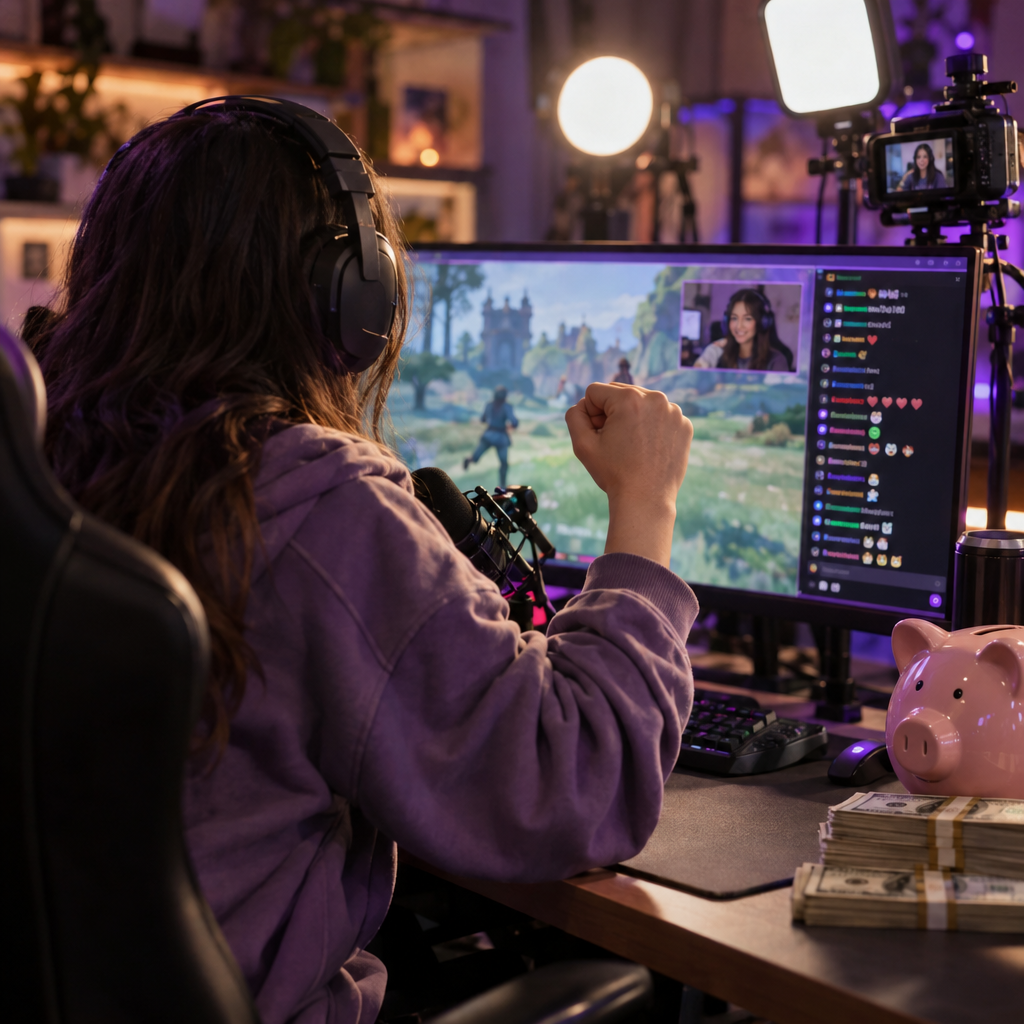
$398. That’s the new average price tag on a single Twitch collaboration, and it’s forcing brand strategists to admit something they’ve been dodging for two years: livestream isn’t a cheap add-on to the influencer mix anymore. It’s a distinct, premium-priced channel with its own economics, and treating it like a discounted YouTube post is how budgets quietly blow past projections.
The $398 Benchmark, in Context
Compare that number to the broader creator market and the gap gets interesting. A typical TikTok collaboration with a mid-tier creator still lands well below that figure, and even Instagram Reels deals rarely clear it without a six-figure follower count attached. Twitch, by contrast, hits $398 as an average, not a ceiling. Top streamers with dedicated communities push well past four figures for a single sponsored segment.
Why does this matter to a brand lead building a quarterly plan? Because averages hide the shape of the curve. On most platforms, price scales fairly predictably with follower count. On Twitch, price scales with something harder to quantify: sustained attention. A streamer with 15,000 concurrent viewers for three hours is delivering a different kind of exposure than a 30-second clip that gets scrolled past in a feed.
Livestream pricing isn’t broken by follower count the way feed based platforms are. It’s priced by sustained attention, and sustained attention has always cost more than a glance.
Why Livestream Costs More Than a Static Post
Livestream collaborations ask for something no other format does: real time trust in front of an audience that can see every unscripted moment. There’s no edit button on a live chat reaction. No retake if the brand mention lands awkwardly. That exposure cuts both ways, and creators price it accordingly.
There’s also the sheer duration. A Twitch integration might run across a two to four hour stream, with the brand mentioned multiple times, woven into chat interactions, and reinforced through on screen overlays. That’s not comparable to a 60 second TikTok. It’s closer to a long form sponsorship, and brands that have historically budgeted for “a post” get sticker shock when a streamer quotes a rate for “a stream.”
This echoes a pattern already playing out across video formats generally. As covered in how video premiums reshape budget mix, longer, higher production formats command higher rates because they demand more creator time and carry more reputational risk. Livestream just sits at the extreme end of that spectrum, since nothing about it is reshootable.
Real Time Engagement Changes the Math
Here’s the thing most procurement teams miss: engagement rate on livestream platforms behaves differently than on static feeds. Chat velocity, concurrent viewer retention, and donation or subscription spikes during a sponsored segment all function as live proof of attention. According to Sprout Social’s engagement benchmarks, platforms with real time interaction consistently outperform passive scroll formats on time spent per session, and Twitch is the clearest example of that dynamic in the creator economy.
That’s also why engagement, not raw reach, has become the metric brands actually negotiate against. The shift toward engagement over follower count in platform algorithms generally is doubly true on Twitch, where a streamer with 8,000 loyal viewers can out-negotiate one with 50,000 passive followers elsewhere.
For brands trying to prove ROI on these deals, the measurement conversation has to change too. Reach numbers alone won’t justify a $398 average spend to a CFO. Tying livestream placements to conversion based measurement rather than impressions gives the spend a defensible story, especially when stream specific promo codes or trackable links are baked into the deal from the start.
What’s Actually Driving the Premium?
- Audience intimacy. Twitch communities skew parasocial. Viewers feel like they know the streamer, which makes a product mention land closer to a friend’s recommendation than an ad.
- Time commitment. Multi-hour streams require sustained integration, not a single scripted line.
- Platform scarcity. There are fewer brand-friendly, mid-tier streamers than there are TikTok or Instagram creators in equivalent niches, and creator scarcity is already reshaping contract structures across the industry.
- Category fit. Gaming, tech, and beverage brands see outsized returns on Twitch specifically, which concentrates demand (and pricing power) among streamers in those verticals.
Industry data from eMarketer’s creator economy research has tracked livestream commerce and sponsorship spend climbing faster than static content spend for two straight years. The $398 average isn’t an outlier. It’s a symptom of a channel that’s maturing into its own pricing tier.
Disclosure Rules Don’t Pause When You’re Live
Here’s where risk mitigation gets harder, not easier. A sponsored post can carry a disclosure tag baked permanently into the caption. A live stream is dynamic: the sponsor mention might happen once, twenty minutes into a three hour broadcast, and never repeat. Regulators don’t care about that technicality.
The FTC’s endorsement guidelines require clear and conspicuous disclosure for the duration a reasonable viewer might be watching, which in practice means repeated, visible disclosure throughout a live segment, not a single mention at the start. Brands that treat Twitch disclosure like an Instagram caption checkbox are setting themselves up for compliance exposure.
This is part of a broader shift already forcing internal process changes. As outlined in how legal teams are rebuilding review workflows, fast moving formats like live content don’t fit neatly into the old multi-week approval cycle. If a stream is happening tonight, legal can’t be reviewing a script next Tuesday.
Building Livestream Into the Budget Mix
So what does a sane budget allocation actually look like given a $398 average? A few operational notes worth stealing for next quarter’s planning:
- Price by segment length, not by creator tier alone. A 10 minute mid-stream mention and a full show takeover sponsorship are not the same line item, even from the same streamer.
- Negotiate repeat disclosure into the contract. Make it the creator’s contractual obligation to re-disclose periodically, protecting both sides.
- Bundle measurement into the deal upfront. Unique promo codes, trackable landing pages, or stream-specific UTM parameters should be non-negotiable deliverables, not an afterthought.
- Test small before scaling. Running a handful of lower cost livestream integrations before committing to a flagship streamer mirrors the derisking approach covered in small batch creator testing strategies, and it applies just as well to an unfamiliar platform as it does to an unfamiliar creator tier.
Brands already comfortable negotiating premium video rates have a head start here. The logic that governs rethinking the influencer budget mix for long form video applies almost directly to livestream, just with a higher floor and less room for reshoots.
Is Twitch Worth the Premium for Non-Gaming Brands?
Not universally, and that’s an honest answer most vendor pitches won’t give you. Twitch’s premium pricing makes the most sense for categories with natural audience overlap: gaming peripherals, energy drinks, tech gadgets, financial apps targeting younger demographics. A skincare brand chasing Twitch because “livestream is trending” will likely pay the premium without getting the parasocial trust benefit that justifies it in the first place.
Check category fit before chasing the format. Statista’s platform demographic data remains a solid starting point for confirming whether your target audience actually spends meaningful time on Twitch before a media buyer commits four figures to a single streamer.
Quick Takeaway
Treat the $398 Twitch average as a floor, not a target, build repeat disclosure and conversion tracking into every contract, and pilot with two or three smaller streamers before committing budget to a flagship name. The premium is real, but it only pays off when the category fit and measurement plan are locked in before the stream goes live.
FAQs
Why is Twitch’s average collaboration price higher than other platforms?
Twitch pricing reflects sustained, real time attention rather than a single static impression. Multi-hour streams, repeated brand mentions, and parasocial audience trust all push rates above typical feed based platform averages.
How should brands budget for Twitch sponsorships compared to TikTok or Instagram?
Price by segment length and integration depth rather than follower count alone. A brief mid-stream mention costs far less than a full show takeover, even with the same streamer.
Does FTC disclosure work differently for livestream content?
Yes. Disclosure needs to be clear and repeated throughout a live broadcast, not stated once at the start, since viewers may join or tune in at any point during the stream.
Which brand categories benefit most from Twitch’s pricing premium?
Gaming, tech, beverage, and youth-focused financial brands tend to see the strongest returns, largely because their target audiences already spend significant time on the platform.
How can brands measure ROI on a livestream collaboration?
Use stream specific promo codes, unique trackable links, or dedicated landing pages built into the sponsorship deal upfront, then tie performance to conversions rather than raw viewer counts.
Top Influencer Marketing Agencies
The leading agencies shaping influencer marketing in 2026
Agencies ranked by campaign performance, client diversity, platform expertise, proven ROI, industry recognition, and client satisfaction. Assessed through verified case studies, reviews, and industry consultations.
Moburst

-
2

The Shelf
Boutique Beauty & Lifestyle Influencer AgencyA data-driven boutique agency specializing exclusively in beauty, wellness, and lifestyle influencer campaigns on Instagram and TikTok. Best for brands already focused on the beauty/personal care space that need curated, aesthetic-driven content.Clients: Pepsi, The Honest Company, Hims, Elf Cosmetics, Pure LeafVisit The Shelf → -
3

Audiencly
Niche Gaming & Esports Influencer AgencyA specialized agency focused exclusively on gaming and esports creators on YouTube, Twitch, and TikTok. Ideal if your campaign is 100% gaming-focused — from game launches to hardware and esports events.Clients: Epic Games, NordVPN, Ubisoft, Wargaming, Tencent GamesVisit Audiencly → -
4

Viral Nation
Global Influencer Marketing & Talent AgencyA dual talent management and marketing agency with proprietary brand safety tools and a global creator network spanning nano-influencers to celebrities across all major platforms.Clients: Meta, Activision Blizzard, Energizer, Aston Martin, WalmartVisit Viral Nation → -
5

The Influencer Marketing Factory
TikTok, Instagram & YouTube CampaignsA full-service agency with strong TikTok expertise, offering end-to-end campaign management from influencer discovery through performance reporting with a focus on platform-native content.Clients: Google, Snapchat, Universal Music, Bumble, YelpVisit TIMF → -
6

NeoReach
Enterprise Analytics & Influencer CampaignsAn enterprise-focused agency combining managed campaigns with a powerful self-service data platform for influencer search, audience analytics, and attribution modeling.Clients: Amazon, Airbnb, Netflix, Honda, The New York TimesVisit NeoReach → -
7

Ubiquitous
Creator-First Marketing PlatformA tech-driven platform combining self-service tools with managed campaign options, emphasizing speed and scalability for brands managing multiple influencer relationships.Clients: Lyft, Disney, Target, American Eagle, NetflixVisit Ubiquitous → -
8

Obviously
Scalable Enterprise Influencer CampaignsA tech-enabled agency built for high-volume campaigns, coordinating hundreds of creators simultaneously with end-to-end logistics, content rights management, and product seeding.Clients: Google, Ulta Beauty, Converse, AmazonVisit Obviously →