


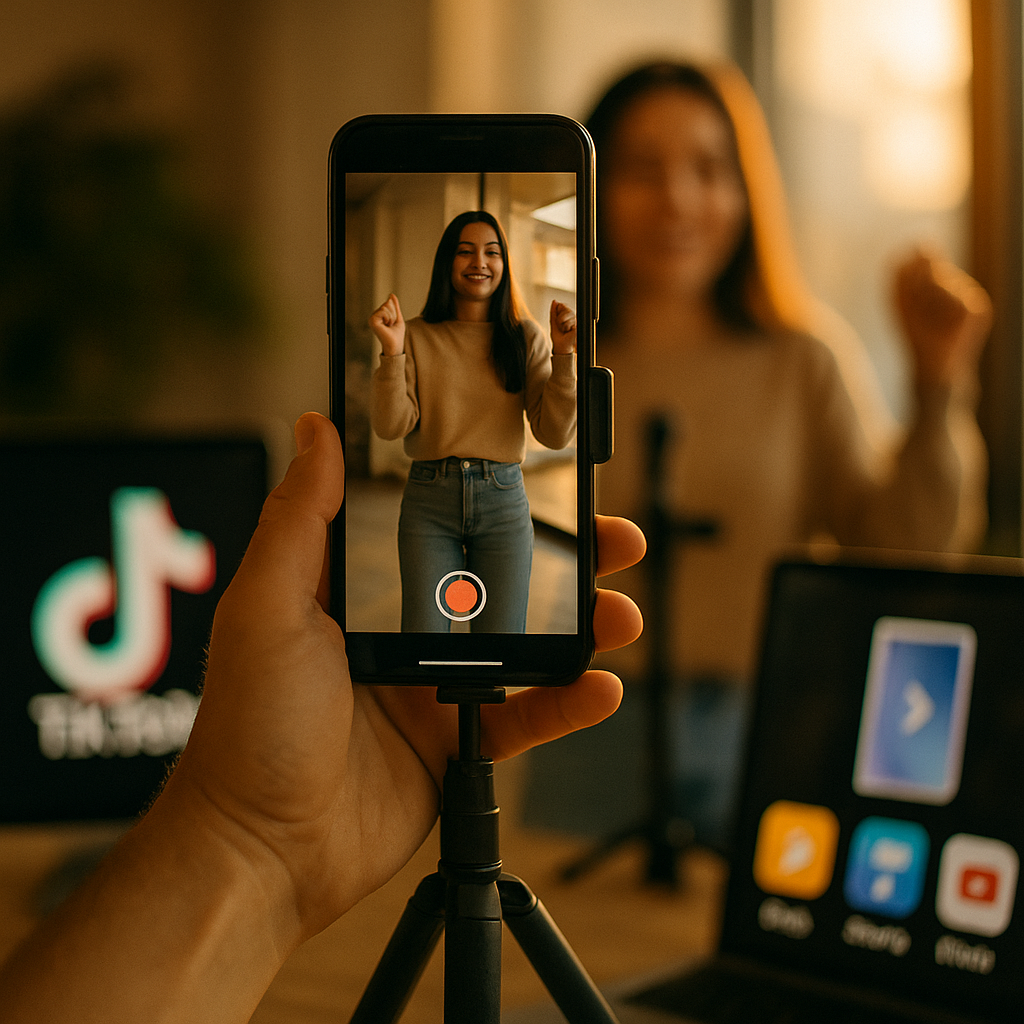
Brands that still treat TikTok, Reels, and Shorts as separate deliverables are burning budget on redundant production. Vertical short-form video has become the default brand format, and the brands winning right now are the ones engineering one creator asset to carry production, distribution, and commerce simultaneously across every surface where buyers actually live.
One Format to Rule Every Surface
The convergence is not theoretical. eMarketer data shows short-form video now accounts for more than 60% of all social media time spent globally, and the share is accelerating as AI-curated feeds on TikTok, Instagram, and YouTube Shorts replace chronological or follow-based discovery entirely. The format is no longer one channel option among many. It is the channel.
What changed is the infrastructure beneath the content. TikTok Shop, Instagram’s shoppable Reels architecture, and YouTube Shopping integrations have collapsed the gap between content and transaction. A creator demonstrating a skincare serum is simultaneously feeding the algorithm, building brand recall, and generating a purchase event — inside the same asset, inside the same session.
Now layer in what AI shopping interfaces are doing. Perplexity’s product cards, Google’s AI Overviews with embedded commerce, and emerging LLM-native storefronts are beginning to surface short-form video clips as evidence for purchase recommendations. Your creator content is no longer just a social artifact; it’s becoming a citation in an AI-mediated buying decision.
A single vertical video produced today must satisfy five simultaneous masters: TikTok’s algorithm, Instagram’s Reels ranking signals, YouTube Shorts’ discovery engine, social commerce checkout flows, and AI shopping interfaces that parse visual and audio content for product credibility signals.
Why the “Post It Everywhere” Strategy Fails
Repurposing is not the same as engineering for convergence. Most brand teams still operate a post-it-everywhere workflow: shoot a horizontal hero asset, crop it to 9:16, caption it differently per platform, and call it a multi-platform strategy. That approach is producing mediocre performance everywhere because each platform’s algorithm now penalizes content that reads as cross-posted rather than native.
TikTok’s ranking system down-ranks videos with visible Instagram or YouTube watermarks, a policy documented in their TikTok for Business guidelines. Meta’s Reels algorithm similarly deprioritizes content that lacks native engagement signals in the first three seconds. These are not soft preferences; they are hard distribution penalties that crater organic reach before paid amplification even enters the equation.
The solution is not shooting more content. It’s building smarter briefs that instruct creators to produce a single vertical asset designed from the ground up to satisfy multiple algorithmic and commerce requirements at once. Shoot-once repurposing frameworks that account for platform-specific safe zones, hook timing, and caption behavior can dramatically reduce production cost while improving native performance across all surfaces.
The Architecture of a Convergent Creator Asset
What does a properly engineered vertical video actually look like? It has five distinct structural layers, and each one serves a different master simultaneously.
- The hook (0-3 seconds): Must create pattern interruption for algorithmic signals while embedding a product cue legible to AI shopping parsers. Emotion first, product second, but the product must appear.
- The narrative core (3-20 seconds): Delivers the creator’s authentic perspective, which is the signal that differentiates influencer content from branded creative and earns watch-through rates that feed ranking algorithms on all three major platforms.
- The commerce trigger (15-25 seconds): A natural verbal or visual product reference timed to align with TikTok Shop’s in-video product tag display window and Instagram’s shoppable sticker overlay zone.
- The CTA architecture (final 5 seconds): Platform-specific CTAs can be swapped in post-production using AI editing tools, allowing one shoot to produce three platform-native endings without reshooting.
- The audio layer: Closed captions, not just for accessibility but because both Shorts and Reels weight caption completion as an engagement signal. Keyword-rich captions also improve indexability in AI shopping interfaces that parse text layers.
For teams running multi-creator campaigns, this structural framework needs to live in the brief, not in post-production notes. A brief architecture for algorithmic reach embeds these structural requirements at the briefing stage so creators make production decisions that serve commerce and distribution simultaneously, without over-constraining the creative authenticity that makes the format work.
Commerce Is Not a Feature. It’s the Frame.
The brands seeing the strongest returns from short-form video right now are not treating commerce as a separate activation layer bolted onto content. They are briefing creators with commerce as the organizing logic from the first production conversation.
Consider how social commerce briefs need to be structured differently from traditional influencer content briefs. A traditional brief optimizes for brand sentiment and reach. A commerce-first brief optimizes for session conversion: the probability that a viewer who watches more than 50% of the video initiates a product interaction. Those are different creative directives, and they produce different content.
E.l.f. Cosmetics is a useful case study. Their TikTok Shop strategy integrates creator briefs, product tag placement, and live shopping events into a single content architecture, with creators briefed on specific product SKUs, price anchoring language, and timing for product reveals within the video. The result is content that performs in organic discovery, earns paid amplification budget, and converts inside the same session. That is the convergence playbook in practice.
AI Shopping Interfaces Are the Next Distribution Channel
Here’s where the stakes escalate for brand strategists: the next wave of short-form video distribution is not a social platform. It’s an AI shopping interface.
Perplexity AI, Google’s AI Mode, and emerging LLM-native storefronts are beginning to surface creator video content as social proof within AI-generated purchase recommendations. When a user asks an AI shopping assistant for the best hydrating moisturizer under $40, the AI is beginning to cite and display short-form video content where creators review, demonstrate, or endorse relevant products. Your creator’s TikTok is becoming evidence in an AI-mediated buying decision.
This requires a new layer in the brief: AI answer engine discovery optimization. Creators need to verbalize product names, brand names, key product attributes, and use-case language in ways that are parseable by LLMs, not just legible to human viewers. It’s a subtle shift in scripting discipline that has outsized implications for whether your content gets cited in AI shopping surfaces or not.
Brands that brief creators to optimize only for human viewers are leaving AI-mediated distribution entirely on the table. The short-form video assets you’re producing today will be parsed by LLMs for product citation within 12 months of publication.
Distribution Logic Has to Live in the Brief
The operational failure most brand teams make is treating distribution as something that happens after production. Platform selection, algorithm requirements, paid amplification windows, and commerce integration points need to be decided before a single creator hits record.
For teams managing multi-creator programs, that means building multi-format briefs that encode distribution logic at the source. Which platform gets the raw native cut? Which platform gets the AI-edited variant with a swapped CTA? Which assets get submitted for TikTok Spark Ads versus Meta’s Advantage+ creative pipeline? These decisions affect what creators actually shoot, and they cannot be retrofitted in post.
Teams also need to account for vertical video specs that align across OTT and social in a single production run, particularly as connected TV surfaces begin integrating short-form creator content in shoppable ad formats. The production discipline required to serve TikTok and a connected TV placement from one shoot is significant, but the cost efficiency compounds quickly at scale.
Finally, compliance cannot be an afterthought in a commerce-integrated format. When a creator’s video directly triggers a purchase event via TikTok Shop or Instagram Checkout, the FTC disclosure requirements apply not just to the social post but to the commerce flow itself. Brands running influencer commerce programs need legal review at the brief stage, not after content goes live.
Platforms are also tightening their own policies. Meta’s business policies and platform monitoring tools like Sprout Social now flag non-disclosed paid content in Reels at scale, and the reputational and algorithmic penalties for non-compliance are significant enough to warrant structural controls in your creator contracting and briefing workflow.
The Operational Shift Required
Treating vertical short-form video as the default brand format requires a structural change in how marketing teams are organized, not just how they brief creators. Production, paid media, commerce, and influencer teams need shared briefing infrastructure, shared performance metrics, and shared optimization cycles.
The brands getting this right have moved from campaign-based thinking to asset-based thinking. Every creator video is an asset with a production cost, a distribution lifespan, a commerce conversion rate, and an AI citability score. Managing it that way requires different tools, different briefs, and different KPIs than a traditional influencer campaign.
Start by auditing your current briefs: do they encode platform-native requirements, commerce triggers, and AI-parseable language, or do they still describe content as if it’s going to a single social channel?
Frequently Asked Questions
What makes vertical short-form video the default brand format?
Vertical short-form video has become the default because it is the primary format consumed across the platforms with the highest engagement and purchase intent: TikTok, Instagram Reels, and YouTube Shorts. These platforms collectively account for the majority of social media time spent, and their algorithms, commerce integrations, and AI discovery surfaces are all optimized for 9:16 video. Brands that produce in any other format are working against the infrastructure, not with it.
How should brands brief creators differently for TikTok Shop versus Reels commerce?
TikTok Shop requires creators to incorporate in-video product tags and often verbal SKU references aligned with specific price points and promotional windows. Instagram Reels commerce relies more on product sticker overlays and link-in-bio flows, with heavier weight on watch-through rates as a ranking signal. The brief needs to specify commerce mechanism by platform, not use a single universal CTA instruction. Timing of the product reveal, language around pricing, and the placement of visual product cues all differ by platform’s commerce architecture.
How are AI shopping interfaces changing influencer content requirements?
AI shopping interfaces like Perplexity AI and Google’s AI Mode are beginning to surface creator video content as social proof within AI-generated purchase recommendations. This means creator content now needs to include verbalized product names, brand names, key attributes, and use-case language that LLMs can parse and cite. Brands should add an AI citability layer to their creator briefs, instructing creators to speak product details clearly and naturally rather than relying on visual product placement alone.
Can one video truly work across TikTok, Reels, Shorts, and AI interfaces?
Yes, but it requires engineering from the brief stage rather than cropping and reposting in post-production. A properly structured vertical video — with a strong hook, native narrative, timed commerce trigger, platform-swappable CTAs, and keyword-rich captions — can perform natively across all major short-form platforms and remain legible to AI shopping parsers. The key is encoding multi-platform requirements into the creator brief before production begins, not adapting a single-platform asset after the fact.
What are the compliance risks specific to shoppable influencer video?
When creator content directly triggers a purchase event through integrated commerce features like TikTok Shop or Instagram Checkout, FTC disclosure requirements apply to the full commerce flow, not just the social post. Brands need clear disclosure language in both the video itself and the commerce interface. Additionally, platform policies from Meta and TikTok increasingly flag non-disclosed paid content algorithmically, creating both reputational and distribution risks. Legal and compliance review should happen at the briefing stage, not after content is published.
Top Influencer Marketing Agencies
The leading agencies shaping influencer marketing in 2026
Agencies ranked by campaign performance, client diversity, platform expertise, proven ROI, industry recognition, and client satisfaction. Assessed through verified case studies, reviews, and industry consultations.
Moburst

-
2

The Shelf
Boutique Beauty & Lifestyle Influencer AgencyA data-driven boutique agency specializing exclusively in beauty, wellness, and lifestyle influencer campaigns on Instagram and TikTok. Best for brands already focused on the beauty/personal care space that need curated, aesthetic-driven content.Clients: Pepsi, The Honest Company, Hims, Elf Cosmetics, Pure LeafVisit The Shelf → -
3

Audiencly
Niche Gaming & Esports Influencer AgencyA specialized agency focused exclusively on gaming and esports creators on YouTube, Twitch, and TikTok. Ideal if your campaign is 100% gaming-focused — from game launches to hardware and esports events.Clients: Epic Games, NordVPN, Ubisoft, Wargaming, Tencent GamesVisit Audiencly → -
4

Viral Nation
Global Influencer Marketing & Talent AgencyA dual talent management and marketing agency with proprietary brand safety tools and a global creator network spanning nano-influencers to celebrities across all major platforms.Clients: Meta, Activision Blizzard, Energizer, Aston Martin, WalmartVisit Viral Nation → -
5

The Influencer Marketing Factory
TikTok, Instagram & YouTube CampaignsA full-service agency with strong TikTok expertise, offering end-to-end campaign management from influencer discovery through performance reporting with a focus on platform-native content.Clients: Google, Snapchat, Universal Music, Bumble, YelpVisit TIMF → -
6

NeoReach
Enterprise Analytics & Influencer CampaignsAn enterprise-focused agency combining managed campaigns with a powerful self-service data platform for influencer search, audience analytics, and attribution modeling.Clients: Amazon, Airbnb, Netflix, Honda, The New York TimesVisit NeoReach → -
7

Ubiquitous
Creator-First Marketing PlatformA tech-driven platform combining self-service tools with managed campaign options, emphasizing speed and scalability for brands managing multiple influencer relationships.Clients: Lyft, Disney, Target, American Eagle, NetflixVisit Ubiquitous → -
8

Obviously
Scalable Enterprise Influencer CampaignsA tech-enabled agency built for high-volume campaigns, coordinating hundreds of creators simultaneously with end-to-end logistics, content rights management, and product seeding.Clients: Google, Ulta Beauty, Converse, AmazonVisit Obviously →