


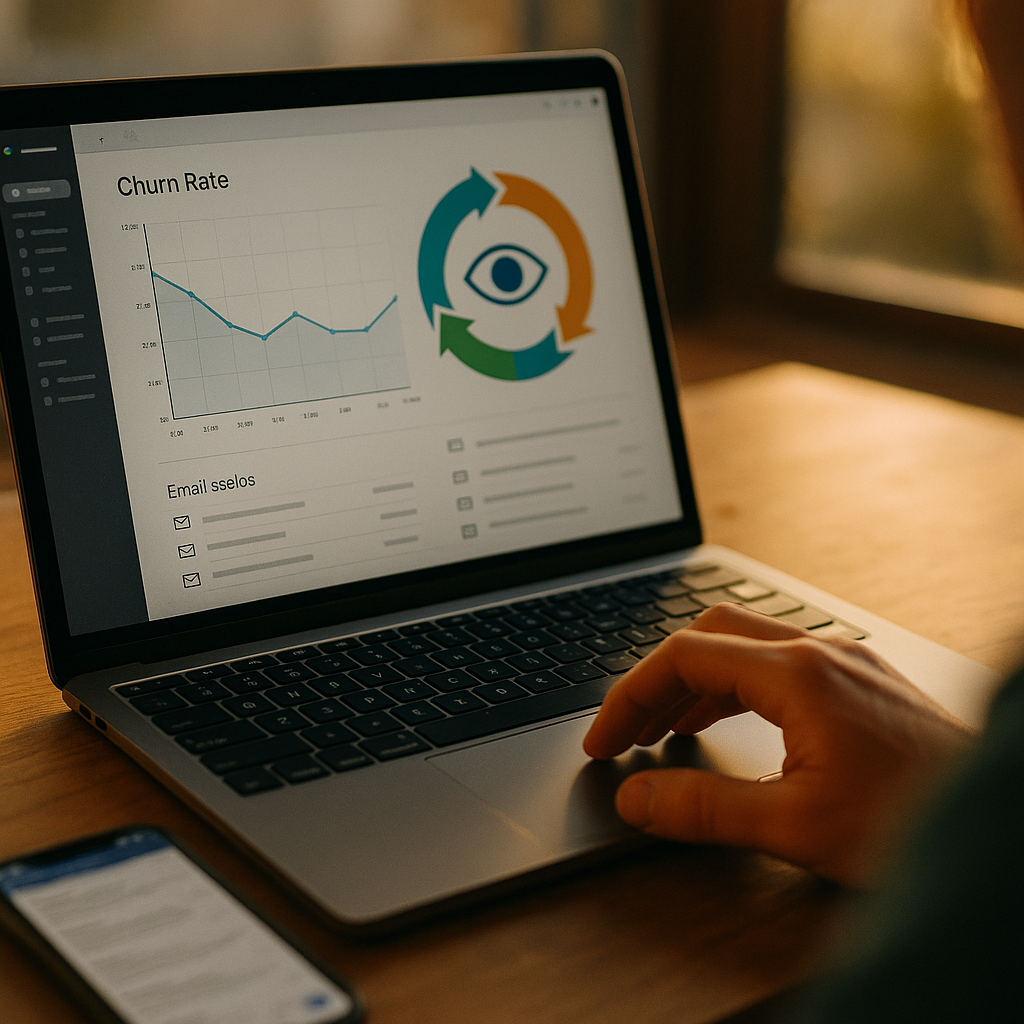
Only 23% of marketing teams say their email programs actually react to real-time customer sentiment, according to recent benchmarking from eMarketer. Everyone else is still sending campaigns based on data that’s a week old by the time it hits an inbox. An AI feedback to email automation loop fixes that lag, and pairing Wavelength with Iris is quickly becoming the reference architecture for doing it without hiring a data science team.
This isn’t theoretical. Brands running influencer and lifecycle programs side by side are drowning in unstructured feedback: DM replies, comment sentiment, post-purchase surveys, support tickets. Most of it never touches the email engine. Wavelength and Iris, used together, close that gap.
What Wavelength and Iris Actually Do
Wavelength is a real-time personalization engine. It ingests behavioral and contextual signals (browsing activity, purchase timing, engagement recency) and adjusts messaging content on the fly rather than relying on static segments built weeks in advance. We covered its personalization mechanics in depth in our real-time personalization framework comparison, and the short version is: it’s built for speed, not for interpreting why customers feel a certain way.
That’s where Iris comes in. Iris is an AI feedback analysis layer that parses unstructured text, reviews, survey responses, social comments, support transcripts, and scores sentiment, intent, and churn risk. Think of it as the interpretation engine sitting upstream of Wavelength’s execution engine. Iris tells you what customers mean. Wavelength decides what to send them next.
The gap between “we know how the customer feels” and “we acted on it before they churned” is where most lifecycle programs quietly lose revenue.
Separately, both tools are useful. Together, they form a closed loop: feedback in, sentiment scored, personalized email out, response captured, loop repeats. That’s the whole pitch, and it’s why marketing ops teams are starting to treat this pairing as infrastructure rather than a nice-to-have integration.
Why Most Feedback Loops Stay Broken
Here’s the uncomfortable truth: most brands collect plenty of feedback. They just don’t operationalize it. Survey data sits in a dashboard nobody checks weekly. Support tickets get tagged but never routed back to marketing. Comment sentiment on influencer posts gets a passing glance from the social team and dies there.
The result is a one-way funnel. Feedback flows in, insights get generated, and then nothing happens downstream because there’s no automated bridge between “we detected dissatisfaction” and “we sent a targeted recovery email within the hour.” Manual handoffs are the killer. By the time a human reviews a sentiment report and briefs the email team, the moment has passed and the customer has already churned or, worse, posted a public complaint.
This is the same structural problem we’ve flagged in MarTech consolidation coverage: too many disconnected tools, each doing its job well in isolation, none of them talking to each other in real time. Feedback loops die in the gaps between platforms, not inside any single platform.
Building the Loop: A Practical Blueprint
So how do you actually wire Wavelength and Iris together? The architecture is simpler than most teams expect, but the sequencing matters.
- Feed Iris everything. Route survey responses, review platform data, support tickets, and social comment exports into Iris continuously. Batch uploads defeat the purpose; you want a live stream, even if it’s just hourly syncs.
- Set sentiment thresholds that trigger action. Iris scores each piece of feedback for sentiment and urgency. Define what counts as “actionable”: a negative sentiment score paired with a recent purchase, for example, or a spike in complaint language around a specific SKU.
- Push scored signals into Wavelength as personalization variables. This is the connective tissue. Wavelength needs to treat sentiment score the same way it treats browsing behavior: as a live input that changes what the next email contains.
- Build the response templates before you need them. Recovery emails, proactive discount offers, escalation-to-human flags, these all need to exist in Wavelength’s library ahead of time so the system can select and personalize instantly rather than waiting on creative approval.
- Close the loop by capturing the response. Whatever happens after the email sends (open, click, reply, purchase, unsubscribe) feeds back into Iris as a new data point. This is what makes it a loop rather than a one-time trigger.
Teams that skip step five end up with a smart trigger system, not a feedback loop. The distinction matters more than it sounds. A trigger reacts once. A loop learns.
If your current stack looks more like a patchwork of point solutions than an integrated pipeline, it’s worth mapping the layers explicitly. Our breakdown of discovery to payment pipelines uses a similar five-layer logic and it translates well to feedback architecture: each layer needs a clean handoff to the next, or the whole chain stalls.
Where the ROI Actually Shows Up
Marketing leaders rightly ask: does this actually move revenue, or is it just operational elegance? The honest answer is both, but the revenue case is stronger than most teams assume.
Retention is the biggest lever. Catching sentiment decline before it becomes a churned customer costs a fraction of reacquisition. HubSpot’s research on lifecycle marketing has consistently shown that proactive, behaviorally triggered emails outperform batch campaigns on both open rate and conversion, and adding sentiment data as a trigger layer sharpens that further because it targets emotional state, not just behavior.
There’s also a support cost angle nobody talks about enough. When Iris catches negative sentiment early and Wavelength routes a resolution-focused email automatically, fewer of those cases escalate to a live support ticket. That’s a direct headcount and cost-per-resolution saving, and it’s measurable within a single quarter.
Sentiment-triggered recovery emails routinely convert at two to three times the rate of generic win-back campaigns, because they’re addressing a specific, known grievance rather than guessing at one.
Then there’s the brand safety dimension, which matters a lot for teams running influencer-adjacent programs. If Iris flags a spike in negative sentiment tied to a specific creator collaboration or product drop, that signal can trigger internal alerts, not just customer emails. Catching a reputational issue in hours instead of days is worth more than most attribution models can even quantify.
The Identity Problem Nobody Mentions
Here’s a wrinkle that trips up a lot of implementations: feedback data and email profile data often don’t share a common identifier. A customer might leave a negative review under one email, submit a support ticket under another, and comment on social under a handle that’s not linked to either. Iris can score all three pieces of feedback perfectly and still fail to connect them to the right Wavelength profile.
This is an identity resolution problem, and it’s the same one we explored in identity management coverage around creator attribution. The fix usually involves a unified customer ID layer sitting between Iris and Wavelength, something closer to a lightweight context engine than a full CDP. If you’re evaluating that middle layer, our context engines versus CDPs checklist is a useful starting point before you commit budget.
Compliance Isn’t Optional Here
Any time you’re scoring sentiment and triggering automated communications, you’re processing personal data at scale, and that carries obligations. The FTC has been explicit about disclosure and data use expectations for automated marketing systems, and the UK’s ICO guidance applies similarly if you’re operating across markets.
Practically, that means three things for a Wavelength and Iris deployment: customers need clear disclosure that feedback is being analyzed for marketing purposes, sentiment scores shouldn’t be retained longer than necessary, and there needs to be a human override path for edge cases (a legitimately angry customer shouldn’t get an algorithmically cheerful upsell email). Building that override into the workflow up front is far cheaper than retrofitting it after a compliance review flags it.
Timing automation compounds these risks if it’s not vetted carefully. Our review of SMS timing automation raises similar governance questions that apply directly to email sequencing built on sentiment triggers: speed is only an advantage if the logic behind it is auditable.
Getting Started Without Overbuilding
You don’t need to automate every feedback channel on day one. Start with the highest-volume, highest-signal source, usually post-purchase surveys or support tickets, and prove the loop works end to end before adding social comment sentiment or review platform data. Measure recovery email conversion against your existing win-back baseline for sixty days. If it beats baseline by a meaningful margin, expand the feedback sources feeding Iris. If it doesn’t, the problem is almost always in the trigger thresholds, not the tools themselves.
Run a single pilot segment through the Wavelength and Iris loop this quarter, benchmark it against your current win-back sequence, and let the sixty-day conversion delta decide whether it’s worth scaling company-wide.
FAQs
What’s the difference between Wavelength and Iris in this setup?
Wavelength personalizes and sends email content in real time based on behavioral and contextual signals. Iris analyzes unstructured feedback, like reviews, surveys, and comments, and scores it for sentiment and urgency. Iris interprets, Wavelength acts.
Do we need a CDP to connect Wavelength and Iris?
Not necessarily a full CDP, but you do need some identity resolution layer that connects feedback data to email profiles. Many teams use a lightweight context engine instead of a heavier CDP for this specific use case.
How fast can a sentiment-triggered email actually send?
With properly configured thresholds, the loop can trigger an email within minutes of a negative feedback event being scored, compared to days or weeks with manual review processes.
Is this compliant with data privacy regulations?
It can be, provided you disclose that feedback is analyzed for marketing purposes, limit retention of sentiment scores, and build in human override paths. Consult FTC and applicable regional guidance before launch.
What’s a realistic first pilot for this integration?
Start with post-purchase survey data or support tickets, the highest-signal feedback sources, and benchmark recovery email performance against your existing win-back sequence for about sixty days before expanding.
Top Influencer Marketing Agencies
The leading agencies shaping influencer marketing in 2026
Agencies ranked by campaign performance, client diversity, platform expertise, proven ROI, industry recognition, and client satisfaction. Assessed through verified case studies, reviews, and industry consultations.
Moburst

-
2

The Shelf
Boutique Beauty & Lifestyle Influencer AgencyA data-driven boutique agency specializing exclusively in beauty, wellness, and lifestyle influencer campaigns on Instagram and TikTok. Best for brands already focused on the beauty/personal care space that need curated, aesthetic-driven content.Clients: Pepsi, The Honest Company, Hims, Elf Cosmetics, Pure LeafVisit The Shelf → -
3

Audiencly
Niche Gaming & Esports Influencer AgencyA specialized agency focused exclusively on gaming and esports creators on YouTube, Twitch, and TikTok. Ideal if your campaign is 100% gaming-focused — from game launches to hardware and esports events.Clients: Epic Games, NordVPN, Ubisoft, Wargaming, Tencent GamesVisit Audiencly → -
4

Viral Nation
Global Influencer Marketing & Talent AgencyA dual talent management and marketing agency with proprietary brand safety tools and a global creator network spanning nano-influencers to celebrities across all major platforms.Clients: Meta, Activision Blizzard, Energizer, Aston Martin, WalmartVisit Viral Nation → -
5

The Influencer Marketing Factory
TikTok, Instagram & YouTube CampaignsA full-service agency with strong TikTok expertise, offering end-to-end campaign management from influencer discovery through performance reporting with a focus on platform-native content.Clients: Google, Snapchat, Universal Music, Bumble, YelpVisit TIMF → -
6

NeoReach
Enterprise Analytics & Influencer CampaignsAn enterprise-focused agency combining managed campaigns with a powerful self-service data platform for influencer search, audience analytics, and attribution modeling.Clients: Amazon, Airbnb, Netflix, Honda, The New York TimesVisit NeoReach → -
7

Ubiquitous
Creator-First Marketing PlatformA tech-driven platform combining self-service tools with managed campaign options, emphasizing speed and scalability for brands managing multiple influencer relationships.Clients: Lyft, Disney, Target, American Eagle, NetflixVisit Ubiquitous → -
8

Obviously
Scalable Enterprise Influencer CampaignsA tech-enabled agency built for high-volume campaigns, coordinating hundreds of creators simultaneously with end-to-end logistics, content rights management, and product seeding.Clients: Google, Ulta Beauty, Converse, AmazonVisit Obviously →