


Wingstop Spent Less and Sold More. Here’s the Breakdown.
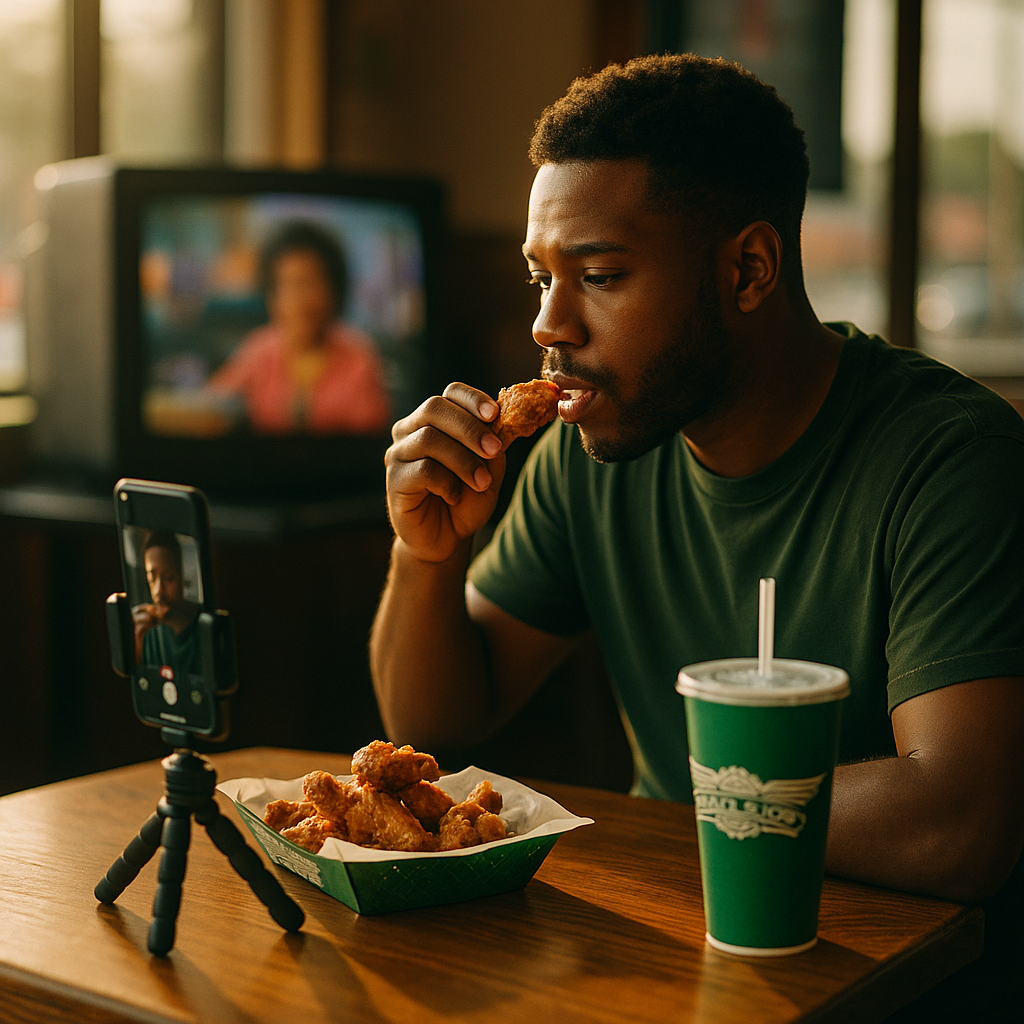
What if your most efficient media channel wasn’t a TV spot or a paid search campaign, but a 47-second TikTok from a food creator with 180,000 followers? Wingstop’s niche creator strategy proved exactly that, beating traditional broadcast on cost-per-sale by leaning into platform-native content and granular attribution infrastructure most restaurant brands still haven’t built.
The Problem With Broadcast for QSR Brands
Quick-service restaurant marketing has relied on broadcast television for decades. The logic was simple: massive reach, consistent brand exposure, predictable CPMs. But reach was always a proxy metric. What broadcast never solved was closed-loop attribution — the ability to connect a viewer’s exposure to a specific creative asset directly to a purchase at the register or through the app.
Wingstop’s marketing leadership recognized this gap. Broadcast CPMs were climbing while measurement confidence was eroding. Meanwhile, TikTok and Instagram had matured into platforms where food content didn’t just perform — it converted. The question wasn’t whether creator content could drive awareness. It was whether the attribution stack could prove it drove sales at a lower cost than traditional media.
The fundamental shift Wingstop made wasn’t creative — it was measurement. By building attribution infrastructure before scaling creator spend, they could compare cost-per-sale across channels with actual confidence, not post-campaign rationalization.
Why Niche Over Reach?
The instinct in most brand media plans is to chase scale. More impressions, bigger creators, broader audiences. Wingstop inverted this. Their creator selection process prioritized audience relevance and community trust over raw follower counts. Food-focused creators with engaged niche communities — wing enthusiasts, late-night food reviewers, college dining accounts — consistently delivered higher conversion rates than generalist lifestyle creators with three times the audience.
This mirrors what we’ve seen across other categories. CPG brands using micro-creator strategies have cut customer acquisition costs significantly by prioritizing niche fit over vanity metrics. The underlying mechanic is the same: a tightly aligned audience that already cares about the category converts at a higher rate, even with lower total impressions.
Wingstop reportedly activated creators across three primary tiers: nano-creators (10,000 to 50,000 followers) for hyper-local market activation around specific store locations, micro-creators (50,000 to 250,000 followers) for sustained category engagement, and mid-tier creators (250,000 to 1 million) for campaign launches and LTO (limited-time offer) announcements. Each tier had a distinct brief architecture and a distinct attribution mechanism.
Platform-Specific Attribution: The Technical Infrastructure
This is where Wingstop’s execution separated from most QSR competitors. Attribution wasn’t an afterthought bolted on after creative production. It was built into the campaign architecture from the start.
On TikTok, Wingstop used TikTok’s TikTok Ads Manager pixel alongside first-party data matching through their app. Creator posts drove users to a trackable ordering flow, with UTM parameters and unique promo codes embedded in link-in-bio placements and TikTok Shop integrations where applicable. On Instagram, Reels-to-DM flows and shoppable link stickers in Stories created distinct conversion pathways that fed into their CDP (customer data platform), allowing the team to separate Instagram-attributed orders from TikTok-attributed ones at the SKU level.
Critically, Wingstop integrated offline purchase data through their loyalty program. A user who saw a creator post, clicked through to the app, and ordered in-store via pickup was still counted as a creator-attributed conversion. This closed the loop that most influencer campaigns leave open.
For brands that haven’t built this infrastructure yet, the comparison point is instructive. Ulta Beauty’s TikTok Shop attribution approach offers a comparable framework for connecting creator content to purchase data across both digital and in-store channels.
The Cost-Per-Sale Comparison
The headline result: Wingstop’s creator-driven campaigns on TikTok and Instagram delivered a cost-per-sale that ran significantly below their broadcast television benchmarks. Industry estimates from eMarketer put average QSR broadcast CPMs in the $25 to $40 range with limited conversion trackability. Wingstop’s creator program, when measured on a true cost-per-attributed-sale basis, reportedly outperformed those benchmarks by a material margin across both platforms.
TikTok slightly outperformed Instagram on raw conversion volume due to the algorithm’s ability to surface content to non-followers, but Instagram delivered higher average order values. This platform-specific behavioral difference led Wingstop to use TikTok primarily for trial and acquisition (first-order conversion) while Instagram Reels and Stories focused on repeat purchase and LTO upsell to an already-engaged audience.
The split is logical and replicable. According to Sprout Social research, Instagram users demonstrate stronger brand loyalty signals while TikTok drives higher discovery intent — exactly the dynamic Wingstop’s data surfaced.
Brief Architecture: What Made the Creative Work
Attribution infrastructure only matters if the creative actually drives clicks. Wingstop’s brief design was deliberately loose on brand polish and tight on behavioral triggers. Creators were given product, clear calls-to-action tied to specific ordering mechanics (app download, promo code redemption, limited-time offer urgency), and latitude on format.
The brief didn’t mandate spokesperson framing. It prioritized authentic consumption moments: unboxing, first-bite reactions, ordering walk-throughs, late-night craving content. These formats perform because they’re native to how food content already lives on both platforms. A scripted 30-second spot feels like an ad. A creator filming themselves ordering Lemon Pepper Boneless from the app at midnight feels like a recommendation.
Brands building similar programs should study how brief architecture and trend timing interact. Wingstop’s team monitored trending audio and food content formats weekly, allowing creator briefs to be updated in near real-time rather than locked six weeks in advance like traditional media schedules.
Loose creative briefs with tight measurement parameters — not the reverse — is the structural insight most brand teams miss when building creator programs that need to prove ROI.
Risk Mitigation and Compliance
Running campaigns across dozens of nano and micro-creators creates compliance exposure. Wingstop’s program incorporated mandatory FTC disclosure language, standardized across all briefs, with a review layer before any content went live. The FTC’s disclosure guidelines require clear material connection labeling, and with creator programs at this scale, that process needs to be systematized, not handled case-by-case.
Brand safety was managed through an allowlist approach: creator content was reviewed against community standards before paid amplification was applied. Organic-first, paid-second sequencing also reduced waste — only posts that demonstrated organic engagement above a performance threshold received Spark Ads budget on TikTok or boosting on Meta.
This organic-to-paid amplification model is increasingly standard among sophisticated brand programs. The mechanics are covered in detail for anyone building a similar sequencing strategy around organic posts plus paid amplification.
What This Means for Your Media Plan
If you’re still allocating a majority of QSR or restaurant brand spend to broadcast without a parallel creator attribution program, you’re operating on faith-based measurement. Wingstop’s case isn’t an outlier — it’s an early signal of where cost-per-sale efficiency is moving across food, retail, and CPG categories simultaneously.
The replicable elements are straightforward. Build your attribution stack before you scale creator spend. Segment creators by tier with distinct objectives and briefs. Treat TikTok and Instagram as separate behavioral environments, not interchangeable distribution channels. And connect your loyalty or first-party data to creator-attributed conversions so you’re measuring actual sales, not just clicks.
For additional context on how similar mid-market food and hospitality brands are deploying creator budgets with measurable reservation and transaction lift, the Benihana creator campaign results offer a directly comparable framework.
Start with one platform, one creator tier, and one measurable conversion event. Prove the unit economics before you scale. That’s how Wingstop built the case to reallocate budget away from broadcast — not with a pitch deck, but with attributed sales data.
Frequently Asked Questions
How did Wingstop measure cost-per-sale from creator campaigns?
Wingstop built a multi-layer attribution stack that combined TikTok pixel tracking, UTM-tagged links, unique promo codes, and first-party loyalty program data. This allowed them to connect creator content exposure directly to app orders and in-store purchases, giving a comparable cost-per-sale figure that could be benchmarked against broadcast media spend.
Why did Wingstop prioritize niche creators over celebrity influencers?
Niche food creators with highly engaged, category-relevant audiences consistently delivered higher conversion rates than larger generalist creators. The audience alignment meant that followers were already primed for food content and more likely to act on recommendations, resulting in better cost efficiency per attributed sale.
What was the difference in strategy between TikTok and Instagram?
Wingstop used TikTok primarily for new customer acquisition and trial, leveraging the platform’s discovery algorithm to reach non-followers. Instagram was used for repeat purchase activation and limited-time offer upsell to an existing engaged audience. Both platforms had distinct attribution pathways and separate performance benchmarks.
What size creators did Wingstop work with?
Wingstop activated creators across three tiers: nano-creators (10,000 to 50,000 followers) for hyper-local market activation, micro-creators (50,000 to 250,000 followers) for sustained category engagement, and mid-tier creators (250,000 to 1 million) for campaign and LTO launches. Each tier had different brief requirements and attribution setups.
How did Wingstop handle FTC compliance at scale?
The program standardized FTC disclosure language across all creator briefs and built a content review process before any posts were approved for paid amplification. This systematized compliance management is essential when running campaigns across large numbers of nano and micro-creators simultaneously.
Can other QSR or food brands replicate this model?
Yes, but the prerequisite is building the attribution infrastructure before scaling creator spend. Brands need a first-party data connection (loyalty program, app, or CDP), platform-specific tracking setups on TikTok and Meta, and a tiered creator brief framework that aligns creator selection with specific campaign objectives and conversion events.
Top Influencer Marketing Agencies
The leading agencies shaping influencer marketing in 2026
Agencies ranked by campaign performance, client diversity, platform expertise, proven ROI, industry recognition, and client satisfaction. Assessed through verified case studies, reviews, and industry consultations.
Moburst

-
2

The Shelf
Boutique Beauty & Lifestyle Influencer AgencyA data-driven boutique agency specializing exclusively in beauty, wellness, and lifestyle influencer campaigns on Instagram and TikTok. Best for brands already focused on the beauty/personal care space that need curated, aesthetic-driven content.Clients: Pepsi, The Honest Company, Hims, Elf Cosmetics, Pure LeafVisit The Shelf → -
3

Audiencly
Niche Gaming & Esports Influencer AgencyA specialized agency focused exclusively on gaming and esports creators on YouTube, Twitch, and TikTok. Ideal if your campaign is 100% gaming-focused — from game launches to hardware and esports events.Clients: Epic Games, NordVPN, Ubisoft, Wargaming, Tencent GamesVisit Audiencly → -
4

Viral Nation
Global Influencer Marketing & Talent AgencyA dual talent management and marketing agency with proprietary brand safety tools and a global creator network spanning nano-influencers to celebrities across all major platforms.Clients: Meta, Activision Blizzard, Energizer, Aston Martin, WalmartVisit Viral Nation → -
5

The Influencer Marketing Factory
TikTok, Instagram & YouTube CampaignsA full-service agency with strong TikTok expertise, offering end-to-end campaign management from influencer discovery through performance reporting with a focus on platform-native content.Clients: Google, Snapchat, Universal Music, Bumble, YelpVisit TIMF → -
6

NeoReach
Enterprise Analytics & Influencer CampaignsAn enterprise-focused agency combining managed campaigns with a powerful self-service data platform for influencer search, audience analytics, and attribution modeling.Clients: Amazon, Airbnb, Netflix, Honda, The New York TimesVisit NeoReach → -
7

Ubiquitous
Creator-First Marketing PlatformA tech-driven platform combining self-service tools with managed campaign options, emphasizing speed and scalability for brands managing multiple influencer relationships.Clients: Lyft, Disney, Target, American Eagle, NetflixVisit Ubiquitous → -
8

Obviously
Scalable Enterprise Influencer CampaignsA tech-enabled agency built for high-volume campaigns, coordinating hundreds of creators simultaneously with end-to-end logistics, content rights management, and product seeding.Clients: Google, Ulta Beauty, Converse, AmazonVisit Obviously →