


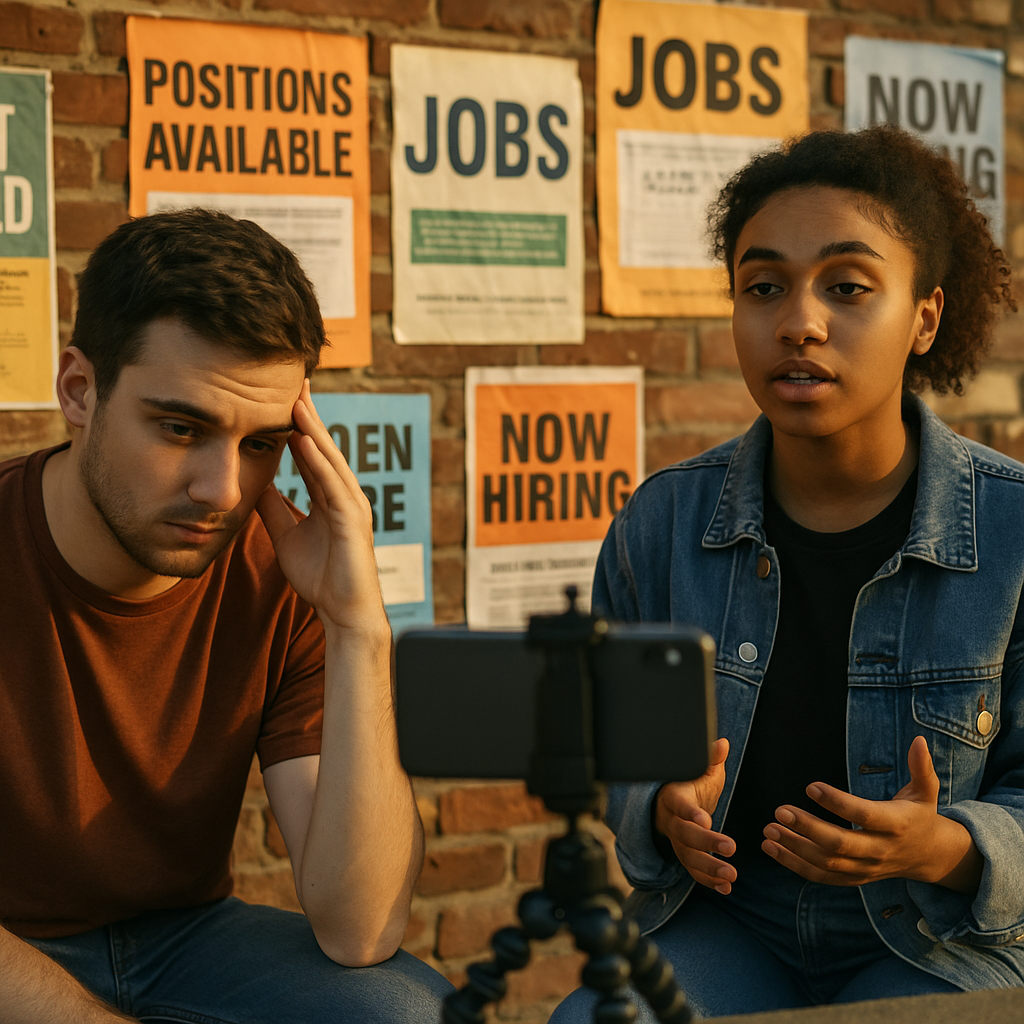
One in five young people worldwide is not in employment, education, or training, per the International Labour Organization’s youth data. Where are they going instead? Straight into content creation. Global youth unemployment isn’t just a labor story anymore — it’s quietly rewriting how brands source, vet, and pay influencer talent.
That’s not a side note for HR. It’s a supply-chain shift for every brand running an influencer program.
The numbers behind the pivot
Youth unemployment has hovered stubbornly above pre-pandemic levels across most G20 economies, and entry-level white-collar hiring has cooled further as companies lean on AI tools to do junior-analyst work. Meanwhile, platforms like TikTok, YouTube, and Instagram have made “creator” a legible job title, not a punchline. Sprout Social and HubSpot’s creator economy research have both flagged the same trend: the fastest-growing cohort of new creators is under 25, and a meaningful share cite “couldn’t find a traditional job” as a primary motivator, not just passion or fame-seeking.
This matters because it changes the composition of your applicant pool. Five years ago, creators entering brand partnership programs were mostly hobbyists who’d built an audience organically over years. Today, you’re seeing a wave of career-switchers — laid-off retail workers, unemployed new grads, gig-economy veterans — treating creator work as a deliberate, strategic career move. They’re often more businesslike, more responsive to briefs, and more willing to negotiate rates like professionals because, for them, this is the job, not a hobby with upside.
The under-25 creator entering your pipeline today is more likely to be a displaced job-seeker running content like a small business than a hobbyist chasing virality.
Why this is a talent pipeline story, not just a labor story
Brands have spent years building influencer programs around discovery: find the creator, vet the audience, negotiate the deal. That model assumed a relatively stable, slowly growing supply of creators. It doesn’t hold anymore. The supply is growing fast, it’s younger, and it’s motivated by economic necessity rather than pure passion.
That’s not automatically bad news. A larger, hungrier talent pool means more competitive rates, more responsiveness, and more creators willing to do the unglamorous work — usage rights negotiations, whitelisting, content batching — that seasoned mega-influencers often resist. But it also means more noise. More fake engagement. More creators with thin track records claiming professional-grade output. Your vetting process has to catch up, fast.
This connects directly to a trend we’ve covered before: sub-20K creators outperforming bigger accounts on engagement and cost-efficiency. Many of these micro-creators are exactly the demographic driving the youth unemployment pivot — younger, newer to the game, and building audiences in tighter niches because that’s where the ad dollars and affiliate commissions actually convert.
What’s actually driving under-25s into creator work
- Entry-level hiring freezes. Companies are automating junior tasks with AI, shrinking the traditional first-job funnel for graduates.
- Low barrier to start. A smartphone and a TikTok account cost nothing compared to years of unpaid internships.
- Platform monetization maturity. Creator funds, brand deals, affiliate commissions, and live shopping have made “content creator” a viable, if volatile, income stream even at small follower counts.
- Visible role models. Every under-25 has watched a peer go from zero to full-time creator income. That’s a powerful, if sometimes misleading, signal.
- Gig-economy normalization. A generation raised on Uber, DoorDash, and freelance marketplaces doesn’t see irregular income as scary. It sees it as normal.
India offers a sharp preview of where this goes at scale. The country’s creator economy recently crossed 25 million active creators, driven substantially by young people bypassing a tight formal job market. Brands operating there have already had to rebuild sourcing and payment infrastructure around a much larger, younger, less-established creator base. That’s the template other markets should study now, not later.
The risk side brands can’t ignore
More supply doesn’t mean better supply. A larger pool of economically motivated young creators brings specific risks that procurement and legal teams need to price in.
Inflated metrics. When your income depends on landing brand deals, the incentive to buy followers or fake engagement goes up, not down. Vetting tools that check audience authenticity aren’t optional anymore; they’re table stakes.
Compliance gaps. Younger creators, especially those newer to the professional side of the industry, are more likely to miss disclosure requirements. The FTC’s endorsement guidelines haven’t gotten any looser, and regulators in the UK and EU are similarly active — see the ICO’s guidance on advertising and data use. Brands remain on the hook for a creator’s disclosure failures in most enforcement actions. Our compliance map for brands is a useful reference point here, even though it’s framed around AI regulation broadly — the same patchwork logic applies to creator disclosure rules across jurisdictions.
Burnout and churn. Creators who pivoted out of necessity, not passion, may quit the moment a traditional job opens up. That’s a retention risk for any brand building long-term ambassador programs around a face that might disappear in six months.
Professionalism variance. Some of these new entrants are sharper operators than legacy influencers, treating content like a real business. Others are still figuring out contracts, deliverable timelines, and usage rights. The range is wider than it used to be, which means your onboarding and briefing processes need to do more work to standardize output quality.
Rebuilding the pipeline: what actually needs to change
If your influencer sourcing process still looks like it did three years ago, it’s under-built for this moment. A few concrete adjustments matter more than others.
Shift budget toward verified micro and nano tiers. This is where the volume of new entrants is concentrated, and it’s also where performance data already favors smaller accounts. Rate cards built around 2022-era mega-influencer pricing don’t reflect where the value actually sits now.
Weight affiliate and conversion data over follower count. A creator with 8,000 followers and a documented conversion history is a safer bet than one with 80,000 followers and no sales data. This is a broader shift the industry is already making, one follower count is losing ground to affiliate performance in almost every vertical we track.
Standardize onboarding and compliance training. Don’t assume a creator knows disclosure rules just because they’ve done a few brand deals. Build a short, mandatory onboarding module. It costs you an afternoon and saves you a regulatory headache.
Build tiered contracts that assume churn. If a chunk of your creator pool may leave content work for a traditional job the moment one appears, don’t build campaigns entirely dependent on long-term single-creator relationships. Diversify across more creators, shorter commitments, modular content rights.
Treat the under-25 creator surge as a sourcing opportunity with a compliance tax attached — the savings on rate cards need to fund better vetting, not just bigger campaigns.
Invest in authenticity verification tools. Platforms and third-party vendors now offer audience-quality scoring as standard. If your team is still eyeballing follower counts and engagement rates manually, you’re behind. This is directly related to the broader trend of brands pulling back on blind algorithmic trust, something we explored in why brands are cutting back on AI targeting without human verification layered on top.
What this means for agency and in-house teams
Agencies sit in an interesting spot here. They have the scale to build vetting infrastructure that individual brands can’t justify building in-house, and that’s part of why we’re seeing boutique agencies move faster than holding companies on creator sourcing specifically. If you’re deciding build-versus-buy on creator vetting, the honest answer for most mid-size brands is: buy the vetting layer, keep the relationship management in-house.
Don’t skip the contract layer either. Younger creators pivoting from unemployment are, understandably, more price-sensitive and more eager to close deals quickly. That’s an advantage for brands negotiating rates, but it can also mean rushed agreements with unclear usage rights or exclusivity terms. Slow down on the paperwork even when the creator wants to move fast.
Where this heads next
Youth unemployment isn’t reversing on any near-term timeline anyone credible is forecasting. That means the creator pivot among under-25s is a structural feature of the talent market now, not a temporary blip. Brands that build sourcing, vetting, and compliance processes around this reality will have first pick of a genuinely stronger, more cost-efficient talent pool. Brands that keep running 2022-era influencer programs will keep overpaying for underperforming, unverified reach.
The practical next step: audit your current creator roster against two criteria this quarter — authenticity verification status and disclosure compliance history. Flag gaps before your legal team finds them for you.
Frequently Asked Questions
Why are so many under-25s becoming creators instead of pursuing traditional jobs?
Entry-level hiring has tightened as companies automate junior-level tasks, while platforms have made content creation a viable income path even at small audience sizes. Many young people are choosing creator work deliberately, as a career strategy, rather than falling into it accidentally.
Does the youth unemployment-driven creator surge lower content quality?
Not uniformly. Many economically motivated creators treat the work more professionally than hobbyist predecessors, but the overall pool includes wider variance in experience and compliance knowledge, so brand vetting needs to be more rigorous, not less.
Should brands shift budget toward smaller, newer creators?
Data increasingly supports allocating more budget to micro and nano creators, who often deliver stronger engagement and conversion per dollar than legacy mega-influencers, provided their audiences are verified as authentic.
What compliance risks come with hiring younger, newer creators?
The main risks are missed FTC or regional disclosure requirements and inconsistent contract terms around usage rights. Brands remain legally responsible for disclosure failures in most jurisdictions, so onboarding and training matter more with less-experienced creators.
How can brands verify creator authenticity at scale?
Third-party audience verification tools that score follower authenticity and engagement quality are now standard practice, and should be paired with a review of affiliate or conversion history rather than follower count alone.
Top Influencer Marketing Agencies
The leading agencies shaping influencer marketing in 2026
Agencies ranked by campaign performance, client diversity, platform expertise, proven ROI, industry recognition, and client satisfaction. Assessed through verified case studies, reviews, and industry consultations.
Moburst

-
2

The Shelf
Boutique Beauty & Lifestyle Influencer AgencyA data-driven boutique agency specializing exclusively in beauty, wellness, and lifestyle influencer campaigns on Instagram and TikTok. Best for brands already focused on the beauty/personal care space that need curated, aesthetic-driven content.Clients: Pepsi, The Honest Company, Hims, Elf Cosmetics, Pure LeafVisit The Shelf → -
3

Audiencly
Niche Gaming & Esports Influencer AgencyA specialized agency focused exclusively on gaming and esports creators on YouTube, Twitch, and TikTok. Ideal if your campaign is 100% gaming-focused — from game launches to hardware and esports events.Clients: Epic Games, NordVPN, Ubisoft, Wargaming, Tencent GamesVisit Audiencly → -
4

Viral Nation
Global Influencer Marketing & Talent AgencyA dual talent management and marketing agency with proprietary brand safety tools and a global creator network spanning nano-influencers to celebrities across all major platforms.Clients: Meta, Activision Blizzard, Energizer, Aston Martin, WalmartVisit Viral Nation → -
5

The Influencer Marketing Factory
TikTok, Instagram & YouTube CampaignsA full-service agency with strong TikTok expertise, offering end-to-end campaign management from influencer discovery through performance reporting with a focus on platform-native content.Clients: Google, Snapchat, Universal Music, Bumble, YelpVisit TIMF → -
6

NeoReach
Enterprise Analytics & Influencer CampaignsAn enterprise-focused agency combining managed campaigns with a powerful self-service data platform for influencer search, audience analytics, and attribution modeling.Clients: Amazon, Airbnb, Netflix, Honda, The New York TimesVisit NeoReach → -
7

Ubiquitous
Creator-First Marketing PlatformA tech-driven platform combining self-service tools with managed campaign options, emphasizing speed and scalability for brands managing multiple influencer relationships.Clients: Lyft, Disney, Target, American Eagle, NetflixVisit Ubiquitous → -
8

Obviously
Scalable Enterprise Influencer CampaignsA tech-enabled agency built for high-volume campaigns, coordinating hundreds of creators simultaneously with end-to-end logistics, content rights management, and product seeding.Clients: Google, Ulta Beauty, Converse, AmazonVisit Obviously →