


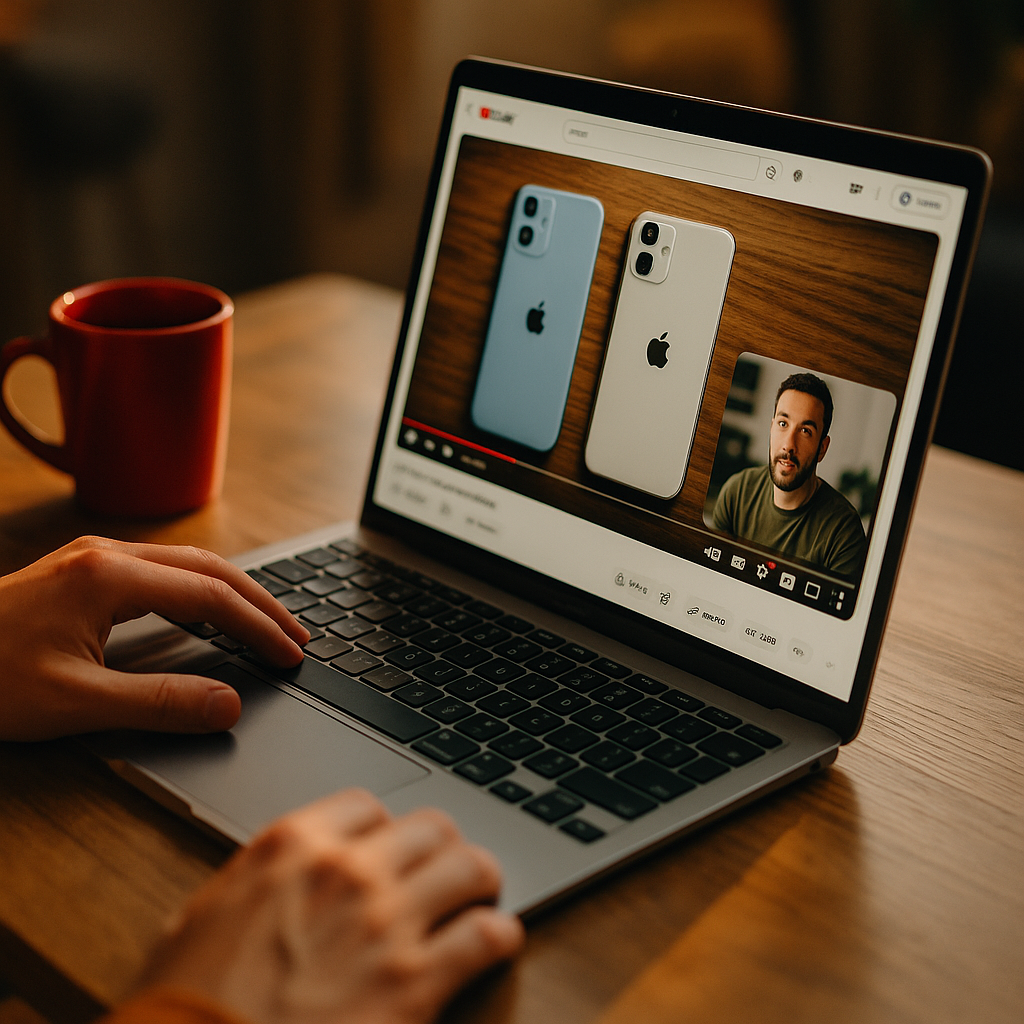
Seventy-four percent of adults say they use YouTube to research a purchase before buying it — more than any other platform, according to Statista consumer behavior data. If your brand still treats YouTube as an afterthought behind TikTok and Instagram, you’re skipping the one channel where people actually decide what to buy. YouTube’s dominance in long-form tutorials and reviews isn’t a legacy holdover. It’s a structural advantage nobody else has matched.
Why Long-Form Still Wins the Consideration Stage
Short-form is a discovery engine. It gets attention, sparks curiosity, plants a product in someone’s head. But discovery isn’t decision-making. When a buyer is genuinely weighing two air purifiers or comparing project management tools, they don’t want fifteen seconds of vibes. They want twelve minutes of someone actually using the thing, breaking down specs, and admitting where it falls short.
That’s the job long-form video does better than any other format. YouTube’s search infrastructure, its watch-time-weighted algorithm, and its evergreen shelf life all reward exactly the kind of content that lives in the messy middle of the funnel — comparison, tutorial, review. A well-optimized comparison video can keep generating views and clicks eighteen months after publish. Try getting that lifespan out of a Reel.
A single evergreen comparison video, properly structured, can outperform a paid campaign’s entire flight in lifetime impressions — without a media budget attached to it after month one.
This is why brands running influencer programs need a YouTube-specific content architecture, not a repurposed TikTok script with a longer runtime. The platform rewards structure. Ignore that, and you’re leaving both search traffic and conversion on the table.
The Anatomy of a Comparative Product Video That Converts
Comparative content — “X vs Y,” “Top 5 Alternatives to X,” “I Tested Every Option So You Don’t Have To” — is YouTube’s bread and butter for commercial intent. But most brand-sponsored versions fail because they’re structured like ads instead of like research.
Here’s the structure that consistently performs, based on patterns across top-performing tech, beauty, and home category channels:
- Hook with the buyer’s actual dilemma (0:00–0:20): Not “today we’re comparing three blenders.” Instead: “I returned two blenders before finding one that didn’t leave chunks in my smoothie.” Specificity signals authenticity, and YouTube’s retention curve punishes generic openers hard.
- State the criteria before the verdict (0:20–1:00): Tell viewers exactly how you’re judging — price, durability, ease of use, whatever’s relevant. This builds trust and gives search engines (and viewers skimming chapters) a reason to keep watching.
- Test each option on camera, in the same conditions: Side-by-side testing isn’t just good content, it’s good evidence. Viewers can smell a sponsored puff piece from a mile away if the “losing” product never actually loses anything.
- Include at least one honest downside per product, including the sponsor’s: Counterintuitive, but this is the single biggest driver of trust and completed watch time. A review with zero criticism reads as an ad, and viewers click away.
- Close with a clear, contextual recommendation: “Best for beginners,” “best for small kitchens,” “best value” — not just “best overall.” Contextual recommendations match how people actually search and reduce bounce after the CTA.
Creators who follow this shape consistently outperform scripted brand-safe reviews, because the format itself signals impartiality even when the video is paid. That’s the paradox brands need to accept: the more honest the structure looks, the harder it works commercially.
Chaptering Isn’t Optional Anymore
YouTube’s chapter markers now function as a mini search index inside the video itself. Viewers jump straight to the comparison table or the specific product they care about, and that’s fine — you still get the view, the impression, and often the click. Brands that resist chaptering because they want viewers to “watch the whole thing” are optimizing for vanity metrics over actual funnel movement.
Pair chapters with a pinned comment linking to affiliate codes or landing pages by product. It’s a small operational detail agencies skip constantly, and it measurably lifts click-through on multi-product videos.
Dedicated Video or Integration? It Depends on the Funnel Stage
This is one of the most common briefing mistakes: treating every sponsorship the same way regardless of what the buyer needs to hear at that moment. A dedicated comparative review works for high-consideration purchases — appliances, software, anything over $100 or requiring a subscription commitment. An integration inside an existing tutorial works better for lower-friction, habitual purchases where the creator’s existing trust does the heavy lifting.
Our team broke down exactly when each format earns better ROI in this funnel-stage comparison, but the short version: dedicated videos convert better on consideration and cart-add, integrations convert better on impulse and top-of-funnel awareness. Don’t brief a $500 skincare device the same way you’d brief a $12 phone case.
What Changed Since YouTube Rebuilt Its View and Watch-Time Signals
Anyone still reporting on raw view counts as a success metric is working off outdated assumptions. YouTube’s shift toward counting views the moment a video begins autoplaying, combined with earlier changes to how Shorts views are tallied, means view count alone no longer tells you what happened after someone clicked. We’ve covered this shift extensively — see how sponsors are rebuilding CPV and the related breakdown on rebuilding KPIs after the update.
For comparative content specifically, this matters more than usual. A “vs” video’s value is almost entirely in the mid-video retention curve — did viewers stick around through the actual comparison, or bail after the intro? Average view duration and audience retention graphs (available in YouTube Studio analytics) are now non-negotiable line items in any sponsorship reporting template. If your agency isn’t pulling retention curves per chapter, ask why.
Retention past the 40 percent mark on a comparison video is a stronger predictor of purchase intent than total view count — yet most brand reporting decks still lead with views.
Monetization Shifts Are Reshaping Who Makes These Videos
The creator economics behind long-form comparative content have shifted too. Recent monetization changes have squeezed nano and micro creators specifically, many of whom historically produced the most trustworthy, low-production comparison content because they had less to lose reputationally. Brands negotiating rates need to understand this new landscape — we’ve mapped it out in this nano-creator deal playbook. If your influencer program relied on scrappy, high-trust micro-reviewers, expect rate renegotiations and possibly a shift toward usage-rights-based pricing rather than flat fees tied to subscriber count, a trend detailed in our usage rights pricing analysis.
Compliance Isn’t Optional When the Format Looks Like Organic Research
Here’s the risk brands underestimate: because comparative reviews are structured to look impartial, disclosure gets sloppier. The FTC doesn’t care that a video “feels like” independent research — if money, product, or affiliate commission changed hands, disclosure rules apply the same as any other sponsored post. Review the current guidance directly at the FTC’s endorsement guides before greenlighting scripts, and make disclosure placement (verbal, on-screen, and in the description) a mandatory checklist item, not a creator afterthought.
This gets trickier with affiliate-linked comparison videos, where the creator has a direct financial incentive to steer the verdict toward whichever brand pays the highest commission. Smart legal and compliance teams now require creators to disclose commission structures, not just “sponsored” tags, particularly for high-ticket categories like software, mattresses, and fitness equipment where affiliate payouts run steep.
Measurement: Building a Reporting Framework That Matches the Format
Standard influencer reporting templates built for short-form don’t translate cleanly to long-form comparative content. Here’s what actually needs tracking:
- Chapter-level retention — did people watch your segment specifically, or skip to a competitor’s?
- Pinned comment click-through — often outperforms description links for driving traffic mid-video.
- Search impression share — pull this from YouTube Studio to see if your sponsored video is ranking for the comparison query it targeted.
- Sentiment in top comments — a proxy for whether the “honest downside” section actually landed as credible.
- Assisted conversions via affiliate/promo code — attribute sales even when the click happens days after the watch.
Tools like HubSpot for attribution modeling and Sprout Social for sentiment tracking across comment sections can plug directly into this framework without building custom dashboards from scratch.
A Quick Note on Cross-Platform Sequencing
The smartest programs don’t treat YouTube in isolation. A short-form teaser on TikTok or Instagram driving to the full YouTube comparison video is one of the highest-ROI sequences available right now, particularly given how TikTok’s watch-time algorithm rewards curiosity hooks that a longer YouTube video can then resolve. Brief creators to build that bridge intentionally instead of treating each platform as a separate silo.
YouTube’s advantage in comparative content isn’t going away — it’s structural, tied to search behavior and watch-time economics that no short-form platform replicates. Brands that build a real YouTube-specific brief, measure retention instead of views, and enforce disclosure discipline will keep winning the consideration stage while competitors chase short-form vanity metrics.
Frequently Asked Questions
Why does YouTube still dominate comparative product content?
YouTube combines search intent, long watch times, and evergreen discoverability in a way short-form platforms don’t replicate. Comparison and review videos rank in Google and YouTube search for months or years, continuing to drive traffic long after the initial publish window.
How long should a comparative review video be?
Most high-performing comparison videos run between eight and eighteen minutes, long enough to test multiple products on camera and include honest pros and cons without padding. Length matters less than retention — a tightly edited ten-minute video will outperform a bloated twenty-minute one.
Should brands prioritize views or watch time when evaluating creator performance?
Watch time and chapter-level retention matter more than raw view count, especially since YouTube’s updated view-counting mechanics. A high view count with a steep drop-off after the intro signals a weak hook, not strong performance.
Do comparison videos need FTC disclosure even if they look like independent reviews?
Yes. Any financial relationship — sponsorship, free product, or affiliate commission — requires clear disclosure under FTC guidelines, regardless of how impartial the video’s format appears.
Is a dedicated review video always better than an integration?
No. Dedicated videos work best for higher-consideration purchases, while integrations inside existing tutorials often convert better for lower-cost, habitual products where the creator’s built-in trust does most of the persuasive work.
Top Influencer Marketing Agencies
The leading agencies shaping influencer marketing in 2026
Agencies ranked by campaign performance, client diversity, platform expertise, proven ROI, industry recognition, and client satisfaction. Assessed through verified case studies, reviews, and industry consultations.
Moburst

-
2

The Shelf
Boutique Beauty & Lifestyle Influencer AgencyA data-driven boutique agency specializing exclusively in beauty, wellness, and lifestyle influencer campaigns on Instagram and TikTok. Best for brands already focused on the beauty/personal care space that need curated, aesthetic-driven content.Clients: Pepsi, The Honest Company, Hims, Elf Cosmetics, Pure LeafVisit The Shelf → -
3

Audiencly
Niche Gaming & Esports Influencer AgencyA specialized agency focused exclusively on gaming and esports creators on YouTube, Twitch, and TikTok. Ideal if your campaign is 100% gaming-focused — from game launches to hardware and esports events.Clients: Epic Games, NordVPN, Ubisoft, Wargaming, Tencent GamesVisit Audiencly → -
4

Viral Nation
Global Influencer Marketing & Talent AgencyA dual talent management and marketing agency with proprietary brand safety tools and a global creator network spanning nano-influencers to celebrities across all major platforms.Clients: Meta, Activision Blizzard, Energizer, Aston Martin, WalmartVisit Viral Nation → -
5

The Influencer Marketing Factory
TikTok, Instagram & YouTube CampaignsA full-service agency with strong TikTok expertise, offering end-to-end campaign management from influencer discovery through performance reporting with a focus on platform-native content.Clients: Google, Snapchat, Universal Music, Bumble, YelpVisit TIMF → -
6

NeoReach
Enterprise Analytics & Influencer CampaignsAn enterprise-focused agency combining managed campaigns with a powerful self-service data platform for influencer search, audience analytics, and attribution modeling.Clients: Amazon, Airbnb, Netflix, Honda, The New York TimesVisit NeoReach → -
7

Ubiquitous
Creator-First Marketing PlatformA tech-driven platform combining self-service tools with managed campaign options, emphasizing speed and scalability for brands managing multiple influencer relationships.Clients: Lyft, Disney, Target, American Eagle, NetflixVisit Ubiquitous → -
8

Obviously
Scalable Enterprise Influencer CampaignsA tech-enabled agency built for high-volume campaigns, coordinating hundreds of creators simultaneously with end-to-end logistics, content rights management, and product seeding.Clients: Google, Ulta Beauty, Converse, AmazonVisit Obviously →