


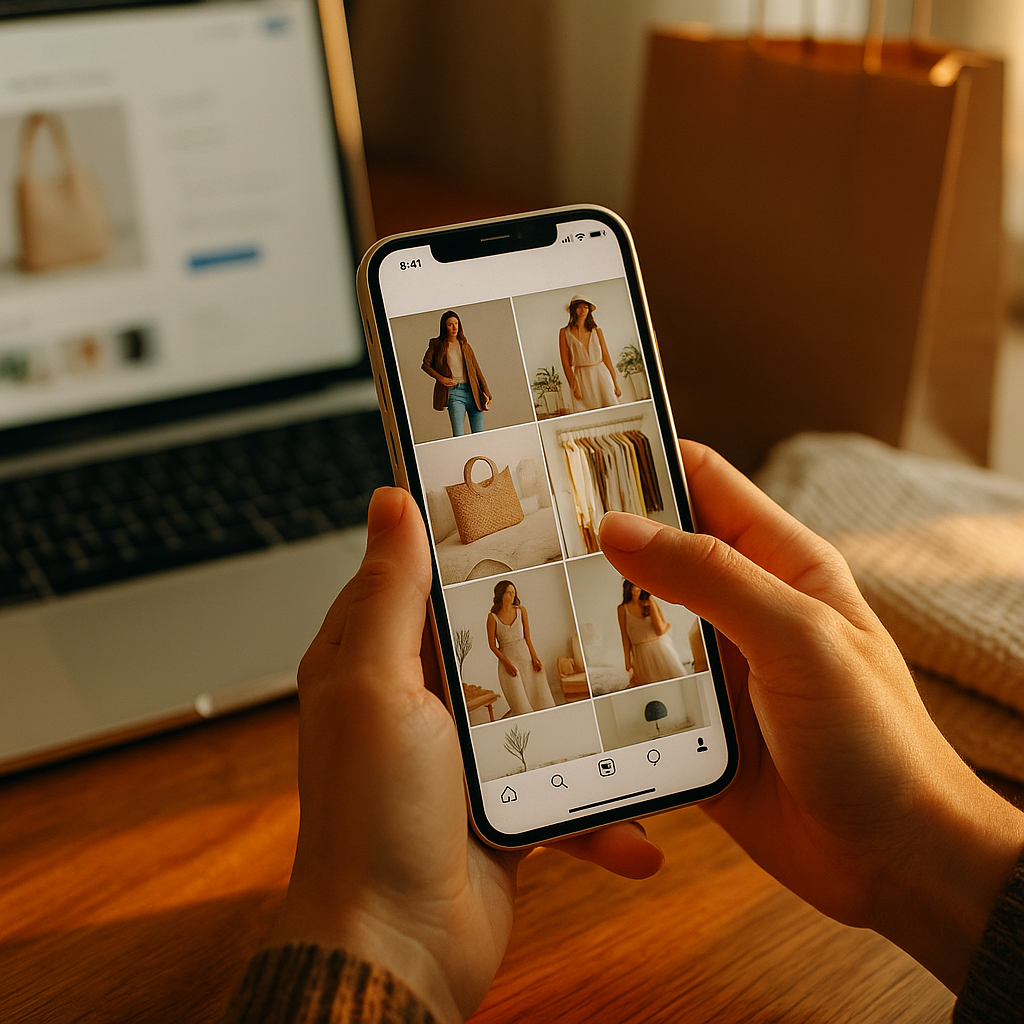
Instagram now drives more product discovery than Google Shopping for users under 35, according to multiple retail surveys published over the past year. That single shift should reorder every lifestyle and e-commerce media plan on your desk. If your team still treats Instagram as a brand-awareness afterthought behind TikTok Shop and YouTube, you’re leaving discovery revenue on the table. This is the Instagram’s visual-first discovery advantage playbook, built for brands that need performance, not just impressions.
Why Visual Discovery Still Belongs to Instagram
TikTok owns watch-time. YouTube owns long-form intent. But Instagram still owns the aesthetic browse — the scroll where someone isn’t searching for anything specific, just absorbing taste, texture, and lifestyle cues. That’s a different psychological mode than search, and it’s exactly where impulse and aspirational purchases get born.
Meta’s own advertiser data continues to show Explore and Reels as the two fastest-growing surfaces for non-follower reach, meaning brands can win new customers without an existing audience. Combine that with Instagram Shopping’s product tagging, saved collections, and now AI-assisted visual search, and you get a platform that still functions as a full-funnel discovery engine, not just a top-of-funnel awareness play.
Instagram’s real advantage isn’t reach anymore. It’s the fact that people arrive already primed to shop aesthetically, not just scroll passively.
Compare that to TikTok Shop’s vertical commerce model, which leans on urgency and entertainment. Instagram leans on curation and identity. Both work. But for lifestyle categories — home goods, fashion, beauty, wellness — identity-driven discovery converts at a premium, because the purchase decision is emotional first, practical second.
The Grid Is Dead. Long Live the Feed Algorithm.
Let’s be honest: nobody’s building a perfectly curated nine-square grid anymore. That aesthetic died with 2019. What matters now is how your content performs inside Instagram’s ranking signals — watch time, shares, saves, and reply rate on Reels.
Saves are the most underrated signal for e-commerce brands specifically. A save means someone plans to come back and buy, or is bookmarking for gift-giving, home renovation, or wardrobe planning. Brands optimizing for saves — how-to Reels, styling guides, “shop this room” carousels — consistently see better downstream conversion than brands chasing pure view count.
If your team is still repurposing static carousels without adapting them for Reels-native pacing, you’re underperforming. Our guide on how to turn carousels into algorithm-friendly Reels covers the specific edits — pacing, text overlay timing, hook placement — that push these formats into non-follower feeds.
What Actually Gets Distributed in 2026
- Reels under 30 seconds with a visual hook in the first second
- Carousels formatted as “swipeable guides” rather than single-image ads
- Product tags embedded directly in Stories and Reels, not just static posts
- User-generated content reshared through Collabs, which doubles distribution without doubling spend
Notice what’s missing? Pure product shots. Instagram’s algorithm, like every platform’s in 2026, rewards content that behaves like content — not like an ad slapped onto a feed.
Shopping Features Brands Still Underuse
Instagram Shopping has quietly matured into something closer to a lightweight storefront than a checkout add-on. Product tags, Collections, and the in-app Shop tab all feed into a discovery loop most brands aren’t fully exploiting.
Here’s the operational gap: many e-commerce teams tag products on static posts but forget to tag them consistently on Reels, where the bulk of new-audience reach now happens. That’s a direct revenue leak. If a Reel goes semi-viral and reaches 200,000 non-followers but has no shopping tag, you’ve converted attention into nothing.
Another underused lever: Instagram’s AI-powered visual search, which lets users screenshot or reverse-search a look and get matched to shoppable products, including from brands they don’t follow. This mirrors Pinterest’s long-standing visual search advantage — a model covered in depth in our Pinterest shopping list guide for home and kitchen brands — but Instagram’s version benefits from far larger daily active usage among 18-34 year olds, per eMarketer’s platform usage data.
If your product isn’t tagged on every Reel, carousel, and Story, you’re asking the algorithm to do free advertising for a checkout page that doesn’t exist.
Creator Partnerships: Match the Aesthetic, Not Just the Audience
Influencer selection on Instagram in 2026 needs a different filter than TikTok casting. TikTok rewards raw, entertaining, occasionally chaotic energy. Instagram rewards visual coherence — the creator’s feed aesthetic needs to plausibly extend your brand’s world, not just borrow their follower count.
This is where a lot of lifestyle brands waste budget. They pick creators based on engagement rate alone, without checking whether the creator’s existing content style matches the mood, lighting, and pacing of the brand’s own visual identity. Mismatched aesthetics create friction, and friction kills conversion, even when the creator’s numbers look great on paper.
Practical vetting checklist for Instagram-specific creator partnerships:
- Pull the creator’s last 15 Reels and check average watch-through rate, not just likes
- Confirm they’ve used product tags successfully before (ask for screenshots of shop-tab traffic if possible)
- Check whether their Stories consistently outperform their grid posts — Stories-strong creators tend to drive stronger urgency and swipe-up (link sticker) action
- Review saved-post ratio if the creator can share insights; saves correlate with purchase intent more than likes do
Rate benchmarking still matters too. Brands running multi-platform creator programs should cross-reference creator rate benchmarks before locking Instagram-specific deals, since cross-platform rate parity has become a common negotiating tactic among mid-tier creators.
Compliance Isn’t Optional, and Instagram’s Enforcement Has Sharpened
Disclosure enforcement on Instagram has gotten noticeably stricter. Meta’s automated detection for paid partnership labels now flags unlabeled sponsored Reels far faster than it did even two years ago, and the FTC’s endorsement guidance continues to apply regardless of platform-specific labeling tools.
For brands running international campaigns, the compliance picture gets more complex. UK-based creator partnerships fall under ICO advertising and data guidance in addition to ASA rules, and inconsistent disclosure across markets is one of the fastest ways to trigger platform-level content restrictions.
Build disclosure language into creator contracts as a hard requirement, not a suggestion. Require screenshots of the “Paid Partnership” tag before final payment releases. It’s a small operational step that prevents a much bigger cleanup later.
Instagram for TV and the Shared-Scrolling Shift
One development brands haven’t fully priced into their media plans: Instagram’s expansion onto connected TV surfaces and shared-scrolling formats. This changes viewing context entirely — content is now being consumed on shared screens, sometimes with multiple household members watching passively rather than one person scrolling solo on a phone.
That shift has real budget implications. Ad formats optimized for single-viewer mobile attention don’t necessarily translate to a living-room, multi-viewer context. Our coverage on what shared-scrolling means for brand budgets breaks down the format adjustments brands should be testing now, and our follow-up on how to test and budget for shared-scrolling gives a more tactical rollout framework.
Early advertiser signals suggest CTV-style Instagram placements favor slower-paced, more cinematic content — closer to a traditional commercial than a scroll-stopping Reel. Lifestyle brands with existing video assets from photoshoots or campaign shoots may already have footage that adapts well here, without needing a full new production cycle.
Building the 2026 Instagram Media Mix
A realistic allocation for a mid-size lifestyle or e-commerce brand running Instagram as a primary discovery channel looks something like this:
- 40% Reels production — mix of brand-produced and creator-produced, prioritizing hook strength and save-worthy utility content
- 25% Creator partnerships — vetted for aesthetic match, not just reach, with contracts requiring disclosure compliance
- 20% Shopping infrastructure — ensuring every asset, including Stories, carries product tags and Collections are updated seasonally
- 15% Emerging surfaces — Instagram for TV testing, visual search optimization, and shared-scrolling format experiments
This isn’t a rigid formula. Beauty and fashion brands may lean harder into creator spend given how aesthetic-dependent purchase decisions are in those categories, similar to patterns seen in beauty category growth on TikTok Shop, which shows just how much visual-first discovery translates into direct sales when the shopping infrastructure is solid.
Tools worth integrating into reporting: Sprout Social for cross-platform engagement benchmarking, and Meta’s native Business Suite for shop-tab attribution data. Brands relying purely on third-party UTM tracking often undercount Instagram’s assisted-conversion role, since a meaningful share of purchases happen in-app without a trackable click.
Instagram in 2026 isn’t the flashiest platform in the influencer marketing conversation, but it’s still the one where lifestyle taste turns into transactions fastest. Audit your shopping tags this week, not next quarter — that single fix often recovers more revenue than an entirely new creator campaign.
FAQs
Is Instagram still worth prioritizing over TikTok Shop for e-commerce brands?
Yes, particularly for lifestyle, home, and beauty categories where aesthetic browsing drives purchase intent. TikTok Shop wins on urgency and entertainment-led conversion, while Instagram wins on curated discovery and higher-intent saves. Most brands need both, but budget allocation should reflect category-specific buying psychology.
What’s the single biggest mistake brands make with Instagram Shopping?
Inconsistent product tagging, especially on Reels. Many teams tag static posts reliably but skip tagging on Reels and Stories, which is where the majority of non-follower reach now happens. Untagged viral content converts attention into nothing.
How should brands vet creators specifically for Instagram partnerships?
Prioritize aesthetic and pacing match over raw follower count or engagement rate. Review a creator’s last 10-15 Reels for watch-through performance, confirm prior shopping-tag success, and check whether their Stories consistently outperform grid content, since that signals stronger urgency-driven conversion.
Does Instagram’s disclosure enforcement differ from other platforms?
Meta’s automated detection for paid partnership labels has become notably stricter, flagging unlabeled sponsored content faster than in prior years. Brands still need to follow FTC endorsement guidance regardless of platform tools, and international campaigns must also account for local regulatory bodies like the ICO.
What is Instagram for TV, and should brands test it now?
Instagram for TV refers to the platform’s expansion onto connected TV and shared-scrolling surfaces, where content is consumed on shared screens rather than solo mobile scrolling. Early data suggests slower-paced, more cinematic content performs better in this context, and brands with existing campaign footage should test repurposing it before investing in new production.
Top Influencer Marketing Agencies
The leading agencies shaping influencer marketing in 2026
Agencies ranked by campaign performance, client diversity, platform expertise, proven ROI, industry recognition, and client satisfaction. Assessed through verified case studies, reviews, and industry consultations.
Moburst

-
2

The Shelf
Boutique Beauty & Lifestyle Influencer AgencyA data-driven boutique agency specializing exclusively in beauty, wellness, and lifestyle influencer campaigns on Instagram and TikTok. Best for brands already focused on the beauty/personal care space that need curated, aesthetic-driven content.Clients: Pepsi, The Honest Company, Hims, Elf Cosmetics, Pure LeafVisit The Shelf → -
3

Audiencly
Niche Gaming & Esports Influencer AgencyA specialized agency focused exclusively on gaming and esports creators on YouTube, Twitch, and TikTok. Ideal if your campaign is 100% gaming-focused — from game launches to hardware and esports events.Clients: Epic Games, NordVPN, Ubisoft, Wargaming, Tencent GamesVisit Audiencly → -
4

Viral Nation
Global Influencer Marketing & Talent AgencyA dual talent management and marketing agency with proprietary brand safety tools and a global creator network spanning nano-influencers to celebrities across all major platforms.Clients: Meta, Activision Blizzard, Energizer, Aston Martin, WalmartVisit Viral Nation → -
5

The Influencer Marketing Factory
TikTok, Instagram & YouTube CampaignsA full-service agency with strong TikTok expertise, offering end-to-end campaign management from influencer discovery through performance reporting with a focus on platform-native content.Clients: Google, Snapchat, Universal Music, Bumble, YelpVisit TIMF → -
6

NeoReach
Enterprise Analytics & Influencer CampaignsAn enterprise-focused agency combining managed campaigns with a powerful self-service data platform for influencer search, audience analytics, and attribution modeling.Clients: Amazon, Airbnb, Netflix, Honda, The New York TimesVisit NeoReach → -
7

Ubiquitous
Creator-First Marketing PlatformA tech-driven platform combining self-service tools with managed campaign options, emphasizing speed and scalability for brands managing multiple influencer relationships.Clients: Lyft, Disney, Target, American Eagle, NetflixVisit Ubiquitous → -
8

Obviously
Scalable Enterprise Influencer CampaignsA tech-enabled agency built for high-volume campaigns, coordinating hundreds of creators simultaneously with end-to-end logistics, content rights management, and product seeding.Clients: Google, Ulta Beauty, Converse, AmazonVisit Obviously →