


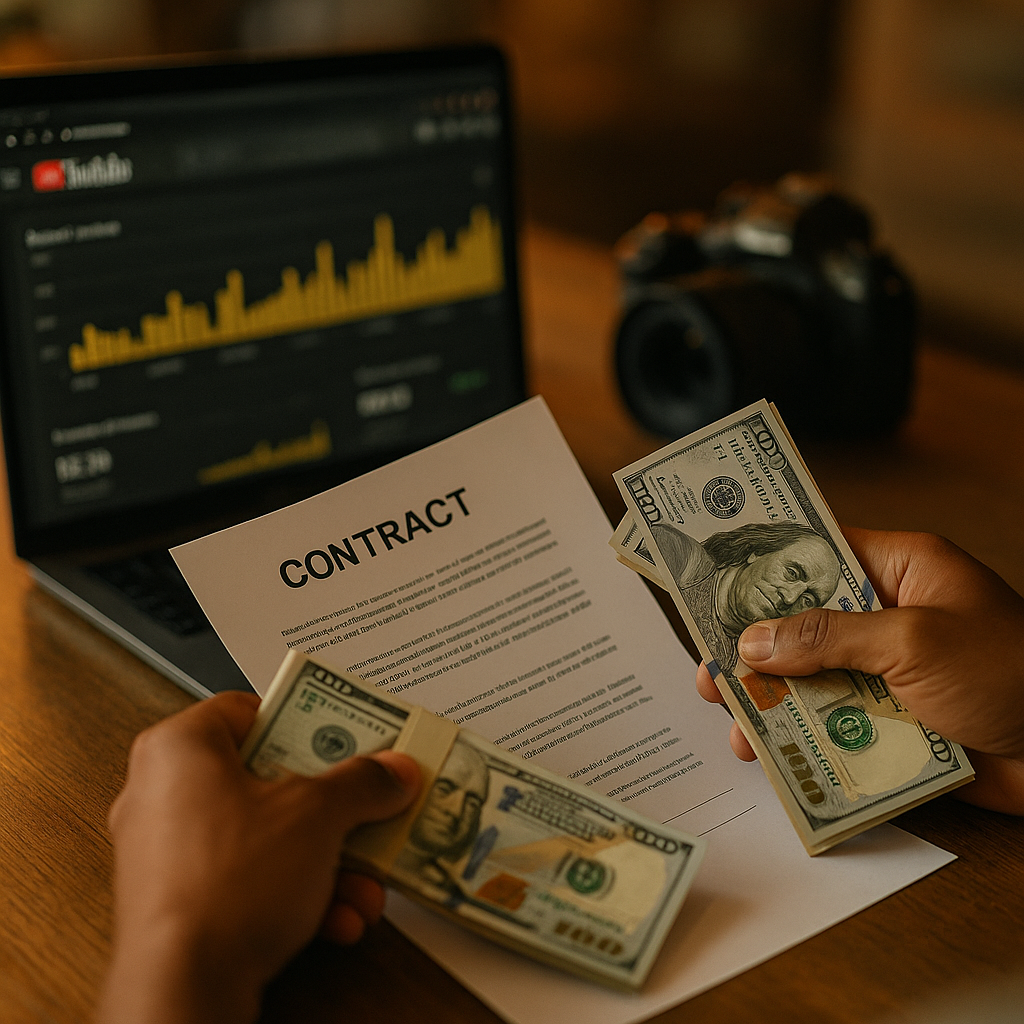
YouTube just quietly reset the economics of its smallest creator tier, and most brand partnership teams haven’t noticed yet. If your influencer program leans on nano-creators for authenticity and cost efficiency, the YouTube monetization changes rolling out now will force a rewrite of how you scope, price, and vet those deals.
Here’s the uncomfortable question: what happens to your nano-creator bench when the platform they depend on for baseline income shifts the ground under them?
What Actually Changed
YouTube has been tightening its Partner Program requirements and adjusting how ad revenue flows to smaller channels, part of a broader push to police “inauthentic” and low-effort content while still growing its creator economy. The practical effect: a wider gap has opened between creators who monetize reliably through ads and those who don’t. Many nano-creators (typically defined as those with under 10,000 subscribers) now find ad revenue less predictable than it was two years ago, even as YouTube’s overall creator payouts keep climbing.
That instability matters to you as a buyer, not just to the creator. Nano-creators historically padded their income with brand deals to make up for thin ad revenue. Now that ad revenue is even less dependable, those deals are less “nice to have” and more “make or break.” That changes their negotiating posture, their reliability, and frankly, their leverage.
When a creator’s platform income becomes unpredictable, brand deals stop being supplemental and start being existential. That shift changes every assumption in your rate card.
This isn’t happening in isolation. It follows a pattern we’ve tracked across the platform: YouTube previously adjusted how view counts are calculated, which already forced sponsors to rebuild their reporting frameworks from scratch. Now monetization structure itself is moving, compounding the measurement headache with a pricing headache.
Why Nano-Creator Deals Were Already Fragile
Let’s be honest about what nano-creator economics looked like before this shift. Brands loved nano-creators for three reasons: cheap CPMs, high perceived authenticity, and access to hyper-niche audiences that mid-tier and macro influencers can’t touch. A gardening brand doesn’t need a creator with 500,000 subscribers. It needs someone with 4,000 subscribers who are all obsessive about raised-bed composting.
But the deal structures for this tier were always loosely built. Flat fees of $50 to $300 per video integration. Vague usage rights. Little in the way of contracts or performance guarantees. Agencies and brands treated nano deals as low-risk, low-cost experiments — which they were, until the creators themselves became less financially stable and more prone to churn, burnout, or abandoning the platform altogether.
Now add a monetization squeeze on top of that fragility. Some nano-creators will lean harder into brand deals as their primary income, becoming more professional and demanding better terms. Others will simply quit, chasing more stable income elsewhere or shifting to platforms like TikTok, where monetization thresholds work differently. Either way, your bench gets thinner and your assumptions about cost per deal need updating.
Restructuring Deal Economics: The New Math
So what should brands actually change? Start with the assumption that nano-creator rates are about to rise, not because these creators are gaining leverage from bigger audiences, but because they’re gaining leverage from necessity. A creator who needs brand income to survive negotiates differently than one who treats it as bonus cash.
Three structural shifts make sense right now:
- Move from flat fees to performance-blended contracts. Pay a smaller base fee plus a bonus tied to engagement rate or conversion, rather than a flat rate for a single post. This protects your budget while still giving financially stressed creators upside if the content performs.
- Buy usage rights separately, and price them fairly. If you plan to repurpose nano-creator content in paid social or on owned channels, that’s a separate line item. Bundling usage rights into a flat fee undervalues the deal and creates resentment down the line. We’ve covered why usage rights pricing now matters more than subscriber count, and that logic applies doubly here.
- Build in retainer options for your best nano performers. If a creator in your niche is reliable and produces, lock them into a quarterly retainer instead of one-off deals. This gives them income stability (which reduces churn risk) and gives you predictable costs and content cadence.
None of this requires massive budget increases. It requires smarter allocation. A $150 flat fee that turns into a $75 base plus $75 performance bonus doesn’t cost more, but it aligns incentives better and signals to the creator that you understand their new reality.
Vetting Gets Harder, Not Easier
Here’s a wrinkle most brand teams haven’t fully processed: monetization instability increases the temptation for creators to cut corners. Buying subscribers, engaging in engagement pods, or accepting low-quality sponsorships just to hit revenue targets. If a nano-creator is financially squeezed, the incentive to inflate metrics or take any deal regardless of brand fit goes up.
That means your vetting process needs to get more rigorous, not less, even as you’re trying to move faster and cheaper at this tier. Look at engagement consistency over time, not just a snapshot. Check comment quality, not just comment volume. Ask directly about other brand partnerships in the last quarter; a creator juggling five unrelated sponsorships in 30 days is optimizing for survival, not for your brand’s message fit.
This same logic showed up when YouTube’s view-count methodology changed and inflated numbers created reporting risk for sponsors, as we detailed in our piece on rebuilding KPIs after inflated view counts. Metric inflation and financial desperation tend to travel together. Treat that as a compliance issue, not just a quality issue.
Budget Reallocation: Where the Money Should Move
If nano-creator costs are rising 10 to 20% (a reasonable estimate given the pressure creators are under, though exact figures vary by niche and region), you have three choices: increase total influencer budget, cut the number of nano-creator deals, or shift some spend to adjacent tactics.
Most mature brand teams we talk to are doing a mix of the second and third options. Rather than running 40 nano-deals per quarter at $150 each, they’re running 25 deals at $200 each with tighter vetting and better usage rights, and reallocating the difference toward retainer relationships with a handful of proven performers. This mirrors a pattern we’ve seen play out on TikTok too, where rate benchmark data reveals real ROI leverage only shows up once brands consolidate spend around fewer, better-vetted creators instead of spreading thin.
Fewer, better-paid, more rigorously vetted nano-creator relationships will outperform a scattershot approach every time monetization pressure rises across a platform.
It’s also worth testing dedicated video sponsorships against quick integrations at this tier, since funnel stage matters even more when budgets tighten. Our breakdown of dedicated video versus integration by funnel stage is a useful reference if you’re deciding where nano-creator content fits in your broader media mix.
What This Means for Contracts and Compliance
Financially stressed creators are more likely to accept ambiguous contract terms just to close a deal, which sounds like a win for brands short-term. It isn’t. Ambiguous contracts create disclosure risk, usage rights disputes, and quality control problems down the line. The FTC’s endorsement guidelines don’t get more lenient because a creator has 3,000 subscribers instead of 300,000. Your compliance exposure is identical regardless of tier.
Tighten your contract templates now, before the churn hits. Specify disclosure requirements explicitly. Define usage rights windows in months, not vague terms like “ongoing.” Require creators to flag other active brand relationships in the same category to avoid conflict-of-interest issues. This is basic hygiene, but it’s the kind of hygiene that gets skipped when teams are moving fast and treating nano-deals as low-stakes.
Platforms and industry bodies continue to publish updated guidance on influencer disclosure and creator economy trends. Resources like eMarketer’s creator economy research and Sprout Social’s platform benchmarking data are worth monitoring quarterly, since monetization structures across YouTube, TikTok, and Instagram are all shifting somewhat in parallel right now.
The Bigger Pattern Brands Should Watch
Zoom out and this isn’t really a YouTube story. It’s a creator economy maturation story. Platforms are tightening monetization criteria across the board, partly to fight low-quality content, partly to protect ad buyer trust. TikTok’s algorithm updates have forced brands to rebuild briefs around new engagement signals. Instagram has pushed changes to whitelisting and shared content formats. YouTube’s ad revenue sharing shift has already forced brands to rethink budget allocation at a structural level.
Every one of these changes pushes the same direction: platforms are professionalizing, and the casual, low-stakes nano-creator deal is becoming a relic. Brands that treat this tier with the same rigor they apply to macro and celebrity partnerships, contracts, usage rights, performance tracking, will come out ahead. Brands that keep running nano deals like informal favors will get burned by churn, quality issues, or compliance gaps.
For a deeper structural view of how to rebuild your nano-creator playbook from the ground up, our earlier analysis on why nano-creator monetization needs a new deal playbook lays out the framework this article builds on.
The Next Move
Audit your current nano-creator contracts this quarter: check for vague usage rights, missing disclosure clauses, and flat-fee structures that no longer reflect creator financial reality. Then rebuild your rate card around performance-blended pay and retainers for your top three to five performers before your competitors lock them in first.
FAQs
How are the YouTube monetization changes affecting nano-creator income specifically?
Ad revenue for smaller channels has become less predictable as YouTube tightens Partner Program requirements and content quality standards. This pushes nano-creators to rely more heavily on brand deals, changing how they negotiate and price partnerships.
Should brands expect to pay more for nano-creator deals now?
Likely yes, in the 10 to 20% range for many niches, though this varies. The increase reflects necessity-driven negotiation rather than audience growth, so brands should pair rate increases with tighter vetting and performance-based structures.
What’s the biggest compliance risk with nano-creator deals right now?
Financially stressed creators may be more tempted to inflate engagement metrics or accept conflicting brand deals. Brands should tighten contract language around disclosure, exclusivity, and usage rights to reduce exposure.
Is it better to use retainers or one-off deals with nano-creators?
Retainers make sense for proven performers in your niche, offering income stability that reduces churn risk. One-off deals still work for testing new creators but should include clearer performance and usage terms than before.
How does this connect to other recent YouTube platform changes?
It compounds existing challenges from YouTube’s view count methodology changes, which already forced sponsors to rebuild reporting and KPI frameworks. Brands now face pricing instability on top of measurement instability at this tier.
FAQs
Top Influencer Marketing Agencies
The leading agencies shaping influencer marketing in 2026
Agencies ranked by campaign performance, client diversity, platform expertise, proven ROI, industry recognition, and client satisfaction. Assessed through verified case studies, reviews, and industry consultations.
Moburst

-
2

The Shelf
Boutique Beauty & Lifestyle Influencer AgencyA data-driven boutique agency specializing exclusively in beauty, wellness, and lifestyle influencer campaigns on Instagram and TikTok. Best for brands already focused on the beauty/personal care space that need curated, aesthetic-driven content.Clients: Pepsi, The Honest Company, Hims, Elf Cosmetics, Pure LeafVisit The Shelf → -
3

Audiencly
Niche Gaming & Esports Influencer AgencyA specialized agency focused exclusively on gaming and esports creators on YouTube, Twitch, and TikTok. Ideal if your campaign is 100% gaming-focused — from game launches to hardware and esports events.Clients: Epic Games, NordVPN, Ubisoft, Wargaming, Tencent GamesVisit Audiencly → -
4

Viral Nation
Global Influencer Marketing & Talent AgencyA dual talent management and marketing agency with proprietary brand safety tools and a global creator network spanning nano-influencers to celebrities across all major platforms.Clients: Meta, Activision Blizzard, Energizer, Aston Martin, WalmartVisit Viral Nation → -
5

The Influencer Marketing Factory
TikTok, Instagram & YouTube CampaignsA full-service agency with strong TikTok expertise, offering end-to-end campaign management from influencer discovery through performance reporting with a focus on platform-native content.Clients: Google, Snapchat, Universal Music, Bumble, YelpVisit TIMF → -
6

NeoReach
Enterprise Analytics & Influencer CampaignsAn enterprise-focused agency combining managed campaigns with a powerful self-service data platform for influencer search, audience analytics, and attribution modeling.Clients: Amazon, Airbnb, Netflix, Honda, The New York TimesVisit NeoReach → -
7

Ubiquitous
Creator-First Marketing PlatformA tech-driven platform combining self-service tools with managed campaign options, emphasizing speed and scalability for brands managing multiple influencer relationships.Clients: Lyft, Disney, Target, American Eagle, NetflixVisit Ubiquitous → -
8

Obviously
Scalable Enterprise Influencer CampaignsA tech-enabled agency built for high-volume campaigns, coordinating hundreds of creators simultaneously with end-to-end logistics, content rights management, and product seeding.Clients: Google, Ulta Beauty, Converse, AmazonVisit Obviously →