


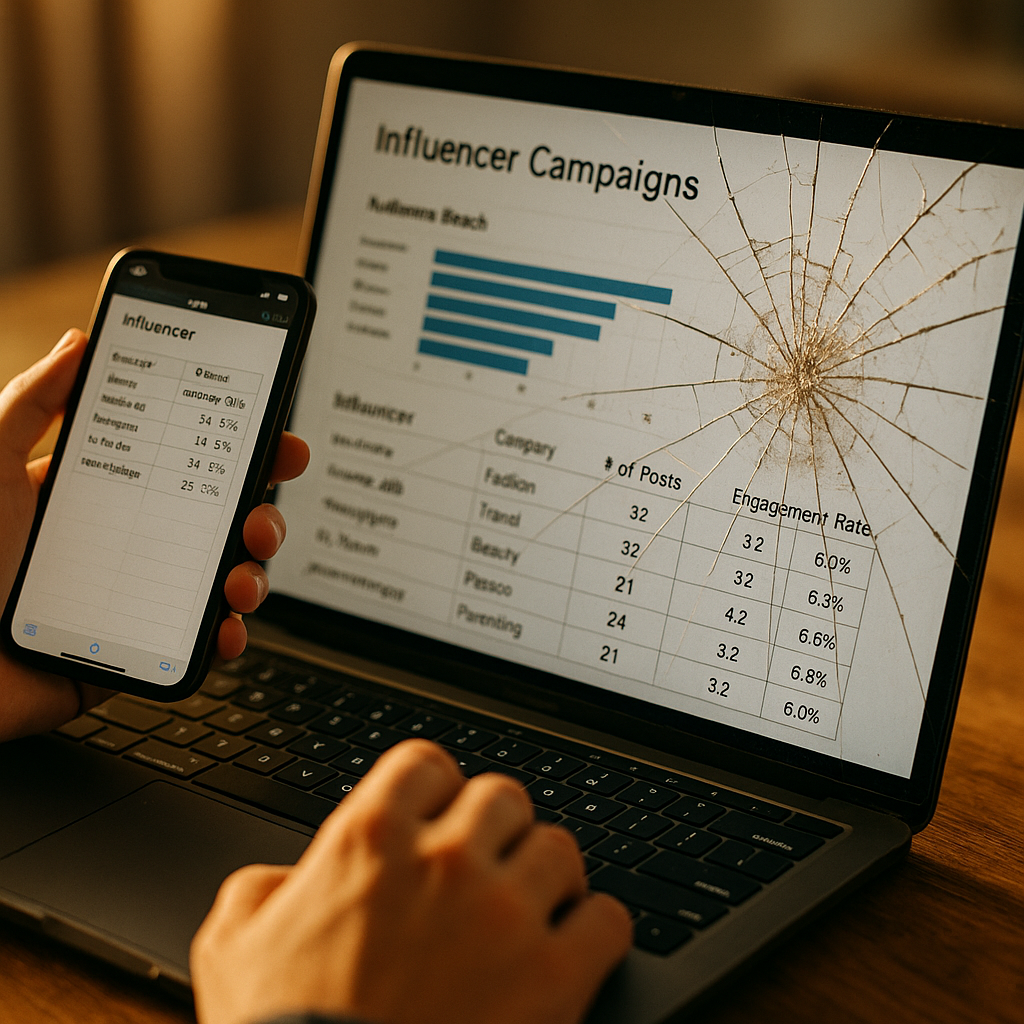
Nearly 4 million active brand-creator collaborations are now running simultaneously across major platforms. That number alone should stop procurement teams cold. Legacy influencer marketing software, much of it built a decade ago for a few hundred campaigns a year, was never engineered for this volume. The result? Spreadsheet sprawl, payment delays, and compliance gaps that are becoming board-level risks, not just marketing headaches.
The Math Legacy Platforms Never Planned For
Think back to 2016. Influencer marketing meant a handful of Instagram deals, a PDF contract, and a Venmo payment. The tools built during that era, many still in market today, assumed linear growth: more creators, more campaigns, same basic workflow. Nobody modeled for millions of concurrent, cross-platform, multi-currency collaborations running through TikTok Shop, Amazon Influencer, and direct brand partnerships all at once.
Scale broke that assumption. Creator counts didn’t grow steadily, they exploded. And the collaboration model itself fragmented: one creator might now run a TikTok Shop affiliate link, an Instagram paid post, a YouTube integration, and a brand ambassador retainer simultaneously, each with different reporting requirements, payment terms, and disclosure rules.
Legacy tools were built to manage campaigns. Today’s environment requires managing relationships, payments, and compliance simultaneously, at a scale ten times larger than most platforms’ original architecture anticipated.
Where the Bottleneck Actually Bites
Ask any operations lead running a mid-size influencer program where the pain lives, and you’ll hear the same three answers.
- Payments infrastructure. Manual invoicing and batch payouts can’t keep pace with thousands of micro-transactions across borders and currencies. Platforms are now competing directly on this front, a shift covered in payments over discovery as the new battleground for platform relevance.
- Compliance tracking. FTC disclosure rules, regional advertising standards, and platform-specific ID verification requirements (see TikTok Shop’s recent moves) mean brands need automated audit trails, not folders of screenshots.
- Data fragmentation. When creator performance data lives in five disconnected dashboards, measuring true ROI becomes guesswork dressed up as analytics.
None of this is theoretical. It’s showing up in vendor earnings calls and platform outages already. IZEA’s recent quarter, for instance, exposed exactly this kind of infrastructure strain, a warning sign covered in IZEA’s Q2 stumble, that should worry any brand leaning on similar legacy stacks.
Why “More Creators” Isn’t the Real Growth Story
Here’s the counterintuitive part. Brands aren’t necessarily working with more unique creators than they were two years ago. They’re running more collaborations per creator, across more platforms, with tighter testing cycles. That’s a fundamentally different operational challenge than simple headcount growth.
Testing frequency, in particular, has become a KPI agencies can’t ignore, because brands now expect dozens of creative variants tested weekly rather than a single hero campaign per quarter. That shift alone multiplies the administrative load on any platform managing contracts, briefs, and payments. Read more on how testing frequency is reshaping agency operations.
Add in the rise of synthetic and AI-generated creators, which introduce entirely new licensing and disclosure questions, and you get a landscape where the old “one contract, one campaign” model simply can’t hold. Brands navigating this shift are grappling with what our analysis calls the trust-efficiency tradeoff of synthetic creators, a tension that legacy tools have zero framework for managing.
The Vendor Consolidation Response
Platform vendors see the bottleneck too, and they’re responding the only way the market rewards: consolidation. Rather than bolt-on point solutions for discovery, payments, and compliance separately, buyers are pushing vendors toward unified stacks that handle the full collaboration lifecycle.
This is playing out visibly. GRIN’s expansion into shipment-to-payment workflows signals exactly this convergence, collapsing what used to be three separate vendor relationships into one operational loop, detailed in GRIN’s shipment-to-payment loop. Smaller agencies are following suit too; Bolder Digital’s recent bundling move reflects a broader SMB appetite to cut vendor count rather than add more dashboards to an already overloaded stack.
The broader market forecast backs this up. Analysts projecting the influencer platform space toward $197 billion in coming years are explicit that consolidation, not fragmentation, is the winning strategy for vendors and buyers alike. Our breakdown of that market forecast is worth a look if you’re evaluating platform contracts this cycle. For deeper context on how buyer priorities are shifting vendor selection criteria industry-wide, see our coverage of vendor consolidation strategy.
What Brands Should Actually Do About It
Strategy first, tooling second. Before signing another platform contract, marketing leaders should map exactly where their current stack breaks under volume. A few practical steps:
- Audit your payment rails. If payouts still require manual approval per creator, you have a scaling ceiling built into your process. Check whether your current platform offers automated, multi-currency payment workflows before renewal.
- Stress-test compliance documentation. Regulators are paying closer attention. The FTC’s endorsement guidelines apply regardless of how many creators you’re managing, and platforms operating in the UK need to track guidance from the Information Commissioner’s Office as well.
- Hire for data, not just relationship management. Agencies are increasingly bringing on dedicated data analysts to make sense of fragmented performance data, a trend our reporting has tracked closely in data analysts becoming top hires and in how agencies are hiring data analysts now.
- Reassess the pod model. Some agencies are restructuring teams into creator pods, small cross-functional units owning a portfolio of collaborations end-to-end, precisely to solve the scaling problem operationally rather than just through software. See our deep dive on the creator pod model.
None of these fixes are glamorous. But they’re the difference between a program that scales predictably and one that quietly bleeds margin through manual workarounds.
A Compliance Risk Hiding in Plain Sight
It’s tempting to treat this as purely an efficiency problem. It isn’t. Every collaboration that slips through inadequate tracking is a potential disclosure violation, a missed contract renewal, or an unpaid creator turning into a public relations problem on social media. TikTok’s own tightening of ID verification and posting caps, a shift we covered in TikTok Shop’s governance shift, signals that platforms themselves are done tolerating the Wild West approach to creator management. Brands that haven’t upgraded their internal systems to match will find themselves out of step with platform-level enforcement, not just their own risk tolerance.
Banks, notably, have already made this calculation. Rather than chase AI-generated ad copy, several major financial institutions are investing AI budget specifically into compliance monitoring, a telling signal about where real operational risk sits in regulated industries. Our analysis of that decision, banks betting AI on compliance, is a useful benchmark for any brand weighing where to direct its own automation investment.
Industry data from firms like eMarketer and Statista consistently shows influencer spend outpacing platform capability investment. That gap is the bottleneck, in plain numbers. Meanwhile, HubSpot’s own marketing benchmarks show measurement and attribution remain the top reported pain points for teams running multi-channel creator programs, reinforcing that this is an industry-wide operational gap, not an isolated vendor failure.
Next Step, Not Just a Summary
Don’t wait for your current platform’s renewal date to force the conversation. Run a payment and compliance audit this quarter, benchmark it against what consolidated vendors now offer, and treat any manual workaround still in your workflow as a scaling risk you’re carrying, not a minor inefficiency you can ignore.
Frequently Asked Questions
What exactly is causing the creator economy’s scaling bottleneck?
The bottleneck stems from a mismatch between collaboration volume and platform architecture. Legacy tools were built for hundreds of campaigns per year, not millions of concurrent, cross-platform collaborations requiring real-time payments, compliance tracking, and performance measurement.
How does this bottleneck affect ROI for brands?
Manual workarounds, delayed payments, and fragmented data all erode margin and slow decision-making. Brands lose visibility into which creators and formats actually drive conversions, making budget allocation less precise and campaign iteration slower.
What should brands prioritize when evaluating new influencer platforms?
Prioritize automated payment infrastructure, built-in compliance and disclosure tracking, and unified reporting across platforms. Consolidated vendors that handle discovery, payments, and compliance in one system reduce operational overhead significantly compared to stitching together point solutions.
Is vendor consolidation always the right answer?
Not universally, but it’s the dominant trend for good reason. Fewer vendors mean fewer integration failures and clearer accountability. Smaller brands with lower collaboration volume may still find value in specialized point tools, but anyone managing hundreds of active creators should weight consolidation heavily.
How does compliance risk factor into the scaling problem?
Every collaboration that isn’t properly tracked for disclosure, contract terms, or payment status represents regulatory and reputational risk. As platforms like TikTok Shop tighten governance requirements, brands with weak internal tracking systems face growing exposure.
Top Influencer Marketing Agencies
The leading agencies shaping influencer marketing in 2026
Agencies ranked by campaign performance, client diversity, platform expertise, proven ROI, industry recognition, and client satisfaction. Assessed through verified case studies, reviews, and industry consultations.
Moburst

-
2

The Shelf
Boutique Beauty & Lifestyle Influencer AgencyA data-driven boutique agency specializing exclusively in beauty, wellness, and lifestyle influencer campaigns on Instagram and TikTok. Best for brands already focused on the beauty/personal care space that need curated, aesthetic-driven content.Clients: Pepsi, The Honest Company, Hims, Elf Cosmetics, Pure LeafVisit The Shelf → -
3

Audiencly
Niche Gaming & Esports Influencer AgencyA specialized agency focused exclusively on gaming and esports creators on YouTube, Twitch, and TikTok. Ideal if your campaign is 100% gaming-focused — from game launches to hardware and esports events.Clients: Epic Games, NordVPN, Ubisoft, Wargaming, Tencent GamesVisit Audiencly → -
4

Viral Nation
Global Influencer Marketing & Talent AgencyA dual talent management and marketing agency with proprietary brand safety tools and a global creator network spanning nano-influencers to celebrities across all major platforms.Clients: Meta, Activision Blizzard, Energizer, Aston Martin, WalmartVisit Viral Nation → -
5

The Influencer Marketing Factory
TikTok, Instagram & YouTube CampaignsA full-service agency with strong TikTok expertise, offering end-to-end campaign management from influencer discovery through performance reporting with a focus on platform-native content.Clients: Google, Snapchat, Universal Music, Bumble, YelpVisit TIMF → -
6

NeoReach
Enterprise Analytics & Influencer CampaignsAn enterprise-focused agency combining managed campaigns with a powerful self-service data platform for influencer search, audience analytics, and attribution modeling.Clients: Amazon, Airbnb, Netflix, Honda, The New York TimesVisit NeoReach → -
7

Ubiquitous
Creator-First Marketing PlatformA tech-driven platform combining self-service tools with managed campaign options, emphasizing speed and scalability for brands managing multiple influencer relationships.Clients: Lyft, Disney, Target, American Eagle, NetflixVisit Ubiquitous → -
8

Obviously
Scalable Enterprise Influencer CampaignsA tech-enabled agency built for high-volume campaigns, coordinating hundreds of creators simultaneously with end-to-end logistics, content rights management, and product seeding.Clients: Google, Ulta Beauty, Converse, AmazonVisit Obviously →