


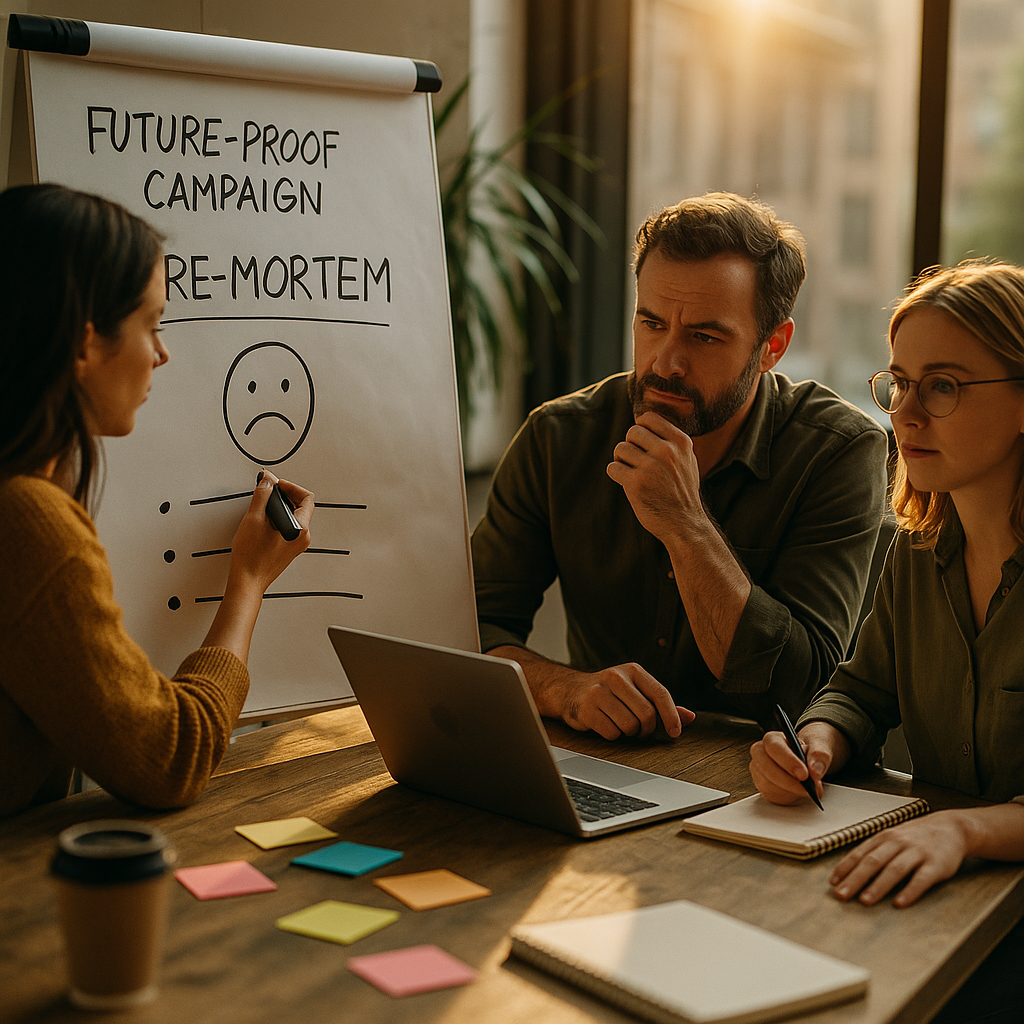
Learning how to conduct a “pre-mortem” workshop can dramatically reduce risk and increase the odds of success for your next high-stakes campaign. This article explores a step-by-step process, expert tips, and best practices for running effective pre-mortem workshops that identify threats—before they become costly realities. Ready to future-proof your next big initiative?
The Value of a Pre-Mortem Analysis for Campaign Risk Management
Launching a high-stakes campaign—be it a product launch, major rebrand, or large-scale marketing blitz—demands anticipating pitfalls before they happen. A pre-mortem workshop is a proven risk management tool that flips traditional thinking by proactively assuming failure and investigating how it might occur. According to 2024 research by the Project Management Institute, teams using pre-mortems reduce unforeseen setbacks by up to 30%. This proactive mindset allows teams to surface hidden threats, challenge assumptions, and establish robust contingency plans. By investing in a pre-mortem analysis, you improve both the resilience and agility of your campaign strategy.
Planning an Effective Pre-Mortem Workshop: Roles and Preparation
Preparation is critical to a high-impact pre-mortem session. Assemble a diverse group of stakeholders with first-hand knowledge of your campaign’s scope—this may include marketers, product leaders, operations specialists, and even customer representatives. Assign clear roles:
- Facilitator: Guides the session and ensures productive, unbiased discussion.
- Recorder: Documents all identified risks and ideas.
- Participants: Bring varied perspectives and raise potential risk scenarios.
Distribute concise campaign briefs prior to the workshop and ask participants to reflect on past failures, relevant industry mishaps, or emerging risks. A well-prepped team uncovers deeper insights and avoids groupthink.
Running the Pre-Mortem Exercise: Workshop Structure and Techniques
A successful pre-mortem revolves around structured creativity and psychological safety. Begin by presenting campaign objectives and asking participants to suspend disbelief: “Imagine we’re three months in the future. The campaign has failed—badly. What went wrong?” Encourage candid, blame-free brainstorming. Effective techniques include:
- Silent ideation: Let each participant jot down possible failure causes independently.
- Round-robin sharing: Invite each member to share one risk at a time, ensuring every voice is heard.
- Categorization: Group risks into themes such as operational, reputational, technological, or external factors.
- Prioritization: Use dot voting or rating systems to rank risks by severity or likelihood.
By making space for honest dialogue and creative thinking, you’ll tap into your team’s collective foresight and experience—surfacing risks otherwise missed during traditional planning.
Translating Pre-Mortem Insights into Actionable Risk Mitigation Plans
Raw lists of risks aren’t enough—actionable follow-up is where pre-mortems deliver real value. After categorizing and prioritizing risks, assign owners and develop targeted mitigation strategies. For example:
- If a critical dependency is at risk: Develop a backup vendor or alternate process.
- If reputational fallout is possible: Prepare holding statements and escalation contacts in advance.
- If timeline slippage is likely: Build buffer periods and milestone checks into your schedule.
Document these strategies in your campaign playbook and schedule regular check-ins. According to Gartner’s 2024 digital transformation survey, organizations that operationalize pre-mortem insights resolve issues 2.5 times faster once problems emerge.
Measuring Workshop Impact and Continuous Improvement for Campaign Success
To maximize ongoing value, assess the impact of your pre-mortem workshop. Track metrics such as:
- Number and significance of new risks identified vs. original risk register.
- Mitigation actions successfully implemented before or during the campaign.
- Actual campaign outcomes compared to previous initiatives without pre-mortems.
Gather participant feedback after the session: What worked well? What could be improved? This commitment to learning ensures your pre-mortem process evolves, delivering better foresight and decision-making for future campaigns. Embedding the pre-mortem methodology into your organizational culture can transform risk management into a competitive advantage.
Common Pitfalls and How to Optimize Your Pre-Mortem Workshop
Even experienced teams occasionally overlook key elements during pre-mortem workshops. Avoid these common mistakes:
- Rushing the process: Allocate enough time to explore complex scenarios and impacts.
- Dominated conversations: Facilitate inclusively, preventing any single voice from overshadowing others.
- Lack of follow-through: Ensure risk mitigation steps are clearly assigned and tracked.
- Failure to revisit risks: Schedule periodic reviews to update risks as your campaign environment changes.
Continually refine your approach by embracing feedback and leveraging case studies from peer organizations. In 2025, companies beating the odds are those that proactively seek, address, and learn from risks—before they cause real damage.
FAQs: Pre-Mortem Workshop Best Practices
-
What is the difference between a pre-mortem and a post-mortem?
A pre-mortem is conducted before launching an initiative to anticipate possible failures and prevent them, while a post-mortem reviews what went wrong after completion. Pre-mortems are preventive; post-mortems are diagnostic.
-
How long does a pre-mortem workshop typically last?
Most pre-mortem workshops last between 90 minutes and 3 hours, depending on the complexity of your campaign and the size of your team.
-
Who should be included in a pre-mortem workshop?
Invite representatives from all key stakeholder groups: marketing, product, sales, operations, customer service, and, if possible, end users for a holistic view of possible risks.
-
How often should pre-mortems be conducted?
Pre-mortems should be run before any major campaign, project, or launch with significant risk. For ongoing initiatives, consider repeating pre-mortems quarterly to address emerging changes.
-
What tools can help facilitate a pre-mortem workshop?
Collaboration tools like Miro or Mural, shared digital whiteboards, and risk tracking software can all enhance the process and aid in documentation.
By thoughtfully implementing a pre-mortem workshop for your next high-stakes campaign, you equip your team to anticipate obstacles, craft robust contingency plans, and drive greater success. Make pre-mortems a regular feature of your risk management toolkit for resilient, future-proof campaigns.
Top Influencer Marketing Agencies
The leading agencies shaping influencer marketing in 2026
Agencies ranked by campaign performance, client diversity, platform expertise, proven ROI, industry recognition, and client satisfaction. Assessed through verified case studies, reviews, and industry consultations.
Moburst

-
2

The Shelf
Boutique Beauty & Lifestyle Influencer AgencyA data-driven boutique agency specializing exclusively in beauty, wellness, and lifestyle influencer campaigns on Instagram and TikTok. Best for brands already focused on the beauty/personal care space that need curated, aesthetic-driven content.Clients: Pepsi, The Honest Company, Hims, Elf Cosmetics, Pure LeafVisit The Shelf → -
3

Audiencly
Niche Gaming & Esports Influencer AgencyA specialized agency focused exclusively on gaming and esports creators on YouTube, Twitch, and TikTok. Ideal if your campaign is 100% gaming-focused — from game launches to hardware and esports events.Clients: Epic Games, NordVPN, Ubisoft, Wargaming, Tencent GamesVisit Audiencly → -
4

Viral Nation
Global Influencer Marketing & Talent AgencyA dual talent management and marketing agency with proprietary brand safety tools and a global creator network spanning nano-influencers to celebrities across all major platforms.Clients: Meta, Activision Blizzard, Energizer, Aston Martin, WalmartVisit Viral Nation → -
5

The Influencer Marketing Factory
TikTok, Instagram & YouTube CampaignsA full-service agency with strong TikTok expertise, offering end-to-end campaign management from influencer discovery through performance reporting with a focus on platform-native content.Clients: Google, Snapchat, Universal Music, Bumble, YelpVisit TIMF → -
6

NeoReach
Enterprise Analytics & Influencer CampaignsAn enterprise-focused agency combining managed campaigns with a powerful self-service data platform for influencer search, audience analytics, and attribution modeling.Clients: Amazon, Airbnb, Netflix, Honda, The New York TimesVisit NeoReach → -
7

Ubiquitous
Creator-First Marketing PlatformA tech-driven platform combining self-service tools with managed campaign options, emphasizing speed and scalability for brands managing multiple influencer relationships.Clients: Lyft, Disney, Target, American Eagle, NetflixVisit Ubiquitous → -
8

Obviously
Scalable Enterprise Influencer CampaignsA tech-enabled agency built for high-volume campaigns, coordinating hundreds of creators simultaneously with end-to-end logistics, content rights management, and product seeding.Clients: Google, Ulta Beauty, Converse, AmazonVisit Obviously →