


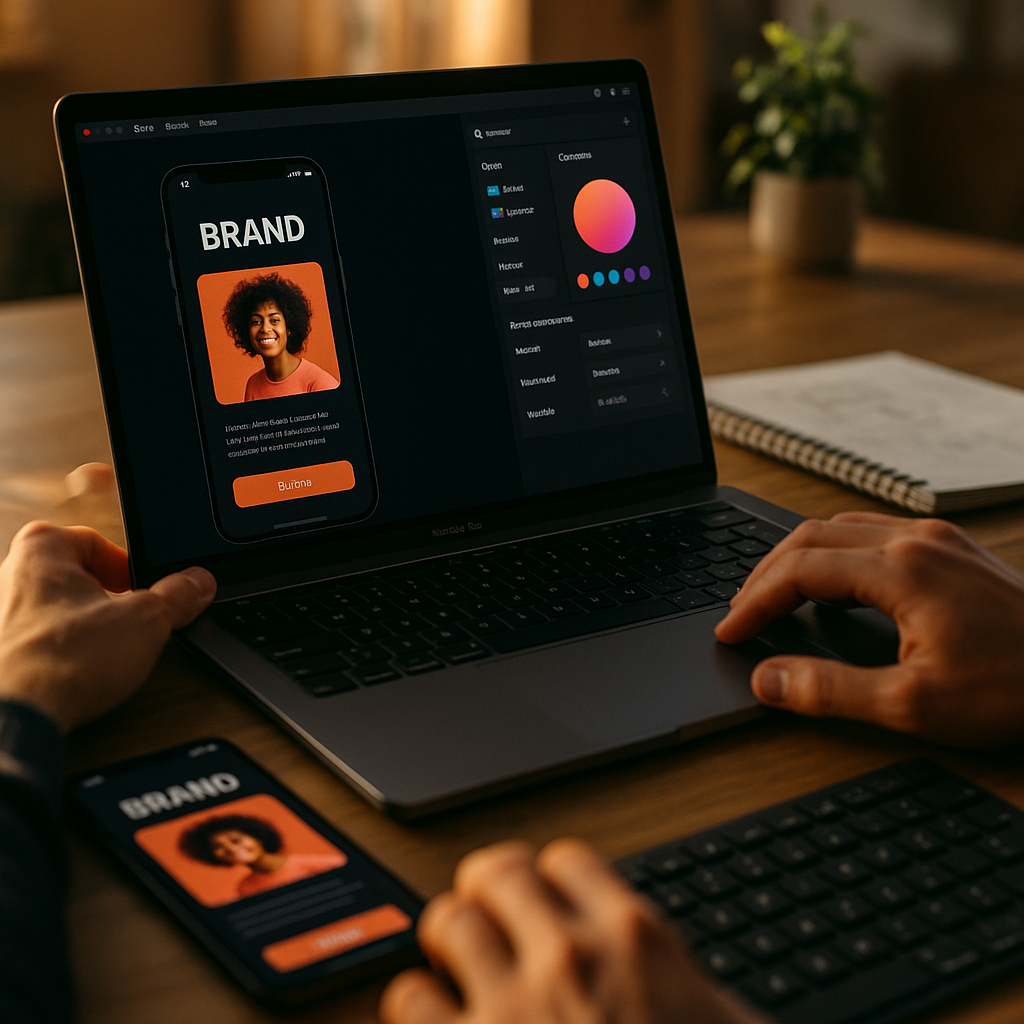
In 2025, teams are under pressure to ship experiences that feel unmistakably on-brand while moving at startup speed. The rise of vibe coding is changing how digital prototypes get built: faster cycles, tighter feedback loops, and more emotion-forward interfaces that mirror brand personality. Done well, it shortens the gap between creative intent and usable product—so what’s the real payoff?
Vibe coding and brand-led prototyping: what it is and why it’s growing
Vibe coding describes a workflow where designers, engineers, and brand teams rapidly translate a desired “feel” into interactive prototypes using modern tooling: design systems, component libraries, and AI-assisted generation. The focus is not just “does it work,” but “does it feel like us?”—tone, motion, microcopy, spacing, and interaction rhythms become first-class requirements.
This approach is expanding because traditional paths often split responsibility: brand teams define guidelines, product teams build features, and the prototype is a compromise. Vibe coding compresses that distance by making brand expression testable in code earlier—before heavy build commitments. It also aligns with how stakeholders decide: they respond to tangible experiences more than static decks.
In practice, brand-led digital prototypes created through vibe coding tend to share three traits:
- Emotionally legible UI: typography, motion, and language convey personality consistently.
- Composable components: teams remix approved patterns instead of reinventing screens.
- Fast learning loops: prototypes get user and stakeholder feedback within days, not weeks.
If you’re wondering whether this is just “design in the browser,” the difference is intent: vibe coding makes brand strategy measurable through interaction, not merely visual polish.
Digital prototypes and rapid iteration: how teams ship faster without losing the brand
Speed only helps if quality stays intact. The most effective vibe-coding teams treat rapid iteration as a controlled system, not a free-for-all. They start with a narrow prototype scope (one journey, one promise, one moment that matters), then iterate on the feel and usability in parallel.
To keep rapid cycles brand-safe, high-performing teams use these guardrails:
- Prototype success criteria set upfront: brand cues to preserve (tone, warmth, authority), usability targets (task completion), and accessibility baselines.
- Design tokens for color, type, spacing, and motion timing so iterations remain consistent even when screens change.
- Component ownership: one person (or small group) approves changes to core components that carry brand identity, like buttons, headers, and navigation.
Readers often ask, “How do we avoid endless tweaking?” The answer is to timebox “vibe exploration” and then lock decisions into reusable components. For example, you can explore three motion styles for transitions in a day, pick one that fits the brand voice, and then standardize it across the prototype via tokens or a shared animation utility.
Another frequent concern is stakeholder churn: prototypes can invite more opinions. The fix is structured reviews. Instead of open-ended feedback, ask stakeholders to score specific attributes (clarity, trust, energy, premium feel) and tie those scores to observable UI elements. That keeps brand feedback actionable rather than subjective.
AI-assisted development and creative direction: where AI helps and where it can’t
AI-assisted development accelerates vibe coding by generating scaffolds, variations, and code drafts that teams can refine. It is especially useful for:
- Component stubs that match a design system’s API (props, states, variants).
- Microcopy variants aligned to a brand voice brief, so teams can test tone quickly.
- Layout options for responsive behavior, letting teams compare “calm vs. energetic” compositions.
- Edge-case coverage such as empty states, error states, and loading behavior—often neglected until late.
But AI can’t replace creative direction. Brand feel is not a generic “modern UI”; it’s a set of deliberate trade-offs. AI tends to average toward common patterns unless you constrain it with strong inputs: a voice chart, token set, content principles, and examples of what “on-brand” looks like in interaction.
To use AI responsibly in 2025, apply three practical controls that also strengthen EEAT:
- Source-of-truth inputs: provide your design tokens, component inventory, and brand voice rules; don’t rely on generic prompts.
- Human sign-off: require review from both product engineering and brand/design leadership for core UI patterns.
- Auditability: record key prompts, decisions, and component changes so future teams understand why the “vibe” is the way it is.
If you’re asking, “Will AI make everything look the same?” it can—unless you codify uniqueness. Vibe coding becomes powerful when AI speeds execution while humans protect differentiation.
Design systems and UI consistency: turning brand identity into reusable code
The backbone of brand-led digital prototypes is a design system that’s more than a style guide. Vibe coding thrives when brand identity is encoded into components, tokens, and interaction rules so that every prototype screen inherits the brand automatically.
Start with the layers that have the highest leverage:
- Tokens: semantic color (e.g., “accent,” “surface,” “danger”), typography scales, spacing, radius, shadow, and motion timing.
- Components: buttons, form fields, navigation, cards, banners, and modals with clear states and accessibility baked in.
- Patterns: onboarding flow, checkout flow, account settings, search and filter, empty/error states.
- Content rules: microcopy principles, capitalization, punctuation, reading level, and CTA conventions.
Teams often follow up with: “How do we express brand beyond color and type?” Treat motion and language as brand primitives. A confident brand may use crisp, quick transitions and decisive verbs. A caring brand may slow motion slightly, use reassuring status messages, and prioritize clarity over flair. Vibe coding makes those decisions tangible because you can test them with real users in an interactive prototype.
To keep UI consistency while iterating, establish a “no inline styling” rule in prototypes: all styling should come from tokens and component variants. That keeps experimentation focused on system changes rather than one-off screen hacks, and it prevents prototypes from drifting away from what can be shipped.
User experience testing and accessibility: validating the “vibe” with real evidence
A prototype that feels on-brand to internal teams can still confuse customers. Vibe coding is strongest when it pairs emotional intent with measurable user experience outcomes. You don’t need a large study to learn quickly; you need well-chosen tasks and clear success metrics.
For brand-led digital prototypes, prioritize these testing angles:
- Comprehension: do users understand what the product is and why it matters within the first moments?
- Trust signals: do users feel safe providing information or taking the next step?
- Task flow: can users complete the critical journey without friction?
- Brand recall: can users describe the experience in words that match your intended brand attributes?
Accessibility cannot be optional, even for prototypes. In 2025, teams increasingly treat accessibility as part of brand credibility. A brand that claims to be inclusive but ships inaccessible interactions creates a trust gap. Build accessibility into the vibe-coding checklist:
- Keyboard navigation works end-to-end for core flows.
- Focus states are visible and consistent with brand styling.
- Color contrast meets accepted standards for text and UI elements.
- Motion preferences respect reduced-motion settings without breaking the experience.
Readers often ask how to measure “vibe” without guessing. Combine qualitative feedback (“What three words describe this?”) with structured ratings tied to brand attributes (e.g., 1–7 for “premium,” “playful,” “reassuring”) and observe behavior: hesitation, misclicks, and abandonment points reveal when the feel clashes with usability.
Cross-functional collaboration and governance: keeping prototypes fast, safe, and shippable
Vibe coding can fail when ownership is unclear. Brand teams may fear dilution, engineering may fear unmaintainable code, and product may fear endless polish. The solution is lightweight governance that protects speed and integrity.
Set up roles and decision rights that match prototype reality:
- Brand steward: ensures tone, visual identity, and interaction personality remain consistent.
- Prototype engineer: ensures components are composable, accessible, and close to production patterns.
- Product owner: defines the journey, success metrics, and learning goals.
- Research lead: runs tests and turns feedback into prioritized changes.
Then adopt a governance rhythm that avoids bottlenecks:
- Daily micro-reviews (15 minutes): confirm the prototype still matches the intended attributes and scope.
- Weekly “lock-in” moments: convert validated choices into tokens/components and freeze them for the next cycle.
- Definition of ready-to-ship: a checklist that includes accessibility, performance basics, and component reuse.
Teams also ask whether vibe-coded prototypes create tech debt. They can—if built as disposable experiments. The best practice is to prototype with production-adjacent constraints: use the same component library philosophy, avoid hard-coded one-offs, and keep documentation of decisions. That way, what you learn transfers directly into what you ship.
FAQs about vibe coding in developing brand-led digital prototypes
What is vibe coding in simple terms?
Vibe coding is a rapid prototyping approach that translates a brand’s desired feel—tone, motion, microcopy, and interaction style—into working UI quickly, so teams can test and refine the experience early.
Is vibe coding only for marketing sites, or also for product UI?
It works for both. It’s especially valuable in product UI where trust, clarity, and personality affect conversion and retention—onboarding, checkout, account flows, and subscription journeys.
How do we keep brand consistency while moving fast?
Use design tokens and reusable components as the default. Timebox exploration, then standardize the winning patterns into the system so every new screen inherits the approved brand expression.
Do we need AI to do vibe coding well?
No. AI can accelerate drafting and variation, but the core is alignment between brand intent, design system rules, and prototype engineering. Strong creative direction matters more than any tool.
How can we test whether the prototype “feels on-brand”?
Ask users for descriptive words and attribute ratings tied to your brand traits, and pair that with behavioral signals like time-to-first-action, errors, and abandonment points. Validate both emotion and usability.
What are the biggest risks of vibe coding?
The main risks are subjective feedback loops, inconsistent UI, and prototype code that can’t be reused. Clear success criteria, governance, and system-based building prevent these issues.
Vibe coding is rising because it turns brand intent into something testable: interactive, measurable, and shippable. In 2025, the teams that win treat brand-led digital prototypes as a system exercise—tokens, components, language, motion, and accessibility working together. Use AI to accelerate drafts, not to define identity. The takeaway: codify the vibe, validate it with users, then scale it.
Top Influencer Marketing Agencies
The leading agencies shaping influencer marketing in 2026
Agencies ranked by campaign performance, client diversity, platform expertise, proven ROI, industry recognition, and client satisfaction. Assessed through verified case studies, reviews, and industry consultations.
Moburst

-
2

The Shelf
Boutique Beauty & Lifestyle Influencer AgencyA data-driven boutique agency specializing exclusively in beauty, wellness, and lifestyle influencer campaigns on Instagram and TikTok. Best for brands already focused on the beauty/personal care space that need curated, aesthetic-driven content.Clients: Pepsi, The Honest Company, Hims, Elf Cosmetics, Pure LeafVisit The Shelf → -
3

Audiencly
Niche Gaming & Esports Influencer AgencyA specialized agency focused exclusively on gaming and esports creators on YouTube, Twitch, and TikTok. Ideal if your campaign is 100% gaming-focused — from game launches to hardware and esports events.Clients: Epic Games, NordVPN, Ubisoft, Wargaming, Tencent GamesVisit Audiencly → -
4

Viral Nation
Global Influencer Marketing & Talent AgencyA dual talent management and marketing agency with proprietary brand safety tools and a global creator network spanning nano-influencers to celebrities across all major platforms.Clients: Meta, Activision Blizzard, Energizer, Aston Martin, WalmartVisit Viral Nation → -
5

The Influencer Marketing Factory
TikTok, Instagram & YouTube CampaignsA full-service agency with strong TikTok expertise, offering end-to-end campaign management from influencer discovery through performance reporting with a focus on platform-native content.Clients: Google, Snapchat, Universal Music, Bumble, YelpVisit TIMF → -
6

NeoReach
Enterprise Analytics & Influencer CampaignsAn enterprise-focused agency combining managed campaigns with a powerful self-service data platform for influencer search, audience analytics, and attribution modeling.Clients: Amazon, Airbnb, Netflix, Honda, The New York TimesVisit NeoReach → -
7

Ubiquitous
Creator-First Marketing PlatformA tech-driven platform combining self-service tools with managed campaign options, emphasizing speed and scalability for brands managing multiple influencer relationships.Clients: Lyft, Disney, Target, American Eagle, NetflixVisit Ubiquitous → -
8

Obviously
Scalable Enterprise Influencer CampaignsA tech-enabled agency built for high-volume campaigns, coordinating hundreds of creators simultaneously with end-to-end logistics, content rights management, and product seeding.Clients: Google, Ulta Beauty, Converse, AmazonVisit Obviously →