


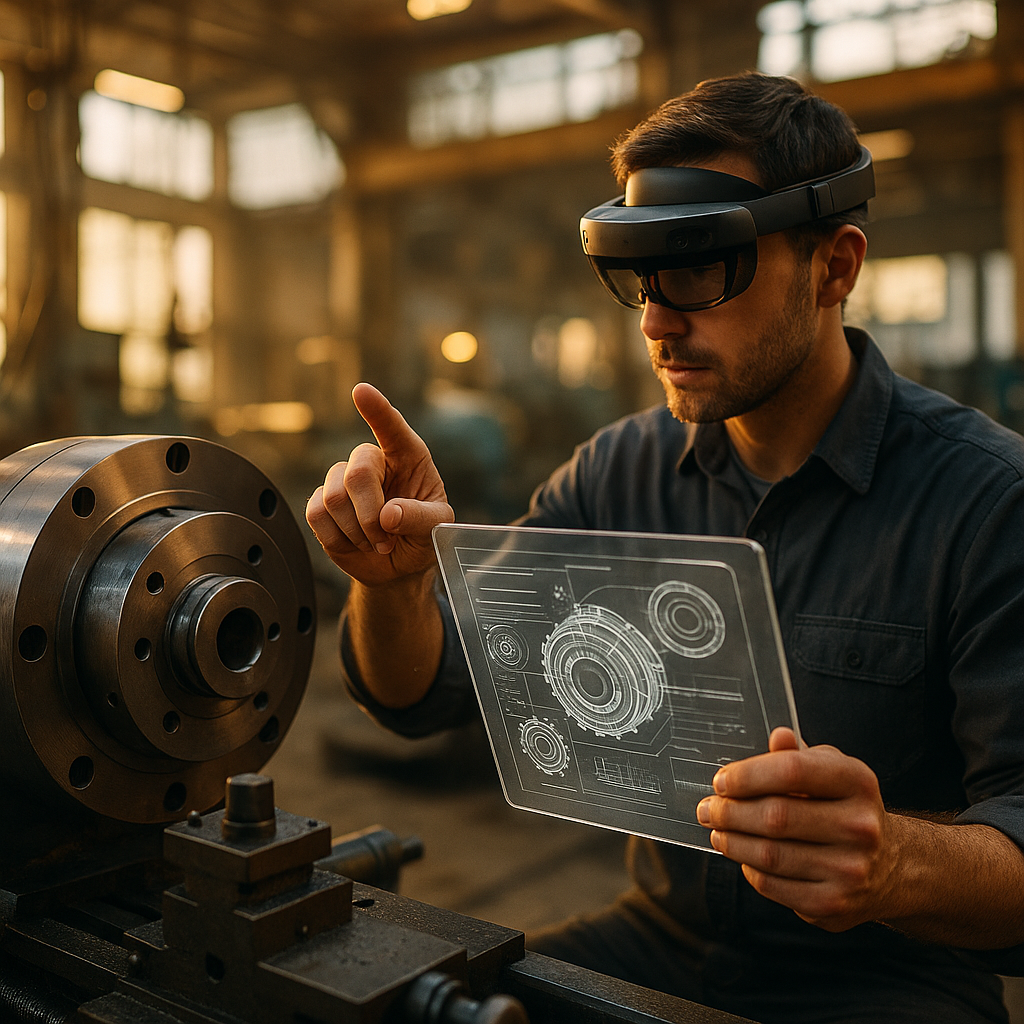
In 2026, buyers expect fast, visual, low-friction decisions, even in industrial markets. This case study on AR for remote sales shows how one traditional manufacturer moved beyond brochures, plant visits, and sample shipping to shorten sales cycles and improve buyer confidence. The results reveal a practical path other legacy firms can follow, especially when travel budgets tighten and competition intensifies.
Why Traditional Manufacturing Sales Needed an Augmented reality sales strategy
The company in this case study is a mid-sized industrial equipment manufacturer that sells custom material-handling systems to distributors, plant managers, and procurement teams. Its products are complex, expensive, and often tailored to each site. For years, the sales process depended on in-person demos, facility tours, printed catalogs, CAD screenshots, and long proposal cycles.
That approach had worked for decades, but buyer behavior changed. Prospects wanted quicker answers, remote collaboration, and more certainty before committing to a high-value purchase. Sales reps faced a recurring problem: they could explain technical features, but they struggled to help buyers visualize how a system would fit inside a real warehouse or production floor.
The manufacturer also dealt with several operational constraints:
- Long sales cycles: Deals often took six to nine months because stakeholders needed repeated reviews.
- High pre-sales costs: Travel, on-site demos, and engineering support consumed margin before a contract was signed.
- Complex products: Buyers had difficulty understanding scale, clearance, maintenance access, and layout impact from 2D documents alone.
- Limited showroom reach: Only a small number of prospects could visit the physical demo facility.
- Decision-maker fragmentation: Operations, finance, engineering, and procurement were rarely in the same room at the same time.
Leadership did not want technology for its own sake. They wanted a tool that would reduce friction in the buying process and make remote selling more effective. After reviewing virtual demos, video conferencing workflows, and interactive 3D product configurators, the team focused on augmented reality because it connected digital product models to the buyer’s real physical environment.
This mattered. In manufacturing, the core sales question is rarely “What does it look like?” It is usually “Will this work in my facility, with my constraints, at my expected throughput?” AR helped answer that question faster and with greater confidence.
How the company built an Industrial AR case study with practical goals
The manufacturer did not launch a company-wide AR platform overnight. It started with a narrow, measurable pilot tied directly to revenue. The leadership team selected one product family that had high average contract value, moderate customization complexity, and frequent requests for site-specific layouts.
The pilot had four clear goals:
- Improve remote product understanding during early and mid-funnel sales conversations.
- Reduce the number of on-site visits required before proposal approval.
- Shorten internal decision time by giving all stakeholders a shared visual reference.
- Increase quote-to-close conversion on qualified opportunities.
To execute the initiative, the manufacturer formed a cross-functional team that included sales leadership, product engineering, IT, and a field applications manager. This was a critical EEAT-related strength: the project was guided by real subject-matter experts, not just a software vendor or innovation committee. Engineering validated the dimensions and motion behavior of the 3D assets. Sales reps defined the buyer objections the AR experience needed to address. IT handled device compatibility, security, and deployment.
The implementation approach was intentionally simple. Instead of requiring specialized headsets, the company used tablet and smartphone-based AR so buyers and reps could access demos with familiar hardware. The team converted existing CAD files into optimized 3D models, then built a lightweight app that allowed prospects to:
- Place the equipment at realistic scale in their own facility
- View multiple configuration options
- Check clearances around walls, racks, and work zones
- Trigger simple animations showing product movement and workflow
- Capture screenshots for internal review
- Join guided remote sessions with a sales rep
The buyer experience was designed around actual sales conversations. A rep could start with a standard configuration, then switch to custom options based on throughput, floor space, safety requirements, or maintenance preferences. This made the discussion less abstract and more consultative.
Importantly, the team did not position AR as a replacement for engineering review. They framed it as a decision-acceleration layer that sat between initial qualification and final technical signoff. That realistic framing increased adoption internally and prevented overpromising externally.
Remote sales technology in action across the manufacturing buyer journey
Once the pilot launched, the manufacturer mapped AR use cases to each stage of the sales funnel. This step turned a flashy demo into a repeatable commercial process.
1. Discovery calls
During early qualification, reps used AR to show how different system footprints compared in real-world environments. Buyers who previously needed several calls to understand the basics could now see scale and placement within minutes. That improved the quality of follow-up conversations because buyers arrived with more specific questions.
2. Multi-stakeholder reviews
One of the biggest advantages emerged during committee-based purchasing. Procurement cared about cost and deployment risk. Operations cared about throughput and downtime. Safety managers looked for access and clearance. Engineering reviewed fit and integration implications. AR gave all of them a common visual model, reducing the confusion that often comes from static PDFs and screenshots.
3. Site-fit validation
Before the AR rollout, the manufacturer often sent a rep or engineer on-site just to determine whether a standard system was even plausible. With AR, buyers could scan or visually place a system in the intended area and identify obvious fit issues early. This did not eliminate site verification, but it filtered out low-quality opportunities and reduced unnecessary travel.
4. Proposal support
Quotes became more persuasive when accompanied by annotated AR captures. Reps included visuals showing layout options, access points, and workflow paths. Prospects could share these with internal stakeholders who had missed live calls, which helped maintain deal momentum.
5. Post-demo follow-up
The manufacturer also learned that follow-up matters as much as the live experience. After each AR session, reps sent a recap that included selected screenshots, key assumptions, and next-step recommendations. This reinforced credibility and prevented the “great demo, unclear action plan” problem.
Several practical lessons appeared quickly. First, AR sessions worked best when guided by a trained rep rather than left entirely self-serve. Second, realism mattered less than clarity; buyers preferred accurate scale and understandable movement over highly cinematic graphics. Third, success depended on sales enablement. Reps needed scripts, objection-handling guidance, and clear criteria for when AR should enter the conversation.
Measured benefits of AR in manufacturing for sales efficiency and trust
Within two quarters of the pilot, the manufacturer compared AR-supported opportunities with a similar baseline of recent deals from the same product line. While results varied by region and account size, the commercial impact was strong enough to justify expansion.
The company reported the following outcomes:
- Shorter sales cycle: Average time from qualified opportunity to proposal approval fell by roughly 22%.
- Fewer pre-sales site visits: Travel for early-stage evaluations dropped by nearly one-third.
- Higher proposal engagement: Prospects spent more time reviewing quote materials when AR visuals were included.
- Improved stakeholder alignment: Reps reported fewer repeated clarification calls after committee reviews.
- Better conversion on qualified deals: Opportunities that included at least one guided AR session closed at a meaningfully higher rate than comparable deals without it.
The biggest gain was not novelty. It was trust. Buyers felt more confident because they could test assumptions visually before committing. In industrial sales, trust comes from reducing uncertainty. AR reduced uncertainty around size, fit, workflow, and use-case relevance.
The manufacturer also gained internal benefits. Sales engineering spent less time recreating basic layout explanations. Reps entered late-stage negotiations with more informed buyers. Marketing gained reusable product visuals for webinars, email nurturing, and distributor support. Customer success teams even began using the same models to support installation planning and onboarding.
These effects align with broader market behavior in 2026. B2B buyers increasingly expect digital experiences that are as clear and interactive as consumer buying journeys, especially for high-consideration purchases. For manufacturers, that does not mean making the process casual. It means making complex decisions easier to evaluate remotely and responsibly.
Key challenges in Digital transformation for manufacturers and how they were solved
The project succeeded, but not because implementation was easy. The manufacturer encountered several issues that many legacy firms will recognize.
Challenge 1: CAD files were not sales-ready
Engineering models were highly detailed and too heavy for mobile AR. The company solved this by creating a workflow for model simplification, asset optimization, and approval checkpoints. Engineering retained control over dimensional accuracy, while the digital team adapted files for performance.
Challenge 2: Sales reps feared a steep learning curve
Some reps worried that AR would complicate meetings or make them look overly scripted. Leadership addressed this through role-specific training. Reps practiced how to introduce AR naturally, how to handle technical questions, and how to transition from visualization to commercial discussion.
Challenge 3: Buyers had varying technical comfort levels
Not every prospect wanted to download an app or move around with a tablet. The company introduced flexible delivery formats, including live rep-led sessions, browser-accessible previews where feasible, and still-image exports for less tech-forward stakeholders. This widened accessibility without weakening the value proposition.
Challenge 4: Internal teams expected instant scale
Executives were enthusiastic, but expansion pressure came quickly. The project team resisted the urge to model the entire catalog at once. They prioritized products with the strongest sales impact and clearest remote-fit use cases. That discipline preserved quality and kept ROI visible.
Challenge 5: Measuring attribution
Like many digital sales tools, AR influenced deals alongside many other factors. To evaluate impact credibly, the company tracked usage by opportunity stage, product line, session type, and sales outcome. It combined CRM data with rep feedback and post-demo buyer surveys. This gave leadership a more defensible view of performance.
For manufacturers considering a similar initiative, these lessons matter more than the software brand or visual polish. The strongest AR programs are commercially grounded, operationally realistic, and tied to buyer needs.
Best practices for B2B remote selling with AR in 2026
This case study offers a practical template for other traditional manufacturers. Whether you sell packaging machinery, industrial automation, HVAC systems, medical devices, or heavy equipment, the same principles apply.
Start with one high-value use case
Do not try to digitize your entire sales organization at once. Choose a product line where buyers struggle to visualize fit, configuration, or workflow impact. Tie the pilot to specific revenue and efficiency metrics.
Use the hardware your buyers already have
For most B2B contexts, smartphone and tablet AR is easier to adopt than headsets. Accessibility usually beats novelty.
Build around sales conversations, not just product models
An accurate 3D object is not enough. The experience should answer the questions buyers actually ask: Will it fit? How does it move? What changes between configurations? What maintenance space is needed? How will operators use it?
Keep experts involved
EEAT matters in technical content and technical selling. Product engineers, field specialists, and experienced reps should validate what prospects see. Accuracy builds credibility; oversimplification damages it.
Train reps to facilitate, not just demonstrate
The best AR sessions are consultative. Reps should guide buyers through relevant scenarios, confirm assumptions, and document next steps. Technology should strengthen expertise, not replace it.
Integrate with your CRM and content workflow
Track which deals use AR, at what stage, and with what outcome. Reuse approved visuals in proposals, follow-up emails, distributor kits, and onboarding materials. This turns AR from a one-off demo tactic into a scalable revenue asset.
Set honest expectations
AR will not close weak opportunities by itself. It works best when it removes uncertainty from otherwise promising deals. Position it as a tool for clarity and decision support.
The central takeaway is straightforward: traditional manufacturers do not need to become software companies to modernize sales. They need to make product understanding easier, faster, and more credible for remote buyers. AR can do that when it is deployed with discipline.
FAQs about AR for remote sales in manufacturing
What is AR for remote sales in manufacturing?
It is the use of augmented reality on mobile devices or tablets to help buyers view industrial equipment in their real environment during a remote sales process. It allows prospects to assess scale, fit, configuration, and workflow without requiring an immediate site visit.
Why is AR especially useful for traditional manufacturers?
Manufacturers often sell complex, expensive products that are hard to evaluate through brochures or 2D drawings. AR makes technical products easier to understand, which improves buyer confidence and reduces friction in multi-stakeholder decisions.
Does AR replace in-person demos and engineering reviews?
No. In most cases, AR improves early and mid-stage decision-making, but final technical validation and implementation planning still require expert review. The strongest programs use AR to accelerate understanding, not bypass due diligence.
What equipment is needed to launch an AR sales program?
Many companies start with standard smartphones and tablets. They also need optimized 3D product models, a delivery platform or app, internal approval workflows, and sales training. Specialized headsets are not required for most use cases.
How can a manufacturer measure ROI from AR in sales?
Track changes in sales cycle length, site-visit frequency, proposal engagement, close rates on qualified deals, rep productivity, and buyer feedback. CRM integration is important for attributing AR usage to specific opportunities and outcomes.
What types of products benefit most from AR selling?
Products with large footprints, customization options, installation constraints, or workflow implications benefit the most. Examples include industrial machinery, automation systems, racking solutions, HVAC equipment, medical devices, and material-handling systems.
What is the biggest mistake companies make with AR in remote sales?
The most common mistake is treating AR as a visual gimmick instead of a sales tool. If the experience is not tied to buyer questions, rep workflows, and measurable business goals, adoption and ROI usually suffer.
Traditional manufacturers can modernize sales without abandoning the strengths that built their reputation. This case study shows that AR works best when it supports expert-led conversations, answers real buyer questions, and reduces uncertainty in complex decisions. Start with one product line, measure commercial impact carefully, and scale only after the process proves both useful and repeatable.
Top Influencer Marketing Agencies
The leading agencies shaping influencer marketing in 2026
Agencies ranked by campaign performance, client diversity, platform expertise, proven ROI, industry recognition, and client satisfaction. Assessed through verified case studies, reviews, and industry consultations.
Moburst

-
2

The Shelf
Boutique Beauty & Lifestyle Influencer AgencyA data-driven boutique agency specializing exclusively in beauty, wellness, and lifestyle influencer campaigns on Instagram and TikTok. Best for brands already focused on the beauty/personal care space that need curated, aesthetic-driven content.Clients: Pepsi, The Honest Company, Hims, Elf Cosmetics, Pure LeafVisit The Shelf → -
3

Audiencly
Niche Gaming & Esports Influencer AgencyA specialized agency focused exclusively on gaming and esports creators on YouTube, Twitch, and TikTok. Ideal if your campaign is 100% gaming-focused — from game launches to hardware and esports events.Clients: Epic Games, NordVPN, Ubisoft, Wargaming, Tencent GamesVisit Audiencly → -
4

Viral Nation
Global Influencer Marketing & Talent AgencyA dual talent management and marketing agency with proprietary brand safety tools and a global creator network spanning nano-influencers to celebrities across all major platforms.Clients: Meta, Activision Blizzard, Energizer, Aston Martin, WalmartVisit Viral Nation → -
5

The Influencer Marketing Factory
TikTok, Instagram & YouTube CampaignsA full-service agency with strong TikTok expertise, offering end-to-end campaign management from influencer discovery through performance reporting with a focus on platform-native content.Clients: Google, Snapchat, Universal Music, Bumble, YelpVisit TIMF → -
6

NeoReach
Enterprise Analytics & Influencer CampaignsAn enterprise-focused agency combining managed campaigns with a powerful self-service data platform for influencer search, audience analytics, and attribution modeling.Clients: Amazon, Airbnb, Netflix, Honda, The New York TimesVisit NeoReach → -
7

Ubiquitous
Creator-First Marketing PlatformA tech-driven platform combining self-service tools with managed campaign options, emphasizing speed and scalability for brands managing multiple influencer relationships.Clients: Lyft, Disney, Target, American Eagle, NetflixVisit Ubiquitous → -
8

Obviously
Scalable Enterprise Influencer CampaignsA tech-enabled agency built for high-volume campaigns, coordinating hundreds of creators simultaneously with end-to-end logistics, content rights management, and product seeding.Clients: Google, Ulta Beauty, Converse, AmazonVisit Obviously →