


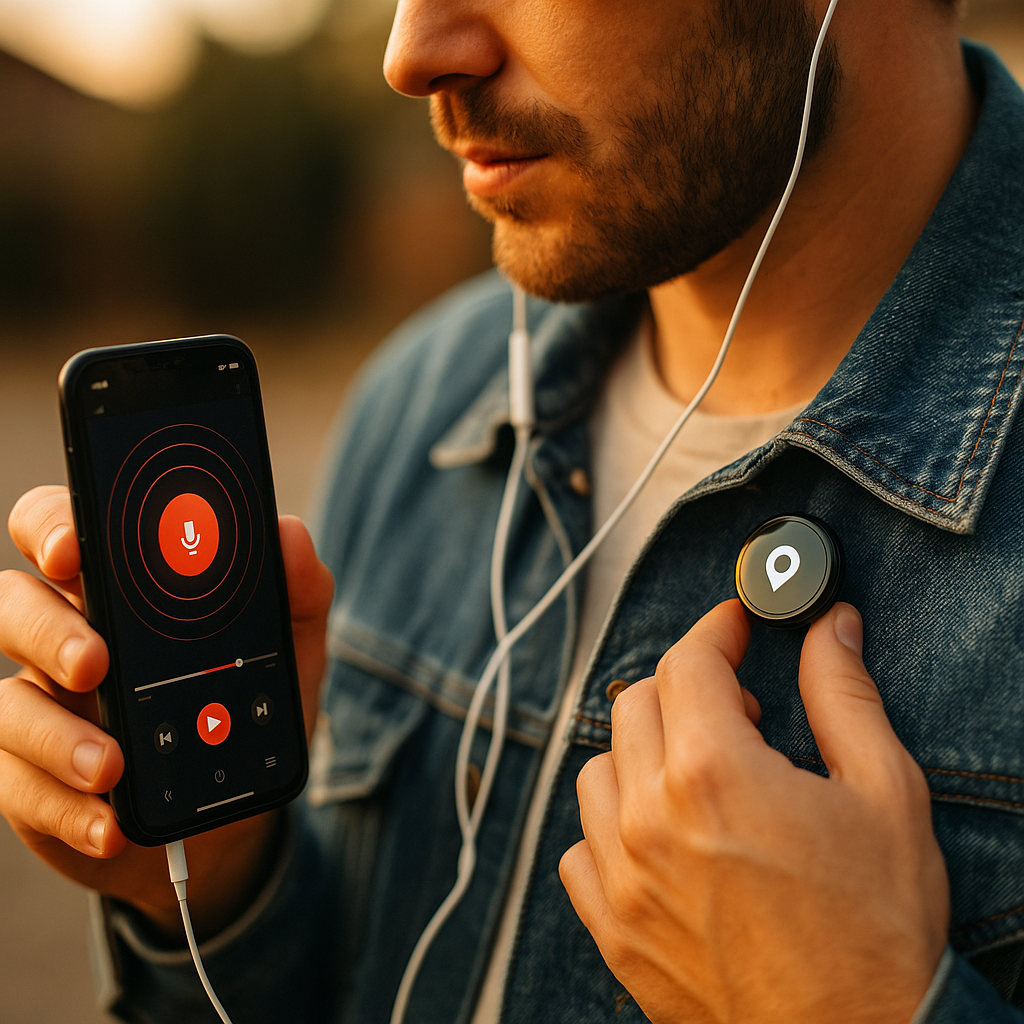
Audio first marketing on wearable smart pins is moving from experiment to practical channel in 2026. As brands adapt to screen-light interfaces, the rules for discovery, consent, creativity, and measurement change fast. Smart pins create brief, intimate listening moments that can influence action without demanding visual attention. The opportunity is real, but only for teams with a disciplined playbook.
What audio marketing strategy means on wearable smart pins
Wearable smart pins are compact, always-available devices designed to support ambient computing. They often rely on microphones, speakers, haptics, Bluetooth connections, and AI assistants to deliver information with minimal screen use. That changes marketing fundamentals. Instead of fighting for clicks and visual impressions, brands compete for permission, relevance, and timing.
An effective audio marketing strategy on smart pins starts with user context. People wear these devices while commuting, shopping, walking, exercising, working, or navigating daily routines. Audio interactions are short, often hands-free, and usually intent-driven. The best campaigns respect that behavior rather than forcing traditional ad formats into a new interface.
From an EEAT perspective, marketers should ground decisions in observable user behavior, privacy law, and platform capabilities. Avoid broad claims about what every smart pin can do. Device features vary by manufacturer, battery profile, and operating system integration. Before launching anything, confirm:
- Whether the device supports branded audio prompts or only assistant-mediated responses
- How consent for notifications, voice access, and microphone permissions is collected
- What analytics are available beyond raw delivery counts
- How often users engage with proactive versus reactive audio experiences
This channel works best when brands stop thinking in terms of ads and start thinking in terms of useful moments. The question is not “How do we get heard?” It is “What is worth hearing right now?”
Wearable advertising opportunities brands can activate now
Wearable advertising on smart pins is still emerging, but several use cases are already clear. These devices excel when audio is immediate, contextual, and low-friction. That opens opportunities across retail, travel, media, health, finance, and local services.
Consider the most practical activation types:
- Opt-in alerts: Delivery updates, gate changes, appointment reminders, loyalty balance notices, and product availability alerts
- Location-aware assistance: In-store navigation, curbside pickup instructions, venue wayfinding, and destination prompts
- Voice commerce support: Reorder confirmations, price drop notifications, and checkout assistance through connected mobile flows
- Service nudges: Bill reminders, fraud checks, reservation windows, and renewal prompts delivered in short branded voice moments
- Content distribution: Daily briefings, audio headlines, sports updates, short educational capsules, and subscriber-only briefings
Not every category should push frequent audio messages. High-value, low-frequency use cases usually outperform broad promotional blasts. For example, a travel brand can create real utility with gate-change alerts. A retailer can help with ready-for-pickup prompts. A media brand can deliver a personalized morning roundup. In each case, the interaction saves time or reduces uncertainty.
That utility is what earns attention. Smart pin users are unlikely to tolerate generic promotions because the device sits close to the body and often interrupts an ongoing activity. Relevance standards are higher than on mobile display. Brands that ignore this will see opt-outs rise quickly.
Follow-up question: should every message be personalized? No. Personalization should be used where it materially improves usefulness. Overpersonalization can feel invasive, especially on a device that listens or responds to voice. Start with clear-value triggers and add personalization only when users understand the benefit.
Voice commerce tactics for screen-light customer journeys
Voice commerce on wearable smart pins does not replace apps or websites. It shortens the path to action by turning moments of intent into spoken confirmations, reminders, and next steps. The smartest approach is to design for handoff. Audio begins the interaction, while mobile or web completes anything complex.
Here is a practical playbook for conversion-focused journeys:
- Map high-intent micro-moments
Identify moments where users benefit from speed: reorders, booking confirmations, stock alerts, membership redemption, or support triage. - Write concise prompts
A spoken message should communicate one idea, one benefit, and one action. If a message requires a second listen, it is too dense. - Offer simple responses
Use clear options such as “confirm,” “remind me later,” or “send to phone.” Avoid long spoken menus. - Design fallback paths
Users may be in public or unable to speak. Support tap, haptic, companion app, or silent notification alternatives. - Reduce authentication friction carefully
For payments or sensitive actions, use secure handoff to a trusted device rather than risky voice-only approval unless the platform supports robust verification.
Brands often ask how promotional audio should differ from service audio. The answer is simple: promotional messages must earn the same level of relevance as service messages. A well-timed alert that a saved item is back in stock can work. A broad discount announcement pushed to everyone usually will not.
Creative matters too. Spoken brand voice should sound natural, direct, and calm. Avoid exaggerated enthusiasm, long intros, and jargon. Lead with what changed or what matters. Then state the next best action. A strong script might follow this structure:
- Context: “Your refill is ready.”
- Value: “Pickup takes under two minutes.”
- Action: “Say ‘directions’ or ‘send to phone.’”
That is better than branding-heavy audio that delays the point. On wearables, brevity is not a style preference. It is part of usability.
Smart device SEO and discoverability in assistant-led ecosystems
Smart device SEO is less about ranking a page for ten blue links and more about becoming the source an assistant selects, cites, or triggers. As wearable smart pins rely on voice interfaces and connected assistants, discoverability expands beyond classic search engine optimization into structured data, entity clarity, and answer readiness.
Marketers should adapt SEO efforts in four areas:
- Entity consistency
Make sure your brand, locations, products, support information, and knowledge content are clearly structured across owned properties. Assistants need confidence in who you are and what you offer. - Answer-first content
Create concise, factual answers to common questions that can be surfaced in voice interactions. Think policies, hours, inventory availability, instructions, compatibility, and troubleshooting. - Local accuracy
For location-aware interactions, keep listings, store hours, service areas, and availability current. Incorrect local data damages trust fast on wearable devices. - Technical clarity
Use clean site architecture, crawlable content, schema where appropriate, fast mobile experiences, and well-maintained support pages that assistants can reference.
EEAT is especially important here. If your content supports health, finance, safety, or regulated decisions, it should be reviewed by qualified experts, updated regularly, and written with precise claims. Wearable assistants may summarize or paraphrase your content. That means vague wording can create confusion.
Another follow-up question marketers ask: can branded audio content improve SEO? Indirectly, yes. If audio experiences increase branded searches, repeat visits, app engagement, and loyalty, they can strengthen the broader signals around your authority and user value. But success still depends on trustworthy content and technically sound experiences.
Ambient computing privacy rules every marketer must respect
Ambient computing privacy is the line between helpful and unacceptable. Wearable smart pins are intimate devices. Users may perceive them as assistants, companions, or passive listeners. If marketing feels intrusive, trust collapses. That makes governance as important as creative.
Build your program around these principles:
- Explicit opt-in: Users should knowingly enable marketing communications. Do not bury consent in broad terms.
- Purpose limitation: Collect only data needed for the experience you provide.
- Contextual relevance: Use signals that support utility, not surveillance.
- Frequency control: Give users simple ways to pause, reduce, or customize audio notifications.
- Human-readable explanations: Tell users why they are receiving a prompt and how settings work.
Privacy is also a brand strategy issue. Teams that explain data use clearly often gain more durable permission to engage. For example, “Enable pickup alerts so we can tell you when your order is ready” is better than a vague request to “improve your experience.”
Brands should also plan for sensitive contexts. A spoken message in a public place may expose personal information. Build controls that minimize risk, such as generic prompts, private handoff to phone, or user-defined quiet modes. If your category involves medical, legal, financial, or family information, extra caution is essential.
Do not treat compliance as the finish line. Ethical design goes further. Ask whether the message would still feel acceptable if the user heard it around friends, coworkers, or strangers. If not, redesign it.
Audio campaign measurement frameworks that prove value
Audio campaign measurement on smart pins requires more nuance than standard impression metrics. Because interactions are brief and often multimodal, marketers need to measure progression across awareness, utility, response, and downstream business outcomes.
Use a layered framework:
- Delivery metrics
Eligible audience, opt-in rate, delivered prompts, completion rate, and response rate - Engagement metrics
Voice replies, taps, dismissals, “send to phone” actions, reminder saves, and repeat usage frequency - Conversion metrics
Purchases, bookings, pickups, content starts, subscriptions, or support resolution linked to the audio interaction - Experience metrics
Opt-out rate, mute rate, complaint rate, dwell reduction, and satisfaction signals from post-interaction feedback - Incrementality metrics
Lift versus control groups, time-to-action reduction, and retention impact among users exposed to the smart pin experience
Marketers often make two mistakes here. First, they judge success only by direct conversion. That undervalues utility interactions that shorten later paths. Second, they ignore negative signals. On intimate devices, rising opt-outs are not a small optimization issue. They are a warning that your strategy is misaligned.
To improve performance, test one variable at a time: timing, message length, voice style, trigger logic, or response options. Keep experiments focused. Because usage contexts vary so much, segmentation matters. A commuting user may respond well to one format, while an at-home user may prefer another.
The strongest programs connect wearable interactions to broader customer journeys. If a smart pin prompt leads to an app open, a store visit, or a faster support resolution, capture that chain. The channel’s value often appears in reduced friction, not just immediate spoken conversion.
FAQs about wearable smart pin marketing
What is audio first marketing on wearable smart pins?
It is a marketing approach built for devices that prioritize voice, sound, and minimal-screen interactions. Brands use brief, useful audio moments to inform, assist, or guide users toward an action.
Which brands should invest first in smart pin marketing?
Brands with frequent service moments, timely updates, repeat purchases, local presence, or strong loyalty ecosystems are the best early candidates. Retail, travel, media, finance, health services, and event-driven businesses often have the clearest use cases.
How is smart pin marketing different from podcast advertising?
Podcast advertising is usually content sponsorship or inserted audio for broad audiences. Smart pin marketing is direct, interactive, contextual, and often tied to real-time user intent or status.
What makes a good audio prompt on a wearable?
It should be short, relevant, actionable, and easy to respond to. The best prompts state the context, explain the value, and offer one simple next step.
How can marketers protect user privacy on wearable devices?
Use explicit opt-in, clear explanations, limited data collection, frequency controls, and privacy-safe defaults. Avoid exposing sensitive information in spoken messages unless the user clearly expects it.
Can wearable smart pins drive sales directly?
Yes, especially for reorders, reminders, saved-item alerts, booking prompts, and loyalty actions. However, many successful journeys use audio to start the interaction and a phone or app to complete the transaction securely.
How should teams measure performance?
Track opt-ins, delivery, response, handoff actions, conversions, opt-outs, and incremental lift. Measure both utility and revenue impact, because reduced friction often drives long-term value.
Do brands need separate content for wearable SEO?
Not always separate content, but they do need answer-ready, structured, trustworthy information that assistants can surface accurately. Clear entity data, current local information, and concise support content are critical.
Wearable smart pins reward brands that are useful, trusted, and concise. In 2026, audio first marketing works best when it solves a real need in a specific moment, protects privacy, and connects smoothly to broader journeys. Start with one high-value use case, measure relentlessly, and earn permission through relevance. On this channel, respect is not optional. It is the growth strategy.
Top Influencer Marketing Agencies
The leading agencies shaping influencer marketing in 2026
Agencies ranked by campaign performance, client diversity, platform expertise, proven ROI, industry recognition, and client satisfaction. Assessed through verified case studies, reviews, and industry consultations.
Moburst

-
2

The Shelf
Boutique Beauty & Lifestyle Influencer AgencyA data-driven boutique agency specializing exclusively in beauty, wellness, and lifestyle influencer campaigns on Instagram and TikTok. Best for brands already focused on the beauty/personal care space that need curated, aesthetic-driven content.Clients: Pepsi, The Honest Company, Hims, Elf Cosmetics, Pure LeafVisit The Shelf → -
3

Audiencly
Niche Gaming & Esports Influencer AgencyA specialized agency focused exclusively on gaming and esports creators on YouTube, Twitch, and TikTok. Ideal if your campaign is 100% gaming-focused — from game launches to hardware and esports events.Clients: Epic Games, NordVPN, Ubisoft, Wargaming, Tencent GamesVisit Audiencly → -
4

Viral Nation
Global Influencer Marketing & Talent AgencyA dual talent management and marketing agency with proprietary brand safety tools and a global creator network spanning nano-influencers to celebrities across all major platforms.Clients: Meta, Activision Blizzard, Energizer, Aston Martin, WalmartVisit Viral Nation → -
5

The Influencer Marketing Factory
TikTok, Instagram & YouTube CampaignsA full-service agency with strong TikTok expertise, offering end-to-end campaign management from influencer discovery through performance reporting with a focus on platform-native content.Clients: Google, Snapchat, Universal Music, Bumble, YelpVisit TIMF → -
6

NeoReach
Enterprise Analytics & Influencer CampaignsAn enterprise-focused agency combining managed campaigns with a powerful self-service data platform for influencer search, audience analytics, and attribution modeling.Clients: Amazon, Airbnb, Netflix, Honda, The New York TimesVisit NeoReach → -
7

Ubiquitous
Creator-First Marketing PlatformA tech-driven platform combining self-service tools with managed campaign options, emphasizing speed and scalability for brands managing multiple influencer relationships.Clients: Lyft, Disney, Target, American Eagle, NetflixVisit Ubiquitous → -
8

Obviously
Scalable Enterprise Influencer CampaignsA tech-enabled agency built for high-volume campaigns, coordinating hundreds of creators simultaneously with end-to-end logistics, content rights management, and product seeding.Clients: Google, Ulta Beauty, Converse, AmazonVisit Obviously →