


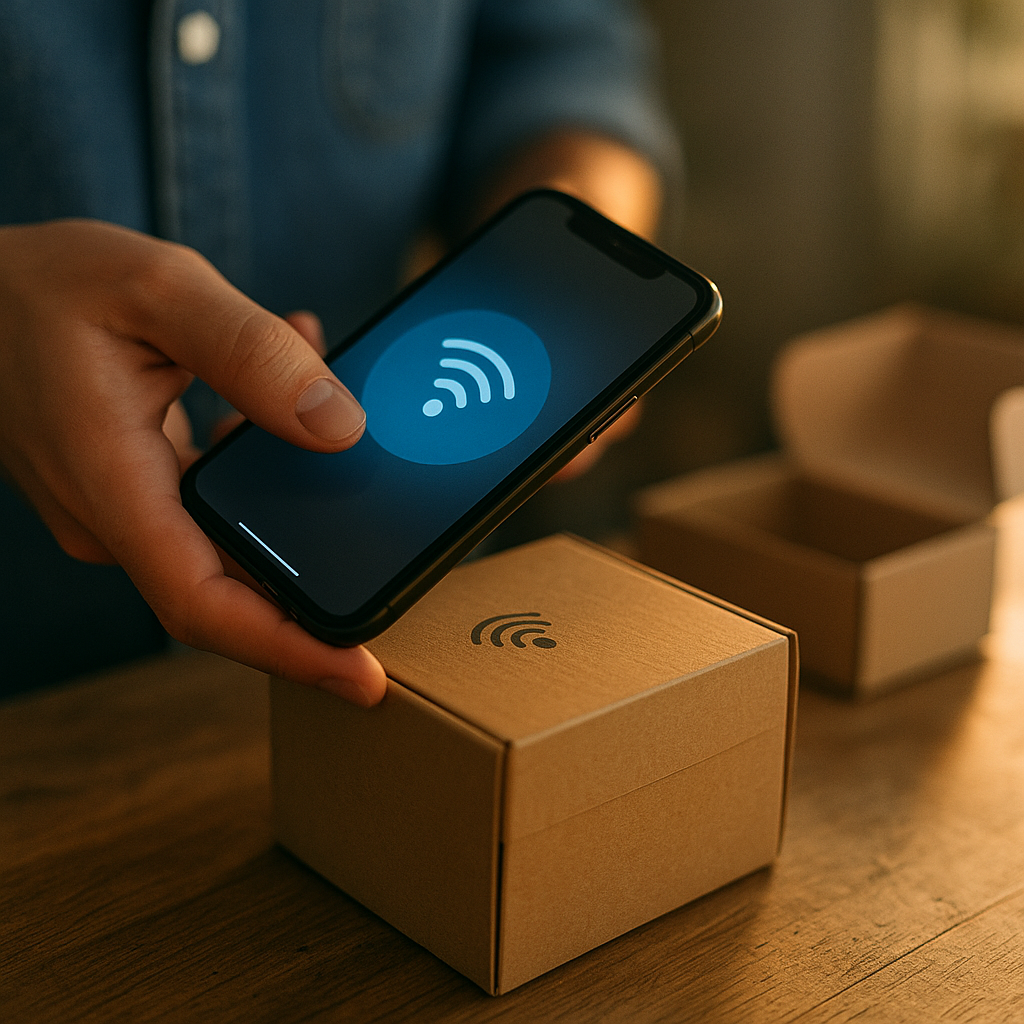
In 2026, brands are under pressure to keep shoppers engaged after the first download. This NFC embedded packaging case study shows how one retailer turned everyday product boxes into a retention channel that increased app opens, loyalty participation, and repeat purchases. The lesson is simple: packaging can do more than protect products—it can reactivate customers at the exact right moment.
Retail app retention strategy: why this retailer had a post-download problem
A mid-sized specialty retailer with a strong e-commerce presence and more than 150 physical stores faced a familiar challenge. Its mobile app generated healthy install volume through paid media, email, and in-store promotions, but retention lagged after the first 30 days. Customers downloaded the app to claim a welcome offer, then stopped opening it unless another discount arrived.
The retailer’s internal team identified three barriers:
- Low habit formation: customers did not associate the app with everyday product use.
- Notification fatigue: push campaigns drove short spikes but also increased opt-outs.
- Fragmented customer journeys: shoppers moved between store, web, and product packaging without a seamless mobile bridge.
The company needed a retention mechanic that felt useful, not intrusive. It also wanted a tactic that could connect physical products to digital experiences without requiring customers to scan a QR code, type a URL, or remember to revisit the app manually.
That led the retailer to test NFC-enabled packaging on selected product lines with high reorder rates and strong loyalty-program participation. The strategic hypothesis was clear: if packaging could trigger a contextual app interaction during product use, the app would become more relevant and more likely to earn repeat engagement.
NFC packaging technology: how the solution worked in stores and at home
The retailer embedded near field communication tags into product packaging for three categories: wellness supplements, skincare bundles, and premium household refills. These categories were chosen because customers often used the items repeatedly over several weeks, creating multiple opportunities for engagement after purchase.
The implementation was designed around simplicity. A shopper tapped the package with their phone and landed in the retailer’s app if it was installed. If the app was not installed, the tap opened a lightweight mobile web page that encouraged installation with category-specific value, not a generic app pitch.
Inside the app, the NFC touchpoint triggered different experiences depending on the customer state:
- First-time buyer: setup guidance, product tutorials, and care instructions.
- Repeat customer: reorder suggestions, loyalty points progress, and usage reminders.
- High-value member: early access to relevant bundles and personalized rewards.
The technical architecture included unique tag IDs mapped to SKU-level records in the retailer’s customer data platform. That allowed the brand to identify which product line had been tapped, when the interaction occurred, and whether the user completed an in-app action such as saving preferences, joining a loyalty challenge, or purchasing a refill.
Just as important, the packaging experience respected privacy and consent. The retailer did not rely on hidden data collection. Customers were clearly informed about what happened after a tap, and logged-in personalization only appeared when users had already granted permission through the app. This matters for both trust and long-term retention, especially as customers become more selective about the brands they allow into their mobile routines.
Customer engagement packaging: campaign design, messaging, and user experience
Embedding NFC alone does not improve retention. The retailer succeeded because it paired the technology with a disciplined user experience strategy. Every tap answered a customer question or delivered a practical benefit.
The team structured the program around three moments:
- Purchase moment: in-store signage and package copy explained the tap benefit in plain language, such as “Tap for setup, rewards, and refills.”
- Usage moment: once customers opened the product at home, the package offered immediate utility through instructions, reminders, and personalized product content.
- Replenishment moment: as usage cycles progressed, NFC taps surfaced easy reorder options, subscription prompts, and loyalty milestones.
This approach reduced friction. Customers did not need to search inside the app to find relevant tools. The package itself became the entry point to a focused destination.
Messaging also played a major role. Instead of using broad promotional copy, the retailer wrote microcopy matched to intent. For example, skincare packaging emphasized application routines and compatibility tips. Supplement packaging highlighted dosage reminders and reorder timing. Household refill packs focused on convenience and sustainability tracking.
The retailer also learned a valuable UX lesson during early testing. Its first prototype sent all taps to a generic app homepage. Engagement was weak because users still had to navigate manually. After switching to deep-linked destinations tied to the product being tapped, app session length increased and completion rates improved. That change reinforced a practical rule for customer engagement packaging: relevance must be immediate.
To support accessibility, the package included a short visual instruction next to the NFC indicator and an alternative URL for customers whose devices did not support tap interactions. This ensured the experience remained inclusive while keeping the NFC action as the easiest option.
Omnichannel retail retention: the results this case study delivered
Within six months, the retailer expanded the NFC packaging pilot from one region to a national rollout across the original three categories. According to the company’s internal performance review in 2026, the initiative produced measurable gains across retention and revenue metrics.
- App 90-day retention increased by 22% among customers who tapped NFC-enabled packaging at least twice.
- Monthly active users grew by 17% in the pilot categories compared with matched control groups without NFC packaging.
- Repeat purchase rate rose by 14% for participating products, driven largely by simplified refill journeys.
- Loyalty enrollment increased by 19% when the first tap experience included reward activation.
- Push notification opt-outs declined by 11% among NFC-engaged users, suggesting the app felt more useful and less interruptive.
The strongest performance came from customers who used the app both in-store and at home. This is where omnichannel retail retention became more than a buzzword. The retailer connected shelf, package, mobile app, loyalty account, and reorder flow into one continuous journey.
There were also operational benefits. Customer support saw fewer basic product-use questions in the tested categories because setup and care information became easier to access. Merchandising teams gained clearer insight into how often products were re-engaged after purchase. The CRM team, in turn, used tap behavior as a signal to improve segmentation, suppress irrelevant promotions, and time reminders more accurately.
Not every KPI improved at the same pace. The app install rate from non-users tapping packaging was positive but modest. That result makes sense. Packaging is more powerful for re-engagement and habit formation than for cold acquisition. The retailer treated this as a retention-first play and measured success accordingly.
Mobile loyalty program growth: why NFC outperformed standard re-engagement tactics
The retailer had previously relied on email, SMS, paid retargeting, and push notifications to bring inactive users back into the app. Those channels still mattered, but NFC packaging delivered an advantage they could not match: it reached customers exactly when the product was physically present and top of mind.
That timing changed behavior. A push notification asks for attention on the brand’s schedule. A package tap happens on the customer’s schedule, usually during product use or replenishment consideration. This made engagement more intentional and more valuable.
It also improved the quality of loyalty participation. Instead of asking customers to join the program through broad homepage banners, the NFC experience invited them at a relevant point, often tied to a specific reward such as points for completing a routine, unlocking a refill discount, or tracking a usage streak. As a result, mobile loyalty program growth became a byproduct of utility rather than pure promotion.
The retailer’s team shared several reasons the program outperformed standard re-engagement tactics:
- Contextual relevance: the app opened with product-specific content rather than generic offers.
- Lower friction: tapping was faster than scanning codes or navigating from an email.
- Repeatable behavior: the same package could prompt multiple useful interactions over time.
- Better data quality: taps created clear signals tied to real product ownership and usage timing.
- Stronger perceived value: customers saw the app as a service layer, not only a promotional channel.
This is the broader insight for retail marketers in 2026. Retention improves when the app helps customers complete a job they already want to do. NFC packaging works because it embeds digital convenience into the physical product experience without adding extra steps.
Connected packaging marketing: implementation lessons and best practices for retailers
Retailers considering a similar program should approach it as a cross-functional initiative, not a packaging experiment in isolation. The success of connected packaging marketing depends on coordination between product, mobile, CRM, analytics, operations, and legal teams.
Based on this case study, several best practices stand out:
- Start with high-frequency or replenishable products. Categories with recurring use create more opportunities for meaningful taps.
- Design deep links before printing packaging. A tap should open to one clear destination with one clear next step.
- Build value beyond discounts. Tutorials, care guidance, refill reminders, and reward tracking keep the experience useful.
- Track incremental lift against a control group. Without measurement discipline, it is hard to separate novelty from true retention impact.
- Make privacy visible. Explain what happens on tap, ask for consent where needed, and avoid over-collecting data.
- Support fallback paths. Include an alternate URL or code for unsupported devices and accessibility needs.
Retailers should also plan for supply-chain realities. NFC tags add unit cost, and the economics must be tied to category margin, repurchase behavior, and expected retention lift. The retailer in this case justified the investment by focusing first on product lines where improved repeat purchase and loyalty participation could outweigh packaging cost quickly.
Another key lesson involves testing cadence. The team did not launch every feature at once. It began with onboarding content and loyalty prompts, then added reorder flows, streak-based rewards, and personalized bundles after proving baseline engagement. That phased model reduced technical complexity and improved decision-making.
Most important, the retailer treated NFC packaging as a customer experience channel. The tags were not there to impress. They existed to remove friction, increase relevance, and extend the value of the app beyond the initial download. That mindset is what turned a smart idea into a measurable retention engine.
FAQs: NFC embedded packaging for app retention
What is NFC embedded packaging?
NFC embedded packaging includes a small near field communication tag placed inside or attached to a product package. When a customer taps the package with a compatible smartphone, it can open an app, a mobile web page, or a specific digital experience tied to that product.
How does NFC packaging improve app retention?
It creates a direct bridge from physical product use to the app. Instead of waiting for a push notification or email, customers can access relevant content, rewards, and reorder options at the moment they are already engaged with the product.
Is NFC better than QR codes for retail packaging?
NFC often reduces friction because customers only need to tap rather than open a camera and scan. QR codes still have value as a visible backup option, especially for device compatibility and accessibility. Many retailers use both.
Which retail categories benefit most from NFC packaging?
Products with repeat use, refill behavior, setup steps, or ongoing care needs tend to benefit most. Examples include beauty, wellness, home care, electronics accessories, specialty food, and subscription-oriented consumables.
What should retailers measure in an NFC packaging pilot?
Key metrics include tap rate, repeat tap rate, app opens, 30-day and 90-day retention, loyalty enrollments, repeat purchases, refill conversion, session depth, and support deflection. A control group is essential for proving incremental impact.
Does NFC packaging raise privacy concerns?
It can if implemented poorly. Retailers should disclose what happens after a tap, obtain permission for personalized experiences, and collect only the data needed to deliver value. Clear consent practices support both compliance and trust.
Is NFC embedded packaging expensive to implement?
The cost varies by tag type, packaging format, and scale. It is usually most effective when deployed first on higher-margin or high-repeat categories where better retention and repeat purchase rates can justify the investment.
Can NFC packaging work if the customer does not have the app installed?
Yes. A tap can lead to a mobile web page with product information and a strong app-install prompt. However, the biggest retention value typically comes from existing users because the packaging reinforces ongoing app habits.
This case study shows that NFC embedded packaging can turn a passive box into an active retention touchpoint. By linking product use, app value, and loyalty incentives, the retailer increased repeat engagement without depending only on push or discounts. The clear takeaway for 2026: when packaging delivers timely utility, customers open apps more often and stay connected longer.
Top Influencer Marketing Agencies
The leading agencies shaping influencer marketing in 2026
Agencies ranked by campaign performance, client diversity, platform expertise, proven ROI, industry recognition, and client satisfaction. Assessed through verified case studies, reviews, and industry consultations.
Moburst

-
2

The Shelf
Boutique Beauty & Lifestyle Influencer AgencyA data-driven boutique agency specializing exclusively in beauty, wellness, and lifestyle influencer campaigns on Instagram and TikTok. Best for brands already focused on the beauty/personal care space that need curated, aesthetic-driven content.Clients: Pepsi, The Honest Company, Hims, Elf Cosmetics, Pure LeafVisit The Shelf → -
3

Audiencly
Niche Gaming & Esports Influencer AgencyA specialized agency focused exclusively on gaming and esports creators on YouTube, Twitch, and TikTok. Ideal if your campaign is 100% gaming-focused — from game launches to hardware and esports events.Clients: Epic Games, NordVPN, Ubisoft, Wargaming, Tencent GamesVisit Audiencly → -
4

Viral Nation
Global Influencer Marketing & Talent AgencyA dual talent management and marketing agency with proprietary brand safety tools and a global creator network spanning nano-influencers to celebrities across all major platforms.Clients: Meta, Activision Blizzard, Energizer, Aston Martin, WalmartVisit Viral Nation → -
5

The Influencer Marketing Factory
TikTok, Instagram & YouTube CampaignsA full-service agency with strong TikTok expertise, offering end-to-end campaign management from influencer discovery through performance reporting with a focus on platform-native content.Clients: Google, Snapchat, Universal Music, Bumble, YelpVisit TIMF → -
6

NeoReach
Enterprise Analytics & Influencer CampaignsAn enterprise-focused agency combining managed campaigns with a powerful self-service data platform for influencer search, audience analytics, and attribution modeling.Clients: Amazon, Airbnb, Netflix, Honda, The New York TimesVisit NeoReach → -
7

Ubiquitous
Creator-First Marketing PlatformA tech-driven platform combining self-service tools with managed campaign options, emphasizing speed and scalability for brands managing multiple influencer relationships.Clients: Lyft, Disney, Target, American Eagle, NetflixVisit Ubiquitous → -
8

Obviously
Scalable Enterprise Influencer CampaignsA tech-enabled agency built for high-volume campaigns, coordinating hundreds of creators simultaneously with end-to-end logistics, content rights management, and product seeding.Clients: Google, Ulta Beauty, Converse, AmazonVisit Obviously →