


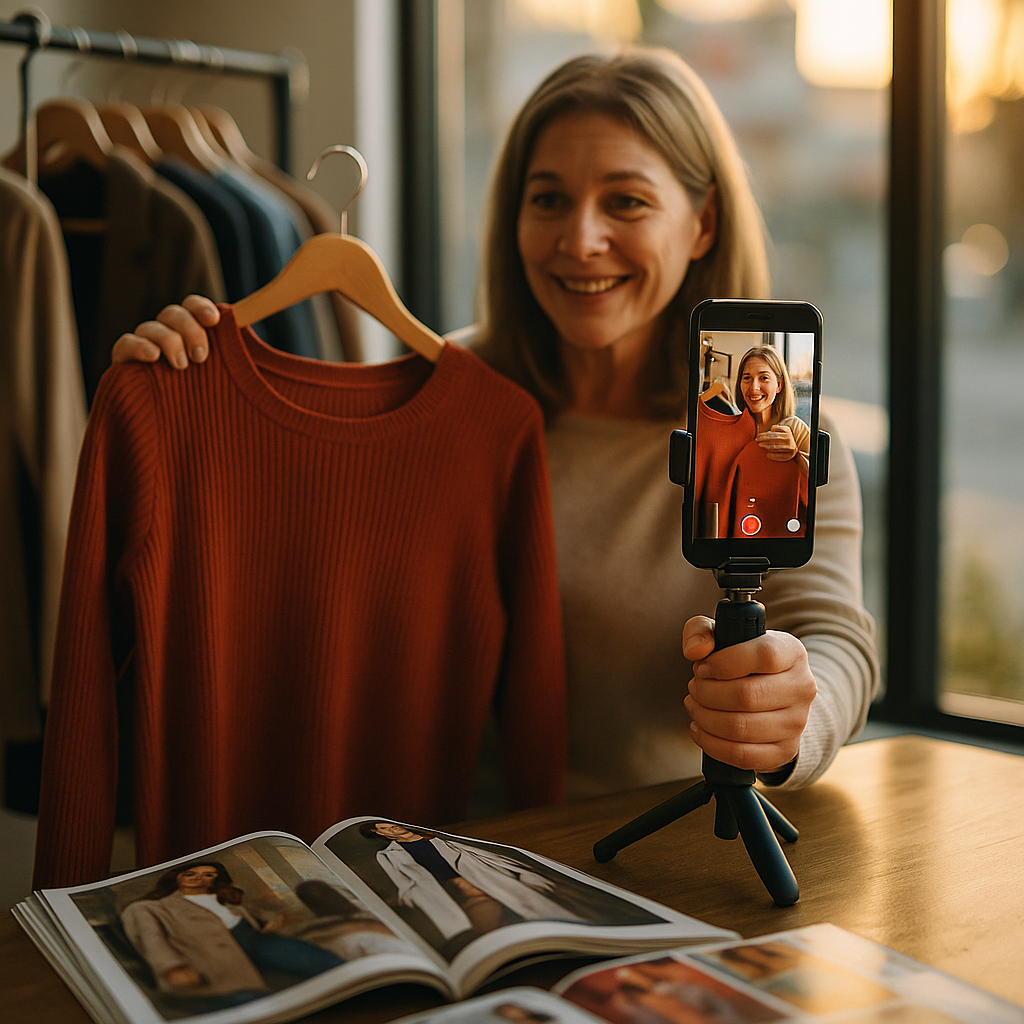
In 2026, many brands still ask whether legacy media can fuel modern growth. This print to social video transition case study shows how one retailer replaced declining print performance with measurable video results across key platforms. By focusing on audience behavior, creative testing, and store-level attribution, the brand unlocked stronger reach, lower acquisition costs, and a more scalable marketing engine.
Retail marketing strategy: Why print stopped delivering efficient growth
The retailer in this case study was a mid-sized regional home and lifestyle brand with more than 80 physical locations and a growing ecommerce business. For years, direct mail inserts, local magazine placements, and newspaper circulars had been central to its customer acquisition model. Print once worked because it matched how the brand’s audience discovered promotions and planned store visits. By 2026, that pattern had changed.
Leadership noticed three warning signs. First, print costs kept rising while measurable returns became harder to isolate. Second, younger shoppers engaged with the brand on social platforms but rarely responded to paper promotions. Third, internal teams could not optimize print with the same speed and precision available in digital channels.
The company did not abandon print on instinct. It reviewed campaign data, customer surveys, loyalty insights, and point-of-sale trends. That audit showed that print still influenced a small segment of repeat buyers, but its role in new customer acquisition had weakened. At the same time, platform analytics revealed a growing appetite for short-form product demos, styling videos, and behind-the-scenes retail content.
This is where experience matters. A successful channel shift starts with evidence, not assumptions. The retailer’s leadership asked a practical question: if customers already consume product inspiration through social video, could the brand move budget from broad print distribution to targeted video campaigns without hurting revenue?
The answer depended on more than format. It required a broader retail marketing strategy built around customer intent, content relevance, and measurable business outcomes. Instead of treating social video as a brand awareness experiment, the company framed it as a performance channel tied to store traffic, ecommerce sales, and repeat purchases.
Social video marketing: Building a strategy around customer behavior
The retailer began with audience research. It analyzed social engagement data, website behavior, loyalty member preferences, and in-store purchase patterns. Three high-value customer groups emerged:
- Style-focused shoppers who wanted visual inspiration before purchasing
- Deal-driven customers who responded to timely promotions and product bundles
- Practical buyers who needed proof of quality, use cases, and value
Instead of producing one generic campaign, the brand mapped each audience segment to distinct video goals. Inspiration-focused videos emphasized room transformations and seasonal styling. Deal-driven creatives highlighted limited-time offers, local inventory, and value comparisons. Practical buyers received short demonstrations, care tips, and product feature breakdowns.
The company also chose platforms based on behavior rather than trend pressure. Short-form vertical video became the core format because it aligned with how target audiences browsed. Paid and organic efforts worked together. Organic content helped the brand discover which themes felt authentic, while paid campaigns scaled the strongest performers to defined audiences.
Another important decision was operational. The retailer created a lean cross-functional team including merchandising, store operations, creative, and paid media. This avoided a common mistake: producing attractive content that ignores actual stock levels, promotional timing, or customer objections. Every video concept had to answer one of these questions:
- What problem does this product solve?
- Why should someone care now?
- What action should they take next?
That discipline kept the strategy customer-centered and commercially useful. It also reflected Google’s helpful content principles. The brand was not publishing video for volume. It was creating original, experience-based content that matched real shopper needs and made purchase decisions easier.
Video content strategy: What the retailer changed in creative production
The transition succeeded because the company changed how it made content, not just where it spent money. Print campaigns had long production cycles, fixed messaging, and limited testing options. Social video demanded a faster system.
The creative team built a repeatable framework with four video categories:
- Product spotlight videos focused on one item, one benefit, and one action
- Lifestyle videos showed products in real homes and real use cases
- Promotional videos drove urgency around offers, bundles, and seasonal sales
- Trust-building videos featured staff recommendations, customer feedback, and practical guidance
Each asset followed mobile-first production standards. Hooks appeared in the first two seconds. Captions were added for sound-off viewing. Branding was visible early but not intrusive. Calls to action were clear, often pointing users to local store pages, product detail pages, or click-and-collect options.
The retailer also embraced a more authentic visual style. Highly polished studio footage looked expensive, but it did not always outperform simpler videos filmed in stores or styled environments. In several tests, lightly produced clips with clear demonstrations generated stronger watch time and more product page visits because they felt more believable and easier to relate to.
This is a useful lesson for other retailers. Effective video content strategy is not about cinematic production alone. It is about clarity, relevance, and consistency. Shoppers want to understand what a product looks like, how it fits into their lives, and why they should trust it.
The team built a weekly test-and-learn cadence. It tested hooks, pacing, text overlays, creators, offer framing, and audience targeting. Underperforming variations were paused quickly. Winning elements were turned into new iterations. That approach reduced waste and steadily improved results over time.
By month three, the retailer had developed a creative feedback loop that print could never provide. Instead of waiting weeks for campaign readouts, marketers could identify strong signals within days and shift budget accordingly.
Omnichannel retail: Connecting social video to stores and ecommerce
One reason many retail video programs fail is that they stop at engagement metrics. This retailer did not. It connected social video to the full customer journey across digital and physical channels.
The brand updated its infrastructure so campaign links directed users to relevant landing pages, local inventory views, and location finders. Store teams were briefed on featured products and promotions before campaigns launched. QR codes on in-store signage reinforced key social messages and helped shoppers continue their research on mobile.
The company also used geographic targeting to support local store performance. Instead of running one broad message everywhere, it tailored creative by region, weather pattern, and inventory availability. If outdoor furniture was overstocked in one market, local video campaigns reflected that reality. If another region saw stronger demand for home organization, the creative shifted accordingly.
That operational alignment mattered because it turned social video into a true omnichannel retail driver. Customers who watched a video could:
- Visit a product page and buy online
- Check nearby store availability
- Reserve items for pickup
- Visit a store with stronger product understanding and purchase intent
The retailer also improved measurement by combining platform analytics with ecommerce tracking, loyalty data, and store sales trends. While store attribution is never perfect, directional analysis became much stronger than what the company had with print. It could see which campaigns lifted branded search, product page views, basket size, and regional store traffic.
This stronger attribution gave executives confidence to continue shifting budget. That is a major part of any successful transformation. Leaders do not just need creative performance metrics. They need business evidence that the new channel improves efficiency and supports revenue goals.
Marketing measurement: The results of the print to video shift
Within two quarters, the retailer moved a significant share of its print acquisition budget into social video. It did not eliminate print entirely. Instead, it reduced low-performing print placements and preserved a smaller allocation for a narrow, proven audience segment. The majority of growth investment went to video.
The results were clear:
- Customer acquisition cost declined by 28% compared with the previous print-led acquisition mix
- Paid social video delivered a 41% higher click-through rate than static social ads used earlier in the transition
- Product detail page visits from paid campaigns increased by 63%
- Store locator interactions rose by 22% in markets supported by localized video creative
- Return on ad spend improved by 34% for ecommerce-targeted campaigns
- Repeat purchase rate improved among loyalty members exposed to sequential video campaigns
Not every metric improved immediately. Early creative batches had inconsistent completion rates, and some promotional videos generated clicks without efficient conversion. But because the brand monitored performance closely, it adjusted fast. It refined audience exclusions, improved landing page alignment, and reduced friction in mobile checkout and store pickup flows.
These outcomes matter because they illustrate an EEAT-friendly principle: credible marketing advice should reflect real constraints, not only wins. The transition worked because the retailer treated it as an operational change, a measurement challenge, and a creative discipline at the same time.
Another overlooked result was internal learning. Merchandising teams gained faster feedback on which products attracted attention. Store staff understood promotional themes earlier. Executives became more comfortable with experimentation because they could see performance trends in near real time. In other words, the retailer did not just improve campaign results. It built a more adaptive marketing organization.
Digital transformation case study: Lessons other retailers can apply
This digital transformation case study offers practical lessons for retailers considering a similar move.
First, audit before you cut. Print may still serve specific audiences or regions. The goal is not to declare old channels obsolete. The goal is to reallocate based on evidence.
Second, build content around real shopping behavior. Social video performs best when it answers customer questions quickly. Show the product, demonstrate value, and make the next step obvious.
Third, connect creative to operations. Campaigns fail when featured items are unavailable, pricing is inconsistent, or store teams are uninformed. Channel strategy must reflect merchandising and fulfillment realities.
Fourth, measure beyond views. Watch time matters, but it is not enough. Track product engagement, store actions, conversion quality, and repeat behavior. The closer your metrics are to business outcomes, the better your decisions become.
Fifth, keep testing. Social video is not a one-time asset library. It is a continuous optimization system. Winning formats fatigue. Audience preferences shift. Platforms evolve. A disciplined test process protects performance.
Sixth, preserve brand trust. Retailers sometimes chase trends that undermine credibility. This brand succeeded by making useful, truthful, visually clear content that matched the customer experience after the click and in the store.
For marketers asking whether social video can replace print entirely, the better question is this: what role should each channel play in today’s customer journey? In this case, print became a limited support channel, while social video became the growth engine. That balance will vary by category, geography, and audience maturity, but the strategic path is relevant across retail.
FAQs: Social video for retailers
Why are retailers moving from print to social video in 2026?
Retailers are following customer attention and improving measurability. Social video allows faster testing, better targeting, clearer attribution, and lower waste than broad print distribution in many categories.
Does social video work for store traffic, or only for ecommerce?
It can support both. With local targeting, inventory-aware messaging, and clear store actions such as location finders or pickup options, social video can influence store visits as well as online purchases.
Should a retailer stop using print completely?
Not always. Some retailers still see value in print for specific demographics, trade areas, or loyalty segments. The smartest approach is to evaluate each channel based on performance and customer behavior rather than making an all-or-nothing decision.
What type of social video performs best for retail?
Short, mobile-first videos that show products clearly, communicate one main benefit, and include a direct call to action tend to perform well. Demonstrations, lifestyle clips, promotions, and staff-led recommendations are strong starting points.
How can retailers measure success beyond views?
Track metrics tied to outcomes: click-through rate, product page visits, add-to-cart rate, store locator actions, local sales lift, return on ad spend, and repeat purchase behavior. Views alone do not show commercial value.
How much content does a retailer need to start?
A retailer does not need a massive library. It needs a structured testing plan. Start with a small set of videos across a few themes, measure performance, and build from the strongest creative patterns.
What is the biggest risk in a print to social video transition?
The biggest risk is treating video as a simple media swap. Success requires updated creative processes, stronger measurement, operational coordination, and a clear understanding of customer intent.
The retailer’s transition from print to social video worked because it combined evidence, useful creative, and disciplined measurement. Rather than chasing attention, the brand built a content system aligned with how customers actually shop. The clear takeaway for 2026 is simple: retailers that connect video strategy to business outcomes can modernize marketing without losing focus on revenue, trust, or long-term growth.
Top Influencer Marketing Agencies
The leading agencies shaping influencer marketing in 2026
Agencies ranked by campaign performance, client diversity, platform expertise, proven ROI, industry recognition, and client satisfaction. Assessed through verified case studies, reviews, and industry consultations.
Moburst

-
2

The Shelf
Boutique Beauty & Lifestyle Influencer AgencyA data-driven boutique agency specializing exclusively in beauty, wellness, and lifestyle influencer campaigns on Instagram and TikTok. Best for brands already focused on the beauty/personal care space that need curated, aesthetic-driven content.Clients: Pepsi, The Honest Company, Hims, Elf Cosmetics, Pure LeafVisit The Shelf → -
3

Audiencly
Niche Gaming & Esports Influencer AgencyA specialized agency focused exclusively on gaming and esports creators on YouTube, Twitch, and TikTok. Ideal if your campaign is 100% gaming-focused — from game launches to hardware and esports events.Clients: Epic Games, NordVPN, Ubisoft, Wargaming, Tencent GamesVisit Audiencly → -
4

Viral Nation
Global Influencer Marketing & Talent AgencyA dual talent management and marketing agency with proprietary brand safety tools and a global creator network spanning nano-influencers to celebrities across all major platforms.Clients: Meta, Activision Blizzard, Energizer, Aston Martin, WalmartVisit Viral Nation → -
5

The Influencer Marketing Factory
TikTok, Instagram & YouTube CampaignsA full-service agency with strong TikTok expertise, offering end-to-end campaign management from influencer discovery through performance reporting with a focus on platform-native content.Clients: Google, Snapchat, Universal Music, Bumble, YelpVisit TIMF → -
6

NeoReach
Enterprise Analytics & Influencer CampaignsAn enterprise-focused agency combining managed campaigns with a powerful self-service data platform for influencer search, audience analytics, and attribution modeling.Clients: Amazon, Airbnb, Netflix, Honda, The New York TimesVisit NeoReach → -
7

Ubiquitous
Creator-First Marketing PlatformA tech-driven platform combining self-service tools with managed campaign options, emphasizing speed and scalability for brands managing multiple influencer relationships.Clients: Lyft, Disney, Target, American Eagle, NetflixVisit Ubiquitous → -
8

Obviously
Scalable Enterprise Influencer CampaignsA tech-enabled agency built for high-volume campaigns, coordinating hundreds of creators simultaneously with end-to-end logistics, content rights management, and product seeding.Clients: Google, Ulta Beauty, Converse, AmazonVisit Obviously →