


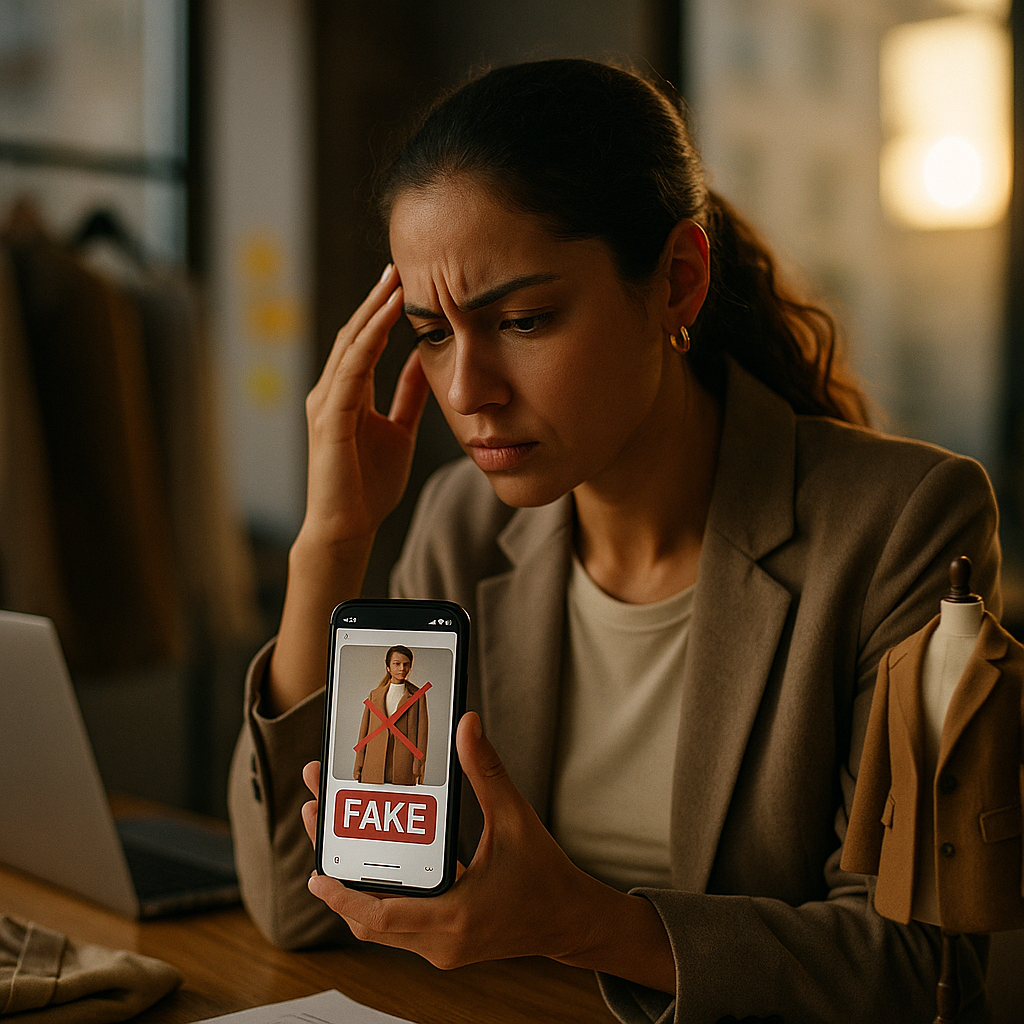
In 2026, a single misleading post can reshape public opinion before a brand publishes its first response. This case study on viral misinformation crisis management shows how a fashion label contained reputational damage, rebuilt trust, and turned scrutiny into a stronger operating model. If your brand could be next, the lessons here matter more than ever right now.
Fashion brand crisis management: What sparked the misinformation surge
The fashion label in this case was a fast-growing direct-to-consumer company known for limited drops, ethical sourcing claims, and a loyal social audience. The crisis began when a short video circulated on multiple platforms alleging the brand used exploitative labor and mislabeled imported goods as locally produced. The clip included edited warehouse footage, screenshots without context, and a dramatic voiceover designed for outrage.
Within hours, the claims spread beyond the original post. Reaction creators amplified the story, customers demanded refunds, and retail partners asked for clarification. Search results for the brand began filling with accusatory headlines, while branded social comments turned hostile. This is a classic modern reputation pattern: misinformation moves faster than verification because it is emotionally charged, easy to share, and often presented with just enough visual proof to feel credible.
The label’s leadership initially faced a difficult question: respond instantly with limited facts, or wait for legal and operations teams to verify every detail. Many brands lose this moment by doing one of two things:
- Staying silent too long and allowing false claims to harden into accepted truth
- Publishing a defensive statement that sounds evasive or corporate
Instead, the company created a rapid response cell made up of executives from communications, legal, supply chain, customer support, and social media. That cross-functional structure mattered because misinformation rarely stays in one lane. It affects search visibility, customer service volume, partner confidence, employee morale, and future sales conversion all at once.
From an EEAT perspective, this first stage was about demonstrating experience and operational reality. The brand did not rely on vague brand language. It began collecting verifiable records: supplier certifications, shipping documentation, timestamped facility audits, and internal quality-control logs. That evidence would shape every next step.
Online reputation management: The first 24 hours of response
The label’s first public update did not try to answer everything. It did three things well. First, it acknowledged the concern directly. Second, it stated that several circulating claims appeared false or edited. Third, it committed to sharing verified documentation quickly. This approach avoided the appearance of panic while signaling accountability.
In the first 24 hours, the team prioritized channel-specific messaging:
- Social platforms: A concise statement was pinned across the brand’s main accounts, linking to a live updates page.
- Website: A central fact page collected evidence, FAQs, timestamps, and policy documents in one place.
- Email: Customers and partners received a plain-language note explaining what was under review and when the next update would arrive.
- Customer support: Agents were given a consistent script, escalation rules, and source links so replies stayed accurate.
This prevented a common crisis mistake: fragmented messaging. When each team improvises, contradictions appear and audiences assume the brand is hiding something. Here, consistency became a trust signal.
The company also monitored how the narrative was evolving. Instead of tracking only mentions, it grouped misinformation into themes: labor conditions, country-of-origin labeling, founder behavior, and alleged product quality defects. That allowed the response team to answer the most damaging claims first.
Another important decision was tone. The label did not attack customers for believing the false posts. It separated the audience from the bad actors. That distinction matters. Most people who share misinformation are reacting, not orchestrating. Treating them respectfully keeps the door open for correction.
By the end of the first day, the brand had not fully reversed sentiment, but it had changed the dynamic. The conversation was no longer one-sided. Journalists, creators, and customers now had a documented source to review rather than relying only on the viral video.
Social media misinformation response: How evidence changed the narrative
Evidence, not emotion, became the brand’s advantage. Over the next several days, the label released a structured set of materials that addressed each accusation. It published current supplier audit summaries, clarified production geography, and shared side-by-side comparisons showing how the original viral video had edited footage from unrelated facilities.
This is where many crisis responses fail. Brands often claim transparency without actually making verification easy. This company did the opposite. It organized proof in a way that customers, reporters, and creators could understand quickly.
- Document scans: Redacted but readable records showing vendor compliance and import classifications
- Explainer videos: Short clips from operations leaders walking through labeling and sourcing processes
- Third-party validation: Statements from independent auditors and manufacturing partners
- Timeline corrections: A chronological breakdown of when the misleading content appeared and what had been altered
The company’s head of sourcing became one of the most credible voices in the response. That was a smart EEAT move. Audiences trust subject-matter experts more than generic brand spokespeople. The operations team explained technical issues in plain language, such as how a garment can include imported materials while still being cut, sewn, or finished in another location under lawful labeling rules.
At the same time, the label used social listening to identify creators who had shared the misinformation in good faith and provided them with documentation. Some updated or removed their original posts. Others posted corrections. Not every critic changed course, but enough did to weaken the original claim’s authority.
Search results also started to shift. Because the brand published a clear, crawlable facts page and consistent updates, search engines had stronger primary-source content to index. That matters in 2026, when reputation recovery is no longer only a PR problem. It is a search and discoverability problem too.
One subtle but effective tactic was the company’s use of a living update log. Every material change had a timestamp. This created a visible record of responsiveness and reduced suspicion that evidence had been retroactively edited without disclosure.
Brand trust recovery: Internal alignment and customer reassurance
External messaging alone could not solve the crisis. The label knew that employees, ambassadors, and wholesale partners would influence how the story spread. So it launched an internal trust program at the same time as its public campaign.
Employees received a briefing from leadership with direct access to source documents and a process for raising concerns internally. Retail partners got a tailored information pack with compliance records, approved talking points, and contacts for urgent media inquiries. Brand ambassadors were not asked to defend the company blindly; they were given the option to pause posting until they felt comfortable reviewing the evidence. That restraint made the brand look more credible, not less.
For customers, reassurance required more than statements. The company introduced concrete service policies:
- Extended return windows for affected orders
- Dedicated support queues for crisis-related concerns
- Transparent product page updates about sourcing and manufacturing
- A public commitment to publish regular supply chain summaries going forward
These steps addressed the emotional side of a misinformation event. People do not only ask, “Is this claim true?” They also ask, “Can I trust this brand after the confusion?” Operational changes answer that second question better than polished copy ever could.
The brand also resisted the temptation to declare victory too early. Even after sentiment improved, it continued to engage with unresolved concerns and published follow-up clarifications where needed. That discipline helped prevent a second wave of speculation.
From an EEAT standpoint, this phase reinforced trustworthiness through actions. The company showed who was accountable, how decisions were made, and what customer protections were available. Helpful content is not just informative. It reduces uncertainty and helps people make decisions with confidence.
Crisis communication strategy: The legal, media, and platform playbook
Because the viral claims included manipulated media and identifiable falsehoods, the label pursued a parallel legal and platform-enforcement strategy. This did not replace public communication; it supported it.
The legal team documented the most harmful posts, submitted takedown and correction requests where platform policies allowed, and issued notices to accounts that had fabricated documents. Crucially, the company did not lead with legal threats in public. That often backfires by making the brand look heavy-handed. Instead, it used legal channels quietly while keeping public messaging focused on facts and customer impact.
The media strategy was equally disciplined. Rather than granting broad interviews immediately, the company first briefed a small number of credible journalists and industry reporters who were willing to review documents carefully. This gave the label a fairer hearing and improved the quality of secondary coverage.
Its spokesperson framework included three rules:
- Lead with what is verified, not what is assumed
- Explain process, not just conclusions
- Acknowledge uncertainty where review is still ongoing
That third rule is often overlooked. Admitting what is still being investigated can strengthen credibility because it shows the brand is not overclaiming. In this case, one minor labeling inconsistency was discovered during the review. The company disclosed it, explained that it was administrative rather than deceptive, and corrected it. That honesty gave more weight to its rebuttal of the larger false allegations.
Platform relationships also mattered. The label’s team had established reporting channels with major networks before the crisis, allowing faster escalation of impersonation accounts and manipulated content. Brands should note this point: preparation before a crisis affects outcomes during a crisis.
By combining public transparency, platform enforcement, and selective media outreach, the company prevented the misinformation from remaining the dominant version of events. It did not erase all criticism, but it restored a fair information environment.
Reputation repair case study: Results, lessons, and the long-term framework
Within several weeks, the fashion label saw measurable recovery. Customer support volume normalized, partner concern decreased, and branded search behavior began favoring the company’s official information over rumor-based queries. Conversion did not snap back instantly, but trust indicators improved because the brand had shown competence under pressure.
The most important result was not simply reputational recovery. It was institutional learning. The company converted its crisis response into a permanent framework:
- Prebuilt evidence library: Audit records, policies, and sourcing summaries organized for rapid publication
- Crisis command structure: Named owners across legal, operations, support, PR, and social
- Scenario planning: Playbooks for manipulated media, labor accusations, counterfeit claims, and founder controversies
- Always-on monitoring: Social listening tied to search and customer service dashboards
- Transparency cadence: Routine updates on sourcing, compliance, and product labeling
Several lessons stand out for any fashion or consumer brand in 2026:
- Speed matters, but structure matters more. A rushed, unsupported response can deepen the crisis.
- Evidence must be accessible. If proof is hard to find or understand, it will not travel as far as the misinformation.
- Experts build trust. Operational leaders and independent validators often outperform polished corporate messaging.
- Customer care is part of reputation care. Flexible policies and direct support reduce anxiety and signal accountability.
- Preparation is a competitive advantage. Brands that map their risks before an incident recover faster.
This case also shows why EEAT is practical, not theoretical. Experience, expertise, authoritativeness, and trustworthiness are exactly what audiences look for when a claim goes viral. The brands that recover are usually the ones that can demonstrate how they know what they know, who is responsible, and where the proof lives.
For fashion labels especially, where sourcing narratives, ethics, and image are tightly linked, misinformation can threaten both identity and revenue. But when a company responds with documented facts, clear leadership, and visible customer protection, it can turn a destabilizing moment into proof of resilience.
FAQs about viral misinformation crisis response
What is a viral misinformation crisis for a fashion brand?
It is a situation where false or misleading claims about a brand spread rapidly across social platforms, search results, or media coverage, causing reputational, commercial, or operational harm.
How quickly should a fashion label respond?
A brand should acknowledge the issue as soon as it confirms that a harmful narrative is spreading. The first message should be factual, concise, and followed by a clear timeline for more detailed updates.
Should a brand respond if the claims are obviously false?
Yes. If misinformation gains traction, silence can be interpreted as avoidance. A calm, evidence-led response helps prevent false claims from becoming the default public narrative.
What type of evidence is most effective?
Primary-source documentation works best: audit summaries, supplier records, shipping and labeling documents, expert explanations, and statements from independent third parties. The key is making the evidence easy to understand.
Can legal action solve the problem on its own?
No. Legal action can help remove manipulated content or address defamation, but it should support, not replace, transparent public communication and customer reassurance.
How can brands protect themselves before a crisis happens?
Build a crisis playbook, maintain an organized evidence library, train spokespeople, establish platform escalation contacts, and monitor social, search, and support signals continuously.
Why is EEAT important during a misinformation event?
EEAT helps brands present information in a trustworthy way. Audiences and search engines both respond better to content that demonstrates real experience, subject expertise, authoritative sourcing, and transparent processes.
What is the biggest mistake brands make during misinformation crises?
The biggest mistake is inconsistency. When social posts, support replies, executive statements, and media comments do not align, trust declines even if the brand is telling the truth.
A viral misinformation crisis can damage a fashion label quickly, but this case study shows recovery is possible when response teams act with speed, proof, and discipline. The clearest takeaway is simple: prepare before the crisis, centralize facts during it, and back every public claim with visible evidence. In 2026, trust belongs to brands that can verify, explain, and adapt.
Top Influencer Marketing Agencies
The leading agencies shaping influencer marketing in 2026
Agencies ranked by campaign performance, client diversity, platform expertise, proven ROI, industry recognition, and client satisfaction. Assessed through verified case studies, reviews, and industry consultations.
Moburst

-
2

The Shelf
Boutique Beauty & Lifestyle Influencer AgencyA data-driven boutique agency specializing exclusively in beauty, wellness, and lifestyle influencer campaigns on Instagram and TikTok. Best for brands already focused on the beauty/personal care space that need curated, aesthetic-driven content.Clients: Pepsi, The Honest Company, Hims, Elf Cosmetics, Pure LeafVisit The Shelf → -
3

Audiencly
Niche Gaming & Esports Influencer AgencyA specialized agency focused exclusively on gaming and esports creators on YouTube, Twitch, and TikTok. Ideal if your campaign is 100% gaming-focused — from game launches to hardware and esports events.Clients: Epic Games, NordVPN, Ubisoft, Wargaming, Tencent GamesVisit Audiencly → -
4

Viral Nation
Global Influencer Marketing & Talent AgencyA dual talent management and marketing agency with proprietary brand safety tools and a global creator network spanning nano-influencers to celebrities across all major platforms.Clients: Meta, Activision Blizzard, Energizer, Aston Martin, WalmartVisit Viral Nation → -
5

The Influencer Marketing Factory
TikTok, Instagram & YouTube CampaignsA full-service agency with strong TikTok expertise, offering end-to-end campaign management from influencer discovery through performance reporting with a focus on platform-native content.Clients: Google, Snapchat, Universal Music, Bumble, YelpVisit TIMF → -
6

NeoReach
Enterprise Analytics & Influencer CampaignsAn enterprise-focused agency combining managed campaigns with a powerful self-service data platform for influencer search, audience analytics, and attribution modeling.Clients: Amazon, Airbnb, Netflix, Honda, The New York TimesVisit NeoReach → -
7

Ubiquitous
Creator-First Marketing PlatformA tech-driven platform combining self-service tools with managed campaign options, emphasizing speed and scalability for brands managing multiple influencer relationships.Clients: Lyft, Disney, Target, American Eagle, NetflixVisit Ubiquitous → -
8

Obviously
Scalable Enterprise Influencer CampaignsA tech-enabled agency built for high-volume campaigns, coordinating hundreds of creators simultaneously with end-to-end logistics, content rights management, and product seeding.Clients: Google, Ulta Beauty, Converse, AmazonVisit Obviously →