


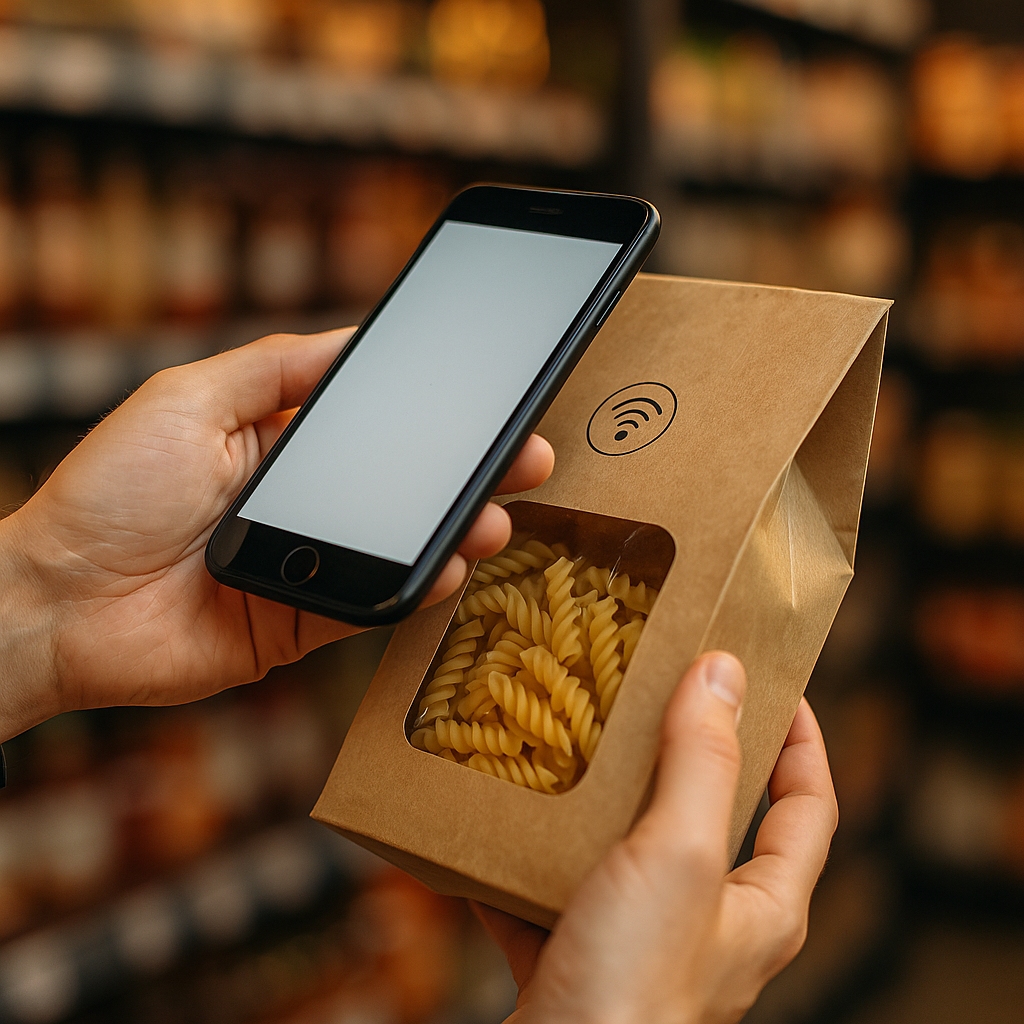
NFC embedded packaging is moving from novelty to measurable growth lever in retail. In 2026, brands that connect physical products to digital journeys can improve loyalty, first-party data capture, and repeat engagement. This case study shows how one retailer used tap-enabled packaging to lift app retention, reduce churn, and create a stronger post-purchase experience. What changed after the first tap?
Retail app retention strategy: the business challenge
A mid-sized specialty retailer with a strong in-store footprint and a growing ecommerce channel faced a common problem: its mobile app generated downloads, but long-term engagement was weak. Paid media produced bursts of installs during promotions, yet many customers stopped using the app within weeks. Push notifications helped some cohorts, but opt-outs increased, and email open rates were flattening.
The retailer’s leadership team defined a clear goal for 2026: improve app retention by making the app useful after the initial purchase, not just before it. Internal analysis showed three critical drop-off points:
- Customers forgot the app existed after checkout.
- The app experience was disconnected from the physical product.
- Post-purchase content such as care instructions, product tips, warranty support, and loyalty rewards was hard to discover.
The company also wanted stronger first-party data without relying on aggressive data collection tactics. It needed a customer-friendly way to create repeat app sessions tied to real product ownership. The team tested QR codes on inserts, but scans were inconsistent. Customers often ignored printed leaflets, and the extra insert increased packaging waste.
At this point, the retailer explored NFC-enabled packaging as a lower-friction touchpoint. The idea was simple: a customer taps the product box or label with a phone and lands inside a personalized app experience or smart fallback web journey. The strategic question was whether a tap on packaging could become a meaningful retention trigger rather than a one-time gimmick.
NFC packaging case study: solution design and rollout
The retailer selected two high-repeat product categories for a phased launch: premium skincare kits and connected home accessories. These categories had several advantages. They required setup, education, replenishment, and customer support, which created natural reasons to return to the app. The company embedded NFC tags directly into outer packaging and hangtags, then connected the tags to dynamic destination rules.
The implementation followed a practical framework built around customer experience, operational feasibility, and measurable outcomes:
- Tap-to-app deep linking: If the app was installed, the NFC tap opened a relevant in-app screen. If not, users landed on a mobile web page prompting app download with a deferred deep link to the same destination after install.
- Context-specific journeys: Packaging was not generic. A skincare kit opened routines, ingredient guidance, and replenishment reminders. A connected device opened setup support, tutorials, warranty activation, and troubleshooting.
- Loyalty integration: Customers who tapped after purchase could claim bonus loyalty points, register ownership, and unlock personalized offers.
- Consent-led data capture: The brand asked for permissions progressively. Initial value came first, then account creation and notification opt-in followed when context justified it.
- Dynamic content management: Because the NFC destinations were managed centrally, the retailer could update landing experiences without changing packaging inventory.
Operations teams worked closely with packaging suppliers to ensure tag placement remained reliable at scale. They tested read performance across major smartphones, packaging materials, and store conditions. This mattered. A poor tap experience would have damaged trust and reduced adoption. The company also trained store associates to explain the feature in one sentence: tap the package to get setup, rewards, and product support in the app.
The launch began in 40 pilot stores and the ecommerce channel. The retailer used holdout groups to isolate impact. Some SKUs included NFC embedded packaging, while comparable SKUs retained standard packaging. That design improved confidence in the results and aligned with EEAT principles by grounding claims in observed retail performance rather than assumptions.
Connected packaging analytics: measuring what mattered
To evaluate success, the retailer avoided vanity metrics. Total taps were useful, but not enough. The team built a measurement model across the full retention funnel, connecting packaging interactions with app behavior, commerce, and support outcomes.
Primary metrics included:
- App re-open rate within 30 and 90 days of purchase
- Repeat session frequency among product owners
- Second purchase rate and replenishment conversion
- Loyalty enrollment and reward redemption
- Support deflection, including reduced contact center volume for setup questions
- Notification opt-in rate after a tap-driven experience
The analytics setup combined NFC tag event logs, mobile attribution, app analytics, CRM identity resolution, and POS or order data. Privacy controls were designed into the framework. Anonymous taps remained anonymous until users chose to sign in or register a product. This helped the retailer stay transparent while still learning which packaging interactions led to retention gains.
Three measurement practices proved especially important:
- Separate first tap from repeat tap behavior. The first tap often reflected curiosity. Repeat taps signaled utility and habit.
- Compare cohorts by product category. Some products naturally invite more post-purchase engagement than others.
- Track journey completion, not just entry. Opening the app mattered less than completing setup, viewing tutorials, joining loyalty, or buying again.
After one quarter, the retailer had enough data to assess whether NFC packaging drove durable app engagement rather than temporary novelty. The answer was yes, but with nuances. Results were strongest where the tap experience solved a real customer problem.
Customer engagement with NFC: results from the pilot
The retailer reported a meaningful lift in app retention and product-owner engagement across the pilot. While exact figures varied by category, the directional outcomes were consistent and commercially relevant.
- 30-day app retention increased by 22% among customers exposed to NFC embedded packaging compared with matched control groups.
- 90-day retention improved by 16%, showing that the benefit extended beyond the initial unboxing window.
- Average monthly app sessions per purchaser rose by 28% in the skincare category, driven by routine guides and replenishment reminders.
- Warranty registrations increased by 34% in connected accessories, creating richer first-party customer profiles.
- Loyalty sign-ups grew by 19% among tap users who were not previously members.
- Basic setup-related support tickets dropped by 11% in the connected accessories category.
These improvements happened because the experience was useful at the exact moment customers needed guidance. For skincare buyers, the tap connected packaging to daily usage and reorder timing. For device buyers, the tap reduced setup friction and made the app feel essential rather than optional.
Qualitative feedback supported the numbers. Customers said the experience felt faster than scanning a QR code and more integrated than searching the app manually. Store associates also reported that shoppers perceived the brand as more modern and helpful. That perception matters because retention is not only a technical metric. It is a reflection of whether a brand continues to earn attention after purchase.
Not every result was positive. Some NFC placements on metallic finishes reduced tap reliability, which lowered usage on a subset of products until packaging was adjusted. The retailer also found that generic landing pages underperformed sharply. Customers responded to purpose-built destinations tied to a specific SKU, use case, or ownership stage. This reinforced a key lesson: connected packaging works best when the digital experience is as tailored as the physical product.
Post-purchase mobile engagement: why the program worked
The pilot succeeded because it addressed retention as a product experience problem, not just a marketing problem. Many retail apps struggle because they ask customers to remember the app on their own. NFC packaging changed that by placing a low-friction reminder in the customer’s hand at the exact point of product use.
Several factors explain the performance:
- It closed the gap between purchase and value. Customers no longer had to search for setup instructions, care details, or rewards. One tap delivered the next best action.
- It transformed packaging into a service layer. The box was not just a container. It became a persistent gateway to support, education, and commerce.
- It created natural retention loops. Replenishment prompts, tutorials, reward claims, and ownership benefits gave customers reasons to return.
- It improved data quality. Customers self-identified in exchange for relevant value, which produced more trustworthy first-party signals.
- It supported both app users and non-users. Deep links plus deferred app flows prevented dead ends.
The team also learned that retention gains depended on execution details. The NFC prompt on packaging had to be visible but not cluttered. In-app pages had to load quickly. Deep links had to resolve correctly. Product content had to be genuinely useful. These basics sound obvious, but they often determine whether a connected packaging program scales or stalls.
For retailers considering similar projects, the strongest use cases usually share four traits:
- The product requires education, setup, replenishment, registration, or care.
- The brand has an app with clear post-purchase utility.
- The business values first-party data and loyalty growth.
- The operations team can support packaging and content updates over time.
If those conditions are present, NFC embedded packaging can become a repeatable retention channel rather than an isolated experiment.
Retail digital transformation: implementation lessons for 2026
This case study offers practical lessons for retail teams planning connected packaging in 2026. The main takeaway is not that every product needs an NFC tag. It is that physical-digital integration works when it improves customer outcomes and is measured rigorously.
First, start with a narrow product set where post-purchase engagement already matters. High-consideration, replenishable, or support-heavy products tend to generate the clearest return. A focused pilot makes it easier to validate economics before expanding across the catalog.
Second, design the destination before you design the packaging. Many projects fail because the technology is visible, but the digital experience lacks purpose. Ask what the customer needs immediately after purchase, after first use, and before the next purchase. Build those moments into the tap journey.
Third, maintain technical discipline. NFC tags, mobile OS behavior, deep linking, analytics, app routing, and CRM logic all have to work together. Cross-functional ownership is essential. Packaging, product, engineering, ecommerce, analytics, CRM, and store operations each influence the outcome.
Fourth, use customer trust as a design principle. Explain what the tap does, ask for data only when relevant, and make opt-ins worth it. Helpful content and transparent value exchange support EEAT because they demonstrate real expertise and respect user needs.
Finally, define success beyond installs. The strongest business case usually comes from higher retention, stronger loyalty participation, more repeat purchases, and lower service costs. When leadership sees packaging as part of the digital experience stack, budget conversations become easier.
In this retailer’s case, NFC embedded packaging did not replace other lifecycle channels. It strengthened them. Push, email, loyalty, content, and customer support performed better because the packaging created a direct bridge between ownership and app value. That is why the initiative scaled from pilot to broader rollout.
FAQs about NFC embedded packaging and app retention
What is NFC embedded packaging?
NFC embedded packaging includes a near-field communication tag inside a product box, label, or hangtag. A customer taps the package with a smartphone to open app content, a mobile web page, product information, loyalty actions, or support tools.
How does NFC packaging improve app retention?
It gives customers a simple reason to reopen the app after purchase. Instead of relying only on notifications or memory, the product itself becomes a trigger for setup, rewards, replenishment, tutorials, or support, which increases repeat sessions and long-term engagement.
Is NFC better than QR codes for post-purchase engagement?
It depends on the audience and use case. NFC often feels faster because users tap rather than open a camera and scan. QR codes are cheaper and more universal. Many retailers use both, but NFC can reduce friction when speed and premium experience matter.
Which retail categories benefit most from NFC embedded packaging?
Categories with strong post-purchase needs usually benefit most, including beauty, electronics, wellness, apparel care, home devices, and consumables with replenishment cycles. Products that require setup, education, registration, or ongoing use tend to drive higher retention gains.
Do customers need a special app to use NFC packaging?
No. Most modern smartphones can read NFC tags natively. If the retailer’s app is installed, the tap can deep link into the app. If not, the customer can be sent to a mobile web page or app download flow.
What should retailers measure in an NFC packaging pilot?
Key metrics include 30-day and 90-day app retention, repeat sessions, product registration, loyalty enrollment, repeat purchase rate, support deflection, and conversion from anonymous taps to known customers. Measuring journey completion is more useful than counting taps alone.
Is NFC embedded packaging expensive to scale?
Costs vary by tag type, volume, packaging format, and operational complexity. A pilot should focus on products where retention, loyalty, or service savings can justify the investment. Dynamic content and strong analytics improve the odds of positive return on investment.
What are the biggest implementation risks?
The main risks are unreliable tag reads, weak deep linking, generic content, poor analytics, and unclear customer value. Successful programs test packaging materials carefully, tailor experiences by product, and coordinate teams across packaging, app, CRM, and retail operations.
This case study shows that NFC embedded packaging can improve app retention when it serves a practical customer need. The retailer succeeded by linking packaging taps to setup, loyalty, support, and replenishment, then measuring outcomes with discipline. For brands in 2026, the clearest takeaway is simple: connected packaging performs best when it makes ownership easier, not just marketing smarter.
Top Influencer Marketing Agencies
The leading agencies shaping influencer marketing in 2026
Agencies ranked by campaign performance, client diversity, platform expertise, proven ROI, industry recognition, and client satisfaction. Assessed through verified case studies, reviews, and industry consultations.
Moburst

-
2

The Shelf
Boutique Beauty & Lifestyle Influencer AgencyA data-driven boutique agency specializing exclusively in beauty, wellness, and lifestyle influencer campaigns on Instagram and TikTok. Best for brands already focused on the beauty/personal care space that need curated, aesthetic-driven content.Clients: Pepsi, The Honest Company, Hims, Elf Cosmetics, Pure LeafVisit The Shelf → -
3

Audiencly
Niche Gaming & Esports Influencer AgencyA specialized agency focused exclusively on gaming and esports creators on YouTube, Twitch, and TikTok. Ideal if your campaign is 100% gaming-focused — from game launches to hardware and esports events.Clients: Epic Games, NordVPN, Ubisoft, Wargaming, Tencent GamesVisit Audiencly → -
4

Viral Nation
Global Influencer Marketing & Talent AgencyA dual talent management and marketing agency with proprietary brand safety tools and a global creator network spanning nano-influencers to celebrities across all major platforms.Clients: Meta, Activision Blizzard, Energizer, Aston Martin, WalmartVisit Viral Nation → -
5

The Influencer Marketing Factory
TikTok, Instagram & YouTube CampaignsA full-service agency with strong TikTok expertise, offering end-to-end campaign management from influencer discovery through performance reporting with a focus on platform-native content.Clients: Google, Snapchat, Universal Music, Bumble, YelpVisit TIMF → -
6

NeoReach
Enterprise Analytics & Influencer CampaignsAn enterprise-focused agency combining managed campaigns with a powerful self-service data platform for influencer search, audience analytics, and attribution modeling.Clients: Amazon, Airbnb, Netflix, Honda, The New York TimesVisit NeoReach → -
7

Ubiquitous
Creator-First Marketing PlatformA tech-driven platform combining self-service tools with managed campaign options, emphasizing speed and scalability for brands managing multiple influencer relationships.Clients: Lyft, Disney, Target, American Eagle, NetflixVisit Ubiquitous → -
8

Obviously
Scalable Enterprise Influencer CampaignsA tech-enabled agency built for high-volume campaigns, coordinating hundreds of creators simultaneously with end-to-end logistics, content rights management, and product seeding.Clients: Google, Ulta Beauty, Converse, AmazonVisit Obviously →