


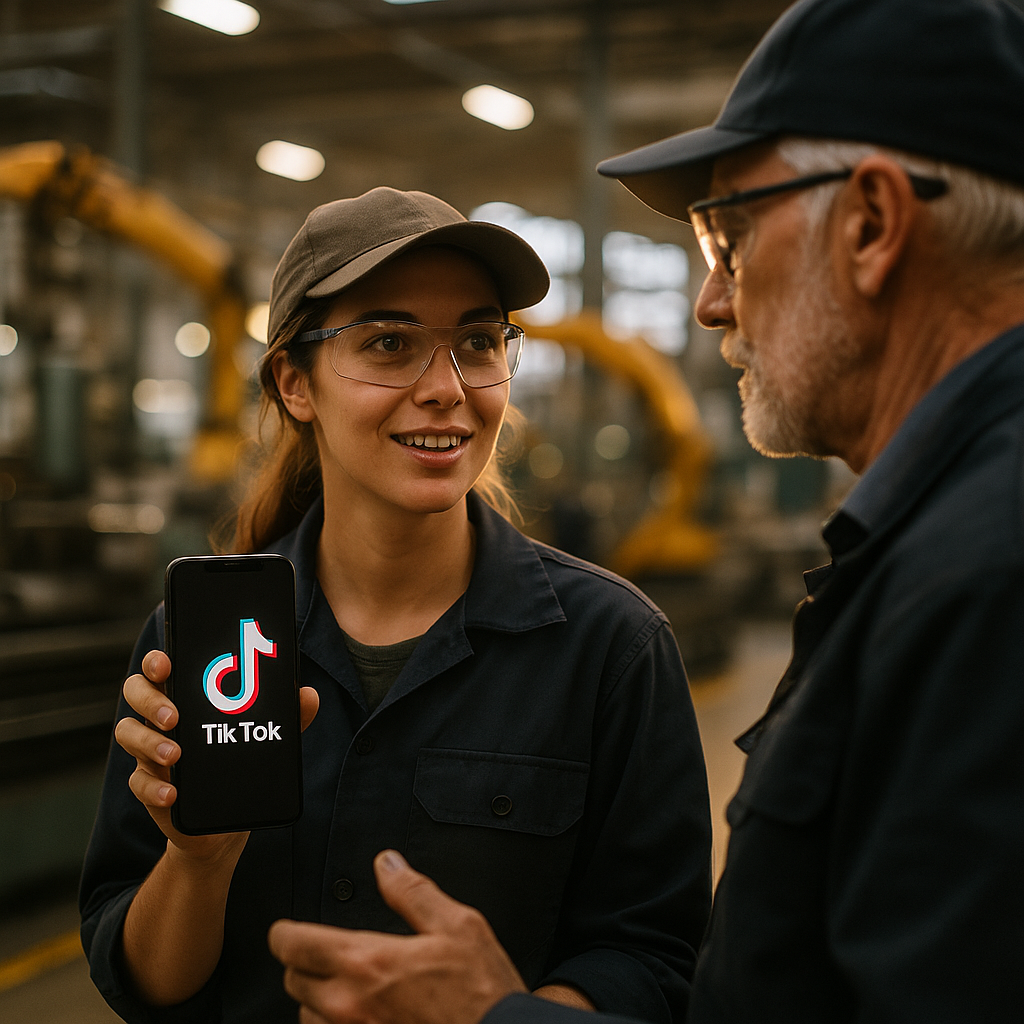
In 2026, TikTok recruiting for manufacturing is no longer experimental. For firms struggling to fill skilled roles, the platform can reach younger technicians, engineers, and operators who ignore traditional job boards. This case study shows how one manufacturing company turned short-form video into a targeted hiring engine, improved applicant quality, and changed employer perception. What exactly made it work?
Why manufacturing recruitment marketing needed a new approach
A mid-sized industrial components manufacturer in the U.S. faced a common hiring problem: open roles stayed vacant for too long, especially for CNC machinists, maintenance technicians, robotics operators, quality specialists, and shift supervisors. The company had a solid reputation with customers, but little visibility with job seekers under 35.
Its talent team relied on job boards, local staffing partners, trade school outreach, and referrals. Those channels still mattered, but they produced three consistent issues:
- Too many unqualified applications for specialized roles
- Too few applicants who understood modern manufacturing environments
- An outdated employer brand shaped by assumptions that factory work was repetitive, dirty, and low-tech
The company’s HR director and operations leaders recognized that the problem was not only reach. It was perception. Their facility had collaborative robots, digital quality systems, apprenticeship pathways, and above-market pay for hard-to-fill roles. Yet candidates rarely saw that story before applying.
That gap led the team to test a new strategy: use TikTok not as a mass-awareness stunt, but as a specialized recruiting channel built around transparency, skill relevance, and workplace reality. Instead of posting generic “we’re hiring” clips, they designed content around the actual questions serious candidates ask:
- What does the equipment look like?
- What skills are required?
- How loud, clean, and fast-paced is the floor?
- What does training look like?
- Can I build a long-term career here?
This shift aligned with EEAT principles. The content had to demonstrate real experience, visible expertise, operational credibility, and trustworthy information. In recruiting, those signals matter because candidates increasingly verify employer claims before they ever click “apply.”
Building a TikTok hiring strategy for specialized roles
The firm began with a 90-day pilot focused on roles that were difficult to fill and expensive to leave open. Leadership approved the test only after HR framed it in operational terms: lower time-to-fill, fewer agency costs, stronger applicant fit, and better retention from informed candidates.
The strategy had five components.
- Role prioritization: The team selected six hard-to-fill positions and wrote clear candidate personas for each. They identified likely motivations, barriers, and misconceptions.
- Content pillars: Videos were organized into themes: day-in-the-life, tool and tech demos, employee career stories, pay and benefits explainers, training pathways, and myth-busting clips.
- On-camera credibility: Instead of polished corporate spokespeople, the company featured actual machinists, maintenance leads, production managers, and apprenticeship graduates.
- Landing-page alignment: Every video drove to mobile-friendly role pages with skill requirements, shift details, compensation ranges where permitted, and a simple application flow.
- Measurement: The talent team tracked video saves, comments, click-through rates, completed applications, qualified applicants, interviews scheduled, offers accepted, and 90-day retention.
The company also defined what TikTok was not. It was not the only source of applicants, and it was not meant to replace trade school partnerships or local outreach. It served as a top- and mid-funnel channel that helped candidates self-select. People who were not interested could move on quickly. People who saw themselves in the environment were more likely to convert.
That filtering effect became one of the campaign’s biggest strengths. Specialized recruiting often fails when messaging is too broad. By showing the reality of precision manufacturing work, the company reduced curiosity clicks and increased intent-driven applications.
Content ideas that improved employer branding on TikTok
The highest-performing content was practical, specific, and human. Videos did not try to imitate entertainment creators. They respected the platform’s format while staying true to the work.
Several content types stood out.
- Machine-in-action clips: Short videos showed CNC setups, automated inspection, and robotics cells with simple overlays explaining the task, tolerance, or process goal.
- Employee perspective videos: A maintenance technician explained what a breakdown response looks like. A quality lead described how data helps prevent defects. An apprentice talked through the first six months on the job.
- Career path explainers: Managers outlined how entry-level operators could progress into programming, supervision, or engineering support functions.
- Work environment tours: Videos addressed cleanliness, safety procedures, PPE, climate control, break areas, and team communication practices.
- Compensation and scheduling clarity: Recruiters answered common questions about shifts, overtime expectations, certifications, tuition support, and benefits.
One of the most effective series was called “What You Think vs. What It’s Actually Like.” In one clip, the company contrasted outdated assumptions about manufacturing with footage of digital dashboards, precision measurement tools, and team-based troubleshooting. The point was not to oversell. It was to correct misconceptions with visible proof.
Another successful tactic involved comments. When users asked, “Do you hire people straight out of trade school?” or “What software do your CNC operators use?” the team responded with short follow-up videos. This created a library of highly relevant content based on real candidate intent.
That responsiveness strengthened trust. Candidates did not just see polished recruiting messages. They saw evidence that the company understood the work and respected the audience’s questions.
Execution details in social media recruiting for manufacturers
Execution mattered as much as creativity. Many recruiting campaigns fail because they ignore operational details that influence candidate conversion.
The manufacturing firm’s process included several practical decisions:
- Short, focused videos: Most clips stayed between 20 and 40 seconds. Each addressed one idea only.
- Clear hooks: Openings answered immediate questions, such as “Here’s what a robotics operator actually does on second shift.”
- Captions and overlays: Technical terms were defined on screen to improve comprehension and accessibility.
- Consistent posting: The team published three to four videos per week during the pilot.
- Local targeting: Paid support focused on geographic areas within practical commuting distance and select technical school markets.
- Fast follow-up: Applicants from TikTok received outreach within one business day whenever possible.
The firm also created internal guardrails. Safety-sensitive areas were filmed only with operations approval. Employee participants signed media consents. Proprietary processes were excluded. Recruiters and plant leaders reviewed scripts for factual accuracy before posting.
Those controls supported trustworthiness, a core EEAT principle. Candidates noticed when details were credible. For example, one operations manager explained why tolerance discipline matters in aerospace-adjacent work. That kind of specificity signals authenticity in a way generic employer-brand language never can.
Another smart move was integrating recruiters with plant supervisors. If a video generated interest in a specific role, the recruiter could immediately confirm requirements, interview availability, and realistic onboarding timelines. This prevented a common social recruiting failure: strong engagement paired with weak hiring coordination.
The company also optimized for mobile completion. Application forms were shortened, and candidates could begin with a quick expression-of-interest form before completing a full application. That reduced drop-off from users who discovered roles on their phones during breaks or commutes.
Results from specialized recruiting case study metrics
By the end of the pilot, the manufacturing firm saw measurable improvements in both hiring efficiency and candidate quality. While exact numbers vary by company and labor market, the internal outcomes followed a clear pattern.
- Higher qualified applicant rate: Fewer total applications came in than from broad job board campaigns, but a significantly larger share met baseline technical requirements.
- Improved interview show rates: Candidates arrived with a better understanding of the environment, reducing last-minute drop-off.
- Lower time-to-fill for priority roles: Hard-to-fill technical positions moved faster once awareness and expectations aligned.
- Stronger 90-day retention: New hires reported that the videos gave them a realistic preview of the job.
- Reduced dependency on staffing agencies: The firm still used agencies selectively, but direct applications increased for several specialized roles.
Qualitative feedback was equally valuable. Candidates mentioned specific TikTok videos during interviews. Trade school instructors began sharing the content with students. Existing employees expressed pride in seeing modern manufacturing represented accurately. Some even volunteered to participate in future videos.
The most important lesson was that TikTok did not succeed because it was trendy. It succeeded because the company treated it like a serious recruiting channel with clear goals, role-specific messaging, and disciplined follow-through.
There were limits, too. Executive and highly senior engineering roles still performed better through other channels. TikTok worked best for awareness, skilled trades, early-career technical talent, and roles where visual proof of the environment helped candidates make decisions.
Key lessons for a manufacturing talent acquisition team
This case study offers practical guidance for manufacturers considering TikTok for recruiting in 2026.
- Show the real workplace. Modern candidates want evidence, not slogans. If your facility is advanced, safe, and growth-oriented, let people see it.
- Use employees as experts. A machinist explaining setup logic or a maintenance lead describing troubleshooting carries more authority than generic brand copy.
- Answer candidate questions directly. Pay transparency, shift expectations, training, and advancement should not be hidden behind an application wall.
- Measure quality, not vanity. Views matter less than qualified applicants, interview attendance, offers accepted, and retention.
- Coordinate recruiting with operations. Social interest creates value only when the hiring process is responsive and accurate.
- Start with a pilot. Test a few hard-to-fill roles, build a content library, learn what resonates, and scale based on evidence.
For firms concerned about professionalism, the answer is simple: professionalism comes from clarity and credibility, not from sounding formal. Manufacturing companies have powerful stories to tell about technology, craftsmanship, safety, problem-solving, and career growth. TikTok simply gives them a format where those stories can travel further.
If your hiring challenge is tied to perception as much as supply, this channel deserves attention. The best results come when marketing discipline and recruiting expertise work together, with operations leaders actively shaping the message.
FAQs about TikTok recruiting for manufacturing
Is TikTok really effective for manufacturing recruiting?
Yes, especially for skilled trades, technicians, apprenticeships, and early-career technical roles. It works best when videos show the real environment, explain job requirements clearly, and connect to a mobile-friendly application process.
What types of manufacturing jobs perform best on TikTok?
Roles with visible tasks and clear career pathways tend to perform well, including CNC machinists, maintenance technicians, robotics operators, welders, quality technicians, and production leads. Highly senior or niche executive roles often require other channels too.
How often should a manufacturing company post recruiting content?
A consistent schedule matters more than volume. For most firms, three to four high-quality videos per week is enough to test messaging, build visibility, and learn which topics attract qualified candidates.
Does TikTok attract unqualified applicants?
It can if content is too broad. The solution is specificity. Show the actual work, define required skills, explain shifts and expectations, and let candidates self-select before they apply.
What should be included in a manufacturing recruiting video?
Focus on one topic per video: the task, the equipment, the team, the training path, compensation basics where allowed, or a common candidate question. Use clear captions and end with a direct next step.
How do you measure success beyond views?
Track qualified applicants, completed applications, interview show rate, offer acceptance rate, time-to-fill, source-to-hire efficiency, and 90-day retention. These metrics show whether TikTok is improving hiring outcomes, not just awareness.
Is paid promotion necessary?
Not always, but paid geographic targeting can help manufacturers reach local talent pools and technical school audiences more efficiently. Organic content is still important because authenticity drives trust.
What are the biggest mistakes manufacturers make on TikTok?
Posting generic hiring messages, hiding key job details, using overly polished corporate scripts, responding slowly to applicants, and failing to coordinate social content with actual recruiting capacity.
Used strategically, TikTok can help manufacturing firms recruit specialized talent by showing the truth of modern industrial work. This case study proves that clear role targeting, credible employee voices, and responsive hiring operations matter more than viral reach. For manufacturers in 2026, the takeaway is direct: make the job visible, answer questions honestly, and let content pre-qualify candidates.
Top Influencer Marketing Agencies
The leading agencies shaping influencer marketing in 2026
Agencies ranked by campaign performance, client diversity, platform expertise, proven ROI, industry recognition, and client satisfaction. Assessed through verified case studies, reviews, and industry consultations.
Moburst

-
2

The Shelf
Boutique Beauty & Lifestyle Influencer AgencyA data-driven boutique agency specializing exclusively in beauty, wellness, and lifestyle influencer campaigns on Instagram and TikTok. Best for brands already focused on the beauty/personal care space that need curated, aesthetic-driven content.Clients: Pepsi, The Honest Company, Hims, Elf Cosmetics, Pure LeafVisit The Shelf → -
3

Audiencly
Niche Gaming & Esports Influencer AgencyA specialized agency focused exclusively on gaming and esports creators on YouTube, Twitch, and TikTok. Ideal if your campaign is 100% gaming-focused — from game launches to hardware and esports events.Clients: Epic Games, NordVPN, Ubisoft, Wargaming, Tencent GamesVisit Audiencly → -
4

Viral Nation
Global Influencer Marketing & Talent AgencyA dual talent management and marketing agency with proprietary brand safety tools and a global creator network spanning nano-influencers to celebrities across all major platforms.Clients: Meta, Activision Blizzard, Energizer, Aston Martin, WalmartVisit Viral Nation → -
5

The Influencer Marketing Factory
TikTok, Instagram & YouTube CampaignsA full-service agency with strong TikTok expertise, offering end-to-end campaign management from influencer discovery through performance reporting with a focus on platform-native content.Clients: Google, Snapchat, Universal Music, Bumble, YelpVisit TIMF → -
6

NeoReach
Enterprise Analytics & Influencer CampaignsAn enterprise-focused agency combining managed campaigns with a powerful self-service data platform for influencer search, audience analytics, and attribution modeling.Clients: Amazon, Airbnb, Netflix, Honda, The New York TimesVisit NeoReach → -
7

Ubiquitous
Creator-First Marketing PlatformA tech-driven platform combining self-service tools with managed campaign options, emphasizing speed and scalability for brands managing multiple influencer relationships.Clients: Lyft, Disney, Target, American Eagle, NetflixVisit Ubiquitous → -
8

Obviously
Scalable Enterprise Influencer CampaignsA tech-enabled agency built for high-volume campaigns, coordinating hundreds of creators simultaneously with end-to-end logistics, content rights management, and product seeding.Clients: Google, Ulta Beauty, Converse, AmazonVisit Obviously →