


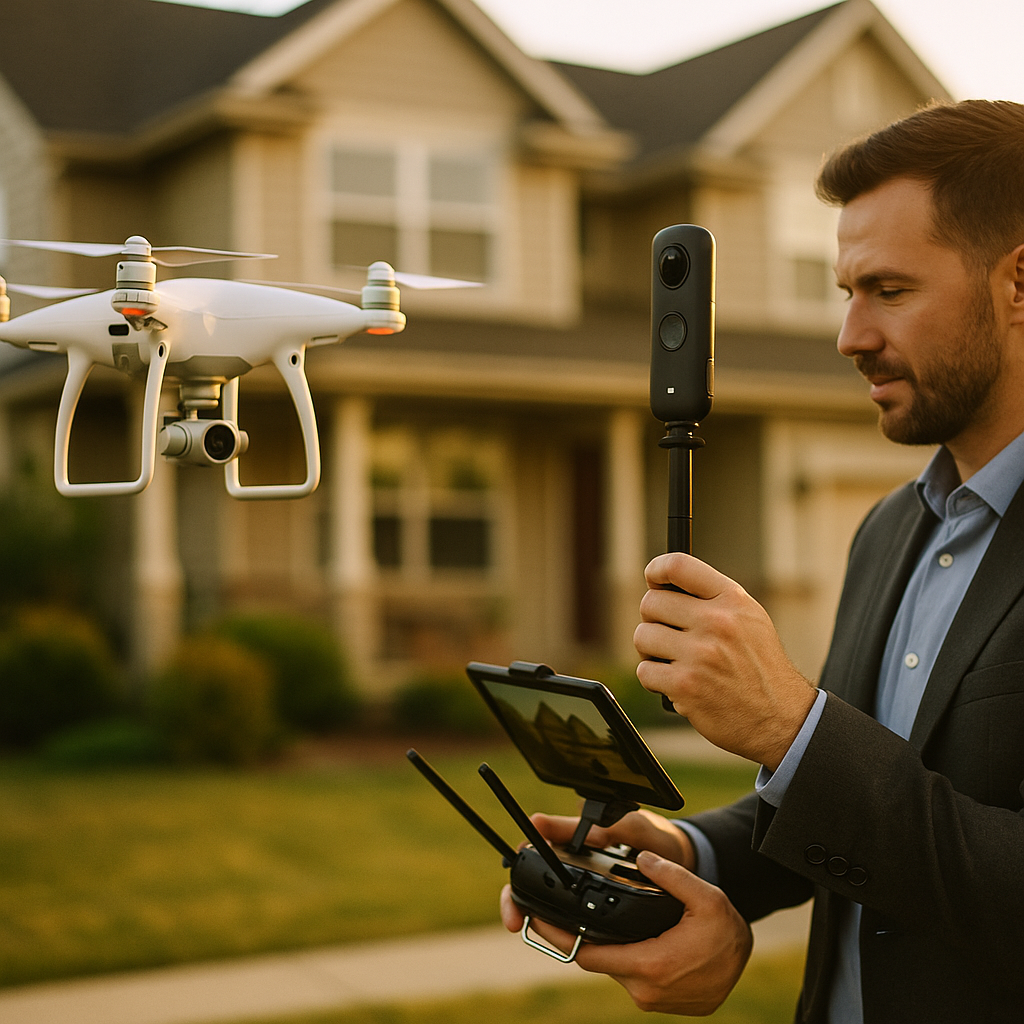
In 2026, buyers expect to explore properties before they ever book a tour, and smart brands now compete on experience as much as inventory. This case study shows how a real estate brand used drones and 360 video for sales to shorten decision cycles, improve lead quality, and increase listing engagement across channels. The surprising part was not the technology, but the strategy behind it.
Real estate video marketing goals: the challenge, baseline, and business case
A mid-sized residential real estate brand operating in a competitive metro market faced a familiar problem: strong listings, weak attention. The company had quality homes, experienced agents, and healthy ad spend, yet too many prospects dropped off after viewing static listing pages. Agents also spent time on in-person tours with buyers who were still in the early research stage, which reduced productivity and slowed deal velocity.
The leadership team set a clear objective: increase qualified inquiries while reducing wasted tours. Instead of treating media production as a branding expense, they framed it as a revenue system tied to measurable sales outcomes. Their internal review identified three gaps:
- Low emotional connection on listing pages because still photos did not fully communicate layout, scale, or neighborhood context.
- Limited pre-qualification because buyers booked tours before understanding whether a property truly fit their needs.
- Weak differentiation in paid and organic channels where many competing listings looked interchangeable.
The brand’s marketing director, sales operations lead, and listing agents collaborated on a test plan built around high-intent inventory. They selected a set of properties across different price bands and neighborhoods, then compared performance against similar listings that used conventional image galleries only. To improve trustworthiness and content quality, the team also established production standards, disclosure rules, and review checkpoints so media accurately reflected each property.
This matters because helpful content in real estate must do more than attract clicks. It should help a buyer make a better decision. That approach aligns with EEAT principles: show real expertise in local property marketing, create accurate visual documentation, and present listings in a way that is genuinely useful rather than promotional noise.
Drone real estate photography strategy: how aerial media supported discovery
The first pillar of the campaign was aerial capture. The team used licensed drone operators and mapped each flight around a buyer question: What can aerial footage explain that ground-level photos cannot? That led to a practical shot list instead of generic cinematic footage.
For suburban homes, drones highlighted lot size, backyard privacy, roof condition visibility, nearby green space, and distance from adjacent homes. For urban and mixed-use properties, the footage showed walkability, street access, parking, transit proximity, and surrounding retail. In luxury listings, aerials framed water views, elevation, and architectural scale.
The strategy worked because drone media was not treated as decoration. It answered objections early. Buyers could quickly judge whether a property’s setting matched their priorities. Sellers benefited too, because agents could demonstrate premium marketing value during listing presentations.
The production workflow included:
- Pre-shoot planning with agent input on property strengths, buyer personas, and local selling points.
- Compliance checks covering airspace restrictions, privacy considerations, weather, and timing for best light.
- Narrative editing that connected approach shots, lot overview, and close exterior angles into a logical sequence.
- Channel-specific exports for listing pages, paid social, vertical video ads, and email campaigns.
One key lesson emerged quickly: shorter drone edits often outperformed longer cinematic cuts on paid media. On-site pages could support a fuller video, but ads needed to communicate the property’s context in seconds. The team therefore built modular edits, allowing the same footage to serve awareness, consideration, and remarketing without redundant production costs.
From an EEAT perspective, this also improved trust. Accurate aerials gave buyers a realistic understanding of the home’s surroundings, reducing disappointment after scheduling tours. That transparency led to fewer low-intent appointments and stronger conversations when prospects finally met an agent.
360 virtual tour real estate implementation: creating deeper buyer engagement
The second pillar was immersive 360 video and interactive virtual tours. The brand chose this format because static photos frequently failed to show room flow, ceiling height, sight lines, and the relationship between kitchen, living, and outdoor areas. Buyers repeatedly asked questions that a 360 walkthrough could answer immediately.
The team created guided tours for priority listings using stabilized walkthroughs and clickable room transitions. Every tour was designed for mobile first, since analytics showed most traffic originated on smartphones. This was crucial. A 360 experience that feels clumsy on mobile can damage trust instead of building it.
The implementation focused on usability:
- Simple navigation so visitors could move room to room without friction.
- Context labels naming spaces, dimensions where appropriate, and key upgrades.
- Embedded lead prompts placed after meaningful engagement rather than immediately on entry.
- Optional agent voiceover for select listings where neighborhood or renovation details added value.
The result was a more informed prospect. Buyers who completed the 360 tour spent more time with listings and submitted more specific inquiries. Instead of asking broad questions like “Is the living room large?” they asked decision-stage questions such as whether a dining nook could be enclosed as an office or whether a terrace faced west. That shift mattered because specificity is often a sign of intent.
Importantly, the brand avoided common mistakes. They did not over-edit rooms, exaggerate dimensions, or use misleading wide-angle treatment that could create a mismatch between digital expectations and in-person reality. That restraint supports credibility, and credibility supports conversion. In real estate, trust is not a soft metric. It is a sales multiplier.
Property listing conversion optimization: distribution, lead capture, and sales enablement
High-quality media alone rarely drives results unless distribution is disciplined. After producing drone and 360 assets, the brand restructured listing pages, ad flows, and CRM handoffs. Their goal was to move buyers from curiosity to action with fewer dead ends.
On listing pages, the brand made three changes:
- Media hierarchy prioritized a short hero video above the fold, followed by photos, then the full 360 tour.
- Clear calls to action offered two next steps: book an in-person showing or request a virtual consultation.
- FAQ snippets answered practical questions about HOA fees, renovation status, parking, and nearby amenities.
For paid media, they segmented audiences by intent. Cold audiences saw short drone-led creative emphasizing location and curb appeal. Warm audiences, including site visitors and saved-listing users, were retargeted with 360 tour clips and invitations to book a guided remote walkthrough. High-intent leads received automated email sequences featuring the full interactive experience, neighborhood highlights, and agent contact options.
Sales teams were trained to use the media as a qualification tool. Before scheduling an in-person visit, agents asked prospects whether they had viewed the virtual tour and which rooms or exterior features stood out. This changed the quality of the call. It also helped agents tailor showings to the buyer’s known priorities.
The brand’s CRM tagging structure was updated as well. Instead of measuring all listing inquiries as equal, the team scored leads based on behaviors such as video completion, 360 interaction depth, repeat visits, and return clicks from email. This gave managers a more realistic picture of pipeline quality. It also allowed agents to prioritize follow-up based on signals tied to actual purchase readiness.
For readers wondering whether these steps add complexity, the answer is yes, but useful complexity. Real estate marketing performs best when media, user experience, and sales operations are connected. If the handoff from listing page to agent call is weak, even excellent visual content will underdeliver.
Real estate lead generation results: what changed in traffic, engagement, and closings
After a full testing period across the selected properties, the brand documented meaningful improvements against its static-media comparison group. While exact numbers varied by property type and price point, the direction was consistent.
Key outcomes included:
- Higher listing engagement as visitors spent more time on pages featuring drone footage and 360 tours.
- Improved lead quality because inquiries reflected stronger purchase intent and better property fit.
- More efficient showings as agents hosted fewer low-intent tours and spent more time with serious prospects.
- Stronger seller confidence during listing pitches, helping the brand win more competitive mandates.
Internally, the company reported that featured listings using the enhanced media package generated a notable lift in inquiry-to-showing conversion and a reduction in the time agents spent qualifying top-of-funnel leads. On premium inventory, drone footage was especially effective in differentiating listings where setting and outdoor amenities carried significant value. On family homes and condos, 360 tours had the biggest impact because they clarified interior layout and livability.
The most important insight was that the technology did not replace the agent. It made the agent more effective. By the time a buyer booked a tour, they already understood the basics of the property and arrived with better questions. That shortened the path from first inquiry to offer discussion.
Could every listing justify the same production budget? No. The brand learned to tier its media investment. Signature properties received the full package. Mid-tier listings used selective drone shots and streamlined interactive tours. Entry-level inventory used templated video elements where appropriate. This protected ROI while preserving a premium brand experience.
For teams evaluating whether immersive content is worth the effort in 2026, this case study suggests a practical answer: when aligned with clear buyer questions and measurable funnel goals, it can improve both marketing performance and sales efficiency.
Real estate content strategy lessons: best practices, costs, and common mistakes to avoid
The case study produced several transferable lessons for brokers, developers, in-house marketers, and agencies serving property brands.
1. Start with buyer intent, not equipment. Many teams begin by asking what camera or drone to buy. The smarter question is what information a buyer needs at each stage. Choose formats that reduce uncertainty and move decisions forward.
2. Build content for mobile behavior. If your tours load slowly, controls are confusing, or videos are poorly cropped for phones, engagement will suffer. Mobile usability is no longer optional in real estate discovery.
3. Match production depth to listing value. Not every property needs a cinematic showcase. Create service tiers that align with margin, neighborhood competition, and likely buyer expectations.
4. Protect trust with accurate representation. Avoid distortion, excessive staging edits, or footage that hides real conditions. Helpful content should inform, not manipulate.
5. Train agents to use the media in follow-up. Sales adoption is essential. If agents ignore the content during conversations, the brand loses much of its compounding value.
6. Measure outcomes beyond views. Watch time and clicks matter, but so do showing quality, time saved, appointment conversion, and close rates.
What about cost? Expenses depend on market, property size, editing complexity, and the number of deliverables needed. In this case, the brand controlled costs by batching shoots geographically, using repeatable shot lists, and repurposing footage across listing portals, social ads, email, and agent presentations. The lesson is not to spend more. It is to extract more value from every asset.
Another frequent question is whether buyers actually use immersive tours. The answer depends on execution. When the experience is fast, intuitive, and integrated into a strong listing page, buyers use it because it saves time. When it is buried, slow, or gimmicky, they abandon it. Utility drives adoption.
Finally, the brand learned that local expertise still matters more than visual polish alone. A beautiful aerial sequence is useful only if it highlights what local buyers care about: schools, commute patterns, privacy, sunlight, lot orientation, walkability, and resale potential. Content becomes more persuasive when it reflects genuine market knowledge.
FAQs about drone and 360 video in real estate sales
What is the main advantage of drones in real estate marketing?
Drones show context that standard photos cannot capture, including lot size, surrounding streets, views, proximity to amenities, and architectural scale. That helps buyers assess fit faster and improves listing differentiation.
How does 360 video help sell homes?
360 video and virtual tours let buyers understand layout, room relationships, and flow before booking a showing. This often improves lead quality because prospects arrive better informed and more serious.
Do drone videos and 360 tours increase conversions?
They can, especially when integrated into strong listing pages, paid media, and follow-up workflows. The biggest gains usually come from higher engagement, better-qualified inquiries, and more efficient showings rather than vanity metrics alone.
Are these tools only useful for luxury real estate?
No. Luxury listings often benefit from drone footage because location and scale matter, but 360 tours are also valuable for condos, suburban family homes, and new developments where layout clarity influences buyer decisions.
What mistakes should brands avoid?
Common errors include overproduced footage that feels misleading, poor mobile performance, long videos with weak messaging, and no connection between media engagement and sales follow-up. Accuracy and usability matter more than flashy editing.
How should a real estate brand measure success?
Track listing engagement, virtual tour completion, inquiry quality, showing-to-offer conversion, agent time saved, and seller win rates. These metrics provide a more complete view of revenue impact than impressions alone.
Is special compliance required for drone filming?
Yes. Brands should work with properly licensed operators and follow local airspace, privacy, and safety rules. Compliance is essential for legal protection and brand trust.
Should every listing get both drone and 360 content?
Not necessarily. A tiered approach usually works best. Use the full package on high-value or highly competitive listings, and apply lighter versions where the likely return justifies the investment.
For this real estate brand, drones and 360 video did not act as novelty features. They solved specific buyer questions, improved listing usability, and gave agents better-qualified conversations. The clear takeaway is simple: immersive property media works best when it is accurate, mobile-friendly, and tied directly to sales operations. In 2026, the winners are the brands that turn visual content into decision-making tools.
Top Influencer Marketing Agencies
The leading agencies shaping influencer marketing in 2026
Agencies ranked by campaign performance, client diversity, platform expertise, proven ROI, industry recognition, and client satisfaction. Assessed through verified case studies, reviews, and industry consultations.
Moburst

-
2

The Shelf
Boutique Beauty & Lifestyle Influencer AgencyA data-driven boutique agency specializing exclusively in beauty, wellness, and lifestyle influencer campaigns on Instagram and TikTok. Best for brands already focused on the beauty/personal care space that need curated, aesthetic-driven content.Clients: Pepsi, The Honest Company, Hims, Elf Cosmetics, Pure LeafVisit The Shelf → -
3

Audiencly
Niche Gaming & Esports Influencer AgencyA specialized agency focused exclusively on gaming and esports creators on YouTube, Twitch, and TikTok. Ideal if your campaign is 100% gaming-focused — from game launches to hardware and esports events.Clients: Epic Games, NordVPN, Ubisoft, Wargaming, Tencent GamesVisit Audiencly → -
4

Viral Nation
Global Influencer Marketing & Talent AgencyA dual talent management and marketing agency with proprietary brand safety tools and a global creator network spanning nano-influencers to celebrities across all major platforms.Clients: Meta, Activision Blizzard, Energizer, Aston Martin, WalmartVisit Viral Nation → -
5

The Influencer Marketing Factory
TikTok, Instagram & YouTube CampaignsA full-service agency with strong TikTok expertise, offering end-to-end campaign management from influencer discovery through performance reporting with a focus on platform-native content.Clients: Google, Snapchat, Universal Music, Bumble, YelpVisit TIMF → -
6

NeoReach
Enterprise Analytics & Influencer CampaignsAn enterprise-focused agency combining managed campaigns with a powerful self-service data platform for influencer search, audience analytics, and attribution modeling.Clients: Amazon, Airbnb, Netflix, Honda, The New York TimesVisit NeoReach → -
7

Ubiquitous
Creator-First Marketing PlatformA tech-driven platform combining self-service tools with managed campaign options, emphasizing speed and scalability for brands managing multiple influencer relationships.Clients: Lyft, Disney, Target, American Eagle, NetflixVisit Ubiquitous → -
8

Obviously
Scalable Enterprise Influencer CampaignsA tech-enabled agency built for high-volume campaigns, coordinating hundreds of creators simultaneously with end-to-end logistics, content rights management, and product seeding.Clients: Google, Ulta Beauty, Converse, AmazonVisit Obviously →