


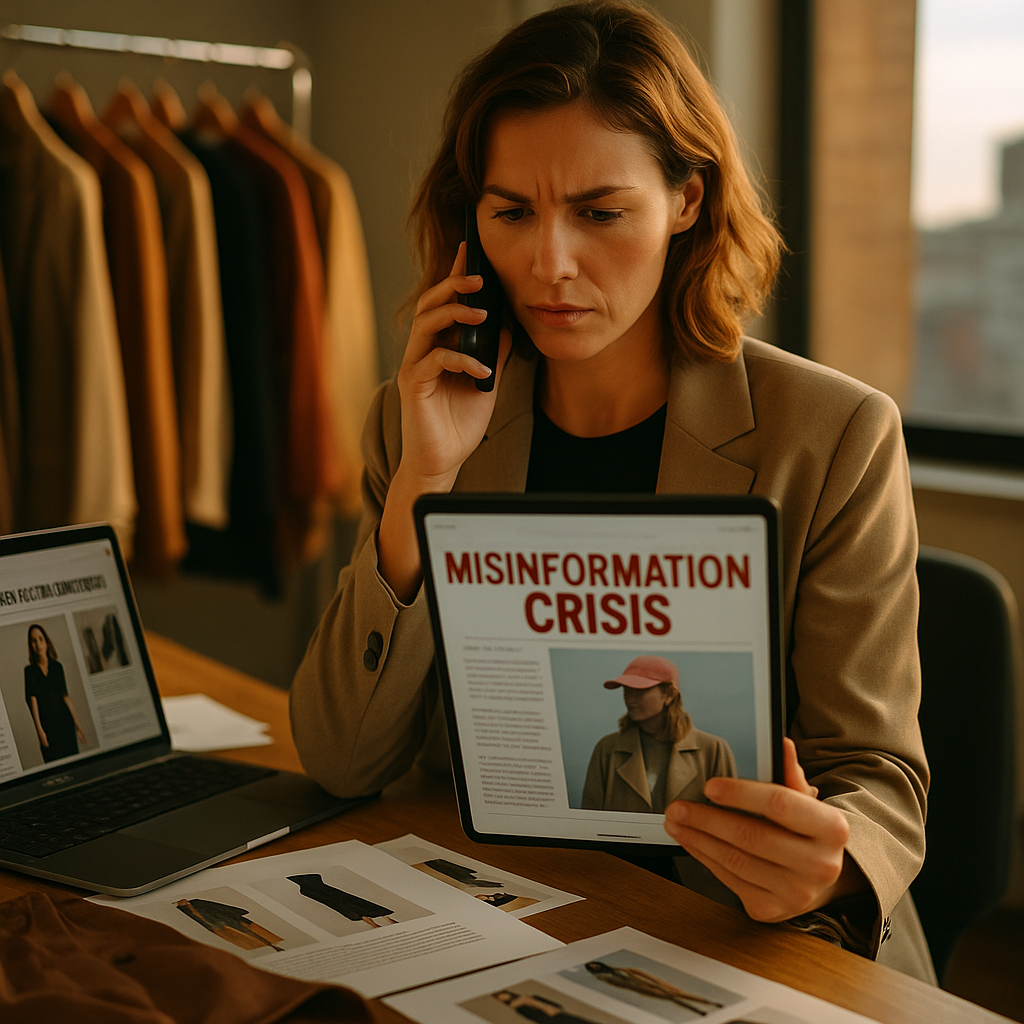
In 2026, a viral falsehood can damage a brand in hours, especially in fashion, where image, ethics, and social proof shape buying decisions. This viral misinformation crisis case study shows how one label contained reputational harm, rebuilt trust, and improved resilience. The lessons matter for founders, marketers, PR teams, and customer experience leaders facing today’s fast-moving attention economy.
What Triggered the fashion brand crisis management Response
The fashion label at the center of this case study was a mid-sized direct-to-consumer brand known for premium basics, transparent sourcing claims, and a strong social audience. The crisis began when a short video spread across social platforms alleging that the brand used exploitative labor in a supplier facility and falsely marketed its sustainability standards. The clip was emotionally persuasive, easy to share, and edited in a way that made unverified claims look conclusive.
Within hours, the post moved from niche commentary accounts to mainstream fashion discussion feeds. Customers began tagging the brand under product launches, creators paused partnerships, and refund requests increased. Search queries around the company shifted from style and sizing questions to ethics, labor, and “is this brand lying.” That search behavior mattered because misinformation rarely stays inside social platforms. It spills into search, reviews, creator content, customer support channels, and even investor conversations.
The company’s leadership initially made a common mistake: it treated the incident like a routine social complaint rather than a cross-channel trust event. The first response was delayed, legalistic, and too narrow. It addressed only one allegation and ignored the emotional concern behind the backlash. That gap allowed third parties to define the narrative.
Once the executive team recognized the scale of the issue, it activated a broader response team. That team included brand leadership, legal counsel, operations, customer support, social media managers, supplier compliance staff, and an outside crisis communications advisor. This structure proved essential because a misinformation event is rarely solved by communications alone. It requires facts, speed, consistency, and credible proof.
How the Team Verified Facts During the misinformation crisis response
The turning point came when the label stopped trying to “win” the conversation and started documenting reality in a way audiences could verify. It built a fast internal evidence process with three priorities: identify the original claims, match them against operational records, and determine what could be published quickly without compromising privacy or legal obligations.
The team reviewed supplier contracts, third-party audit reports, shipping records, factory certifications, and internal sustainability documentation. It also contacted the supplier named in the viral content and commissioned an immediate independent review. This was a strong move because audiences do not trust self-policing during a reputational emergency. Independent evidence carries more weight than self-authored reassurances.
The company then separated the claims into three categories:
- False claims that could be disproven with records
- Misleading claims that used outdated or edited material
- Valid concerns about how clearly the brand explained its supply chain standards
That distinction helped the brand respond with credibility. Too many companies deny everything and lose trust when even a small criticism turns out to be fair. In this case, the label admitted where its communication had been incomplete. It acknowledged that consumers wanted clearer sourcing disclosures and more accessible explanations of audits and factory oversight. That admission made its rebuttal of false allegations more believable.
From an EEAT perspective, this approach mattered. The brand showed experience by explaining how sourcing oversight worked in practice, expertise by using compliance documentation and third-party review, authoritativeness by publishing verifiable materials, and trustworthiness by addressing both the facts and the public’s concern. Helpful content in a crisis is not polished brand language. It is evidence-led communication that answers the next question before people ask it.
The Public Strategy for brand reputation repair
After fact-finding, the label shifted to a public response built around clarity, repetition, and accessibility. It issued a short initial statement across its website and social channels, then followed with a detailed explanation in a dedicated trust update page. This two-layer approach worked well. The short statement acknowledged the concern and pointed to facts. The longer page answered likely follow-up questions.
The trust update included:
- A timeline of what happened and when the brand became aware of the claims
- A plain-language summary of which allegations were false, misleading, or under review
- Links to recent supplier audits and certification summaries
- A statement from the independent reviewer
- A commitment to publish clearer sourcing information going forward
The company’s CEO also recorded a concise video message. That choice mattered because misinformation is highly visual, and text alone often underperforms in restoring confidence. In the video, the CEO did not read a defensive script. She explained what the company knew, what it was still checking, and what would change next. She used direct language and avoided phrases that sound evasive, such as “we take this seriously” without specifics.
The brand then adjusted its community management practices. Rather than hiding every negative comment, it removed only abusive or clearly defamatory content and responded publicly to reasonable questions. This preserved transparency. It also reduced the “cover-up” impression that can intensify social backlash. Customer support teams received a live FAQ, approved response templates, and escalation guidance so shoppers got consistent answers by email, chat, and social direct messages.
Search visibility was another critical part of the strategy. The company updated its website with indexed pages that addressed the claims directly. This helped accurate information appear when people searched for the controversy. It also coordinated with media contacts and key creators who had previously covered the brand, offering them source materials and interviews. The goal was not to suppress criticism but to make verified information easier to find than rumor-driven summaries.
Operational Changes That Strengthened social media crisis management
One reason many brands fail after a misinformation event is that they focus only on messaging. This label understood that trust returns faster when communication is backed by operational improvement. Even though several allegations were false, leadership recognized the crisis had exposed real weaknesses in transparency.
First, the company redesigned its sourcing disclosure system. Product pages now linked to concise origin details, audit status, and care information, with deeper supply-chain content available for those who wanted it. Second, it created a quarterly transparency brief that summarized supplier reviews, corrective actions, and manufacturing standards in plain English. Third, it added a crisis monitoring dashboard that combined social listening, support tickets, search trends, creator mentions, and press pickup.
It also formalized escalation rules. If a post alleging harm crossed a set threshold for engagement and negative sentiment, the issue no longer sat with the social team alone. Operations, legal, PR, and executive stakeholders were alerted automatically. This reduced reaction time and prevented fragmented messaging.
Influencer relations were updated too. Instead of sending partners generic reassurance, the company gave them a factual briefing packet and optional access to a sourcing lead for questions. That respected creators as decision-makers rather than distribution channels. Several who had paused campaign activity later returned, saying the label had handled the matter more transparently than most consumer brands do.
Internally, employees received a clear briefing before the public rollout. That step is often overlooked. Staff are among the first people friends, family, and customers ask during a controversy. When employees lack information, confusion spreads. When they understand the facts and the company’s response, they become a stabilizing force.
Results From the online reputation management Plan
The brand did not recover overnight, but its disciplined response changed the trajectory. In the first days of the crisis, negative mentions surged, customer service volume spiked, and conversion rates fell sharply. However, once the evidence-based response went live and third-party confirmation appeared, sentiment began to improve. Search results became more balanced, media framing shifted from accusation to investigation, and customer questions moved from outrage to clarification.
Several outcomes stood out:
- Refund pressure eased after the trust update page and CEO video were published
- Customer support efficiency improved because agents used one verified answer set across channels
- Search trust recovered as the company’s own pages and credible coverage ranked for key controversy-related queries
- Creator partnerships stabilized once briefing materials and independent review findings were shared
- Internal readiness improved through clear escalation playbooks and monitoring systems
Most importantly, the label emerged with a stronger trust architecture than it had before the incident. That is the deeper lesson. A crisis can expose a communications failure, but it often begins as a transparency failure. When brands make it hard for audiences to verify claims, bad actors can fill the gap with compelling fiction.
For marketers and founders, this case also highlights a key reality in 2026: viral misinformation is not only a PR issue. It affects SEO, conversion, retention, creator relations, customer service costs, and long-term brand equity. The right response therefore combines communications, operations, and discoverable helpful content.
Practical Lessons in crisis communication strategy for Fashion Labels
This case study offers a practical framework other fashion brands can use. The first lesson is to respond fast, but not carelessly. Speed without proof creates contradictions. Silence without explanation creates suspicion. Acknowledge the concern early, then expand as facts are confirmed.
The second lesson is to publish evidence in a format ordinary people can understand. Audit PDFs alone are not enough. Translate technical sourcing language into plain answers: where products are made, how suppliers are reviewed, what standards apply, and what happens when issues are found.
The third lesson is to answer the emotional question, not just the factual one. Customers are not only asking whether a clip is true. They are asking whether your brand deserves their trust. Brands that sound cold, evasive, or overly legalistic often lose the audience even when the allegation is false.
The fourth lesson is to align all channels. Your website, support team, social replies, executive messaging, creator outreach, and press engagement must tell the same truth. If one channel sounds transparent and another sounds defensive, audiences assume inconsistency means guilt.
The fifth lesson is to build systems before you need them. A current supplier database, a pre-approved escalation workflow, a crisis FAQ template, and strong social listening can cut precious hours from your response time. In a viral event, hours matter.
Finally, treat every misinformation crisis as a stress test for brand trust. Ask what made the false narrative believable in the first place. Was your sourcing page vague? Were your sustainability claims too broad? Did your support team lack clear answers? Fixing those weaknesses is how you protect the brand beyond the news cycle.
FAQs about fashion misinformation crisis Handling
What is a misinformation crisis for a fashion brand?
It is a situation where false or misleading claims about a brand spread quickly enough to affect public perception, customer behavior, media coverage, search visibility, or commercial performance. In fashion, common triggers include labor allegations, sustainability claims, cultural controversies, counterfeit rumors, and misleading edited videos.
How quickly should a fashion label respond?
A brand should acknowledge the issue as soon as it confirms awareness, ideally within hours. The first statement should not speculate. It should state that the brand is reviewing the claims, share when an update will come, and point audiences to one official source of information.
Should a company deny false claims immediately?
Only if it has verified facts. If evidence is still being collected, the safer move is to acknowledge concern, explain the review process, and commit to a timed update. A premature denial can create bigger reputational damage if any part of the story turns out more complex than expected.
What kind of evidence builds trust fastest?
Independent verification, current supplier audits, clear timelines, accessible sourcing disclosures, and named executive accountability usually work best. Evidence must be understandable, not just technically accurate. Plain-language summaries improve credibility.
How does SEO affect misinformation recovery?
When people search for the brand plus controversy terms, they need to find accurate, up-to-date information. A dedicated trust page, structured FAQs, media outreach, and clear indexed content can help verified information rank above rumor-based commentary.
Should brands delete negative comments during a crisis?
Not broadly. Remove harassment, hate speech, spam, or clearly defamatory content, but leave reasonable criticism and answer it where possible. Over-moderation often increases suspicion and can prolong the crisis.
Can a misinformation crisis permanently damage a fashion label?
Yes, if the brand responds slowly, inconsistently, or without proof. But it can also become a turning point if leadership addresses the issue transparently, improves operations, and makes trust easier to verify across every customer touchpoint.
In this case study, the fashion label recovered because it treated misinformation as both a communications emergency and an operational warning. It verified facts, published evidence, answered real customer concerns, and improved transparency where gaps existed. The clearest takeaway is simple: in 2026, brand trust depends on making the truth easy to find, understand, and believe.
Top Influencer Marketing Agencies
The leading agencies shaping influencer marketing in 2026
Agencies ranked by campaign performance, client diversity, platform expertise, proven ROI, industry recognition, and client satisfaction. Assessed through verified case studies, reviews, and industry consultations.
Moburst

-
2

The Shelf
Boutique Beauty & Lifestyle Influencer AgencyA data-driven boutique agency specializing exclusively in beauty, wellness, and lifestyle influencer campaigns on Instagram and TikTok. Best for brands already focused on the beauty/personal care space that need curated, aesthetic-driven content.Clients: Pepsi, The Honest Company, Hims, Elf Cosmetics, Pure LeafVisit The Shelf → -
3

Audiencly
Niche Gaming & Esports Influencer AgencyA specialized agency focused exclusively on gaming and esports creators on YouTube, Twitch, and TikTok. Ideal if your campaign is 100% gaming-focused — from game launches to hardware and esports events.Clients: Epic Games, NordVPN, Ubisoft, Wargaming, Tencent GamesVisit Audiencly → -
4

Viral Nation
Global Influencer Marketing & Talent AgencyA dual talent management and marketing agency with proprietary brand safety tools and a global creator network spanning nano-influencers to celebrities across all major platforms.Clients: Meta, Activision Blizzard, Energizer, Aston Martin, WalmartVisit Viral Nation → -
5

The Influencer Marketing Factory
TikTok, Instagram & YouTube CampaignsA full-service agency with strong TikTok expertise, offering end-to-end campaign management from influencer discovery through performance reporting with a focus on platform-native content.Clients: Google, Snapchat, Universal Music, Bumble, YelpVisit TIMF → -
6

NeoReach
Enterprise Analytics & Influencer CampaignsAn enterprise-focused agency combining managed campaigns with a powerful self-service data platform for influencer search, audience analytics, and attribution modeling.Clients: Amazon, Airbnb, Netflix, Honda, The New York TimesVisit NeoReach → -
7

Ubiquitous
Creator-First Marketing PlatformA tech-driven platform combining self-service tools with managed campaign options, emphasizing speed and scalability for brands managing multiple influencer relationships.Clients: Lyft, Disney, Target, American Eagle, NetflixVisit Ubiquitous → -
8

Obviously
Scalable Enterprise Influencer CampaignsA tech-enabled agency built for high-volume campaigns, coordinating hundreds of creators simultaneously with end-to-end logistics, content rights management, and product seeding.Clients: Google, Ulta Beauty, Converse, AmazonVisit Obviously →