


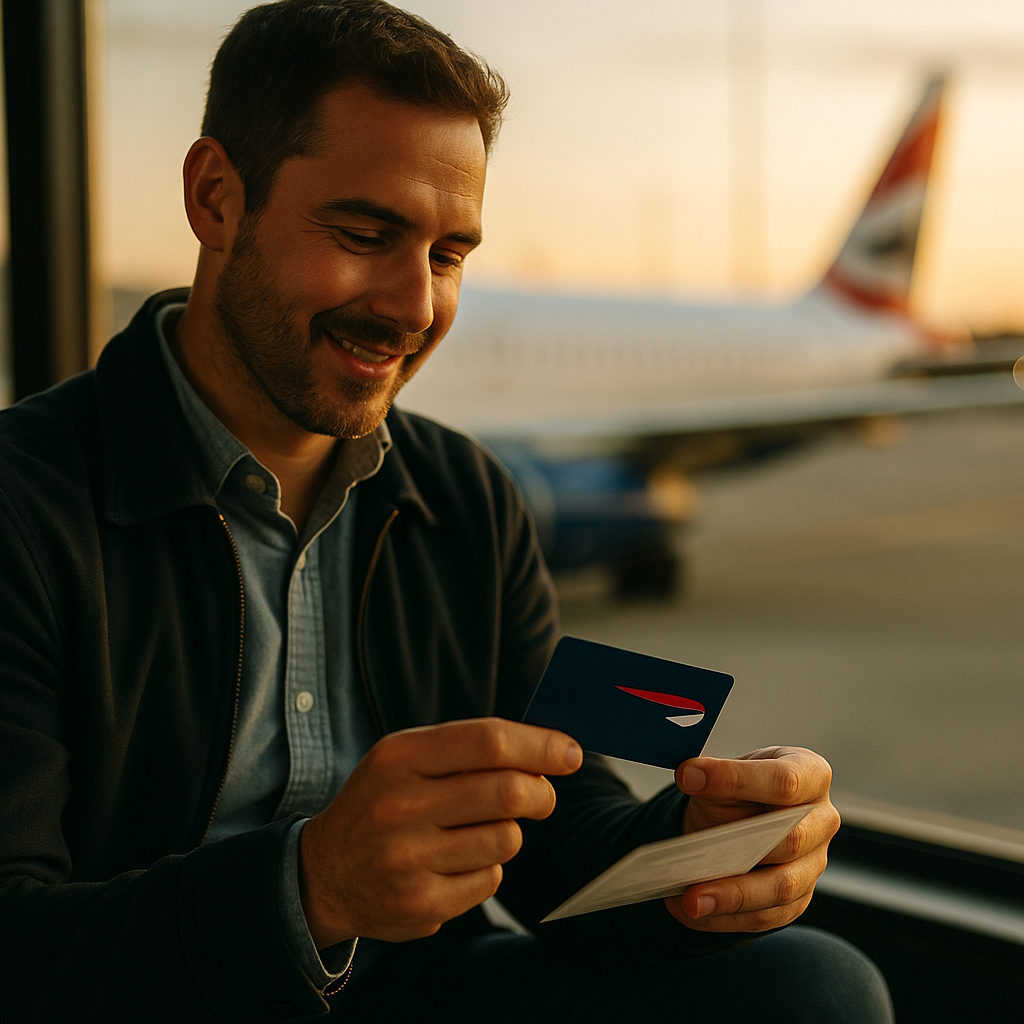
Case Study: How British Airways Used Small Wins to Revive Loyalty ROI offers a practical lesson for brands facing rising acquisition costs, soft retention, and pressure to prove marketing value. Instead of chasing one dramatic transformation, British Airways focused on incremental improvements across loyalty, personalization, and customer experience. Those small wins compounded into stronger engagement, better efficiency, and a smarter growth engine. Here’s what mattered most.
British Airways loyalty strategy: why small wins mattered
British Airways did not need a vague promise of “better engagement.” It needed loyalty activity that produced measurable commercial value. In 2026, that challenge is familiar to nearly every consumer brand: customers have more choices, media costs remain volatile, and finance teams expect retention investments to show a return. A loyalty program cannot survive on sentiment alone. It has to influence repeat behavior, share of wallet, and margin.
British Airways had an advantage many brands envy: strong brand recognition, a global route network, and an established loyalty ecosystem through The British Airways Club and Avios. But scale can create friction. Large loyalty systems often become harder to optimize because customer segments are broad, benefits are layered, and legacy communication patterns can slow change. The brand’s response was not to rebuild everything at once. It focused on smaller, high-confidence improvements that could be tested, measured, and expanded.
That approach aligns with how effective loyalty leaders work today:
- They prioritize actions with clear behavioral links, such as reducing booking friction or improving reward visibility.
- They treat loyalty as a profit engine, not just a points ledger.
- They measure incremental lift rather than relying on top-line membership counts.
- They connect operations and marketing, because customer experience directly affects repeat purchase.
The key insight from British Airways is simple: loyalty ROI often improves when brands stop waiting for a perfect overhaul and start stacking improvements that customers actually notice. A clearer reward message, a better-timed email, a more relevant offer, or a simpler path to redemption can each seem modest. Together, they can shift retention economics.
Customer retention case study: fixing friction before chasing growth
One reason small wins work is that they target customer friction. In loyalty, friction is expensive. If members do not understand how to earn, how to use benefits, or why a program matters right now, they disengage. British Airways appears to have leaned into practical improvements that made value easier to see and easier to access.
For a travel brand, friction tends to appear in predictable places:
- Enrollment complexity that discourages new members.
- Unclear reward rules that make benefits feel distant.
- Poorly timed communication that misses booking windows.
- Redemption anxiety when customers believe rewards are hard to use.
- Inconsistent experience between app, website, service channels, and airport touchpoints.
British Airways’ lesson is not that every issue must disappear before ROI improves. It is that reducing a few critical pain points can produce outsize gains. If more members understand the value of joining, more of them book logged-in sessions. If logged-in sessions rise, personalization improves. If personalization improves, conversion and repeat purchase often follow. This is how a small operational win can become a revenue win.
That sequence matters because loyalty ROI is rarely created by one campaign. It usually emerges from a chain of connected improvements. A better account dashboard can lift reward awareness. Better reward awareness can increase redemption activity. More redemption can reinforce perceived value and future booking intent. The brands that win are the ones that measure these links instead of looking only at final sales numbers.
For marketers, the practical takeaway is to audit the customer journey for moments where loyalty intent stalls. Ask:
- Do members know what they gain from the next action?
- Can they understand the value proposition in seconds?
- Are messages tied to real travel intent and lifecycle stage?
- Does redemption feel achievable, not theoretical?
British Airways shows that improving loyalty ROI starts with removing the reasons people stop paying attention.
Loyalty program ROI: how incremental optimization compounds
Many executives want loyalty transformation to arrive in one quarterly presentation. In practice, sustainable gains come from compounding. British Airways’ case is useful because it highlights how several moderate improvements can outperform one headline initiative.
Consider the mechanics of compounding in a loyalty program. Suppose a brand improves email relevance, app engagement, reward visibility, and post-booking communication. None of those changes is revolutionary alone. But each one increases the probability of the next valuable action. Over time, the cumulative effect can lift frequency, reduce churn, and improve customer lifetime value.
The strongest loyalty teams often focus on a sequence like this:
- Increase identifiable traffic by encouraging logins and membership enrollment.
- Improve first-value moments so new members quickly understand benefits.
- Use behavior-based segmentation instead of broad demographic buckets.
- Promote redemptions strategically because members who use rewards often trust the program more.
- Re-engage at-risk members before inactivity becomes churn.
British Airways benefited from this mindset because travel loyalty has naturally recurring decision points: searching, booking, checking in, flying, and planning the next trip. Every touchpoint is an opportunity to either reinforce the loyalty proposition or weaken it. A small uplift at each step can significantly change the economics of member retention.
From an ROI perspective, the most credible measurement model includes both direct and indirect outcomes. Direct outcomes include repeat bookings, ancillary purchases, and redemption-led conversion. Indirect outcomes include increased preference, lower paid media dependence for existing customers, higher app usage, and stronger engagement with owned channels. EEAT-friendly analysis requires being honest here: not every positive signal proves causation. But when multiple signals move together after targeted changes, the business case strengthens.
That is why British Airways’ small-win approach deserves attention. It is more realistic than a complete relaunch and more defensible than broad branding claims. It creates a trail of evidence.
Personalization in loyalty marketing: making rewards feel relevant
Relevance is the dividing line between a loyalty program people use and one they ignore. British Airways’ revival of loyalty ROI likely depended in part on improving how members experienced personalized value, not just how often they heard from the brand.
In 2026, customers expect brands to know enough about them to avoid generic messaging. But they also expect restraint. Effective personalization is not surveillance-heavy or overly clever. It is useful. In airline loyalty, useful personalization can include route suggestions based on prior travel patterns, reminders linked to earned benefits, app prompts around upgrade opportunities, and content that matches whether someone travels for business, family visits, or leisure breaks.
British Airways’ small wins likely came from making communications more actionable:
- Lifecycle messaging that changes based on whether a member is new, active, lapsing, or high value.
- Contextual reward prompts shown when redemption is most relevant.
- Segment-specific offers that reflect actual travel behavior.
- Simplified explanations of benefits and status progress.
These improvements matter because loyalty members do not need more messages. They need fewer, better messages. If a member opens an app and immediately sees progress, available benefits, and a realistic next action, the program feels useful. If they receive a generic offer unrelated to their habits, it feels like noise.
There is also a trust dimension. Brands that explain value clearly tend to earn more engagement. British Airways, as a major airline, operates in a category where customer confidence matters. When communication becomes clearer and more relevant, the loyalty program can feel less like a complicated rules system and more like a genuine advantage.
For marketers applying this lesson, the key is to personalize around customer decisions, not just customer profiles. That means building communications around moments such as “considering a trip,” “preparing to fly,” “close to status threshold,” or “eligible to redeem.” This is where relevance begins to improve ROI.
Travel loyalty program metrics: what success really looks like
A case study about loyalty ROI is only useful if it clarifies what to measure. British Airways’ example suggests that the right metrics are both commercial and behavioral. Too many brands still overemphasize program size. Membership volume matters, but inactive members do not generate meaningful return.
The more reliable way to evaluate a loyalty recovery is to track:
- Active member rate: the share of members engaging within a defined period.
- Repeat booking rate: especially among members exposed to loyalty communications.
- Redemption rate: a sign that value is tangible.
- Incremental revenue per member: compared with similar non-member cohorts where possible.
- Customer lifetime value trend: whether member economics are improving over time.
- Owned-channel engagement: app sessions, email clicks, logged-in website behavior.
- Retention by segment: because premium and occasional travelers often behave differently.
British Airways’ “small wins” approach is especially effective because these metrics can show progress before a full-year revenue picture is complete. For example, increased logged-in behavior can precede higher booking conversion. More redemptions can precede better renewal and repeat purchase patterns. Segment-level engagement can reveal whether a new message strategy is landing with frequent flyers or helping reactivate occasional travelers.
Strong measurement also protects against false optimism. If open rates rise but active member rate does not, the creative may be appealing while the offer remains weak. If redemptions rise but margin falls sharply, the reward mix may need adjustment. Helpful content should acknowledge this: loyalty ROI improves when brands optimize both engagement and economics, not one at the expense of the other.
The lesson here is discipline. British Airways did not need every metric to move at once. It needed leading indicators that pointed toward profitable loyalty behavior. That is how small wins become an operating system rather than a slogan.
Brand loyalty case study lessons: what other marketers can copy
The most valuable part of the British Airways story is its transferability. Most brands do not have airline-scale data, but they can still use the same logic. The model is repeatable because it is built on prioritization, testing, and consistent measurement.
Here are the most practical lessons marketers can apply:
- Start with one friction audit. Map where customers fail to enroll, engage, or redeem.
- Choose improvements with a short feedback loop. Messaging, UX, and offer clarity often reveal impact quickly.
- Connect teams early. Loyalty, CRM, product, analytics, and customer service should work from the same KPIs.
- Make value visible. If benefits are hidden, they cannot influence behavior.
- Reward use matters as much as reward earning. Redemption often strengthens belief in the program.
- Document every small win. Stakeholders support loyalty investment when evidence accumulates.
Another lesson is strategic patience. Small wins are not the same as timid action. They require clear hypotheses, firm ownership, and willingness to scale what works. British Airways’ experience suggests that loyalty recovery becomes more credible when a brand can say, “We improved this step, saw this response, and expanded from there.” That narrative is far stronger than a vague claim about brand love.
Finally, this case reinforces an important truth for 2026: loyalty is no longer a side program. It is a system for increasing customer value efficiently. Brands that treat it as a measurable growth lever will outperform those that treat it as a decorative retention tactic.
FAQs about British Airways and loyalty ROI
What does “small wins” mean in a loyalty strategy?
It means making focused improvements that are easy to test and measure, such as clearer reward messaging, better-timed emails, simpler redemption paths, or more relevant app prompts. These changes may look minor individually, but together they can improve retention and revenue.
Why is British Airways a useful loyalty case study?
Because it shows how a large, established brand can improve loyalty performance without relying on one dramatic relaunch. The case illustrates how incremental optimization across customer experience, personalization, and measurement can revive ROI.
How do small wins improve loyalty ROI?
They reduce friction at key moments in the customer journey. When members understand the value of joining, see relevant benefits, and can redeem rewards more easily, they are more likely to stay active, book again, and respond to owned-channel marketing.
What metrics matter most for loyalty ROI?
Focus on active member rate, repeat booking rate, redemption rate, incremental revenue per member, retention by segment, and customer lifetime value trends. These metrics reveal whether loyalty activity is influencing profitable behavior, not just generating attention.
Can smaller brands use the same approach?
Yes. Smaller brands may have fewer channels and less data, but they can still identify friction points, improve onboarding, simplify benefits, and personalize communication around customer decisions. The principle of compounding gains works at any scale.
What is the biggest mistake brands make with loyalty programs?
Many focus too heavily on enrollment and not enough on active use. A large membership base means little if customers do not understand the benefits, engage regularly, or redeem rewards. Loyalty value comes from behavior change, not just sign-ups.
How should marketers present loyalty wins internally?
Use a clear chain of evidence: what changed, which audience saw it, what behavior shifted, and how that connects to commercial outcomes. This helps finance and leadership teams see loyalty as a measurable growth driver rather than a brand-only initiative.
British Airways proved that loyalty ROI does not always return through a grand reset. It often comes from disciplined, customer-focused improvements that remove friction, increase relevance, and strengthen measurement. For marketers, the takeaway is clear: identify the moments that matter, improve them one by one, and let compounding do the hard work. In loyalty, consistent progress often beats dramatic change.
Top Influencer Marketing Agencies
The leading agencies shaping influencer marketing in 2026
Agencies ranked by campaign performance, client diversity, platform expertise, proven ROI, industry recognition, and client satisfaction. Assessed through verified case studies, reviews, and industry consultations.
Moburst

-
2

The Shelf
Boutique Beauty & Lifestyle Influencer AgencyA data-driven boutique agency specializing exclusively in beauty, wellness, and lifestyle influencer campaigns on Instagram and TikTok. Best for brands already focused on the beauty/personal care space that need curated, aesthetic-driven content.Clients: Pepsi, The Honest Company, Hims, Elf Cosmetics, Pure LeafVisit The Shelf → -
3

Audiencly
Niche Gaming & Esports Influencer AgencyA specialized agency focused exclusively on gaming and esports creators on YouTube, Twitch, and TikTok. Ideal if your campaign is 100% gaming-focused — from game launches to hardware and esports events.Clients: Epic Games, NordVPN, Ubisoft, Wargaming, Tencent GamesVisit Audiencly → -
4

Viral Nation
Global Influencer Marketing & Talent AgencyA dual talent management and marketing agency with proprietary brand safety tools and a global creator network spanning nano-influencers to celebrities across all major platforms.Clients: Meta, Activision Blizzard, Energizer, Aston Martin, WalmartVisit Viral Nation → -
5

The Influencer Marketing Factory
TikTok, Instagram & YouTube CampaignsA full-service agency with strong TikTok expertise, offering end-to-end campaign management from influencer discovery through performance reporting with a focus on platform-native content.Clients: Google, Snapchat, Universal Music, Bumble, YelpVisit TIMF → -
6

NeoReach
Enterprise Analytics & Influencer CampaignsAn enterprise-focused agency combining managed campaigns with a powerful self-service data platform for influencer search, audience analytics, and attribution modeling.Clients: Amazon, Airbnb, Netflix, Honda, The New York TimesVisit NeoReach → -
7

Ubiquitous
Creator-First Marketing PlatformA tech-driven platform combining self-service tools with managed campaign options, emphasizing speed and scalability for brands managing multiple influencer relationships.Clients: Lyft, Disney, Target, American Eagle, NetflixVisit Ubiquitous → -
8

Obviously
Scalable Enterprise Influencer CampaignsA tech-enabled agency built for high-volume campaigns, coordinating hundreds of creators simultaneously with end-to-end logistics, content rights management, and product seeding.Clients: Google, Ulta Beauty, Converse, AmazonVisit Obviously →