


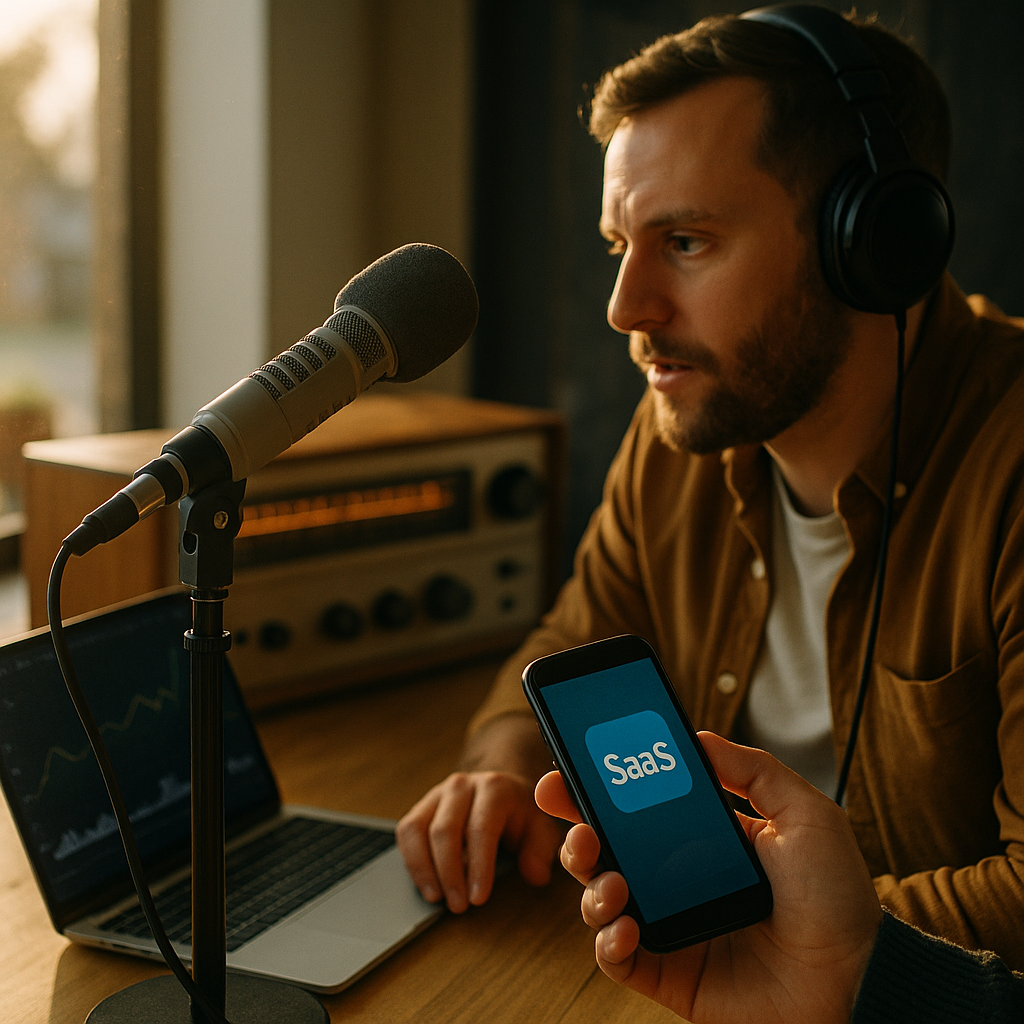
In 2026, growth teams chase digital saturation while overlooking a stubborn truth: local trust still drives buying decisions. This case study on micro local radio marketing shows how a SaaS firm expanded awareness, improved demo quality, and gained market share by pairing tightly targeted radio placements with measurable digital follow-through. The surprise was not reach, but efficiency at scale.
Why micro local radio advertising fit the SaaS growth problem
The company in this case study was a B2B SaaS firm selling workflow software to multi-location service businesses. Its product solved scheduling, dispatch, invoicing, and reporting challenges for operators with five to fifty branches. The sales cycle was not instant, but it was short enough to benefit from strong brand recall. Buyers typically moved from awareness to demo request in two to six weeks.
By the start of 2026, the firm faced a common problem. Paid search costs had climbed in its core categories. Social campaigns still generated volume, but lead quality had become uneven. Display retargeting helped nudge prospects, yet it rarely created net-new demand on its own. The firm needed a channel that could do three things at once:
- Build familiarity in specific cities where sales coverage was strongest
- Reach owners and operators during working hours, not just during research sessions
- Create measurable lift without committing to a broad national media buy
Micro local radio advertising emerged as the test channel because it matched the firm’s go-to-market model. Instead of buying major-market blanket campaigns, the team selected a portfolio of neighborhood-level, commuter corridor, and industry-relevant local radio slots. These were not vanity placements. They were designed to influence a narrow buying audience in places where the company already had implementation support and customer success capacity.
From an EEAT perspective, this mattered. The strategy reflected operational reality, not media hype. The marketing team aligned campaign geography with actual service strength, reducing wasted reach and improving the customer experience after the sale.
Building a local audio strategy for SaaS with real attribution
The first challenge was obvious: how do you measure radio for software? The answer was to stop treating radio as an untrackable top-of-funnel tactic and instead build attribution into the offer, the landing experience, and the sales workflow.
The SaaS firm created a local audio strategy for SaaS around six metro clusters, each broken into smaller zones. For every zone, the team built a dedicated landing page, a unique vanity URL, and a local offer tailored to the audience. In one region, the message focused on reducing technician idle time. In another, it emphasized faster billing and cash flow. Calls to action were consistent but location-specific: book a 15-minute operations audit.
The media mix included:
- Short-form live-read spots on talk and business programming
- Drive-time ads in suburban corridors with dense target business activity
- Industry-adjacent local stations with loyal small-business audiences
- Companion digital audio inventory where stations offered bundled streaming
To support attribution, the team used several methods together rather than relying on one imperfect metric:
- Direct response signals: vanity URLs, tracked phone lines, and dedicated forms
- Time-based correlation: spikes in branded search, direct traffic, and demo bookings within hours of airing
- Geo lift analysis: comparing target zones with matched control zones not receiving radio
- CRM tagging: sales reps asked every inbound lead how they heard about the firm, then cross-checked answers against campaign data
This multi-layered setup improved confidence in the results. No responsible marketer should claim that every influenced buyer converts through a radio URL. Many hear a spot, search later, click a paid ad, and book from there. The firm accounted for that reality from the start.
How radio attribution for B2B marketing revealed the real impact
After eight weeks, the early signals were stronger than the team expected. Direct attribution from vanity URLs and phone lines captured only part of the picture, but branded search in active radio zones rose materially compared with control markets. Sales reps also reported a shift in conversation quality. Prospects were less likely to ask, “What does your company do?” and more likely to ask, “Can your platform handle multiple field teams and custom reporting?”
That difference matters. Better-informed prospects often move faster through the funnel and require less costly sales education. The marketing team measured the impact across three categories:
- Awareness lift: increased branded search volume, direct traffic, and repeat site visits in exposed markets
- Pipeline efficiency: higher demo-to-opportunity conversion rates in radio markets
- Sales velocity: shorter time between first touch and qualified opportunity for radio-influenced accounts
Here is what the firm learned from radio attribution for B2B marketing:
First, message repetition beat message complexity. Early scripts tried to explain too many product features. The best-performing ads used one operational pain point, one proof point, and one action. When the company simplified the copy, recall improved.
Second, local relevance increased response. Spots that referenced the city, local business conditions, or regional workflow challenges outperformed generic scripts. Buyers responded to language that sounded situated rather than mass produced.
Third, radio worked best with search and retargeting. In markets with radio exposure, paid search click-through rates on branded terms improved and demo-form completion rates rose. This suggested that radio pre-sold the click.
Fourth, not all stations were equal. Audience loyalty and contextual fit mattered more than raw reach. A smaller station with a trusted business audience delivered more qualified pipeline than a broader entertainment format in the same geography.
By month three, the company had enough data to make a commercially relevant conclusion: radio was not replacing digital acquisition. It was making digital perform better while creating incremental demand where the brand had previously been weak.
Execution details that improved SaaS market share growth
The company did not win through media placement alone. It won through execution discipline. For readers considering a similar strategy, these operational details are where results usually improve or collapse.
1. Tight market selection
The firm chose markets based on three factors: existing customer density, sales team readiness, and realistic share-of-voice potential. It avoided cities where implementation staffing was thin. This prevented the common error of creating demand that the business could not fulfill well.
2. Short feedback loops
Creative, landing pages, and call handling were reviewed weekly. If a station generated calls but poor-fit leads, the script changed. If branded search rose but form conversion lagged, the landing page was simplified. This is a practical EEAT signal in action: demonstrate expertise by iterating against evidence.
3. Sales enablement
Reps were trained to continue the message heard on air. If a radio spot promised a 15-minute operations audit, the first sales call delivered exactly that. Message continuity protected trust and improved qualification.
4. Strong proof points
Each radio script included one credible claim: faster invoicing, less scheduling waste, or smoother multi-location oversight. The company avoided inflated statements. Specific, believable claims made the ads sound confident rather than promotional.
5. Frequency over broad reach
The team prioritized enough repetition within a narrow audience instead of spreading impressions too thinly. For B2B SaaS, hearing a concise value proposition multiple times in context can matter more than reaching a much larger general audience once.
The outcome was measurable SaaS market share growth in the selected regions. Share was assessed using a blended view of qualified pipeline share, branded search share, win rates against named competitors, and net-new account penetration. The company’s gains were strongest in secondary markets where larger competitors were digitally present but locally invisible.
Lessons from regional brand awareness campaigns for modern SaaS teams
Many marketers assume radio belongs to a previous era. That assumption misses how local media still shapes attention, especially when buyers are busy, mobile, and not actively browsing for solutions. The deeper lesson from these regional brand awareness campaigns is not “radio beats digital.” It is that overlooked channels can create efficient demand when they are deployed with precision.
Several lessons stand out for SaaS teams:
- Choose markets where operational follow-through is strongest. Marketing should amplify a business advantage, not expose a service gap.
- Align the audio message with one buyer pain point. A crowded script reduces recall and weakens response.
- Measure assisted impact, not only direct response. Brand lift often appears in search, site behavior, and conversion quality before it appears in a single-source dashboard.
- Use local language credibly. Mentioning a city is not enough; the message must reflect local business realities.
- Integrate radio into the full funnel. Search, retargeting, landing pages, and sales scripts should reinforce the same promise.
There is also a strategic takeaway. In crowded software categories, market share rarely shifts because of one brilliant ad. It shifts when a company becomes easier to remember, easier to trust, and easier to buy from in the places that matter most. Micro local radio helped this SaaS firm do exactly that.
Common mistakes in local media buying for software companies
Before expanding the program, the company documented the errors it nearly made. These are useful guardrails for any team exploring local audio.
Mistake one: buying too broadly. Local media buying for software companies fails when marketers chase scale before fit. Start with a manageable number of markets and enough budget to build frequency.
Mistake two: using generic creative. Audio has little room for wasted language. If the ad sounds like it could belong to any software company, it will be forgotten.
Mistake three: expecting last-click proof. Radio rarely behaves like a pure performance channel. If your measurement framework ignores assisted conversion, you will undervalue the channel.
Mistake four: neglecting inbound handling. If calls route poorly, forms are slow, or reps are unaware of the offer, campaign efficiency drops fast.
Mistake five: scaling before saturation. The firm expanded only after local indicators stabilized: consistent branded search lift, acceptable cost per qualified opportunity, and healthy close rates in target zones.
Once those indicators held, expansion became rational rather than speculative. That is the hallmark of sound growth strategy: prove economics in a bounded environment, then scale what is repeatable.
FAQs about micro local radio marketing
What is micro local radio marketing?
It is a highly targeted form of radio advertising focused on specific neighborhoods, commuter areas, or tightly defined local audiences rather than broad regional or national coverage. For SaaS firms, it works best when tied to markets with sales and service capacity.
Can radio really work for a SaaS company?
Yes, if the product serves a clearly defined audience and the campaign connects radio exposure to digital follow-up. Radio can improve brand recall, increase branded search, and raise demo quality, especially in markets where buyers respond to local trust signals.
How do you measure radio ROI for B2B SaaS?
Use a blended approach: unique landing pages, tracked phone numbers, CRM self-reported attribution, geo-based lift analysis, and changes in branded search and conversion rates. Looking only at last-click metrics will understate radio’s impact.
Which SaaS companies benefit most from local radio?
SaaS firms with geographic sales coverage, region-specific operations, or customer segments concentrated in certain cities often see the clearest results. Examples include software for field services, healthcare groups, education providers, real estate operators, and franchise businesses.
What kind of radio ad works best for software?
Short, clear spots with one pain point, one proof point, and one simple call to action usually perform best. Local relevance, repetition, and consistent post-click messaging matter more than trying to explain every feature.
How long should a test run before judging performance?
Most teams need enough time to generate repeat exposure and observe downstream effects in search, site behavior, and sales conversations. A short burst can miss the cumulative value of frequency, so structured testing over multiple weeks is more reliable than judging after a few airings.
Is micro local radio better than paid search?
They do different jobs. Paid search captures active intent, while micro local radio can create awareness and strengthen recall before the search happens. In this case study, radio improved the performance of search rather than replacing it.
The core takeaway is simple: a SaaS firm used micro local radio not as a nostalgic experiment, but as a disciplined demand-generation tool. By choosing the right markets, tightening the message, and measuring assisted impact, the company increased qualified pipeline and gained market share. For teams facing rising digital costs, local audio deserves serious testing with rigorous execution.
Top Influencer Marketing Agencies
The leading agencies shaping influencer marketing in 2026
Agencies ranked by campaign performance, client diversity, platform expertise, proven ROI, industry recognition, and client satisfaction. Assessed through verified case studies, reviews, and industry consultations.
Moburst

-
2

The Shelf
Boutique Beauty & Lifestyle Influencer AgencyA data-driven boutique agency specializing exclusively in beauty, wellness, and lifestyle influencer campaigns on Instagram and TikTok. Best for brands already focused on the beauty/personal care space that need curated, aesthetic-driven content.Clients: Pepsi, The Honest Company, Hims, Elf Cosmetics, Pure LeafVisit The Shelf → -
3

Audiencly
Niche Gaming & Esports Influencer AgencyA specialized agency focused exclusively on gaming and esports creators on YouTube, Twitch, and TikTok. Ideal if your campaign is 100% gaming-focused — from game launches to hardware and esports events.Clients: Epic Games, NordVPN, Ubisoft, Wargaming, Tencent GamesVisit Audiencly → -
4

Viral Nation
Global Influencer Marketing & Talent AgencyA dual talent management and marketing agency with proprietary brand safety tools and a global creator network spanning nano-influencers to celebrities across all major platforms.Clients: Meta, Activision Blizzard, Energizer, Aston Martin, WalmartVisit Viral Nation → -
5

The Influencer Marketing Factory
TikTok, Instagram & YouTube CampaignsA full-service agency with strong TikTok expertise, offering end-to-end campaign management from influencer discovery through performance reporting with a focus on platform-native content.Clients: Google, Snapchat, Universal Music, Bumble, YelpVisit TIMF → -
6

NeoReach
Enterprise Analytics & Influencer CampaignsAn enterprise-focused agency combining managed campaigns with a powerful self-service data platform for influencer search, audience analytics, and attribution modeling.Clients: Amazon, Airbnb, Netflix, Honda, The New York TimesVisit NeoReach → -
7

Ubiquitous
Creator-First Marketing PlatformA tech-driven platform combining self-service tools with managed campaign options, emphasizing speed and scalability for brands managing multiple influencer relationships.Clients: Lyft, Disney, Target, American Eagle, NetflixVisit Ubiquitous → -
8

Obviously
Scalable Enterprise Influencer CampaignsA tech-enabled agency built for high-volume campaigns, coordinating hundreds of creators simultaneously with end-to-end logistics, content rights management, and product seeding.Clients: Google, Ulta Beauty, Converse, AmazonVisit Obviously →